Slug Range Limits on a Deer Drive
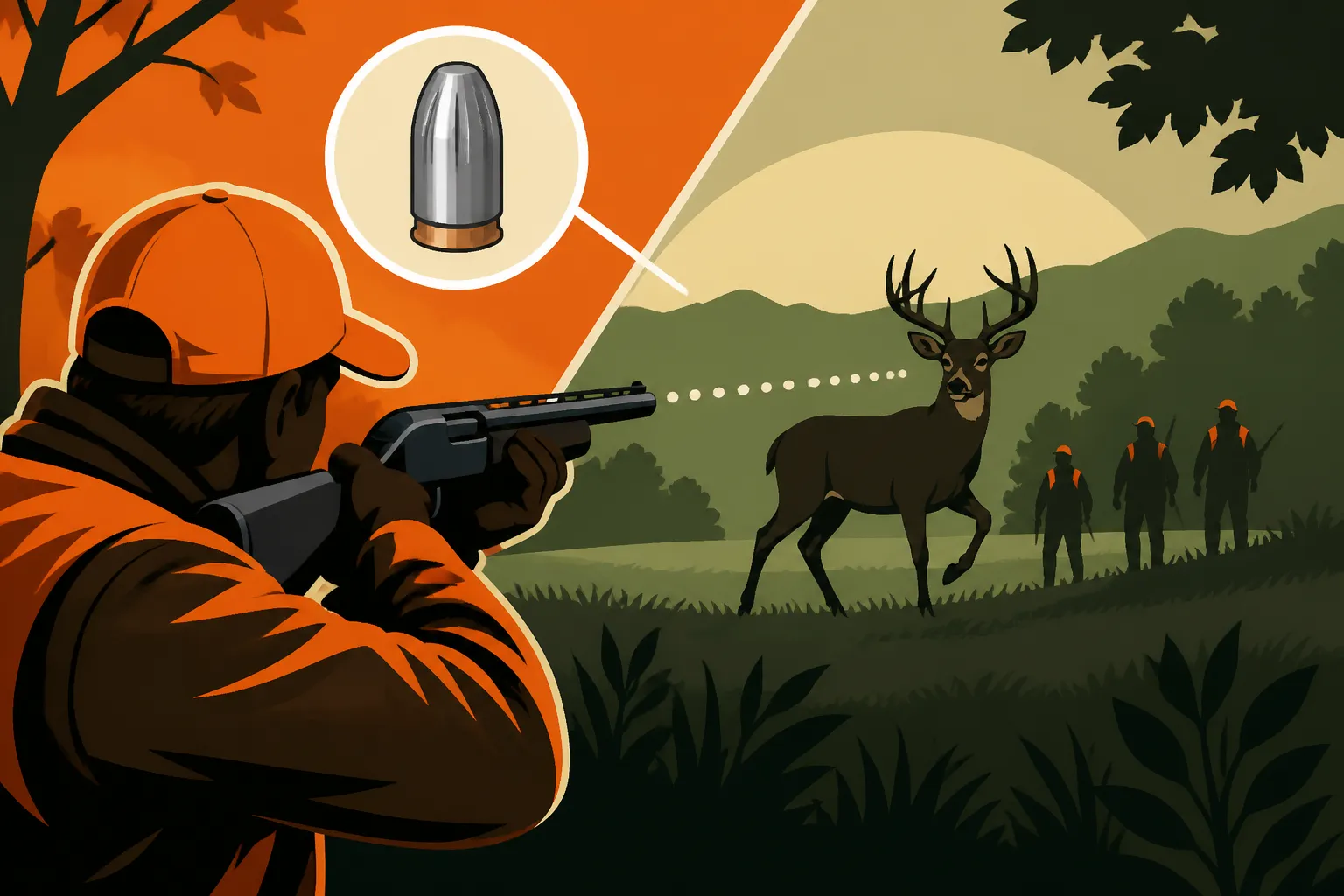
Deer drives can be one of the most exciting, adrenaline-fueled ways to hunt whitetails in Iowa, especially during the shotgun seasons. But that excitement often comes with a significant challenge: making split-second decisions about shot distance and safety, particularly when you're pushing deer through thick cover with a slug gun. It's all too easy to let the rush of a deer bursting out of a bedding area tempt you into a shot that's simply too far or too risky. This guide is here to help you understand the practical and ethical range limits for slug guns during an Iowa deer drive, ensuring both hunter safety and clean, responsible harvests.
Understanding Slug Ballistics for Effective Hunting
Before we even talk about distances, it’s vital to understand what slugs are designed to do and their inherent limitations compared to, say, a high-powered rifle round. Shotgun slugs are essentially large, heavy projectiles meant to deliver a massive amount of energy at relatively close ranges. They’re a fantastic tool for dense timber and open fields alike, but their ballistic properties mean they drop faster and lose energy quicker than most centerfire rifle cartridges.
The Dynamics of Shotgun Slugs
When you pull the trigger on a shotgun loaded with a slug, you're sending a much heavier, slower projectile downrange than you would with a typical rifle. This weight and lower velocity mean slugs are highly effective for delivering knock-down power within their effective range, but they are also much more susceptible to gravity and air resistance. A slug will start dropping almost immediately after leaving the barrel, and that drop accelerates quickly. This isn't a problem at 50 yards, but it becomes a major factor at 100 yards and beyond.
There are two main types of slugs commonly used: Foster (or "rifled") slugs and Sabot slugs. Foster slugs are designed for smoothbore barrels and stabilize somewhat through their weight-forward design and the rifling fins on their body, which are primarily to allow them to compress when passing through a choke. Sabot slugs, on the other hand, are smaller, more aerodynamic projectiles encased in a plastic sabot that peels away after leaving the barrel, allowing the slug itself to spin and stabilize from a rifled shotgun barrel. A rifled barrel with sabot slugs offers significantly better accuracy and effective range than a smoothbore with Foster slugs. Most Iowa deer hunters running a dedicated slug gun setup are using rifled barrels and sabot slugs for this reason.
Effective Range Versus Maximum Range
It's easy to confuse these two terms, but understanding the difference is paramount for ethical hunting. The maximum range of a slug might be several hundred yards – meaning the projectile could travel that far. However, the effective range is the distance at which you can consistently place a shot into a deer's vital organs (lungs and heart) with enough kinetic energy to ensure a quick, humane kill. For most hunters using typical slug setups, this distinction means the difference between a clean harvest and a wounded animal.
For a smoothbore shotgun with Foster slugs, the effective range for deer is generally considered to be around 50-75 yards. Pushing past 75 yards introduces a rapidly increasing chance of significant bullet drop, reduced energy, and inconsistent accuracy. With a rifled barrel and sabot slugs, that effective range can stretch out to 100-150 yards, and in some highly optimized setups with experienced shooters, possibly 175 yards. Beyond these distances, even with the best equipment, the projectile drop becomes so severe, and the margin for error so slim, that taking a shot becomes increasingly unethical.
Ethical Shot Ranges for Deer Drives
In the chaos and excitement of a deer drive, knowing your ethical shot range is even more critical. Deer are often moving fast, sometimes erratically, and the cover can be thick. You have less time to range, less time to steady your shot, and less time to verify your backstop.
The Realities of Shooting Moving Deer
Let's be honest, shooting a deer that's running full tilt is incredibly challenging. Even at close ranges, hitting the vitals on a sprinting deer is tough. During a deer drive, you're often presented with exactly this scenario. The deer might be walking, trotting, or flat-out running as it tries to escape the drivers. This dynamic situation significantly reduces your effective range compared to shooting at a stationary target.
For most hunters, a realistic maximum range for a walking deer with a slug gun (rifled barrel/sabots) might be 75-100 yards. For a trotting deer, that might drop to 50-75 yards. A running deer? Many experienced hunters would say that anything beyond 40-50 yards is a low-percentage shot for a clean kill, regardless of the weapon. This isn't about the gun's capability but the hunter's ability to consistently place a shot on a small, moving target under pressure. It's far better to let a deer pass than to take a Hail Mary shot that results in a long, difficult blood trail or, worse, a lost animal. Remember, the goal is always a quick and humane harvest.
Prioritizing Shot Placement and Backstops
During a drive, every hunter needs to be acutely aware of their surroundings. This means not only identifying the deer but also knowing precisely where your shot will go if it misses or passes through the animal. A safe backstop isn't just a suggestion; it's a fundamental safety rule. In Iowa's mixed landscape of timber, fields, and rolling hills, a safe backstop often means a hill, the ground, or a very thick section of timber without other hunters or structures behind it.
When deer are being pushed, they might appear suddenly, and often the temptation is to swing and shoot. However, you must take a moment to assess the shot angle and what's beyond the deer. Is the deer running toward another stander? Is it running towards a road or a house? These are critical questions to answer in fractions of a second. If you don't have a clear shot and a safe backstop, you absolutely must hold your fire. This is where pre-drive planning really shines, as knowing where your fellow hunters are positioned, and having a general idea of the terrain, can help you make these decisions more quickly and confidently. Organizations like GoHunt emphasize the importance of detailed mapping for pre-hunt scouting, and while their focus is often on western big game, the principle of understanding your terrain and surroundings is universal and incredibly valuable for Iowa deer drives.
Slug Types and Their Practical Range
Different slug types, as mentioned, have different practical range limitations. Here’s a quick overview:
| Slug Type | Barrel Type | Typical Projectile Speed (FPS) | Recommended Effective Range (Yards) | Key Advantage |
|---|---|---|---|---|
| Foster (Rifled) | Smoothbore | 1600-1800 | 50-75 | Cost-effective, works in any shotgun |
| Sabot | Rifled | 1800-2000+ | 100-150 | Superior accuracy, flatter trajectory |
It's clear that if you're serious about extending your ethical range on deer drives, investing in a rifled barrel and quality sabot slugs is the way to go. However, regardless of your equipment, practice is non-negotiable. Spend time at the range, not just shooting at a stationary target at 50 yards, but practicing rapid target acquisition and shooting from different positions, perhaps even simulating a moving target if your range allows. Understanding your Slug Range Limits on a Deer Drive comes from knowing your equipment and your personal skill level.
Factors Affecting Slug Range and Accuracy
The stated effective ranges for slugs are often under ideal conditions. In the real world of an Iowa deer drive, numerous factors can conspire to reduce that effective range. Being aware of these will make you a safer and more ethical hunter.
Terrain and Vegetation
Iowa's diverse landscape means a deer drive can take you through anything from dense timber and thick multiflora rose to CRP fields and creek bottoms. Each of these environments presents unique challenges. In thick timber, your visibility might be limited to 20-30 yards, making longer shots impossible regardless of your slug's capabilities. A bullet traveling through even light brush can be deflected, leading to an inaccurate shot. This is why a clear shooting lane is paramount.
When planning your drive, consider the terrain. A deep creek bottom can offer a natural backstop but also limit visibility. Rolling hills might provide excellent natural shooting lanes and backstops on one side, but blind spots on another. Using detailed topographical maps, similar to the advanced planning resources available on platforms like GoHunt, can help you and your hunting party visualize these terrain features and position standers strategically to maximize safe, ethical shot opportunities while minimizing risk. Understanding Reading an Iowa Timber Draw for Deer Sign can also help you predict where deer might break and set up standers accordingly.
Weather Conditions and Visibility
Iowa weather can be fickle, especially during the deer seasons. Rain, snow, fog, or even heavy overcast skies can drastically reduce visibility. What might be a reasonable 75-yard shot on a clear, sunny day becomes an irresponsible gamble in dense fog or a blinding snow squall. Wind is another factor; while heavy shotgun slugs are less affected by wind than lighter rifle bullets, a strong crosswind can still nudge a slug off target, especially at the longer end of its effective range.
It's crucial to adjust your personal range limits based on current conditions. If visibility is poor, shorten your maximum shot distance significantly. If it's windy, be mindful of potential drift. A smart hunter knows when to pass on a shot because the conditions aren't cooperating, even if the deer is within what would normally be considered a "shootable" range.
Hunter Skill and Practice
Ultimately, your effective range is dictated by your ability to consistently hit a specific target area under real-world hunting conditions. A hunter who practices regularly at the range, shooting from different positions (standing, kneeling, off-hand), and familiarizes themselves with their slug gun's trajectory, will naturally have a longer ethical range than someone who only shoots a few rounds to sight-in before opening day.
Confidence in your equipment and your ability comes from practice. If you haven't shot your slug gun beyond 50 yards, then 50 yards is likely your absolute maximum ethical range, regardless of what the ballistic charts say. Many dedicated hunters will spend time Sighting In Before Shotgun Season at various ranges, understanding holdovers and trajectory. The more confident you are in your own skill, the more accurately you can assess a shot opportunity in the field. Don't let ego override common sense; if you're unsure, don't take the shot.
Safety Considerations During a Deer Drive
Deer drives introduce unique safety challenges that go beyond just understanding ballistic limitations. When you have multiple hunters in motion or positioned strategically, communication and strict adherence to safety rules are paramount.
Communication and Stander Placement
Effective communication is the backbone of a safe and successful deer drive. Before anyone moves, the entire party needs to be clear on the plan: who is driving, who is standing, the direction of the drive, designated safe zones, and the precise locations of all hunters. Using two-way radios can be incredibly helpful for maintaining contact and ensuring everyone knows where others are, especially in larger timber blocks or when pushing through heavy cover.
Standers must be positioned in locations that offer clear shooting lanes without pointing their muzzle in the direction of other hunters. Drivers also need to be aware of where standers are located as they push through, being careful not to move ahead of the established line or into potential shooting lanes. Reviewing Party Hunting Rules and Safe Drives is essential for all involved, especially regarding safety protocols and what constitutes a legal shot.
Knowing Your Shooting Lanes and Safe Zones
Every stander should identify their primary and secondary shooting lanes immediately upon getting into position. This involves mentally mapping out where a deer might appear and, crucially, where your bullet would go if you missed or if the bullet passed through the deer. As discussed, a proper backstop is non-negotiable. If your designated shooting lane risks sending a slug toward a road, a building, or another hunter's position, then that lane is off-limits.
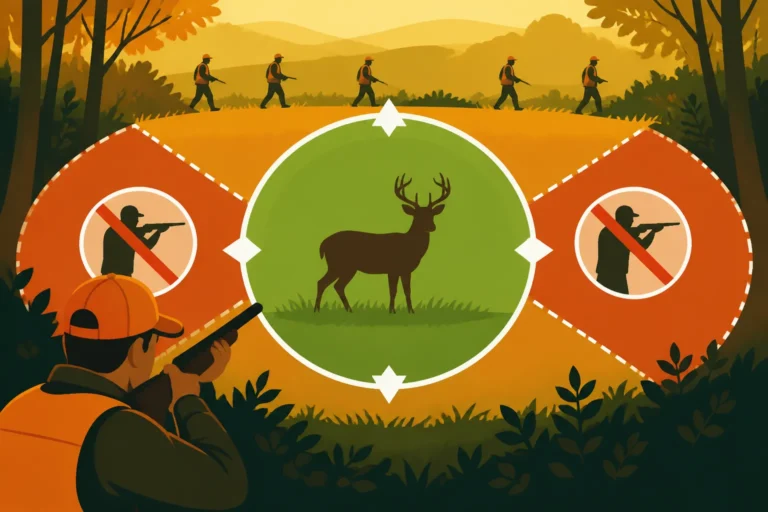
Establishing designated safe zones or "no-shoot" zones for the entire drive is also vital. These might be areas where drivers are expected to emerge, or sections of dense cover where visibility is too low to guarantee a safe shot. Always err on the side of caution. Even if a monster buck steps out, if it's in a no-shoot zone or if you don't have a clear backstop, you must let it walk. For more on safety, refer to Safe Zones in a Deer Drive.
The Importance of Blaze Orange
Iowa law requires hunters to wear blaze orange during shotgun deer seasons. This isn't just a suggestion; it's a critical safety measure, especially during deer drives. For drivers, this means wearing an outer garment (like a vest or jacket) with at least 50% blaze orange, and a hat. Standers also need to be highly visible. The bright color helps distinguish hunters from deer, significantly reducing the risk of accidental shootings.
Even with blaze orange, assume every movement in the brush could be another hunter until you can positively identify it as a deer. Always verify your target. Do not shoot at sounds, movement, or "deer parts" (like a flash of brown or white tail) without seeing the entire animal and confirming it's a deer and not another person. For a full breakdown of requirements, check out Blaze Orange Rules During Iowa Gun Season. Staying vigilant, practicing clear communication, and respecting the limits of your equipment and abilities will ensure that your Iowa deer drives are memorable for all the right reasons.
Disclaimer
The information provided in this article is for general guidance and informational purposes only and does not constitute legal advice or endorsement of any specific hunting practice. Hunting regulations can change, and it is the responsibility of each individual hunter to review and comply with all current Iowa Department of Natural Resources (DNR) rules, regulations, and licensing requirements before engaging in any hunting activities. Always prioritize safety, ethical hunting practices, and respect for wildlife and private property.