October Bow Season Heat Strategy
October in Iowa, for all its beauty, can really throw a wrench into a bowhunter's plans, especially when that early-season warmth just refuses to let go. You’re out there, hoping for crisp mornings and active deer, only to be met with sweltering temps that make bucks disappear like ghosts. This inconsistent heat, particularly in the first half of the month, can lead to immense frustration, leaving you wondering where all the deer have gone. This comprehensive guide will equip you with the strategies and tactical adjustments you need to successfully navigate and bowhunt Iowa whitetails, even when October's unseasonably warm weather makes hunting a true challenge.
Understanding Deer Behavior in Warm October Weather
When the thermometer refuses to drop, deer behavior shifts dramatically, and understanding these changes is the first step toward adapting your hunting strategy. It’s not just about comfort; it’s about their very survival and energy conservation.
Why the Heat Changes Everything for Whitetails
Deer, especially those big, mature Iowa bucks we all dream of, are incredibly sensitive to temperature fluctuations. When daytime highs climb into the 60s or even 70s in October, their natural inclination to move during daylight hours dwindles significantly. They're not being lazy; they're actively trying to conserve energy and avoid the very real risk of overheating. Their heavy coats, designed for colder weather, become a burden. This means their metabolism slows down, and any movement during the peak heat of the day could cost them vital energy and put them at risk.
This physiological response leads to a frustrating reality for bowhunters: less daylight activity. You might still find deer feeding, but typically under the deep cover of darkness when temperatures are at their lowest. Their food choices might also subtly shift towards more easily digestible options that require less energy to process. Crucially, water sources become even more critical during these warm spells. Just like us, deer need to stay hydrated, and they’ll often modify their travel routes to pass by reliable water. This is the core frustration for many hunters – the deer you know are there simply vanish from visible activity, making the woods feel empty.
Prime Bedding Areas When Temperatures Climb
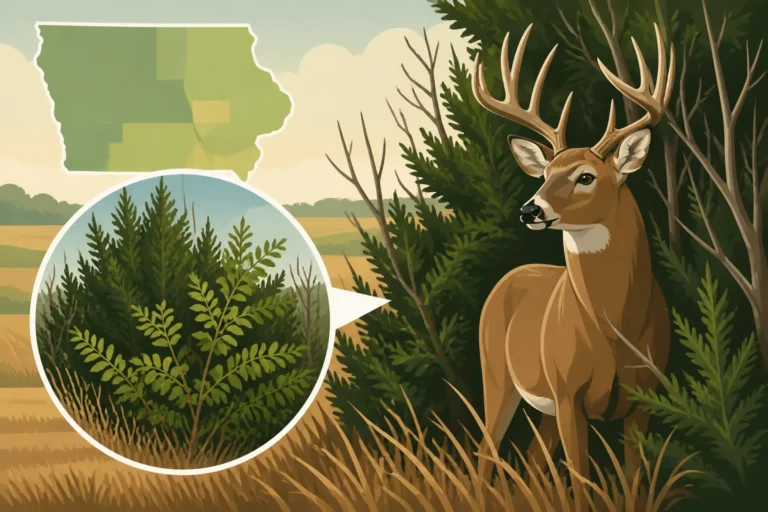
Forget those wide-open, sun-drenched south-facing slopes you might typically scout for later in the season. When temperatures climb in October, whitetails prioritize finding the coolest, most secluded bedding areas possible. Their focus shifts entirely to shade, air movement, and protection from the sun's direct rays. This often means they’ll gravitate toward thick, dense cover on north-facing slopes, which receive less direct sunlight throughout the day. Areas with heavy cedar thickets, dense honeysuckle, multiflora rose, or thick river bottom timber provide a crucial canopy that blocks out the sun and traps cooler air closer to the ground.
Deep creek bottoms and marshy areas also become prime real estate. The damp ground and proximity to water, combined with heavy cover, can create a microclimate that's several degrees cooler than higher, drier ground. Even standing crops, if they are tall and dense enough, can offer a surprisingly cool and concealed bedding option, especially when a light breeze can filter through the stalks. These aren't just random spots; these are calculated choices by the deer to stay comfortable and hidden. You might find that CRP Grass and Where Bucks Bed takes on a new dynamic, with deer pushing into the densest, shadiest pockets rather than simply open fields. The closer a buck can bed to a reliable water source during these warm spells, the less energy he has to expend traveling to quench his thirst during the hottest parts of the day.
Tactical Adjustments for Warm Weather Bowhunting
Knowing how deer react to heat is one thing; actually putting yourself in a position to intercept them is another. Successful warm-weather bowhunting in Iowa demands significant tactical adjustments from your usual October playbook.
Shifting Your Focus to Early Morning and Late Evening
The most critical adjustment you can make when temperatures are high is to redefine your "prime time." Forget about those romanticized all-day sits unless you have an exceptionally strategic location like a secluded water hole that you know deer are hitting midday. For the vast majority of warm October days, the only realistic windows of opportunity will be the first hour or two after legal light and the last hour or two before dark. These are the moments when ambient temperatures are at their lowest, providing deer with a brief reprieve from the heat, making them more comfortable moving from their bedding areas to food or water.
This means you need to be in your stand or blind well before the sun comes up, often requiring a patient, quiet approach in the dark. Similarly, you'll want to stay until the very last minute of legal shooting light, being prepared for a careful, stealthy exit in the dark once again. This might involve packing a reliable headlamp and knowing your route like the back of your hand. Midday periods, when the sun is highest and temperatures peak, are generally dead zones for mature buck movement in warm weather. Trying to hunt during these hours often does more harm than good, as your presence could alert deer that are still bedded nearby, forcing them to become even more nocturnal. Focus your energy on those golden hours, because that's when your chances are highest.
Hunting Water and Transition Funnels
When it's warm, water isn't just a convenience for deer; it's a necessity, making water sources absolute magnets. Small, stagnant ponds tucked away in timber, natural seeps bubbling up from the ground, creek crossings, or even temporary puddles after a rain event can become focal points of deer activity. Scouting these spots for fresh tracks and sign is paramount. A classic example of leveraging this is through Early-Season Bowhunting Over Water, a tactic that gains even more importance when the mercury rises.
Beyond the water itself, focus on the transition areas that connect bedding to water, or bedding to a primary, high-value food source. These funnels are where deer will feel most secure moving in daylight, as they offer cover and a direct route between necessities. Look for subtle terrain features that might not seem obvious on a map but serve as natural bottlenecks. This could be a narrow strip of timber connecting two larger woodlots, a subtle finger ridge, or even a low saddle between two higher points. Understanding features like Saddles and Benches Deer Cross Daily or Hunting a Narrow Creek Corridor becomes crucial, as these micro-features can provide thermal advantages or concealed travel lanes that deer will instinctively use to stay cool and hidden. The key is to find where deer are concentrated due to their immediate needs, and then position yourself subtly along their travel routes.
The Role of Food Sources in Warm October
While deer activity might decrease, their need for sustenance doesn't disappear entirely. However, their preferences and the timing of their feeding can definitely change with warm October weather. You'll want to shift your focus to high-value, easily digestible foods that don't require extensive travel or exposure. White oak acorns are often at the top of this list. When they drop, they provide a dense, carbohydrate-rich food source that deer will prioritize, often hitting them under the cover of darkness or in the cooler twilight hours. Green plots, especially those with brassicas or clover, can also be attractive, particularly if they are tucked away in a timber pocket or offer some degree of shade and aren't overly exposed to the sun.
Standing corn and soybean fields, while offering abundant food, might be less appealing during the hottest parts of the day if they don't also provide adequate shade and airflow. Deer might still utilize them, but often later in the evening or earlier in the morning. A recently picked bean field, however, could see some evening activity as deer move out to glean any leftover beans. Your scouting efforts should be meticulous, looking for fresh droppings, tracks, and signs of recent browsing around these preferred food sources. This is where a robust e-scouting platform can be invaluable. Using a tool like GoHunt, you can analyze aerial imagery to identify timber stands likely holding white oaks or locate those tucked-away green plots that might offer a cooler feeding option. This allows you to prioritize your physical scouting efforts and minimize disturbance in the woods.
Scent Control and Stealth in Challenging Conditions
In warm October weather, scent control isn't just important; it's absolutely paramount. Elevated temperatures mean more sweat, more body odor, and faster dissipation of scent, creating an environment where a deer's keen nose can bust you from a mile away.
Upping Your Scent Control Game
When the temperatures are unseasonably warm, your scent control regimen needs to be absolute perfection. Deer are already on high alert, cautious about moving in daylight, and any foreign scent will send them packing faster than usual. Start with rigorous personal hygiene: shower with scent-eliminating soap immediately before heading out, focusing on all the usual suspects. Your hunting clothes, which should be clean every time you go out, should be stored in scent-free bags or containers and only put on once you’ve reached your parking spot, ideally away from any other lingering odors. Layering light, moisture-wicking clothing will help manage sweat, which is a major contributor to human odor.
While no product can truly eliminate all human scent, utilizing a high-quality scent spray for your clothes, boots, and even your bow can help significantly minimize your odor footprint. But remember, sprays and soaps are only part of the equation. The most crucial aspect of scent control is always, always playing the wind and thermals. This becomes even more critical in warm weather when deer are hypersensitive. Before every hunt, check the wind direction religiously and understand how local topography might affect it. Knowing how Wind and Thermals in River Breaks or in rolling timber behave is non-negotiable. Even with the best scent control products, if the wind is wrong, you’re busted. While GoHunt doesn't sell scent control products, its mapping features can help you predict wind direction for a chosen stand location based on historical and real-time data, allowing you to pick the absolute best setup for the conditions.
Minimizing Impact on Entry and Exit
Deer in warm October weather are on hyper-alert, moving carefully and cautiously. This means your approach to and departure from your stand is just as critical as the hunt itself. One bumped deer, especially a mature buck, can learn quickly and retreat to becoming completely nocturnal for days, or even weeks, drastically reducing your chances. Therefore, minimizing your impact is non-negotiable. Plan your entry and exit routes meticulously to avoid known bedding areas, common travel corridors, and any areas where deer are likely to be staging.
This might mean taking a longer, more circuitous route to your stand, even if it adds extra walking time. Utilize natural terrain features for concealment, such as walking in creek beds, deep ditches, or along the backside of ridges, using the terrain to block your silhouette and muffle your sound. Quiet footwear is also critical. Every rustle, every crunch of a leaf is magnified in the still, warm air. Consider Access Routes That Avoid Bedding Areas to ensure you're not inadvertently pushing deer out of your hunting area before you even climb into your stand. If you're utilizing a mobile hunting strategy, like Mobile Saddle Hunting in Iowa, the ability to set up quickly, quietly, and with minimal disturbance based on real-time observations and wind conditions is a huge advantage in these challenging environments. The goal is to be a silent phantom, slipping in and out without leaving a trace of your presence.
Scouting and Adaptability in October's Heat
Successfully hunting Iowa in warm October weather isn't just about showing up; it's about smart, calculated scouting and a willingness to adapt your plans on the fly. You can't just rely on old habits; you have to be dynamic.
E-Scouting and Boots-on-the-Ground Recon
Before you even consider stepping foot into the timber, an intensive e-scouting session is paramount. Tools like GoHunt offer incredible mapping capabilities that allow you to digitally scout for potential water sources, the densest cover, and likely travel corridors based on detailed aerial imagery and topographic maps. Look for those hidden pockets of timber on north-facing slopes, unpressured creek bottoms, or secluded ponds that might not be obvious at first glance. Pay attention to how different crop fields border these cover areas, identifying potential transition points.
Once you have a few promising spots identified, your physical scouting efforts need to be strategic and minimal. In warm weather, every intrusion has a magnified impact. Instead of crashing through the woods, focus your boots-on-the-ground recon on cool, damp mornings or immediately after a rain shower. These conditions allow you to walk more quietly and fresh sign (tracks, droppings, rubs) will be more apparent and easier to date. Concentrate your efforts around identified water sources and very limited, concentrated feeding areas. Don't over-scout. A quick in-and-out mission to verify current deer activity, confirm wind direction for a specific setup, and check for fresh sign is much better than extensive, noisy walks that could push deer out of the area or make them more nocturnal. Remember, Reading Aerial Imagery for Bedding Cover from home minimizes your footprint in the field.
Adapting to the October Lull (and if it's real)
Many hunters talk about the "October Lull," a period when deer activity, especially mature buck movement, seems to drop off a cliff. While some argue its existence, it's undeniable that deer behavior often changes significantly. Warm weather often intensifies this perceived lull, making bucks seem to disappear entirely as summer food sources dry up and the pre-rut hasn't fully kicked in. This guide highlights why The October Lull and Whether It Is Real is often heavily influenced by weather.
The key to success during this period, especially with warm temperatures, is adaptability. You cannot afford to be stubborn and hunt the same stand repeatedly if it's not producing. If your primary stand setup isn’t yielding results, don’t be afraid to move. This might mean having several different stand locations scouted and ready, or utilizing a lighter, more mobile setup like a saddle or a hang-on stand with climbing sticks that you can move easily. Watch the weather forecast like a hawk. Even during an extended warm spell, a sudden cold front, even a minor one, can trigger a burst of deer activity. Be ready to capitalize on these brief opportunities, as they might be your best chance for a daylight encounter.
Stand Placement and Strategy Shifts
When you're hunting in warm October conditions, your stand placement needs to be meticulously thought out to provide you with every possible advantage. Forget about stands designed for wide-open views. Instead, think about shaded setups. A stand on the north side of a ridge or deep within a thick timber block will feel significantly cooler than one exposed to direct sunlight. This provides you with comfort and keeps your movements more concealed against the darker background.
Consider using ground blinds if the wind is absolutely perfect and you can brush them in effectively. Deer are looking for shade themselves, and a well-concealed ground blind can offer a great ambush point, especially if you’re positioned to intercept deer moving to water or a shaded food source. Beyond broad location, focus on micro-features. A single white oak tree actively dropping acorns might be a hotspot. A small seep or bog could be drawing deer in. A subtle ridge that funnels deer in a cool breeze might be a golden ticket. Don’t just look at the big picture; zoom in on the small details. The GoHunt app, with its detailed topographic and satellite maps, can help you pinpoint these subtle yet critical micro-features that might be attracting deer seeking refuge from the heat. Being able to visualize these small nuances from home can give you a significant advantage when the heat is on.
| Factor | Warm October Strategy | Typical October Strategy (Cooler) |
|---|---|---|
| Deer Activity | Mostly nocturnal, very limited daylight | Increased daylight movement as rut nears |
| Bedding | Thick, cool cover; north slopes, close to water | South slopes, open timber, staging areas |
| Food Sources | Acorns (esp. white oak), lush green plots | Acorns, crop fields, diverse food plots |
| Water Sources | Absolutely critical magnets, often hunted directly | Important, but less of a primary draw |
| Hunt Times | First/last 90 minutes of daylight | All-day sits, particularly midday |
| Scent Control | Absolutely paramount, rigorous | Still important, but less extreme reliance on products |
| Impact | Minimize at all costs, easily busted | Can tolerate slightly more pressure, but still avoid spooking deer |
Post-Harvest Care in Warm Weather
Let's say your efforts pay off and you make a successful shot. Congratulations! However, the warm October temperatures present a new challenge: proper post-harvest care to ensure your venison doesn't spoil. This is a crucial, often overlooked, aspect of hunting in higher temperatures.
Speedy Recovery and Field Dressing
When the weather is warm, time is of the essence. A deer’s body temperature can rise rapidly after death, creating a breeding ground for bacteria. Your priority should be to locate and recover your deer as quickly and efficiently as possible. If you’ve made a good shot and seen the deer go down, approach cautiously but without delay. If the blood trail is sparse or the deer has traveled a distance, consider waiting a shorter period than usual (e.g., 30 minutes instead of an hour) before taking up the trail, unless you're confident it's a gut shot. In those cases, a longer wait is still advisable, but you must factor in the heat. Using a tracking dog, if legal in Iowa, can be a game-changer for quick recovery.
Once you find your deer, the clock is ticking for Field Dressing in Warm October Weather. You need to get that deer field-dressed immediately. This means removing the entrails to allow the body cavity to begin cooling. Don’t delay. Prop open the cavity with a stick or two to maximize airflow. If you have any concerns about getting the deer out of the woods quickly, consider quartering it in the field to allow for faster cooling and easier transport. This also means you need to be prepared with the right tools – a sharp knife, game bags, and perhaps a bone saw or replaceable blade knife. Every minute counts when the temperature is working against you.
Cooling and Transporting Your Harvest
After field dressing, the next critical step is getting that deer cooled down as rapidly as possible. If you can, get the deer to a shaded area or, ideally, back to your vehicle and into an air-conditioned space or cooler. If you're on public land or a long walk from your vehicle, bringing a game cart can greatly expedite the process of Getting a Deer Out of an Iowa Creek Bottom or any other challenging terrain.
Once at your vehicle, if you're not heading straight to a processor, pack the body cavity with ice or frozen water bottles. This helps draw the heat out of the carcass from the inside. Many hunters will keep several large coolers filled with ice in their truck specifically for this purpose. If you're quartering the deer in the field, place the meat into game bags immediately and then into coolers packed with ice. Ensure the meat is not sitting directly in meltwater, as this can degrade the quality. Drain coolers regularly. If the weather is warm and you plan to process the deer yourself, aim to get it broken down and in your refrigerator or freezer within 12-24 hours. For longer waits, a locker plant is always a good option, but check their availability, especially during busy seasons.
Disclaimer: Hunting regulations and conditions can change. Always consult the latest Iowa Department of Natural Resources (DNR) regulations before heading into the field. This guide offers tactical advice and does not supersede official regulations. Stay safe and hunt ethically.