Iowa Trapping Season Dates
Trying to figure out Iowa's trapping season dates can feel like navigating a maze, especially with different species having different windows and specific regulations tied to each. It’s enough to make even seasoned trappers scratch their heads sometimes. This guide is here to untangle all that, providing a clear, comprehensive breakdown of Iowa's trapping season dates, license requirements, and essential best practices so you can hit the lines with confidence.
Understanding Iowa's Trapping Regulations and Philosophy
Trapping in Iowa isn't just a hobby; it's a vital part of wildlife management and has a deep-rooted history in the state. The regulations, including season dates, are carefully crafted to ensure healthy furbearer populations while offering opportunities for trappers.
The Why Behind Trapping Seasons
At its core, Iowa's trapping season structure is about balance. The Iowa Department of Natural Resources (DNR) monitors furbearer populations like raccoons, muskrats, mink, and coyotes to ensure they remain healthy and sustainable. Trapping helps manage these populations, preventing overpopulation that could lead to disease, habitat degradation, or increased conflicts with humans, such as muskrats undermining pond dams or raccoons raiding chicken coops. For many rural communities, trapping also offers economic opportunities and a way to connect with the land, passing down traditional skills through generations. It’s a pretty integral part of our outdoor heritage here in Iowa, and the seasons reflect a careful scientific approach to maintaining that.
General License Requirements
Before you even think about setting a trap, you'll need the proper licensing. In Iowa, anyone 16 years or older who intends to trap or hunt furbearers (except coyotes and groundhogs which can be hunted without a furharvester license during daylight hours) must possess a valid furharvester license. This isn't just a formality; it's how the state tracks participation and funds wildlife conservation efforts. On top of the furharvester license, you'll also need to purchase an Iowa habitat fee. This fee directly supports the preservation and improvement of wildlife habitats across the state, benefiting all hunters, trappers, and outdoor enthusiasts. If you’re a landowner trapping on your own land, some exemptions might apply, but it's always best to check the latest Iowa DNR regulations to be sure. Make sure to grab your Iowa Furharvester Licence before heading out.
The Importance of the Iowa Hunting Atlas and GoHunt
Knowing the rules is one thing, but knowing where you can set your traps is another entirely. That's where resources like the Iowa Hunting Atlas and tools like GoHunt become indispensable. The Iowa Hunting Atlas, available through the DNR website, is a fantastic, free resource that shows you all the public hunting and trapping lands across the state, including Wildlife Management Areas (WMAs) and IHAP (Iowa Habitat and Access Program) tracts. This helps you avoid inadvertently trespassing, which is a big deal in Iowa, especially in our patchwork of farm ground and timber. Using the Iowa DNR Hunter Atlas is crucial for planning.
These digital tools, often available on your phone, allow you to see property boundaries, identify public access points, and even download maps for offline use when you're out of cell service in a remote creek bottom. Companies like GoHunt provide advanced mapping layers that can show you topographical changes, wetland features, and even crop history, giving you an edge in identifying prime furbearer habitat. It truly makes a difference, allowing you to focus on your trapping strategy rather than worrying about property lines. It's an investment in your peace of mind and your success, especially when considering onX Layers for Iowa Land Status.
Key Furbearer Trapping Seasons in Iowa
Iowa offers diverse trapping opportunities, with seasons designed to target different furbearers at times when their fur is prime and populations are robust. Understanding these specific windows is key to a successful and ethical trapping season.
Early Fall Trapping Opportunities (Raccoon, Opossum, Skunk, Badger)
When the leaves start to turn and there's a crispness in the morning air, Iowa's early fall trapping season kicks off, typically around the last Saturday of October. This period usually runs through late January, offering a long window for targeting some of Iowa's most common furbearers: raccoons, opossums, skunks, and badgers.
Raccoons are often the bread and butter for many trappers in Iowa. They're abundant, adaptable, and their fur can be quite valuable, especially as it thickens up with the cooler weather. Early season trapping for raccoons can be fantastic along creek banks, timber edges, and near picked cornfields. You'll often find them traveling these routes looking for an easy meal. Body-gripping traps, cage traps, and foothold traps are all effective for raccoons, with specific regulations on sizes and placement depending on public or private land.
Opossums and skunks often inhabit the same areas as raccoons, making them common incidental catches. Their seasons typically mirror the raccoon season. Badgers, while less numerous and more localized, also fall into this early season window. They prefer more open, dry habitats like pastures and field edges where they can dig for rodents. Successfully trapping a badger requires understanding their habits and often involves blind sets near active dens. The advantage of the early season is that temperatures are generally mild, making blood trailing and fur handling a bit more comfortable than in the dead of winter. It’s a great time to get out and learn the ropes, before the really bitter cold sets in.
Peak Season for Muskrat, Mink, and Beaver
While many furbearer seasons open simultaneously, the "peak" season for water-loving animals like muskrats, mink, and beaver really kicks into high gear as temperatures drop and water bodies begin to freeze. Their season also typically opens the last Saturday of October, but these animals are often targeted more heavily as winter approaches. This extends through the end of February for muskrats and mink, and through April for beavers.
Muskrats are prolific breeders and are often found in wetlands, ponds, and slow-moving streams. Their fur becomes exceptionally prime in the colder months. Trapping muskrats often involves 'drowning sets' with conibear-style traps or body-gripping traps placed at den entrances or travel routes along the water's edge. Mink, elusive and cunning predators, often follow muskrat runs, making sets targeting muskrats also effective for mink. They're like the silent shadows of the waterways.
Beavers, being our largest furbearers, have a longer season due to their slower reproductive rate and the challenges of trapping them. They can cause significant damage to timber and agricultural land, so managing their numbers is important. Trapping beaver often involves larger body-gripping traps or specialized foothold traps placed in channels, at den entrances, or near fresh cuttings. As winter progresses, trappers must contend with ice, which can make setting and checking traps more challenging but also funnel animals into predictable travel lanes beneath the ice. Safety around frozen water is paramount during this time.
Late Season for Coyote and Fox
While coyotes can be hunted year-round in Iowa, and their trapping season generally opens with other furbearers in late October, the "late season" for coyotes and foxes, extending well into January and often into February for coyotes, is a prime time for these cunning canids. Their fur is at its absolute peak quality in the bitter cold of winter, making them highly sought after by trappers.
Coyotes, in particular, have seen a surge in interest from trappers due to strong fur prices and their adaptability across Iowa's landscape. They are found in nearly every county, from remote timber blocks to the fringes of urban areas. Trapping coyotes often involves dirt hole sets, flat sets, or urine post sets, designed to appeal to their inquisitive nature and territorial instincts. Knowing Coyote Behaviour Around Iowa Farms is key. Snares, when used correctly and legally, can also be highly effective, especially in travel corridors.
Foxes, both red and gray, are also popular targets during this late season. Red foxes tend to favor more open country, while gray foxes prefer thicker timber and brushy areas. Their trapping methods are similar to coyotes, though often with smaller traps or more subtle sets. The challenges of late-season trapping for these species include contending with deep snow, extreme cold, and the animals' heightened wariness. However, the reward of a perfectly prime pelt is often worth the effort. Many hunters also transition to calling coyotes this time of year, with Coyote Calling in Iowa Farm Country being a popular tactic.
Here's a quick overview of some common furbearer seasons in Iowa:
| Furbearer Species | Season Dates (General) | Legal Trapping Methods (General) | Notes |
|---|---|---|---|
| Raccoon, Opossum, Skunk, Badger | Last Saturday of Oct. – Jan. 31 | Foothold, Body-gripping, Box/Cage, Snares | Highly adaptable, found in various habitats. Good early season opportunity. |
| Muskrat, Mink | Last Saturday of Oct. – Feb. 28 | Foothold, Body-gripping, Snares | Water sets common, fur primes in cold. Check ice safety. |
| Beaver | Last Saturday of Oct. – Apr. 15 | Foothold, Body-gripping, Snares | Longer season due to management needs and size. Larger traps required. |
| Red Fox, Gray Fox | Last Saturday of Oct. – Jan. 31 | Foothold, Body-gripping, Snares | Prime fur in winter, targeted with dirt hole/flat sets. |
| Coyote | Last Saturday of Oct. – Feb. 28 (also year-round hunting) | Foothold, Body-gripping, Snares | Peak fur in late season, highly sought after. Can be hunted year-round. |
| Groundhog (Woodchuck) | All year (except closed firearm deer seasons) | Foothold, Body-gripping, Box/Cage | Primarily for nuisance control, not typically a furbearer. No furharvester license needed to hunt. |
Disclaimer: These dates are general and based on typical Iowa DNR regulations. Always consult the most current Iowa Hunting, Trapping & Migratory Game Bird Regulations for precise, up-to-date information before heading afield.
Navigating Specific Trapping Rules and Best Practices
Trapping isn't just about setting a trap and hoping for the best. There are very specific rules and ethical considerations that every Iowa trapper must understand and adhere to for the safety of themselves, the public, and the welfare of the animals.
Trap Placement and Set Types
Iowa's regulations are quite clear about what types of traps are allowed and where you can place them. This is crucial for avoiding accidental catches of non-target species, pets, or even humans.
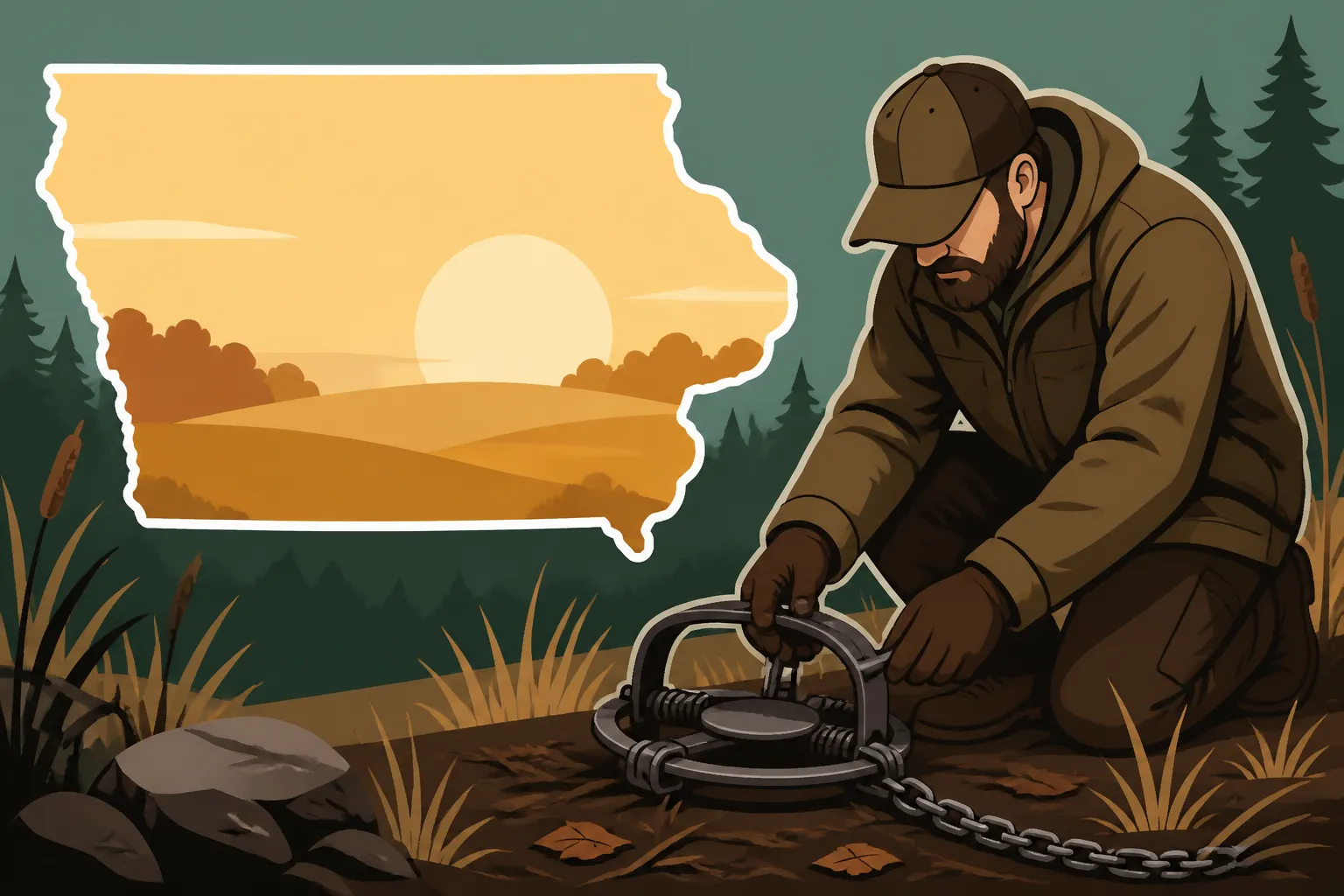
- Legal Trap Types: You can use foothold traps, body-gripping traps (like Conibear-style traps), and snares. However, each has specific rules. Foothold traps have size limitations depending on the target species and whether they're on land or in water. Body-gripping traps also have size limits and often require full submersion in water or specific setback distances from public trails or roads when set on land. Snares are legal but have strict regulations regarding loop size, breakaway devices, and when and where they can be used, especially on public land. For example, snares set on dry land for furbearers other than coyotes and groundhogs generally require a relaxing lock and a breakaway device.
- Setback Rules: This is a big one. You can't just set a trap anywhere. Many regulations require traps to be a certain distance from public roads, trails, and even inhabited dwellings. This is to minimize the chance of catching pets or posing a risk to people. Always read the regulations carefully to ensure your sets are compliant, particularly on public ground like Iowa Wildlife Management Areas or Public Hunting Land in Iowa. A little extra caution here goes a long way.
- Water vs. Land Sets: The rules often differ significantly for traps placed in water versus on dry land. Water sets for muskrats and mink, for example, often have fewer restrictions on trap size and type compared to land sets, due to the reduced risk of catching non-target animals. On the flip side, beaver sets, while often in water, may require larger, more powerful traps that have their own set of specific guidelines.
Understanding these nuances is absolutely essential. A poorly placed or illegal trap can result in fines and the loss of your trapping privileges.
Daily Check Requirements and Ethical Considerations
Trapping is a hands-on activity that demands a significant commitment from the trapper. This commitment is enshrined in Iowa's daily check requirements and underscores the ethical responsibilities involved.
- The 24-Hour Check Rule: In Iowa, all traps and snares, regardless of species or location, must be checked at least once every 24 hours. This isn't just a suggestion; it's a legal requirement. The purpose of this rule is twofold: it ensures that animals caught are removed quickly, minimizing suffering, and it allows trappers to reset traps or adjust their sets as needed, especially in changing weather conditions. Missing a check can lead to serious consequences, both legally and ethically.
- Ethical Treatment of Animals: Beyond the legal requirements, there’s an ethical code that guides responsible trappers. This includes the quick and humane dispatch of any caught animals, minimizing stress and suffering. Trappers should be proficient in humane dispatch methods and always carry the necessary tools. This respect for the animal is a core tenet of ethical trapping.
- Proper Handling: Once an animal is dispatched, proper handling of the carcass and pelt is crucial. This means keeping the animal clean, cooling it down quickly, and skinning and preparing the fur in a way that maximizes its value. This commitment extends from the trap line to the fur shed. It’s not just about catching; it’s about honoring the animal through proper care.
Reporting and Cashing In Your Harvest
Unlike deer hunting, where harvest reporting is mandatory for every animal, trapping in Iowa typically does not require individual harvest reports for each furbearer. However, there are still important aspects to consider regarding your harvest.
- DNR Surveys and Data: While you might not report every raccoon, the Iowa DNR does conduct furbearer harvest surveys. If you receive a survey, it's incredibly important to participate. This data helps the DNR monitor furbearer populations, understand harvest trends, and make informed decisions about future seasons and regulations. Your participation directly contributes to the sustainability of Iowa's trapping heritage. You can learn more about Iowa Furbearer Harvest Trends through these surveys.
- The Value of Furs: Once you've harvested and prepared your furs, the next step is often selling them. The value of furs fluctuates greatly based on market demand, fur quality, and species. Raccoon Numbers and Fur Prices are always a hot topic among trappers. Some trappers sell their furs raw to local buyers, while others process them further (fleshing, stretching, drying) to fetch a higher price from larger fur houses or brokers. Events like local fur auctions or conventions can also be good places to connect with buyers and learn about market trends.
- Personal Use and Crafting: Of course, not all furs are sold. Many trappers keep some of their harvest for personal use, whether for crafting, taxidermy, or simply as a trophy. There's a deep satisfaction in wearing a hat made from a coyote you trapped or having a tanned badger pelt displayed in your home. This personal connection is a big part of why many people trap, extending the life and respect for the animal beyond the trap line. If you're looking for more opportunities on public land, consider checking out the Iowa Habitat and Access Program Explained.
Disclaimer
The information provided in this guide is intended for general informational purposes only and is subject to change. Hunting and trapping regulations in Iowa are established by the Iowa Department of Natural Resources (DNR) and can be complex. It is the responsibility of every hunter and trapper to review and understand the most current official Iowa Hunting, Trapping & Migratory Game Bird Regulations booklet, available on the Iowa DNR website or from license vendors, before engaging in any hunting or trapping activities. Always prioritize safety and ethical practices.