How CWD Spread Across Iowa Counties
The news about Chronic Wasting Disease (CWD) can feel like a dark cloud hanging over the incredible hunting opportunities we cherish here in Iowa. It's a frustrating, often confusing topic that leaves many of us wondering what it means for our deer herds and our hunting future. This guide aims to pull back the curtain on how CWD has unfortunately made its way across our beautiful state, exploring its origins, the paths it's taken, and what we as hunters can do to understand and adapt to this ongoing challenge.
Understanding CWD: What It Is and Why It Matters to Iowa Hunters
Chronic Wasting Disease is a serious, always-fatal neurological disease that affects cervids, including white-tailed deer, mule deer, elk, and moose. For Iowa hunters, it’s a constant concern, threatening the health and vitality of the very deer herd we work so hard to manage and enjoy. It’s not just a statistic; it’s a potential threat to the traditions we hold dear, the venison we put on our tables, and the overall balance of our wild ecosystems.
The Basics of Prion Disease
At its core, CWD isn't caused by a bacteria or a virus, but by an abnormal protein called a prion. These misfolded prions can induce normal prion proteins in the host animal's brain and other tissues to also misfold. Think of it like a domino effect on a cellular level. Once these abnormal prions start accumulating, they essentially create holes in the brain, leading to a slow, irreversible degeneration of neurological function. It’s a terrifying process because these prions are incredibly resilient, able to persist in the environment for years, making them very difficult to eradicate once a landscape becomes contaminated. This persistence is a significant part of what makes managing CWD such a monumental task for wildlife agencies and hunters alike.
Why CWD Poses a Unique Challenge
The unique nature of CWD's prions creates a distinct and difficult challenge for wildlife management. Unlike many diseases, there's no vaccine, no treatment, and no cure for CWD. An infected animal will eventually die. Furthermore, an animal can be infected and spreading prions into the environment for a long time before showing any visible signs of illness, which makes detection incredibly difficult in live, wild populations. This "incubation period" means that by the time you see a deer acting sick, it may have been shedding prions through saliva, urine, and feces for months or even years, contaminating the soil, plants, and water in its home range. The fact that these prions can bind to soil particles and remain infectious for such extended periods makes containment a truly Herculean effort.
Early Signs and Symptoms in Deer
While hunters rarely see deer in the advanced stages of CWD, understanding the symptoms can still be valuable. In the later stages of the disease, infected deer often exhibit a range of noticeable behaviors and physical conditions. You might observe a significant loss of body condition, almost as if the deer is wasting away – hence the name. They might appear emaciated, with ribs and hip bones clearly visible. Neurological symptoms can include stumbling, a lack of coordination, and an abnormal gait. Behavioral changes are also common; deer might appear listless, walk in repetitive patterns, or show a distinct lack of fear towards humans, which is highly unusual for a wild whitetail. Excessive salivation, often leading to drooling, and increased thirst and urination are also tell-tale signs. If you ever observe a deer displaying these symptoms, it's crucial to report it to the Iowa Department of Natural Resources (DNR) immediately to assist in their ongoing Iowa Wildlife Disease Monitoring efforts.
The Initial Breach: How CWD First Entered Iowa
For years, Iowa stood as one of the few states in the Midwest without a confirmed case of CWD in its wild deer herd. We all held our breath, watching neighboring states deal with the disease, hoping it wouldn't cross our borders. Unfortunately, that hope eventually gave way to reality. Understanding how that first case arrived is crucial to grasping the larger picture of CWD spread.
Tracing the First Iowa Cases
Iowa's long-held distinction as a CWD-free state for its wild deer ended in 2013 when the first wild deer tested positive. This pivotal moment occurred in Allamakee County, tucked away in the beautiful, rugged "Driftless Area" of northeast Iowa. This region, known for its deep river valleys and timbered bluffs, shares borders with both Wisconsin and Minnesota, states that had already been grappling with CWD for some time. The discovery was a sobering one, confirming our fears and signaling the beginning of a new chapter in Iowa deer management. Subsequent testing in the area revealed a small cluster of cases, indicating that the disease had likely been present in the local deer population for a period before its official detection. This initial discovery highlighted the insidious nature of CWD, quietly spreading before anyone even knew it was there. More information on the initial detection is covered in Where CWD Was First Found in Iowa.
The Role of Carcass Movement and Natural Dispersal
When we talk about how CWD spreads, it’s a mix of natural deer movement and, unfortunately, human activity. In a border county like Allamakee, the natural movement of deer across state lines is always a strong possibility for disease introduction. Bucks, especially, can travel significant distances during the rut, crossing rivers and boundaries, potentially bringing infected prions with them. However, a major concern that often gets overlooked is the movement of hunter-harvested deer carcasses. If a hunter harvests a deer in a CWD-positive area outside of Iowa and then transports that carcass, or parts of it that can harbor prions (like brain or spinal cord), back into Iowa, they could inadvertently be introducing the disease to new areas. This is a primary reason for the strict Iowa Carcass Transport Restrictions that are now in place, especially regarding bringing deer into Iowa from other states. The resilient nature of prions means even a seemingly innocent act of bringing a trophy rack with brain matter still attached could pose a risk.
Early Containment Efforts and Their Limitations
Following the initial detection, the Iowa DNR wasted no time implementing immediate and aggressive containment strategies. These efforts included targeted culling in the immediate area around the positive cases, increased CWD surveillance testing, and public outreach campaigns to educate hunters on the risks and regulations. The goal was to limit the disease's footprint and prevent further spread. However, as we've learned from other states, completely containing CWD once it's in the wild herd is incredibly difficult, if not impossible. The long incubation period, the environmental persistence of prions, and the natural movement patterns of deer all work against effective containment. While the early actions slowed the initial expansion, the reality of CWD's nature meant that further spread was almost inevitable without radical, and often unfeasible, measures.
Mapping the Spread: CWD's March Across Iowa Counties
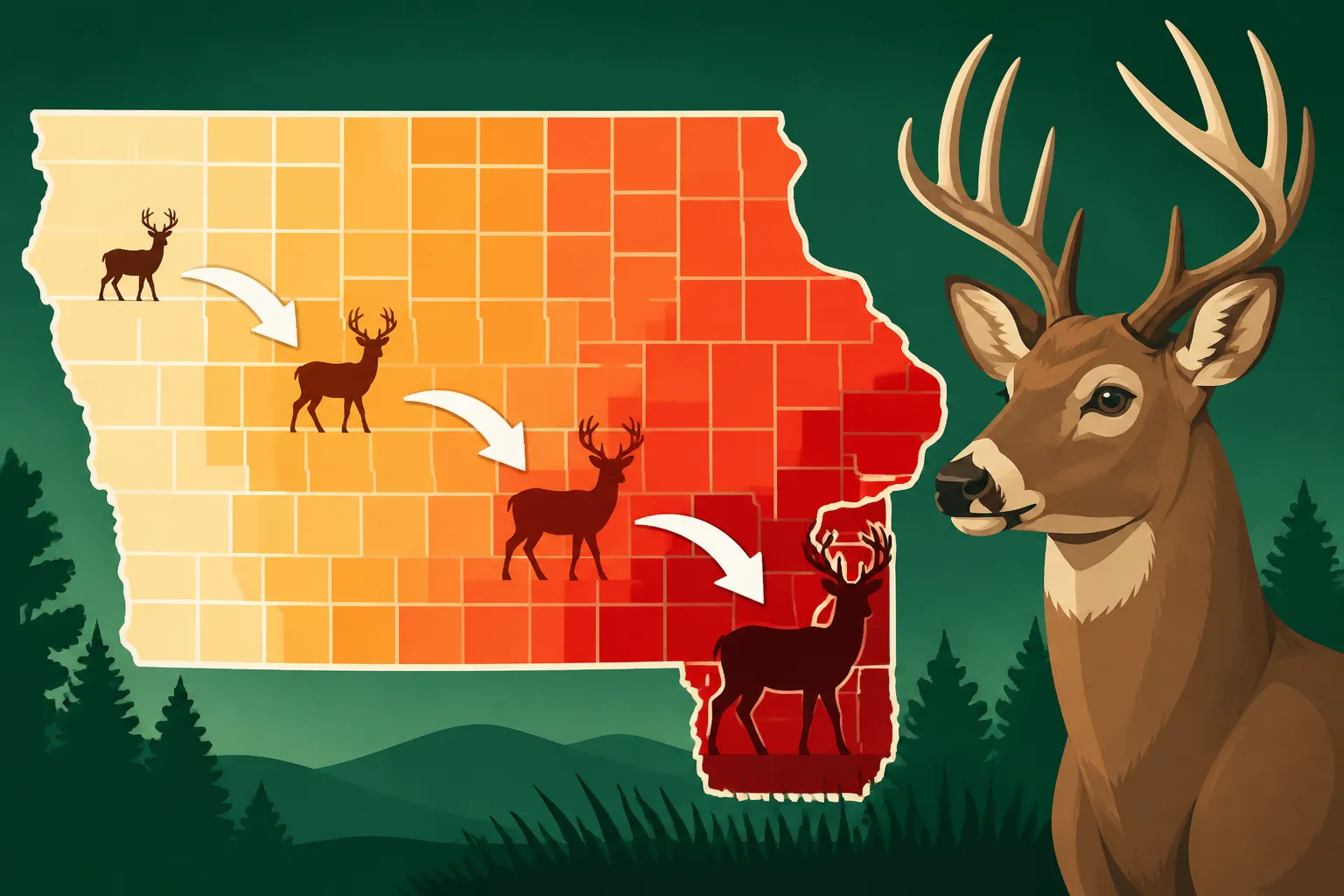
Since that first detection in Allamakee County, CWD has, unfortunately, continued to expand its reach. It hasn't been a rapid, state-wide explosion, but rather a slow, creeping advance that the Iowa DNR actively monitors. Understanding this geographical progression helps hunters grasp the current landscape of the disease.
Key Counties Affected Over Time
After Allamakee County, CWD detections began to emerge in other parts of the state, though thankfully not all at once. The disease initially appeared to be concentrated in that northeastern corner, radiating outwards to neighboring counties like Clayton and Winneshiek. However, in more recent years, new positive cases have popped up in other areas, sometimes quite a distance from the initial hot zone. For example, detections have occurred in counties like Wayne and Appanoose in southern Iowa, and even in parts of central Iowa. These geographically disparate detections suggest that while natural deer movement contributes, other factors, particularly human-mediated transport, might be at play in establishing new, isolated infection clusters. To get a current picture, hunters often check resources provided by the Iowa DNR or services like GoHunt to find the most up-to-date maps showing CWD-positive counties, especially those with How Many Iowa Counties Have CWD confirmed.
Here’s a simplified look at some of the counties that have seen CWD detections and their approximate first detection year in wild deer:
| County Name | First Detection (Wild Deer) | Primary Geographic Region |
|---|---|---|
| Allamakee | 2013 | Northeast Iowa (Driftless) |
| Clayton | 2016 | Northeast Iowa (Driftless) |
| Winneshiek | 2018 | Northeast Iowa (Driftless) |
| Fayette | 2018 | Northeast Iowa |
| Linn | 2021 | East Central Iowa |
| Wayne | 2022 | Southern Iowa |
| Appanoose | 2023 | Southern Iowa |
| and others… | various | various |
Note: This table represents general trends. For the most current and specific data, always consult the official Iowa DNR CWD surveillance reports.
Identifying Hotspots and Emerging Zones
The concept of "hotspots" is crucial in CWD management. These are areas where the prevalence of the disease (the percentage of tested deer that are positive) is significantly higher than in surrounding regions. The initial Allamakee County area quickly became a hotspot, prompting intensified surveillance and management efforts. As the disease spreads, new emerging zones can develop. An "emerging zone" might be a county where CWD has recently been detected for the first time, or where detections are still low but increasing. These areas become priority targets for increased sampling and hunter education, as early intervention can potentially slow the local spread. Hunters who use tools like GoHunt to plan their trips can specifically look for information related to these identified CWD hotspots and emerging zones before heading out, helping them prepare for potential mandatory testing requirements.
Factors Contributing to Localized Spread
Several factors contribute to CWD's localized spread within a county or management zone. High deer densities can certainly accelerate transmission, as more deer interacting in close proximity means more opportunities for prion shedding and ingestion. Habitat features also play a role; areas with fragmented habitats or bottlenecks where deer movement is concentrated can become areas of higher prion contamination. Furthermore, certain behaviors, like deer congregating at specific food sources or mineral licks, can increase the risk of indirect transmission from the environment. This is why the Iowa Baiting Ban for Deer is so important, as concentrating deer at artificial feeding sites significantly increases the potential for direct and indirect CWD transmission among animals. Understanding these localized dynamics is key for the DNR to tailor its management strategies to specific areas.
Beyond Natural Movement: Human Influence on CWD Dispersal
While deer naturally move and can spread CWD, it’s a hard truth that human actions often play a significant, albeit unintentional, role in accelerating and broadening the disease's distribution. Our habits as hunters, processors, and even landowners, can create pathways for prions to travel much farther and faster than a deer could ever walk.
The Impact of Hunter-Harvested Carcasses
One of the most concerning ways CWD spreads is through the improper handling and transportation of hunter-harvested deer carcasses. Imagine a scenario: A hunter from Iowa travels to a state with a high prevalence of CWD, harvests a deer, and brings the whole animal back home to Iowa to process it. If that deer was infected, and its brain or spinal cord tissue (which contain high concentrations of prions) were disposed of in an Iowa landfill or, worse, on private property, it creates a potential new source of infection in the environment. Prions are tough; they can persist in the soil for years. This is precisely why the Iowa DNR has put strict Iowa Carcass Transport Restrictions in place. These rules dictate that only certain parts, like deboned meat, clean antlers, or taxidermy-ready hides, can be brought back into Iowa from CWD-positive areas outside the state. It's a critical measure to prevent hunters from unknowingly seeding new infection sites.
Illegal Transport and Its Consequences
Unfortunately, not everyone adheres to the rules. Despite clear regulations, there have been instances of illegal transport of whole carcasses or high-risk parts across state lines, which significantly escalates the risk of CWD spreading to new, uninfected areas. The consequences of such actions are severe, not just in terms of legal penalties, but for the wider deer population and hunting community. A single illegally transported infected carcass could establish a new CWD cluster, undoing years of containment efforts and jeopardizing the health of deer hundreds of miles away. It's a stark reminder that responsible hunting practices extend beyond the moment of the shot and include how we handle our harvest from field to freezer. Every hunter has a responsibility to know and follow these rules.
Baiting and Supplemental Feeding Concerns
Another human-mediated factor that contributes to CWD spread, especially localized spread, is the practice of baiting or supplemental feeding deer. While seemingly harmless and often done with good intentions, these activities force deer to congregate in unnaturally high densities at a single location. When multiple deer are eating from the same pile of corn, licking the same mineral block, or drinking from the same trough, the chances of direct and indirect transmission of prions skyrocket. An infected deer shedding prions through saliva can contaminate the bait, which is then ingested by healthy deer. This is why Iowa has a Iowa Baiting Ban for Deer during hunting seasons. The goal isn't to punish hunters, but to reduce the risk of CWD transmission and maintain the health of the herd. Understanding What Counts as Bait in Iowa is essential to comply with these crucial regulations and prevent exacerbating the CWD problem.
Navigating CWD as an Iowa Hunter: Regulations and Responsibilities
As CWD continues to be a concern, hunters in Iowa play a vital role in monitoring and managing its spread. It can feel like a lot of responsibility, but by understanding and adhering to the regulations, we become part of the solution, helping to protect our deer herd for future generations. It’s no longer just about the thrill of the hunt; it's about being good stewards of the wildlife we pursue.
Mandatory Testing and Reporting Requirements
To effectively track and manage CWD, the Iowa DNR relies heavily on surveillance testing, particularly in areas where the disease is known to exist or is likely to emerge. This often involves Iowa CWD Mandatory Sampling Counties, where hunters who harvest deer are required to submit their deer for CWD testing. This typically means taking the head of a harvested deer to a designated drop-off location or a cooperating locker plant. While it can feel like an extra step after a successful hunt, it's absolutely critical data collection. Hunters can usually find a list of Where to Drop an Iowa CWD Sample on the DNR website, or by checking the specific regulations for their hunting zone. Timely reporting of any suspected sick deer to the DNR is equally important, as this information helps identify potential new infection sites and allows for swift action. Services like GoHunt can also provide quick access to updated regulations and drop-off locations, making compliance easier.
Carcass Movement Restrictions in Affected Areas
To prevent the human-aided spread of CWD from known positive areas to uninfected parts of the state, specific carcass movement restrictions are in place. These rules generally limit the movement of certain high-risk parts of deer harvested within CWD-positive counties. For instance, you might be allowed to transport deboned meat, antlers (without brain tissue attached), hides, or finished taxidermy, but not the brain, spinal cord, or other lymphatic tissues. The specifics can vary, so it's paramount to review the current regulations before you head afield, especially if you're hunting in or near a designated CWD management zone. Adhering to these rules, which are detailed in Iowa Carcass Transport Restrictions, is one of the most direct ways hunters can prevent inadvertently spreading prions to new areas. Ignoring these rules puts the entire deer herd, and our hunting opportunities, at risk.
Best Practices for Hunters to Mitigate Risk
Beyond mandatory regulations, there are several best practices every hunter can adopt to minimize the risk of CWD spread and exposure. Firstly, always wear gloves when field dressing a deer, especially if you're in a known CWD area. While there's no strong evidence CWD can transmit to humans, it's always wise to exercise caution. Secondly, consider leaving high-risk carcass parts (head, spinal column, etc.) at the kill site if you're in a CWD-positive county, or disposing of them in an approved waste facility. Avoid distributing these parts across the landscape. Thirdly, if you're processing your own deer, thoroughly clean all your tools and surfaces with a 10% bleach solution. Lastly, avoid baiting or supplemental feeding deer, as we've discussed, to prevent unnatural congregations and reduce transmission risk. Being informed and proactive is key to protecting the herd, and understanding aspects like How CWD Testing Works on a Deer can give you confidence in the science behind these efforts.
The Future of CWD in Iowa: Management Strategies and What's Next
CWD isn't going away anytime soon, and that's a hard truth we all have to face as Iowa hunters. However, it doesn't mean we throw in the towel. The Iowa DNR, in conjunction with hunters and landowners, is continuously working on strategies to manage the disease, mitigate its impact, and preserve the health of our deer herd. It's a long game, demanding patience, adaptation, and collective effort.
Iowa DNR's Ongoing Management Plan
The Iowa DNR has a comprehensive CWD management plan that evolves as new data emerges. This plan is multifaceted, focusing on surveillance, population management, and public education. Surveillance involves continuous monitoring through mandatory and voluntary testing, especially in Iowa CWD Mandatory Sampling Counties, to identify new cases and track disease prevalence. Population management includes strategies like increased antlerless harvest in CWD-positive areas to reduce deer densities, thereby decreasing opportunities for transmission. These efforts are part of the broader Iowa Deer Herd Management and Harvest goals, aiming for a healthy and balanced herd. Educational outreach remains critical, informing hunters about regulations, carcass handling, and how to identify and report sick deer. The DNR also collaborates with researchers to better understand CWD dynamics in Iowa's unique landscape, continually refining its approach based on the latest science.
Research and Monitoring Efforts
Understanding CWD is an ongoing scientific endeavor. The Iowa DNR works with universities and other research institutions to study various aspects of the disease specific to Iowa's environment and deer population. This includes research into prion persistence in different soil types, the exact mechanisms of transmission in wild settings, and the potential impact of various management interventions. Monitoring efforts extend beyond just testing harvested deer; they also involve examining the long-term trends in disease prevalence, tracking the geographical spread, and assessing the effectiveness of management actions. This scientific rigor is essential to ensure that the strategies implemented are based on the best available data, helping us answer critical questions like How Many Iowa Deer Have Tested Positive for CWD and what those numbers truly mean for the herd's future. It’s a painstaking process, but every piece of information helps.
The Long-Term Outlook for Iowa's Deer Herd
The long-term outlook for Iowa's deer herd in the face of CWD is complex and uncertain, but not without hope. While CWD is a serious threat, it's important to remember that it’s a slow-moving disease. It doesn't typically cause immediate, drastic population declines across entire regions. However, if prevalence rates become very high in localized areas, it can certainly impact local deer numbers and age structures over time. The key to mitigating these impacts lies in sustained, aggressive management and continued hunter cooperation. By keeping deer populations at healthy levels, especially in affected areas, and preventing further human-mediated spread, we can work to contain the disease and maintain a robust and huntable deer herd across much of the state. The future of Public Land Deer Hunting in Iowa and other opportunities depends on our collective vigilance and commitment to responsible practices. It’s a challenge, but one that Iowa’s dedicated hunting community is capable of facing head-on.
Disclaimer
This article is for informational purposes only and is not a substitute for official regulations. Always consult the latest Iowa Department of Natural Resources (DNR) hunting regulations and guidelines before participating in any hunting activities. Seasons, rules, and CWD management zones can change, so staying up-to-date with official sources is crucial.