Where Iowa Pheasants Concentrate
Finding pheasants in Iowa can sometimes feel like chasing a ghost, especially if you're hitting spots that look good on a map but never seem to hold birds. It's incredibly frustrating to put in the miles and the legwork, only to come up empty-handed. This guide is here to cut through that frustration, diving deep into understanding where Iowa pheasants truly concentrate, helping you hunt smarter and find more success in the field.
Understanding the Essential Habitat Needs of Iowa Pheasants
Pheasants are particular creatures when it comes to their living arrangements, and understanding their core habitat requirements is the first step to figuring out where they'll be holding. It's not just about finding tall grass; it's about finding the right kind of tall grass, coupled with other critical elements that allow them to survive and thrive throughout the year. If even one piece of the puzzle is missing, a promising-looking field can be a barren wasteland.
The Critical Role of Winter Cover
Winter in Iowa is no joke, and for pheasants, it's often the make-or-break season. They need dense, thermal cover to survive the brutal cold, heavy snow, and biting winds. We're talking about more than just a patch of weeds. They need something thick enough to shed snow, break the wind, and provide a degree of insulation. This is where those seemingly impenetrable cattail sloughs, dense stands of switchgrass, or even thickets of multiflora rose really shine.
Without adequate winter cover, pheasant populations can crash dramatically, even if they had a great nesting season. When a major blizzard rolls through, birds caught in open stubble or sparse grass simply won't make it. This is why you'll often find a high concentration of birds in areas with secure winter cover, even if those areas might not look like ideal hunting grounds during milder weather. Think about those nasty, thorny spots you usually try to avoid – pheasants absolutely love them in January. It's also worth noting that the Winter Severity and Iowa Pheasant Numbers are very closely linked; a harsh winter can set the population back for years.
Food and Water Proximity
Like all wildlife, pheasants need readily available food and water, and they prefer not to travel far from their cover to get it. This means the best pheasant habitat offers a mosaic of cover types interspersed with food sources. Waste grain from corn and soybean fields, weed seeds, and insects are all on the menu.
During the fall and winter, picked corn and bean fields adjacent to dense cover are pheasant magnets. The birds can duck into the safety of the heavy cover when they feel threatened, but still pop out to feed throughout the day. Water sources, while not always as obvious as a pond, can be satisfied by dew, snow, or even the moisture content in their food. However, in drier areas, a small creek, ditch with standing water, or even a seep can become a critical draw, especially during the breeding season. The closer these elements are, the less energy pheasants expend, and the more likely they are to stick around.
Top Geographical Regions for Pheasants in Iowa
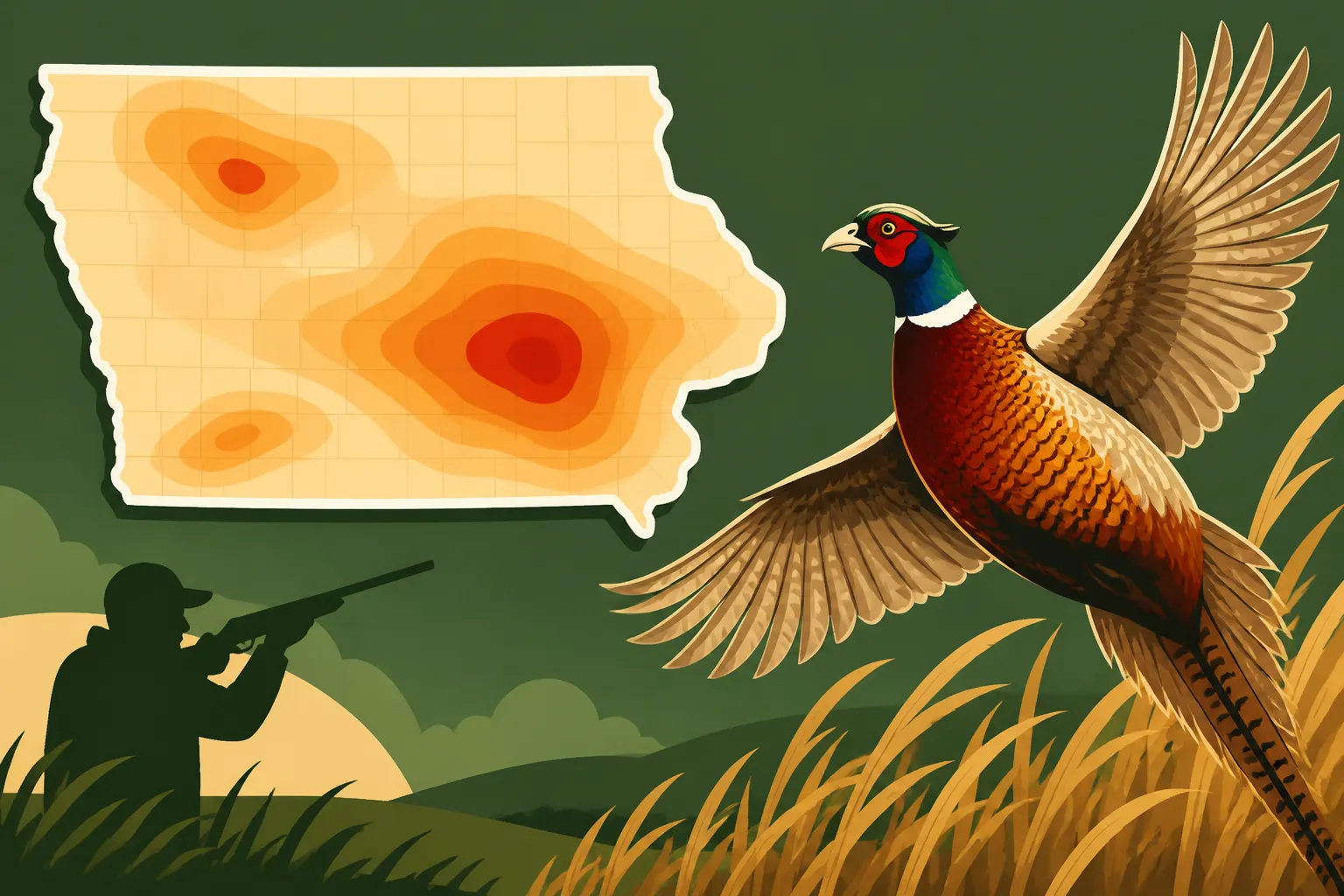
While pheasants are found across much of Iowa, certain regions consistently produce higher numbers of birds due to a combination of favorable habitat, historical land use, and weather patterns. These aren't hard and fast rules, and good hunting can be found in unexpected places, but if you're looking for the highest odds, these areas are often your best bet. It’s also important to follow the annual Iowa Pheasant Roadside Survey Results which can pinpoint hot zones year-to-year.
Northwest and North-Central Iowa's Prairies and Potholes
Historically, the northwest and north-central parts of Iowa have been the heart of the state's pheasant country. This region, often referred to as the Prairie Pothole Region, is characterized by vast stretches of flat to gently rolling farmland, interspersed with numerous small wetlands, sloughs, and high-quality grassland habitat. The fertile soil here leads to abundant crop production, providing ample waste grain for food.
More importantly, these counties often have significant enrollments in conservation programs like the Conservation Reserve Program (CRP), which creates ideal nesting and brooding cover. The presence of these large, contiguous blocks of diverse habitat, coupled with the numerous small wetlands (potholes), creates a mosaic perfectly suited for pheasants. You'll find a higher density of birds here simply because the landscape is better designed for them. Tools like GoHunt can be invaluable for identifying CRP fields and wetlands when you're scouting from home, helping you zero in on potential hotspots before you even set foot in the field.
Central Iowa and the Transition Zones
Central Iowa also holds its own when it comes to pheasant hunting, though it often presents a slightly different habitat picture. While still heavily agricultural, you might find fewer of the classic "potholes" and more emphasis on field edges, ditch lines, and smaller, scattered blocks of cover. Here, pheasants often concentrate in the transition zones between intensive row cropping and available permanent cover.
Think about areas where timber gives way to open fields, or where a river bottom provides a linear corridor of diverse vegetation. These "edge habitats" are incredibly important in central Iowa. Pheasants might utilize a narrow strip of CRP alongside a soybean field, or a thick fencerow bordering a picked cornfield. Success in this region often comes down to meticulously Scouting Iowa Timber and River Bottoms and finding those smaller, overlooked pockets of cover that still offer everything a pheasant needs. Don't discount these areas; they can hold impressive numbers of birds, especially if they haven't been pressured too heavily.
Specific Habitat Types to Target
Knowing the general regions is one thing, but getting down to the nitty-gritty of where to walk is another. Pheasants don't just exist in "pheasant country"; they live in specific types of cover within those regions. Learning to identify these key habitat types, whether you're driving by or studying a topo map with GoHunt, will significantly increase your odds of finding birds.
Conservation Reserve Program (CRP) Fields
CRP fields are absolute gold for pheasant hunters. These are privately owned croplands that have been taken out of production and planted with native grasses, legumes, or other beneficial vegetation for a set period, often ten years or more. These fields provide excellent nesting cover in the spring, escape cover during the summer, and crucial winter cover when the snow flies. The varied growth within a well-managed CRP field creates perfect pheasant real estate.
Look for CRP fields that are adjacent to food sources, such as corn or bean stubble. The edges of these fields are often prime areas to start your hunt. Pheasants love to run the edges before busting into the open. A key strategy is Working Pheasant Cover Without a Dog by systematically pushing these fields. Furthermore, fields that have diverse plant species, including some forbs and broadleaf plants mixed with grasses, offer a richer insect base and more varied cover, which means more birds. Always check the Iowa DNR's public hunting atlas or GoHunt to identify specific CRP tracts that are open to public access, especially those designated as Iowa's Habitat and Access Program (IHAP) lands.
Cattail Sloughs and Wetland Edges
When the weather turns cold or the pressure gets high, pheasants head for the heavy stuff, and there's nothing much heavier than a dense cattail slough or the brushy edges of a wetland. These areas provide unparalleled thermal protection from winter winds and snow, making them critical survival refuges. During the hunting season, birds will often retreat to these thickets, presenting a challenging but rewarding hunt.
Hunting a cattail slough requires effort, and often multiple hunters to effectively push. You might find pheasants holding incredibly tight, only flushing when you're practically on top of them. Be prepared for mud, water, and thick vegetation. The payoff, however, can be huge, as these areas often concentrate a significant number of birds. Remember, these aren't just for winter; even in early season, a small slough can hold birds seeking refuge from the heat or hunting pressure.
River Bottoms, Creek Drainages, and Timber Fringes
While often associated with deer, river bottoms and creek drainages can be fantastic pheasant habitat, especially in central and southern Iowa where classic prairie habitat is less prevalent. These linear corridors often feature a mix of tall grass, brushy thickets, briars, and even small patches of timber, providing diverse cover and food sources. The varied topography can also offer protection from the wind.
Pheasants will use these areas as travel corridors and as secure bedding and roosting cover. The fringes where this brushy cover meets an agricultural field are especially productive. Don't be afraid to Working Cover Edges Without a Dog if you're hunting solo. It’s not uncommon to jump pheasants out of what looks like deer bedding cover, especially if it's dense enough to offer good overhead concealment. The key is to look for that transition zone where the heavy cover thins out into more open terrain or cropland.
Road Ditches, Fencerows, and Shelterbelts
In heavily farmed areas, even narrow strips of cover become crucial for pheasants. Road ditches, particularly those with wide, ungrazed shoulders and a good mix of tall grasses and weeds, can hold surprising numbers of birds. These linear habitats offer travel lanes and escape cover in landscapes dominated by row crops. Similarly, overgrown fencerows with briars, small trees, and tall grass provide vital shelter and can act as mini-corridors between larger blocks of habitat.
Shelterbelts, often planted as windbreaks around farmsteads or fields, also serve as excellent pheasant cover. These narrow strips of conifers and deciduous trees, usually with grassy edges, offer both thermal protection and a degree of concealment. While hunting these smaller strips might not yield dozens of birds, they are excellent places for a quick walk, especially if you're Blocking a Field End for Roosters on an unpressured public land parcel. Always be mindful of road hunting regulations and property boundaries when utilizing these linear features.
Here's a quick look at common Iowa pheasant habitats:
| Habitat Type | Primary Benefit | Ideal Season for Hunting | Hunter Accessibility (General) | Notes |
|---|---|---|---|---|
| CRP (Conservation Reserve Program) | Nesting, Brooding, Escape, Winter Cover | Early to Late Season | High (on public land) | Large tracts, often adjacent to food. Excellent for systematic drives. |
| Cattail Sloughs/Wetland Edges | Thermal Protection, Escape Cover | Mid to Late Season (especially cold) | Moderate to Low (tough walking) | Birds hold tight. May require multiple hunters. Best during harsh weather. |
| River/Creek Bottoms | Diverse Cover, Travel Corridors | Early to Mid Season | Moderate | Look for thick brush and grass. Can hold birds where traditional cover is scarce. |
| Timber Fringes | Escape Cover, Edge Habitat | Early to Mid Season | Moderate | Focus on where timber meets fields or dense grass. |
| Road Ditches/Fencerows | Linear Cover, Travel Lanes, Escape | Early to Mid Season | High (check local regs/access) | Small, quick hunts. Be aware of property lines and road rules. |
| Shelterbelts | Windbreak, Thermal & Escape Cover | Mid to Late Season | Moderate | Often narrow, can be good for quick passes. |
| Standing Corn/Crop Edges | Food Source, Temporary Cover | Early Season | High (if adjacent to cover) | Pheasants feed here. Best when combined with nearby permanent cover. |
The Impact of Weather on Pheasant Concentrations
You can find the best-looking habitat in the world, but if the weather isn't cooperating, the birds might not be where you expect them. Pheasants are highly sensitive to environmental conditions, and understanding how factors like recent snowfall, extreme cold, or even a sudden shift in temperature affect them is key to predicting their movements and where they'll concentrate.
Snowfall and Severe Winter Conditions
Fresh snow, especially a heavy blanket, drastically changes where pheasants will hold. Light snow can make it easier to spot birds and track their movements, but deep, powdery snow makes travel difficult for them and forces them into the densest available cover. They'll abandon lighter grass fields and seek out those thick cattail sloughs, heavy brush, or deep timber edges that offer real thermal protection.
When temperatures plummet after a snowfall, this behavior intensifies. Pheasants will huddle together in the most secure cover they can find, trying to conserve body heat. This is why you'll often find multiple birds flushed from a single, small patch of heavy cover after a winter storm. Hunting during or immediately after these conditions can be incredibly productive if you focus your efforts on these impenetrable fortresses. It's truly a test of grit, for both the hunter and the hunted. Always be aware of the Iowa Pheasant Population Cycles in relation to these harsh winters.
The Influence of Temperature and Wind
Temperature plays a significant role in pheasant behavior throughout the season. In the early fall, when temperatures are still mild, birds might be more spread out, utilizing lighter cover and feeding more openly. As it gets colder, they become more concerned with conserving energy and finding thermal protection. This means they'll stick closer to heavy cover and reduce their movements.
Wind is another huge factor. Pheasants hate wind. Strong winds can chill them quickly, make it harder to hear approaching predators, and disrupt their ability to forage. On very windy days, you'll often find birds tucked into the lee side of hills, in sheltered drainages, or deep within dense cover where the wind is broken. They'll also typically face into the wind when holding, so planning your approach to hunt into the wind can sometimes give you an advantage, allowing you to get closer before they flush. Understanding these nuances helps dictate where you should focus your efforts on any given day.
Leveraging Resources for Effective Pheasant Scouting
In today's age, you don't have to blindly wander around looking for pheasants. There are some fantastic resources available that can help you scout effectively from home, saving you time and shoe leather, and ultimately pointing you towards where Iowa pheasants concentrate. Smart hunters use these tools to stack the odds in their favor before they ever step into the field.
Iowa DNR Roadside Surveys and Annual Reports
The Iowa Department of Natural Resources (DNR) conducts annual roadside surveys in August to estimate pheasant populations. These surveys provide invaluable data, indicating general population trends and highlighting which regions and even specific counties are likely to hold higher numbers of birds. Paying attention to the Birds Per Route in the Iowa Survey results can give you a strong indicator of where to focus your efforts.
While these reports won't pinpoint exact fields, they'll tell you which counties are showing promising numbers. If a particular area has consistently high counts, it's a good place to start your deeper scouting. The DNR also often provides general habitat condition reports, which can give you an idea of nesting success and overall cover quality. These reports are publicly available on the Iowa DNR website and are a must-read for any serious Iowa pheasant hunter.
Online Mapping Tools and Aerial Imagery
This is where technology really shines for pheasant hunters. Online mapping tools, whether it's the Iowa DNR's Hunting Atlas, OnX Hunt, or even just Google Earth, are indispensable for identifying prime pheasant habitat from your couch. You can use aerial imagery to spot key features like CRP fields, cattail sloughs, dense fencerows, and timber fringes adjacent to crop fields.
Look for the distinct patterns of native grasses, often appearing as uniform green or tan blocks contrasting with the more geometric patterns of row crops. Identify areas where different cover types merge – these "edge habitats" are pheasant magnets. Tools like GoHunt or OnX allow you to overlay public land boundaries, IHAP tracts, and even specific habitat layers (like CRP), making it incredibly efficient to find huntable land with ideal pheasant cover. You can mark waypoints, measure distances, and plan your approach routes, all before you even leave home. This kind of detailed E-Scouting Iowa Farm Country From Home is a game-changer for finding those concentrations.
Disclaimer
Hunting is an inherently dangerous activity. Always prioritize safety, follow all local, state, and federal regulations, and obtain appropriate licenses and permissions. The information provided in this guide is for informational purposes only and does not constitute professional advice. Hunt at your own risk.