How Iowa Ranks for Boone and Crockett Entries
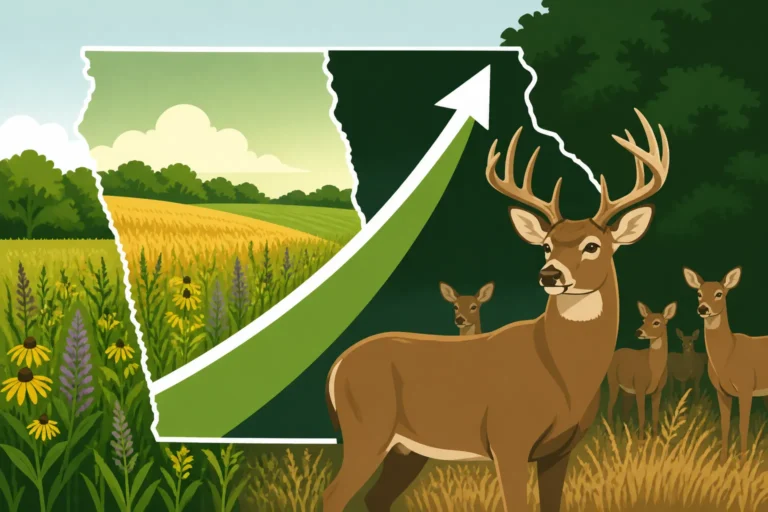
For any hunter dreaming of a truly world-class whitetail, the name Iowa almost immediately springs to mind. There’s a widespread understanding that the Hawkeye State consistently produces some of the biggest deer in North America, but many wonder just how well it actually stacks up against other states when it comes to the ultimate benchmark: Boone and Crockett Club entries. This guide will meticulously break down Iowa’s impressive standing in the record books, explore the unique factors that contribute to its trophy potential, and offer insights into why this state is a consistent leader for big bucks.
Understanding Iowa's Whitetail Reputation and the Boone and Crockett Club
Before we dive into the impressive statistics, it’s important to understand why Iowa holds such a revered spot in the hunting world and what exactly the Boone and Crockett Club represents. These two pieces of the puzzle are intrinsically linked when discussing trophy whitetails.
Why Iowa is a Big Buck Destination
It’s no secret that Iowa is a big buck factory. The state’s reputation isn't built on a few lucky years but on decades of consistent production of massive whitetails, both in body size and antler growth. Several key factors converge here to create this ideal environment. First and foremost is the incredible nutrition available. Iowa is an agricultural powerhouse, dominated by vast fields of corn and soybeans. These crops provide a high-protein, high-energy diet that allows bucks to reach their full genetic potential, fueling incredible antler growth year after year. It's a prime example of Soil Fertility and Antler Growth in action, where the rich soil directly translates to better deer.
Beyond nutrition, Iowa's deer population benefits from a favorable age structure. Management practices, including a nonresident lottery system that limits out-of-state pressure and an overall hunter culture that often allows younger bucks to walk, ensure that a good number of deer reach maturity. Older bucks simply have more years to grow larger antlers. The state's landscape, a mix of dense timber, sprawling crop fields, and winding river bottoms, also provides ample cover for these deer to escape pressure and grow old. This combination of superior nutrition, good genetics, and sufficient age allows Iowa to consistently produce the kind of giants that make hunters' hearts pound. Many sources, including scientific studies, point to the direct correlation between available resources and the health and size of the herd, and Iowa's agricultural landscape is a textbook case of this principle.
What is the Boone and Crockett Club?
The Boone and Crockett Club is more than just a record-keeping organization; it's an institution dedicated to fair chase hunting ethics and wildlife conservation. Founded in 1887 by Theodore Roosevelt, its mission is to promote the conservation and management of wildlife and its habitat, and to preserve the tradition of fair chase hunting. The club maintains detailed records of North American big game animals, recognizing exceptional specimens taken through ethical hunting practices. When a hunter talks about a "Boone and Crockett buck," they're referring to a deer whose antlers meet or exceed a specific minimum score according to the club's rigorous measuring system.
The scoring system itself is meticulous, accounting for antler length, circumference, spread, and the symmetry of points (for typical entries) or the mass and irregular points (for non-typical entries). What truly sets Boone and Crockett apart is its unwavering commitment to fair chase. Animals entered into their records must be taken under strict ethical guidelines, without artificial advantages like baiting (which is generally legal in many states but not for B&C entries) or the use of modern technology that gives an unfair advantage. This emphasis on fair chase means that every entry truly represents a monumental achievement in ethical hunting, and Iowa's strong showing in these records speaks volumes about the quality of its deer and the integrity of its hunting community.
Iowa's Boone and Crockett Rankings and Statistics
Now for the exciting part: how Iowa actually stacks up against other states when it comes to those coveted Boone and Crockett entries. The results consistently place Iowa at or near the very top of the list, a testament to its exceptional whitetail herd.
Iowa's Overall Ranking and Historical Performance
Iowa has a storied history in the Boone and Crockett record books. While specific, real-time numbers can fluctuate, Iowa consistently ranks among the top states for total whitetail deer entries, often vying for the number one or two spot with states like Wisconsin and Illinois. This isn't a new phenomenon; Iowa has been a dominant force in big buck production for decades. Its sustained performance speaks to the stability of its deer management programs and the rich habitat that allows deer to thrive. This consistent high ranking means that year after year, hunters in Iowa are encountering and harvesting animals that meet the club's prestigious minimums for both typical and non-typical categories.
For hunters keenly interested in exploring this data, resources exist where you can dive into the historical records. Many hunters use resources like GoHunt to dive into these historical records and see the sheer volume of quality animals the state has produced. It’s a remarkable achievement for a state that isn't typically thought of as a vast wilderness, but rather as a highly productive agricultural landscape. This dominance isn't limited to one-off giants; it's about the sheer density of mature, high-scoring bucks across much of the state, making Iowa a consistent frontrunner in the trophy whitetail world.
Factors Influencing Iowa's High Ranking
Iowa's consistent high ranking isn't a stroke of luck; it's the result of a powerful combination of environmental and regulatory factors. As mentioned, the prime nutrition from corn and soybean crops provides an unparalleled dietary foundation for antler growth. Bucks simply have more fuel to grow bigger. But it's more than just food. The state's Buck Age Structure in Iowa is another critical component. Iowa's management philosophy, combined with hunter preferences, generally allows bucks to survive longer than in some other states. A three, four, or five-year-old buck in Iowa has had several years of optimal nutrition to pack on inches of antler.
Another significant factor is the controlled hunting pressure, particularly for nonresidents. The lottery system for nonresident tags means that hunter numbers are regulated, preventing over-pressuring of prime habitat and allowing more bucks to reach maturity. While residents have more access, even resident hunters often exercise patience, driven by the knowledge that truly giant bucks exist. Furthermore, the diverse landscape, with its timbered creek bottoms, dense draws, and expansive CRP fields, provides excellent sanctuary and bedding areas, allowing mature bucks to evade detection and hunters during the various seasons. Tools like GoHunt can also help hunters analyze draw odds and strategize their applications, indirectly contributing to the management of hunter numbers.
Top Performing Counties in Iowa
While trophy bucks can theoretically turn up anywhere in Iowa, certain regions and counties consistently stand out as hotspots for Boone and Crockett entries. Generally, the counties in Southern Iowa, particularly those with a good mix of timber, agriculture, and river systems, tend to produce the most impressive numbers. Areas along the major river drainages like the Mississippi and Missouri, as well as their tributaries, often offer the ideal blend of food, cover, and water, creating prime habitat for big deer.
It's not uncommon to hear tales of giants coming from counties in the south-central and southeast parts of the state. These areas often feature larger blocks of timber and less fragmented habitat, allowing bucks to establish home ranges and reach older ages. While specific "top" counties can vary slightly from year to year, the general trend points toward areas where mature timber meets extensive agriculture. Hunters looking to specifically target high-potential areas might research Which Iowa Counties Produce Big Bucks, or consult detailed harvest reports and B&C entry lists (often found through aggregated data sources like GoHunt) to identify historically productive regions. The key is to find areas that offer sanctuary combined with abundant, high-quality food sources.
The Impact of Iowa's Regulations and Management
Iowa's hunting regulations and management strategies play a pivotal role in maintaining its status as a trophy whitetail destination. These rules are carefully crafted to balance hunter opportunity with herd health and the potential for mature animals.
How Regulations Contribute to Trophy Potential
Iowa's weapon regulations, particularly its historically shotgun-only general seasons for deer, have had a significant impact on the deer herd and hunter behavior. Unlike states with widespread rifle use, shotgun hunting generally means shorter effective ranges. This limitation naturally forces hunters to get closer to deer, or pass on shots, which in turn can lead to more deer surviving to older ages. While the introduction of straight-wall cartridge rifles has expanded range capabilities, they are still limited in power and reach compared to traditional centerfire rifles used in many Western states. This nuanced approach to weapon choice contributes to a less pressured deer herd overall.
Furthermore, the emphasis on archery hunting through a long and popular season allows hunters to target deer more intimately and provides additional opportunity without the same level of widespread disturbance that gun seasons can create. These regulations, combined with other aspects of Iowa Deer Herd Management and Harvest, encourage a healthy population structure where bucks have a better chance of maturing. It creates a hunting landscape where deer are less prone to being spooked out of an entire county, allowing them to remain in their established patterns and grow those impressive racks.
Nonresident Draw and Preference Points
One of the most defining features of Iowa deer hunting, especially for those outside the state, is the nonresident draw system. This lottery system is critical to managing hunter pressure and maintaining the quality of the deer herd. Instead of an unlimited "over-the-counter" tag sales approach, Iowa allocates a limited number of nonresident tags each year through a drawing, ensuring that the hunting pressure from outside the state remains controlled. This allows for a more stable and less disturbed deer population, which directly benefits the production of mature, trophy-class bucks.
Aspiring nonresident hunters must understand the nuances of the Iowa Nonresident Deer Draw Explained and how Iowa Preference Points and How They Work. Accumulating preference points over several years significantly increases your odds of drawing a coveted tag. This system essentially "banks" your commitment to hunting Iowa, rewarding patience. The restricted access, while frustrating for some, is a key component in protecting the mature buck age structure that makes Iowa famous. Savvy hunters often use tools like GoHunt to research draw odds by zone and season, helping them make informed decisions about where and when to apply to maximize their chances of securing a tag.
Understanding Typical vs. Non-Typical Entries
When discussing Boone and Crockett records, it's essential to differentiate between "typical" and "non-typical" whitetail entries. Both categories represent exceptional deer, but their scoring methods cater to different antler characteristics. A typical whitetail is generally symmetrical, with a clean, classic rack featuring well-defined points (tines) that emanate cleanly from the main beam. The scoring emphasizes symmetry, length of beams and points, and mass. Deductions are made for any significant differences between the left and right sides.
A non-typical whitetail, on the other hand, is characterized by irregular points or abnormal antler growth that doesn't follow the symmetrical pattern. These can include drop tines, sticker points, or massive amounts of irregular bone growth. The non-typical scoring system accounts for all antler material, adding the abnormal points to the gross typical score. Iowa consistently produces outstanding deer in both categories, showcasing the incredible genetic potential within its herd. Knowing the difference is crucial when evaluating a deer's potential for the record book and understanding the different kinds of giants Iowa is known for. Learning more about Scoring Typical and Non-Typical Racks can help you appreciate the nuances of each.
Tips for Hunting a Boone and Crockett Buck in Iowa
Hunting a Boone and Crockett caliber buck in Iowa is a challenging but achievable goal for dedicated hunters. It requires more than just showing up; it demands strategic planning, deep understanding of deer behavior, and a good dose of patience.
Strategic Scouting and Habitat Understanding
Successful trophy hunting in Iowa begins long before the season opener, often stretching into the off-season. Strategic scouting is paramount. You need to understand the lay of the land, identify key deer travel corridors, and locate prime bedding and feeding areas. This means spending time in the woods, even in the spring and summer, to pinpoint sign and potential ambush points. Utilizing modern tools for Reading Aerial Imagery for Bedding Cover from home can give you a massive head start, allowing you to narrow down promising areas before you even set foot on the property. Look for secluded timber blocks adjacent to crop fields, thickets along creek bottoms, and subtle terrain features like saddles and pinch points that funnel deer movement.
Don't just focus on finding any deer sign; look for big deer sign – larger tracks, bigger rubs on substantial trees, and larger diameter scrapes. Paying attention to Scouting Iowa Timber and River Bottoms will give you an edge, as these areas often provide the cover and resources mature bucks need. Even on public land, there are often overlooked pockets that hold mature deer away from intense pressure. This proactive approach to understanding the specific habitat and how deer use it will significantly increase your chances of intercepting a B&C contender.
Patience and Persistence
Hunting trophy whitetails in Iowa, or anywhere, is a test of patience and persistence. It's rare for a Boone and Crockett buck to just walk by your stand on opening morning without you having put in the work. You need to be prepared for long sits, sometimes enduring uncomfortable weather, and accepting that many hunts will end without seeing the buck you're after. The key is to remain disciplined and stick to your plan, especially during peak movement times. The When the Iowa Rut Peaks in early to mid-November is often considered the best window of opportunity, but mature bucks are vulnerable throughout the season, from the early archery opener to the late muzzleloader hunts.
Passing on smaller bucks, even if they're tempting, is a crucial part of trophy hunting in a state like Iowa. It requires confidence in your scouting and belief that the big one is out there. There will be frustrating days, but the reward of harvesting a truly mature Iowa whitetail is worth every ounce of effort. This journey is as much about mental fortitude as it is about hunting skill.
Choosing the Right Gear and Tactics
Having the right gear and employing sound tactics are non-negotiable for success when pursuing a B&C buck in Iowa. Your weapon choice, whether a bow, shotgun, or muzzleloader, needs to be something you are utterly proficient with. Practice diligently at varying distances and angles to ensure ethical, clean shots. Quality optics, including a reliable rangefinder and binoculars, are essential for identifying deer at a distance and making precise shot placements.
For tactics, studying resources like Iowa Whitetail Hunting Tactics Through the Rut can help you refine your approach during key periods. Consider your stand setup carefully: is it positioned for the prevailing wind? Does it offer clear shooting lanes to high-traffic areas? Will your entry and exit routes minimize disturbance? For mobile hunters, utilizing a saddle or lightweight hang-on stand can be advantageous for quickly adapting to changing deer patterns. Scent control, quiet movements, and an understanding of how deer use wind and thermals are also critical. Every small detail contributes to tipping the odds in your favor against these intelligent, mature animals.
| Factor | Impact on Iowa's B&C Ranking |
|---|---|
| Rich Agricultural Diet | Provides essential protein and energy for maximal antler growth. |
| Favorable Age Structure | Bucks have more years to mature and grow larger racks due to balanced harvest and hunter patience. |
| Controlled Hunter Pressure | Nonresident lottery system and resident ethics reduce overall disturbance, allowing deer to thrive. |
| Diverse Habitat | Mix of timber, CRP, and crop fields offers sanctuary, food, and cover for mature deer. |
| Weapon Regulations | Historically limited range weapons (shotgun-only) can lead to bucks living longer. |
| Genetic Potential | Strong native whitetail genetics contribute to large body and antler size. |
Disclaimer
This article is for general informational purposes only and does not constitute professional advice. Laws, prices and regulations vary by location and change over time. Consult a qualified professional for guidance on your specific situation.