Iowa Rabbit Population Trends
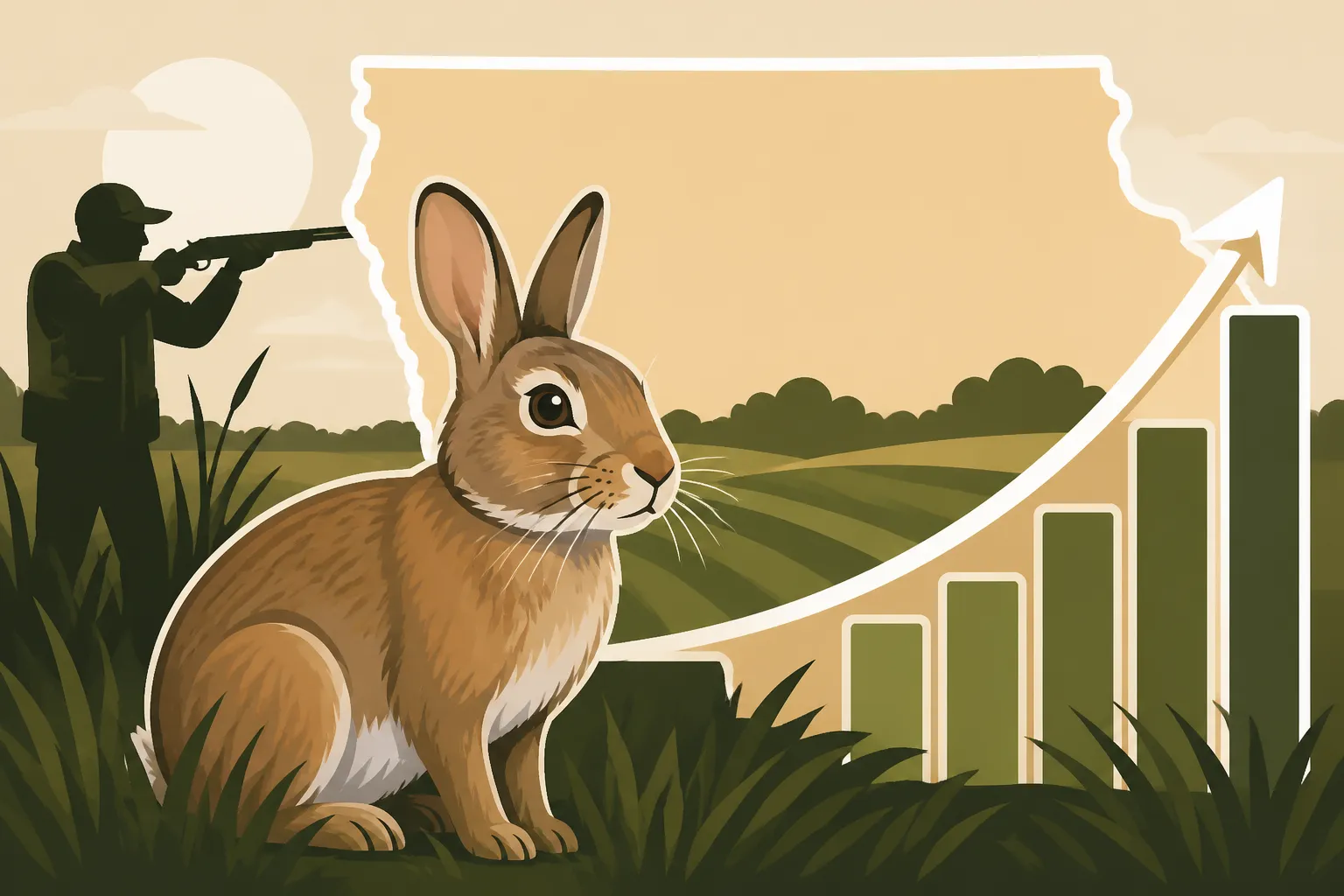
If you've spent any time at all chasing rabbits across Iowa, you've likely had days where the action was fast and furious, and other days where you felt like you were walking through a ghost town. It's frustrating when you remember tales of dense rabbit populations from "back in the day" and wonder why your experience doesn't always match up. This guide aims to shed some light on the reality of Iowa's rabbit population trends, exploring the various factors that influence their numbers and offering strategies to help you find more bunnies in the field, even when they seem scarce.
Understanding Iowa's Rabbit Species and Their Habitat Needs
When we talk about rabbit hunting in Iowa, almost without exception, we're talking about the Eastern Cottontail. While other lagomorphs might have historically roamed parts of the state, the cottontail is the ubiquitous rabbit species that every small game hunter knows and loves.
The Ubiquitous Cottontail
The Eastern Cottontail (Sylvilagus floridanus) is the bread and butter of Iowa's rabbit hunting scene. These resilient little animals are found across the entire state, from the highly agricultural areas to the more timbered river bottoms. They are incredibly adaptable, but like all wildlife, they have very specific habitat requirements that dictate where you'll find them and in what numbers.
Cottontails are masters of cover. They thrive in areas that offer a mosaic of dense, protective cover for escape and bedding, alongside open areas for foraging. Think of those gnarly brush piles, tangled multiflora rose thickets, old overgrown fencerows, and the dense undergrowth found along creek bottoms or the edges of small timber patches. These places provide sanctuary from predators and harsh weather, allowing them to feel safe enough to venture out for a bite to eat. In Iowa's highly cultivated landscape, these pockets of "edge habitat" are crucial. When farmers clear out fencerows or convert marginal land into more row crops, those critical hideouts for cottontails diminish, directly impacting local populations.
Other Rabbit Species (and why they're less common)
While the Eastern Cottontail is king, you might occasionally hear whispers of other rabbit species. The White-tailed Jackrabbit (Lepus townsendii) is a native lagomorph that once had a stronger presence in Iowa, particularly in the western prairies. However, with the dramatic changes in Iowa's landscape — the conversion of vast grasslands to agriculture and the loss of expansive prairie ecosystems — the white-tailed jackrabbit's range and numbers have dwindled significantly. For most hunters today, encountering a jackrabbit in Iowa would be an extremely rare event, almost a relic of a bygone era.
For all practical purposes, if you're hunting rabbits in Iowa, you're pursuing cottontails. Understanding their preference for dense, brushy cover adjacent to feeding areas is the key to finding them. This focus on the cottontail's specific needs helps us understand why population trends might fluctuate and where to concentrate our efforts.
Factors Influencing Iowa's Rabbit Populations
Iowa's rabbit populations, like most wildlife, are in a constant dance with their environment. There are several key factors that significantly influence whether you're seeing a boom or a bust in your favorite hunting spots. It's rarely one single thing, but often a combination that dictates the health of the local bunny population.
Habitat Loss and Fragmentation
This is arguably the most significant factor impacting small game like rabbits in Iowa. Our state is an agricultural powerhouse, and while that's fantastic for feeding the world, it often comes at the expense of diverse wildlife habitat. Modern farming practices have led to larger fields, often farmed right up to the property line, leaving little room for the brushy fencerows, small timber patches, and unkempt corners that rabbits rely on.
Think about those crucial areas: a tangle of multiflora rose bordering a cornfield, a forgotten brush pile at the edge of a timber stand, an old abandoned farmstead with overgrown shrubs, or even just a thick ditch bank. These aren't just places for rabbits to hide; they're their entire world – their home, their nursery, their refuge from predators and harsh weather. When these patches are removed or become too isolated, the population struggles. What was once a continuous corridor of cover becomes fragmented into small, isolated islands, making it harder for rabbits to move safely and reducing the overall carrying capacity of the land. Urban sprawl, though less widespread than agricultural conversion, also contributes to this habitat loss around growing communities, pushing wildlife out of traditional areas.
Weather Patterns and Disease
Mother Nature plays a huge role in rabbit numbers, sometimes offering a helping hand, and other times delivering a devastating blow. Severe winters, especially those with prolonged periods of deep snow and bitter cold, can be brutal. Deep snow can cover essential food sources and make it incredibly difficult for rabbits to move and evade predators. If cover is already limited, a harsh winter can result in significant mortality. On the flip side, wet, cold springs can be just as detrimental. Rabbit kits are born relatively helpless, and sustained cold, wet conditions can lead to high mortality rates among young rabbits, impacting the success of the year's breeding cycles.
Diseases can also play a role, though they tend to be more localized and less of a statewide population driver than habitat or weather. Tularemia, often called "rabbit fever," and Rabbit Hemorrhagic Disease Virus 2 (RHDV2) are examples of diseases that can cause localized die-offs. While not always widespread, a specific outbreak in an area can drastically reduce rabbit numbers for a season or two. This is where hunters can often be the first to notice an issue, reporting unusually low numbers or finding deceased rabbits, helping wildlife agencies track potential health concerns.
Predation and Competition
It's a wild world out there, and rabbits are a foundational food source for many predators. Coyotes, foxes, bobcats (in areas where they are returning), owls, hawks, and even domestic cats and dogs are all significant predators of rabbits. A healthy predator population is natural, but an imbalance, especially when combined with reduced cover, can put extra pressure on rabbit numbers. If rabbits don't have enough dense cover to escape into, they become much easier prey.
While less impactful than habitat or predation, competition for resources can also play a minor role. In certain areas, heavy deer populations might browse on some of the same succulent plants or browse lines that rabbits prefer, though this is usually less of a direct competition for essential food than it is for cover. A healthy ecosystem has a balance, and shifts in one population can have ripple effects throughout others. Understanding this dynamic helps paint a fuller picture of why rabbit populations fluctuate.
Monitoring and Observing Rabbit Trends in Iowa
When it comes to understanding how Iowa's rabbit populations are doing, it's a mix of on-the-ground observations and broader data. As a hunter, you're often one of the best sources of information, even if it's just your gut feeling after a day in the field.
Hunter Observations and Anecdotal Evidence
Let's be real, most hunters notice trends long before any official reports come out. You're out there, boots on the ground, seeing the cover, noting the tracks, and counting the flushes. If you've hunted the same property for years, you develop an intimate knowledge of what "normal" rabbit numbers look like. It's incredibly frustrating when you go back to a tried-and-true spot and only kick up one or two bunnies where you used to see a dozen. These individual observations, while not scientific surveys, are incredibly valuable. They help create a mosaic of information that informs our general understanding of how rabbits are doing across different regions of the state. It's totally valid to feel like numbers are down in your local woodlot or fencerow – your personal experience matters and contributes to the overall narrative.
Official Surveys and Data Collection
Unlike deer or turkey, rabbits in Iowa don't have mandatory harvest reporting, which means wildlife agencies don't have precise annual harvest data. However, the Iowa Department of Natural Resources (DNR) does utilize various methods to monitor small game populations. This can include small game hunter harvest surveys, where a sample of hunters voluntarily report their take, giving the DNR an estimate of statewide harvest and effort. They also conduct roadside surveys for pheasants and quail, and while these aren't designed specifically for rabbits, observations of other small game can sometimes be recorded.
These surveys, combined with general wildlife observations from biologists in the field and reports from landowners, help piece together a broader picture. While you might not find a dedicated "Iowa Rabbit Population Trend Report," the data collected for other small game and overall habitat health often provides strong indicators for what's happening with rabbits. Online platforms, like GoHunt, can sometimes offer community insights or aggregated reports from hunters that, while not official, can help give you a sense of general small game activity in different areas, though they might not have specific population trend data. These resources help build a broader understanding beyond individual hunting spots.
How Land Management Impacts Local Numbers
It's crucial to understand that rabbit populations are often highly localized. What's happening on one farm or a specific public land tract might be very different from what's happening just a few miles down the road. This patchy distribution is largely a result of land management practices.
Conservation programs, such as the Conservation Reserve Program (CRP), can be absolute lifesavers for rabbits. Acres enrolled in CRP often feature dense grasses, legumes, and even shrub plantings that provide ideal nesting cover, escape cover, and foraging opportunities. Landowners who actively manage for wildlife by creating brush piles, planting native shrubs, or leaving un-mowed areas along field edges can see a direct and positive impact on their local rabbit numbers. Similarly, public hunting areas that engage in habitat projects like timber stand improvement to create more undergrowth, or prescribed burns that rejuvenate desirable plants, can create hotspots for rabbits.
Conversely, areas that lack such management, or those where clean farming practices are intensified, will naturally support fewer rabbits. This means that while there might be general statewide trends influenced by broad weather patterns or major shifts in agriculture, your immediate hunting success is often a direct reflection of local habitat quality and management.
Tips for Finding Rabbits Even When Numbers Seem Low
It can be disheartening to hit your favorite rabbit cover and come up empty-handed. But even when overall numbers seem low, you can still put rabbits in the bag by adjusting your tactics and really focusing on prime habitat. It's about working smarter, not just harder.
Focusing on Prime Habitat
Rabbits are masters of hiding, and when populations are down, they're even more reliant on the densest, most protective cover available. Forget the sparse, open woods; you need to focus on the nastiest, thickest stuff you can find. This includes:
- Multiflora Rose and Osage Orange Thickets: These thorny tangles are absolute fortresses for rabbits. Nothing short of a bulldozer can get through them easily, and rabbits know it. They'll hide in these all day, knowing most predators (and hunters) will shy away. These thickets often form dense hedgerows or impenetrable islands in fields.
- Brush Piles: Whether natural or man-made, large brush piles are rabbit magnets. They provide overhead cover from raptors and ground cover from everything else. Often, a single large brush pile can hold multiple rabbits.
- Overgrown Fencerows and Ditch Banks: These linear strips of cover, especially if they haven't been mowed or sprayed, offer crucial travel corridors and hiding spots. The brushier, the better. Look for areas where old farm equipment, discarded lumber, or even just heavy weeds have created extra layers of protection.
- Creek Bottoms and Timber Edges: Where small timber meets a creek or a field edge, you often find a transition zone with denser undergrowth, fallen trees, and tangled vines. These "edge habitats" are extremely productive. Pay attention to how the habitat changes on the hunting map you're using. Many hunters find that resources like GoHunt, with their detailed satellite imagery and property lines, can be invaluable for identifying these prime habitat features before you even step foot in the field.
The key is to think like a rabbit: where would you go if you needed to disappear instantly? That's where you'll find them. Often, the places you least want to walk are the places they're most likely to be.
Timing Your Hunts
The time of day and year can significantly impact your success, especially when rabbits are scarce.
- Early Morning and Late Afternoon: These are typically the most active times for rabbits, as they emerge from their deepest cover to feed. During these periods, they might be slightly more exposed, offering better shot opportunities.
- Late Fall and Winter (After Leaf-Drop): This is arguably the best time to hunt rabbits in Iowa. Once the leaves are off the trees and brush, visibility increases dramatically, making it easier to spot rabbits in heavy cover.
- Snow Cover: A fresh blanket of snow is a rabbit hunter's best friend. It concentrates rabbits into the densest cover, makes tracks incredibly obvious, and often encourages them to "hole up" in places where you can almost predict their location. A light, fresh snow can also make it easier to sneak up on them.
- Cold, Clear Days: After a cold night, rabbits often move to sunnier, more protected spots to warm up. They can be found basking at the edge of thickets, making them more visible.
| Habitat Feature | Why It's Prime Rabbit Habitat | Hunting Strategy |
|---|---|---|
| Multiflora Rose Thickets | Impenetrable thorns offer ultimate predator protection and dense cover. | Push slowly through (wear tough pants!) or walk just outside, checking for rabbits bolting out. |
| Brush Piles (natural/man-made) | Layered cover provides shelter from above and ground predators; often holds multiple rabbits. | Kick and stomp around the edges, then work inwards. Be ready for a quick flush. |
| Overgrown Fencerows | Linear cover connecting larger patches, offering travel corridors and hiding spots. | Walk parallel to the fencerow, keeping your eyes peeled for movement, especially where it widens or thickens. |
| Ditch Banks with Heavy Cover | Often overlooked, these provide excellent drainage, thicker vegetation, and escape routes. | Walk along the top edge, looking down into the ditch, and then walk the bottom, looking up into the cover. |
| Cedar Thickets | Dense, year-round green cover that provides warmth in winter and excellent concealment. | Systematically work through the thicket, pausing often. Rabbits may hold tight until you're right on them. |
| CRP Grass (dense areas) | Provides nesting cover, food, and protection, especially in transition zones. | Work the edges where CRP meets timber or brush; rabbits might be further in during colder weather. |
Utilizing Dogs or Strategic Pushing
When rabbits are scarce, relying solely on walking isn't always enough. You need to either bring in some help or be very methodical.
- Hunting with Dogs: A good beagle or other rabbit dog is invaluable. Their keen sense of smell can root out rabbits holding tight in dense cover that you'd walk right past. The dog's persistence often gets a rabbit moving, giving you a shot. If you don't have your own dog, consider joining up with a buddy who does.
- Strategic Pushing and "Blocking": If you're hunting solo or with a small group without dogs, you need to be very deliberate.
- Slow, Methodical Pushing: Instead of just walking, slowly and thoroughly work through dense cover, kicking every brush pile, stomping through every thicket. Pause frequently, sometimes for 10-15 seconds. Rabbits will often hold until you're very close, and pausing might make them nervous enough to move.
- The "Blocker" Method: If you have even one hunting partner, you can use a simple blocking tactic. Have one person stand silently at the suspected escape route or end of a thicket, while the other slowly pushes through from the opposite end. Rabbits, when flushed, will often try to circle back or run out the opposite side, presenting a shot to the blocker. This tactic can also work when Party Hunting Rules and Safe Drives are in effect for other species, but remember to stay focused on the small game.
- Working Cover Edges: Don't just plow through the middle. Systematically work the edges of thickets, where rabbits might be more prone to dart out. This is similar to Working Pheasant Cover Without a Dog where you slowly dissect the habitat.
Remember, rabbit hunting is a fantastic way to enjoy the outdoors, hone your shooting skills, and put some delicious meat on the table. Even when trends suggest lower numbers, good strategy and a keen eye for prime habitat can make all the difference.
Disclaimer
This article is for general informational purposes only and does not constitute professional advice. Laws, prices and regulations vary by location and change over time. Consult a qualified professional for guidance on your specific situation.