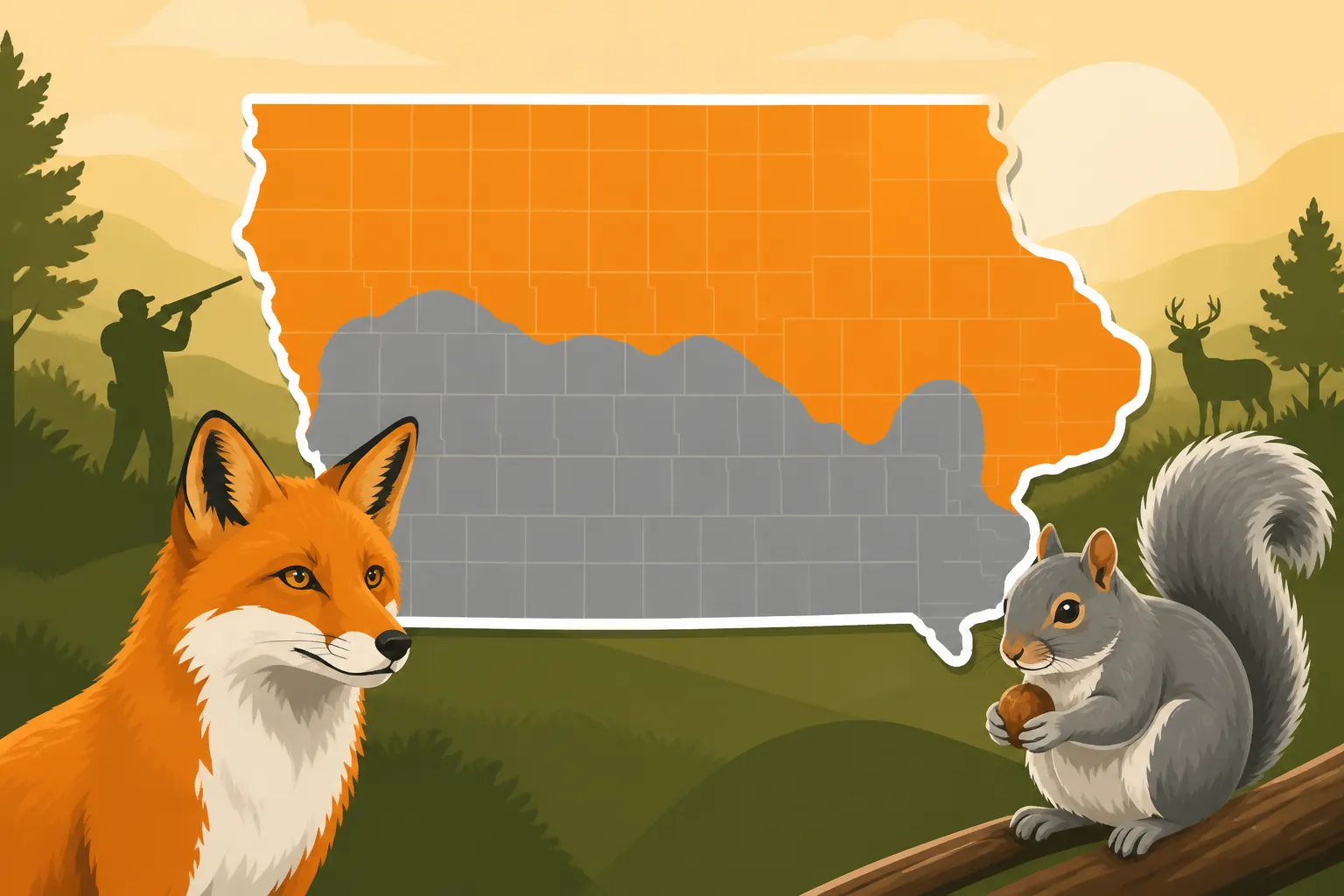
Fox and Gray Squirrel Range in Iowa
It's a common story in Iowa: you're itching to get into the woods, but deer season is either a distant memory or still a far-off dream. Maybe you're looking for a way to introduce a new hunter to the outdoors without the intensity of deer or turkey, or perhaps you just crave a quieter, more contemplative hunt. Whatever your reason, understanding the range and habits of Iowa's two primary squirrel species – the fox squirrel and the gray squirrel – is the secret handshake to unlocking a fantastic small game experience. This comprehensive guide will walk you through where these bushy-tailed critters hang their hats, what makes them tick, and how you can tailor your approach to find success and put some delicious wild game on your table.
The Widespread World of the Fox Squirrel in Iowa
If you've spent any time in Iowa's timber, or even just driven through its vast stretches of farm country, chances are you've seen a fox squirrel. These robust, reddish-orange squirrels are the undisputed champions of adaptability in the Hawkeye State, thriving in a wider variety of habitats than their gray cousins. They're resilient, cunning, and offer an excellent challenge for any hunter.
Habitat Preferences and Adaptability
Fox squirrels are incredibly versatile creatures, which is a major reason why they are so prevalent across Iowa. Unlike some wildlife that requires pristine, untouched wilderness, fox squirrels are perfectly content in what many might consider fragmented or less-than-ideal habitat. Think about those smaller woodlots, the lines of mature trees winding along a creek, or even the sprawling shade trees in a small town park – these are all prime fox squirrel territories.
They really shine in areas where timber meets agriculture. The edges of corn and soybean fields, where a stand of oaks or hickories provides both cover and food, are absolutely bustling with fox squirrels. They're master foragers, constantly on the move, digging for buried nuts or feasting on whatever mast crops are available. Their dens are often found in tree cavities, but don't be surprised to spot their impressive leaf nests, called "dreys," high in the branches, especially in the warmer months. This comfort with human-altered landscapes means you don't always need to venture deep into expansive forests to find them; they're often right there on the fringes, accessible and abundant.
Geographic Dominance Across the State
You could almost say the fox squirrel map of Iowa is a solid block of color because they are found virtually everywhere. From the Missouri River breaks on the west to the Mississippi River bluffs on the east, and from the northern prairie potholes down to the southern tier, if there's timber, there are very likely fox squirrels. Their range is truly statewide, making them the most encountered squirrel species for most Iowans.
This widespread distribution is a testament to their incredible adaptability. They don't need continuous canopy cover spanning hundreds or thousands of acres; smaller pockets of woods are perfectly adequate. While they appreciate a good oak or hickory stand for its bounty of acorns and nuts, they'll also readily utilize sycamore, maple, and even evergreen trees for cover and den sites. This contrasts sharply with the more specialized habitat needs of the gray squirrel, which we'll dive into next. So, if you're looking to hit the woods for some squirrel action in almost any part of Iowa, your chances of running into a fox squirrel are exceptionally high.
Understanding Iowa's More Elusive Gray Squirrel
While the fox squirrel commands most of Iowa's landscape, the gray squirrel offers a different kind of hunting experience, a bit more akin to stalking a phantom in the deeper woods. These agile, often shyer squirrels are just as charming but require a different approach and a keener eye for specific habitat.
The Deep Woods Dweller's Domain
Gray squirrels are the connoisseurs of dense, mature timber. They crave extensive, unbroken forests with a high concentration of mast-producing trees like various oak species, hickories, and walnuts. These areas provide not just a consistent food source but also the continuous canopy cover they prefer for travel and escape. You won't typically find gray squirrels venturing far into open fields or making their homes in small, isolated woodlots. They are primarily arboreal, meaning they spend most of their lives in the trees, zipping from branch to branch with incredible speed and agility.
Their preference for mature timber stems from a few factors. First, older trees often have more natural cavities for denning, which they favor over building leaf nests. Second, a dense canopy offers protection from aerial predators like hawks and owls, and also from ground predators. Finally, the sheer abundance of mast in these mature forests supports larger populations of gray squirrels. If you're hunting in a patchy timber stand where you can easily see the field on the other side, you're probably in fox squirrel territory. If you find yourself in towering hardwoods where the forest floor is dappled with shade and you feel a sense of being enveloped by the woods, that's where the gray ghosts are more likely to roam.
Pockets of Gray Squirrel Strongholds
While fox squirrels are everywhere, gray squirrels are more concentrated in specific "strongholds" across Iowa. These are typically areas with significant tracts of mature, unbroken timber, often associated with major river systems or larger state and federal lands. Think of the rugged, beautiful terrain along the Mississippi River bluffs in eastern Iowa. Here, the landscape often features steep, timbered slopes and deep ravines that provide the ideal conditions for gray squirrels to flourish.
Other prime locations include the extensive timber found along major river corridors like the Des Moines, Skunk, and Iowa Rivers, particularly in areas where these rivers cut through public lands. You'll also find them in the deep timber of Iowa's state forests, such as Yellow River State Forest in northeast Iowa or Stephens State Forest in the south-central part of the state. These larger public land areas offer the vast, connected canopy that gray squirrels depend on. If you're using a mapping tool like GoHunt or the Iowa DNR Hunter Atlas, look for those expansive green blocks indicating continuous timber, especially areas rich in oak and hickory, and you'll be on the right track for gray squirrel opportunities. Understanding Reading an Iowa Timber Draw for Deer Sign can also give you insight into the type of timber movement and habitat that gray squirrels will also utilize.
Spotting the Difference and Tailoring Your Hunt
Being able to differentiate between a fox squirrel and a gray squirrel in the field isn't just a matter of academic interest; it's a practical skill that can help you adapt your hunting strategy on the fly. Each species presents its own set of characteristics and behaviors that can inform how you approach your hunt.
Visual Cues and Behavioral Differences
The most obvious difference between the two is often size and coloration. Fox squirrels are generally larger, often noticeably so, with a body length that can approach a foot, not including their tail. Their fur is typically a mix of reddish-orange, brown, and sometimes grizzled gray, often with a distinctly reddish belly. Their tail usually has a yellowish or rusty fringe. Gray squirrels, on the other hand, are smaller and sleeker. Their fur is predominantly gray, sometimes with brownish highlights, and they nearly always have a pristine white belly. Their tail is often fringed with white hairs, giving it a distinctive silver-gray appearance.
Beyond looks, their behavior offers significant clues. Fox squirrels, especially in more open or fragmented habitats, tend to be bolder and spend more time on the ground. You'll often see them scurrying across fields, digging for nuts, or scampering up trees from ground level. They can be quite vocal, with a variety of barks and chirps. Gray squirrels are much shyer and more wary, especially when pressured. They prefer the safety of the canopy and are incredibly adept at navigating the treetops. When alarmed, they're more likely to flatten themselves against a branch or disappear silently into dense foliage, rather than barking loudly like a fox squirrel might.
Here's a quick comparison:
| Feature | Fox Squirrel | Gray Squirrel |
|---|---|---|
| Size | Larger, robust | Smaller, sleeker |
| Coloration | Reddish-orange, brown, reddish belly | Gray, sometimes brownish, white belly |
| Tail Fringe | Yellowish or rusty | White |
| Primary Habitat | Timber edges, fragmented woods, farm country | Dense, mature, unbroken timber |
| Ground Time | Frequent | Less frequent, mostly arboreal |
| Behavior | Bolder, often vocal, adaptable | Shyer, wary, prefers canopy, quieter |
Hunting Strategies for Each Species
Given their distinct habitats and behaviors, tailoring your hunting strategy can significantly improve your success.
For fox squirrels, you'll want to focus on those areas where timber meets fields, smaller woodlots, or mature treelines along creeks. These squirrels are often most active early in the morning and late in the afternoon, especially as they move between bedding and feeding areas. A common tactic is still-hunting, moving slowly and deliberately through the woods, pausing frequently to scan for movement. Because they spend more time on the ground, paying attention to the forest floor for rustling leaves or digging activity is crucial. You can often get away with a bit more movement than you would with a gray squirrel, but patience is still paramount. Remember, they are common in public land areas like Iowa Wildlife Management Areas or even accessible private land, so finding a spot to start is often straightforward.
When targeting gray squirrels, your approach needs to be more stealthy and focused on deep, mature timber. These are the hunts where you might want to consider a sitting approach, finding a good vantage point among mast-producing oaks and hickories, and waiting them out. Given their shyness and preference for the canopy, look for movement high in the trees. They are less forgiving of noise or sudden movements, so a quiet approach is essential. A good strategy is to find a spot with plenty of fresh cuttings (nut shells) at the base of trees, indicating recent feeding activity. Using a mapping app or a tool like GoHunt can help you identify these specific habitat types on public lands, such as in Iowa State Forests Open to Hunting. Consider tips from articles like Best Stand Locations in Rolling Timber, which apply well to understanding squirrel movement in dense woods.
The Joys and Challenges of Iowa Squirrel Hunting
Squirrel hunting might not get the same fanfare as deer or turkey season, but it's a deeply rewarding pursuit that offers a wealth of benefits, from honing your skills to putting delicious, lean meat on the table. It's also an excellent gateway to the outdoors for new hunters.
Why Squirrel Hunting is a Great Pursuit
One of the best things about squirrel hunting in Iowa is its accessibility. You don't need highly specialized gear or thousands of dollars invested to get started. A simple .22 rifle, a small gauge shotgun, or even a bow can be effective. The season is generally long, often running from early fall into late winter, providing ample opportunity to get out. It's fantastic for sharpening fundamental hunting skills: stalking, observation, patience, and marksmanship. Learning to identify subtle movements in the canopy, or the tell-tale rustle of leaves on the forest floor, makes you a better hunter for all species. For those just starting out, the less intense nature of squirrel hunting, coupled with generally good success rates, can build confidence and foster a lifelong love for the outdoors. Plus, squirrel meat, when properly prepared, is absolutely delicious and a true wild game delicacy. It's lean, flavorful, and incredibly versatile in the kitchen.
Finding and Accessing Prime Squirrel Ground
Iowa offers a surprising amount of public land that holds excellent squirrel populations. Beyond the state forests mentioned earlier, numerous Iowa Wildlife Management Areas (WMAs) and county conservation board lands provide access. Many of these areas feature diverse habitats, including both fragmented woodlots for fox squirrels and deeper timber for grays. The Iowa DNR's online hunting atlas is an invaluable tool for locating these areas and understanding their boundaries and specific regulations. Tools like GoHunt are also fantastic for overlaying property lines and identifying potential hotspots. For those willing to put in the legwork, hunting Iowa Walk-In Ground Without Burning It Out can yield excellent results, especially for squirrels that receive less pressure.
Private land access for squirrel hunting is often easier to obtain than for deer, as some landowners are less concerned about small game hunting impacting their property. Don't be shy about asking for permission; sometimes, a simple knock on a farmer's door can open up prime hunting opportunities. Learning the basics of Finding Private Land Access in Iowa is a critical skill for any hunter in the state. Remember to always be respectful, leave no trace, and thank the landowner for their generosity. Whether public or private, always ensure you understand Iowa Hunter Education and Licensing Basics before heading out. Iowa's small game regulations, including those for Iowa Small Game: Rabbit, Squirrel and Partridge, are designed to provide generous seasons while maintaining healthy populations, ensuring that future generations can also enjoy the classic pursuit of the bushy-tail.
Disclaimer
This article is for general informational purposes only and does not constitute professional advice. Laws, prices and regulations vary by location and change over time. Consult a qualified professional for guidance on your specific situation.