Iowa’s Habitat and Access Program Explained
Let's be honest, finding a good spot to hunt in Iowa can feel like an impossible quest sometimes. You scout all year, find a promising timber edge or a CRP field holding pheasants, only to be met with a "No Trespassing" sign. It's frustrating, disheartening, and a reality for many hunters, especially those without private land connections. This comprehensive guide is here to shed light on one of Iowa's most valuable programs designed to combat this very challenge: the Habitat and Access Program, or IHAP. We'll dive deep into what it is, how it works, and how you can use it to unlock more hunting opportunities across the Hawkeye State.
The Frustration of Limited Access: Understanding Iowa's Habitat and Access Program (IHAP)
For generations, Iowa has been a hunter's paradise, renowned for its incredible whitetail deer, thriving pheasant populations, and booming turkey numbers. Yet, a vast majority of the state is privately owned, leaving many of us scratching our heads, wondering where we can actually go to enjoy these riches. It's a common lament around campfires and coffee shops: "If only I had more ground to hunt." This sentiment isn't just anecdotal; it's a real barrier for many, and it's precisely why programs like IHAP are so vital.
The Persistent Challenge of Finding Hunting Ground in Iowa
You've been there, right? You spend hours pouring over maps, looking at satellite imagery, seeing all that prime habitat, only to realize it's all locked up behind private ownership. Iowa's landscape, dominated by agriculture, often means that even small pockets of timber or grasslands are part of larger private holdings. This checkerboard of ownership makes public access feel fragmented and scarce. For new hunters, or those who haven't inherited family land, the hurdle of finding a place to hunt can be incredibly daunting, sometimes enough to make them give up before they even start. We all want to experience the thrill of a big buck slipping through the creek bottom or a rooster exploding from cover, but if you can't even get your boots on the ground, those dreams remain just that—dreams.
While the quality of Iowa's game animals is undeniable – we consistently produce some of the largest whitetail deer in the country and our pheasant populations are often among the best in the Midwest – the challenge of access is a constant undertone. It’s why initiatives that bridge the gap between private land and public opportunity are so critical for the health of our hunting heritage. Without places to hunt, hunters eventually dwindle, and with them, the conservation funding they provide through license sales and excise taxes.
What Exactly Is the Habitat and Access Program?
Enter the Iowa Habitat and Access Program, affectionately known as IHAP. At its heart, IHAP is a visionary partnership designed to connect private landowners with public hunters. In simple terms, landowners voluntarily enroll their private property into the program, and in exchange for opening their land for public hunting (and sometimes fishing), they receive incentives. These incentives can range from direct payments for access to financial and technical assistance for implementing wildlife habitat improvements on their property.
Think of it as a bridge between the landowner's desire to manage their land and potentially gain some income or assistance, and the hunter's need for more places to pursue game. It’s not about the state taking ownership of the land; it's about a temporary, mutually beneficial agreement for access and habitat enhancement. The program aims to increase public hunting opportunities, improve wildlife habitat, and foster stronger relationships between landowners and the hunting community. It’s a powerful tool in Iowa’s conservation arsenal, directly addressing that perennial problem of limited access by unlocking parcels that would otherwise remain private.
How IHAP Works: A Win-Win for Landowners and Hunters
The beauty of IHAP lies in its dual benefit structure. It’s not just about one party gaining; it’s genuinely designed to create a beneficial exchange that supports both private land stewardship and public hunting access. This symbiotic relationship is crucial for the program's success and for the long-term health of Iowa's wildlife and hunting traditions.
The Landowner's Perspective: Why Enroll in IHAP?
For a private landowner, opening up their property to public hunting might initially sound counterintuitive. However, the benefits offered by IHAP are often compelling. First and foremost, many landowners are passionate about wildlife and conservation, but lack the resources or expertise to implement large-scale habitat projects. IHAP steps in here, providing invaluable technical assistance from wildlife biologists to design and execute habitat improvements, whether it's planting food plots, establishing native grass and pollinator habitat, or restoring wetlands. These improvements directly benefit the wildlife on their property, enhancing biodiversity and creating healthier ecosystems.
Beyond the habitat work, there are often direct financial incentives. Landowners may receive rental payments for the access they provide, which can help offset property taxes or other costs associated with land management. Another significant benefit, and one that often weighs heavily on a landowner's mind, is liability protection. Many states, including Iowa, offer some form of liability protection for landowners who open their property to public recreation, which can alleviate fears of lawsuits if an incident occurs on their enrolled land. This peace of mind is often as valuable as any financial payment. If you're a landowner curious about how to participate, understanding Enrolling Land in Iowa IHAP can provide more specific details on the process and requirements.
What Hunters Gain: Expanded Opportunities and Diverse Habitat
From a hunter’s perspective, the gains from IHAP are straightforward and incredibly exciting. The most obvious benefit is simply more ground to hunt. IHAP parcels often represent prime hunting opportunities, as many enrolled lands already possess, or are actively being enhanced for, quality wildlife habitat. You might find a small timber block acting as a deer travel corridor, a pristine CRP field teeming with pheasants, a brushy draw holding quail, or a restored wetland attracting waterfowl. These are spots that, without IHAP, would likely be inaccessible.
The program creates a patchwork of accessible lands, often in areas traditionally dominated by private ownership, which means hunters can find new spots closer to home or in different regions of the state. It allows for diversification in your hunting plans; if your usual spots aren't producing, or if pressure is too high, IHAP offers alternatives. Moreover, because these lands are often managed with wildlife in mind, they can be incredibly productive, providing diverse ecosystems where deer, turkeys, pheasants, and other game can thrive, leading to truly rewarding hunting experiences.
The Role of State Agencies in Facilitating IHAP
Behind the scenes, the Iowa Department of Natural Resources (DNR) plays a pivotal role in making IHAP a reality. They are the administrators of the program, working directly with landowners, assessing potential properties, and managing the allocation of funds. The funding for IHAP comes from a combination of sources, primarily from hunting license sales and federal aid programs like the Wildlife Restoration Act (Pittman-Robertson Act). This is a testament to how hunters' dollars directly contribute to conservation and access initiatives.
DNR staff and wildlife biologists are instrumental in the process, providing the technical expertise needed to develop and implement habitat improvement plans for enrolled properties. They ensure that the lands brought into the program meet certain criteria for habitat quality and potential public access. Their work involves everything from site visits and ecological assessments to drawing up formal agreements with landowners. This oversight ensures the program is effective, transparent, and aligned with Iowa's broader conservation goals, ultimately benefitting both the land and those who seek to enjoy it.
Navigating IHAP Ground: Finding Your Next Hunting Spot
Now for the practical part: how do you actually find these elusive IHAP parcels and make the most of them? It's not like every square inch of Iowa suddenly turns yellow on a map. Knowing where to look and what tools to use is key to unlocking these valuable hunting opportunities.
Utilizing the Iowa Hunting Atlas and Digital Tools
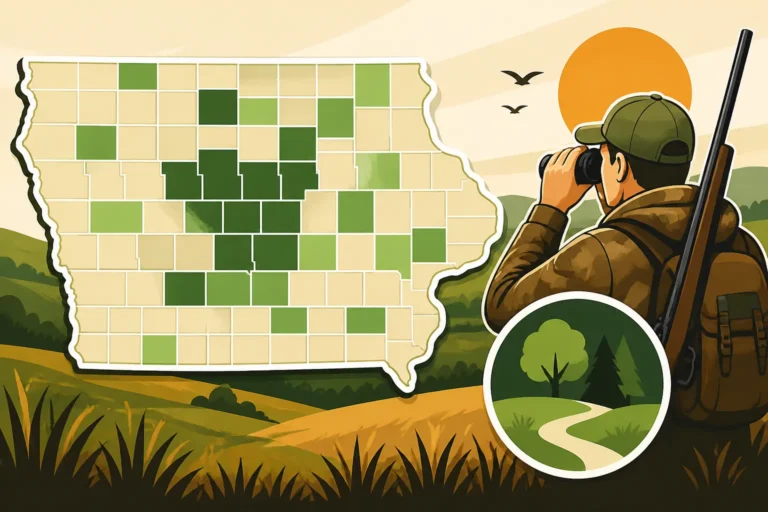
The single most important resource for any hunter looking to use IHAP ground is the official Iowa Hunting Atlas. This online interactive map, provided by the DNR, is a treasure trove of information, clearly marking all public hunting lands across the state, including IHAP tracts. It’s regularly updated, so you can count on the information being current. You can zoom in on specific areas, filter by different types of public land, and even get details on parking and specific regulations for each parcel.
Beyond the DNR's official atlas, digital mapping applications have revolutionized how we scout and navigate public land. Platforms like onX Hunt are incredibly popular among hunters for a reason. These apps overlay property ownership lines, including public land boundaries and IHAP tracts, right onto satellite imagery. This means you can see exactly where the public access begins and ends, identify potential ambush points, bedding areas, and travel corridors, all from the comfort of your home. You can switch between aerial views, topo maps, and even identify different types of vegetation. Tools like this, which often have specific IHAP layers, allow you to visualize the landscape and plan your approach with remarkable precision, helping you save valuable time in the field. To learn more about how to access and interpret these invaluable resources, check out Using the Iowa Hunting Atlas.
Understanding IHAP Signs and Boundaries
When you actually get to an IHAP property, you'll notice distinctive signage. Look for large, yellow signs that clearly state "Walk-In Hunting Access" or "IHAP – Public Access." These signs are crucial because they mark both the entrance points and the boundaries of the enrolled land. It's not always obvious where private land ends and IHAP begins, especially in thick timber or dense brush, so paying close attention to these markers is absolutely essential.
These signs are placed by the DNR to guide hunters and to clearly delineate the areas open for public use. It’s your responsibility as a hunter to recognize these signs and stay within the marked boundaries. Trespassing, even accidentally, can jeopardize the program's relationship with landowners and lead to parcels being pulled from the program, which hurts everyone. Always respect the adjacent private property, even if it looks like prime hunting ground. The success of IHAP relies on hunters adhering to these visual cues and honoring the agreements made with landowners.
E-Scouting and Pre-Season Reconnaissance for IHAP Tracts
Once you've identified potential IHAP tracts on your mapping app or the Iowa Hunting Atlas, the real fun of e-scouting begins. This is where you use those digital tools to your advantage, long before you ever set foot on the property. Look for features like funnel points where timber pinches down, inside corners of crop fields, isolated pockets of cover, or creek beds that act as natural travel corridors. These are often high-traffic areas for deer and other game. You can also identify potential bedding areas in thickets or dense CRP grass, and nearby food sources. E-scouting allows you to develop a mental map and prioritize specific areas for an in-person visit.
When planning your reconnaissance, remember that IHAP stands for "Walk-In Hunting Access." This is a critical detail. Most IHAP properties do not allow vehicle access beyond designated parking areas. So, when e-scouting, pay close attention to where you can legally park and how far you'll need to walk to reach your desired hunting spots. Consider how you'll get a deer out of a creek bottom, or a limit of pheasants back to your truck. Identifying these logistical challenges beforehand can save you a lot of grief later. For a deeper dive into scouting from your couch, read our guide on E-Scouting Iowa Farm Country From Home.
Rules of Engagement: Specifics for Hunting IHAP Lands
Hunting on IHAP ground comes with a few specific guidelines that are important to understand and adhere to. These aren't just arbitrary rules; they're in place to maintain the integrity of the program, protect the land, and ensure positive relationships with the landowners who make this access possible. Following these rules is paramount to keeping IHAP a viable option for all Iowa hunters.
General Rules and Restrictions on IHAP Properties
The golden rule for most IHAP properties is "walk-in access only." This means absolutely no ATVs, dirt bikes, or other motorized vehicles beyond designated parking areas. You're expected to proceed on foot, respecting the quiet nature of the land and minimizing disturbance. This rule also extends to horses or other equestrian access unless explicitly stated otherwise. The access dates for IHAP typically coincide with general statewide hunting seasons, but it's always wise to double-check the Iowa Hunting Atlas for any specific season segments or dates that might apply to a particular parcel. Generally, IHAP land is open when the season is open for the respective game.
Furthermore, IHAP properties are typically managed with a "leave no trace" philosophy. This means packing out everything you pack in, including spent shell casings, food wrappers, and any other trash. Do not disturb crops, livestock, or any other property belonging to the landowner. It’s critical to remember that while you have hunting access, you are still on private property that a landowner has generously opened up. Maintaining a respectful demeanor and adhering strictly to the rules outlined on the IHAP signs and the Iowa Hunting Atlas is non-negotiable. More detailed information can be found in Walk-In Only Access on IHAP Ground.
Portable Stands, Blinds, and Scent Control Considerations
When it comes to treestands and ground blinds on IHAP ground, the rule of thumb is portability and impermanence. Most IHAP parcels do not allow permanent treestands or blinds. If you plan to hunt from an elevated position, you'll need to use a portable hang-on stand, a climber, or a saddle setup. These typically must be removed at the end of each day's hunt, or within a very short, specified timeframe (e.g., within 72 hours), to ensure they don't become permanent fixtures or create unsightly clutter for the landowner. Always check the specific regulations for the individual IHAP tract you plan to hunt, as some might have slight variations.
Ground blinds are generally permitted, provided they are temporary structures and removed after your hunt. Pop-up blinds are a common choice, offering concealment without leaving a lasting footprint. Regardless of your setup, consider the importance of scent control, especially for whitetail hunting on potentially smaller, more pressured parcels. IHAP tracts can be popular, and deer become wary quickly. A good scent control regimen, quiet movements, and playing the wind become even more crucial when hunting these valuable, often smaller, pieces of habitat. For those considering mobile hunting setups, our article on Portable Stand Rules on Iowa Public Ground offers valuable insights.
Respecting the Land, the Landowner, and Fellow Hunters
This might be the most important "rule" of all, though it’s more of an ethical imperative. The continued success and expansion of the IHAP program hinges entirely on the respectful behavior of hunters. When you hunt an IHAP property, you are a guest on private land. This means going above and beyond to be a responsible steward. Avoid damaging fences, closing gates behind you, and absolutely never drive on fields or access areas beyond designated parking. If you encounter livestock, leave them undisturbed.
Hunter etiquette also extends to your fellow hunters. IHAP parcels can sometimes be smaller, and you might find other hunters utilizing the same property. Be courteous, communicate if appropriate, and maintain safe distances. The goal is for everyone to have a positive experience, and overcrowding or disrespectful behavior can quickly sour the hunting environment. By demonstrating respect for the land, the landowner, and other hunters, you help foster goodwill, which in turn encourages more landowners to participate in the program, ultimately benefiting the entire hunting community in Iowa.
Strategic Hunting on IHAP: Maximizing Your Chances
Hunting IHAP properties often requires a slightly different approach than sprawling state forests or vast WMAs. Because many IHAP parcels are smaller, often nestled within agricultural landscapes, and potentially subject to more concentrated hunting pressure, smart strategies are essential. It's about working with the nuances of these unique hunting grounds.
Targeting Specific Game on IHAP Properties
The type of game you're after will heavily influence your strategy on an IHAP parcel, just as it would on any other piece of ground. For whitetail deer, IHAP tracts often excel due to their location within productive farm country. Look for areas where timber fingers extend into crop fields, tight creek bottoms that act as natural travel corridors, or dense cedar thickets offering bedding cover adjacent to food sources. These small pockets can hold surprising numbers of deer, especially during the rut. Our guide Iowa Whitetail Hunting Tactics Through the Rut can provide further insights into capitalizing on peak deer movement.
If pheasants and quail are your target, many IHAP areas include high-quality grass cover, such as CRP fields or native prairie restorations. Focus on the edges of these fields, areas with multiflora rose or other brushy cover, and where grass meets crop fields. These transition zones often hold birds. For specific tips, consider reading Pheasant Hunting Iowa Grass and Crop Edges. Turkeys will be found in IHAP parcels with mature timber, especially along river or creek bottoms and on ridge tops where they roost and feed. Understanding the specific habitat on a given IHAP tract is paramount to success.
Adapting to Hunting Pressure on Smaller Parcels
Let's be realistic: some IHAP parcels, especially those that are easily accessible or known to hold good numbers of game, can experience significant hunting pressure. This is particularly true during opening weekends of popular seasons. However, this doesn't mean they're not worth hunting. It simply means you need to adapt your strategy. One common tactic is to hunt deeper into the property than most others are willing to go. Many hunters stick to the edges or walk only a short distance in. The deer, pheasants, and turkeys know this and will often seek refuge in the more remote or harder-to-reach pockets within the IHAP boundaries.
Consider hunting during weekdays, when pressure is typically much lower, or during less popular times of the day, like midday. Also, pay attention to the wind and thermals, especially in rolling terrain or creek bottoms, as these can dictate how game moves and where other hunters might be situated. Scouting for overlooked corners or dense escape cover that might not look "pretty" on a map but offers sanctuary can be incredibly productive. Our article on Hunting Pressure Patterns on Iowa Public Land provides excellent strategies for dealing with crowded areas.
Timing Your Hunts: Weekdays, Weather, and the Rut
Timing is everything, and this holds especially true for IHAP lands. As mentioned, weekdays almost always offer a less crowded and more peaceful hunting experience compared to weekends. If your schedule allows, prioritizing mid-week hunts can significantly increase your chances of encountering undisturbed game.
Weather also plays a massive role. A sudden cold front can get deer up and moving, or push pheasants into thicker cover. Fresh snow can provide excellent tracking opportunities and reveal new travel patterns. Conversely, warm, calm days might mean game is less active, especially if the parcel is already seeing pressure. Finally, understanding the peak times for specific game, like the whitetail rut, is crucial. During When the Iowa Rut Peaks, bucks are often on their feet during daylight hours, cruising for does, making them more vulnerable. Planning your IHAP hunts around these windows of opportunity can be a game-changer. Digital tools like GoHunt, with their extensive resources on species behavior and seasonal patterns, can be invaluable for planning your trips.
IHAP vs. Other Public Land: A Comparative Look
While all public hunting lands in Iowa offer valuable opportunities, IHAP parcels have distinct characteristics that differentiate them from state-owned Wildlife Management Areas (WMAs) or State Forests. Understanding these differences can help you decide which type of public land is best suited for your hunting style and target species.
Differentiating IHAP from WMAs and State Forests
The fundamental difference lies in ownership and management. IHAP lands are privately owned properties that have been temporarily opened for public hunting through a cooperative agreement. This means the underlying land use might still be agricultural, with specific areas designated for habitat, or it might be a timber block within a larger farm. Wildlife Management Areas (Iowa Wildlife Management Areas), on the other hand, are publicly owned by the state (Iowa DNR) and are managed primarily for wildlife production and public recreation. State Forests (Iowa State Forests Open to Hunting) are also state-owned, with a primary focus on timber production, but often offer significant hunting opportunities as a secondary use.
Because IHAP lands are private, they can often be smaller and more interspersed within the agricultural landscape, creating unique hunting pockets. WMAs and State Forests tend to be larger, contiguous blocks of land. Management of IHAP is a partnership with the landowner, often focusing on specific habitat improvements to benefit both wildlife and agricultural operations. WMAs and State Forests are managed more broadly by the DNR for ecological health, timber harvest, and large-scale habitat goals. This distinction means IHAP parcels often offer a taste of hunting in classic Iowa farm country that might not be replicated in larger, more remote WMAs or forests. For a comprehensive overview of general public land options, refer to Public Hunting Land in Iowa.
Advantages and Disadvantages of IHAP Access
Like any hunting opportunity, IHAP comes with its own set of pros and cons.
Advantages:
- Increased Access: The most obvious benefit is simply more places to hunt, especially in regions traditionally dominated by private land. This is a huge win for hunters without private land connections.
- Diverse Habitat: Many IHAP parcels integrate diverse habitats like crop fields, timber, CRP, and wetlands, often within a smaller footprint, creating excellent "edge" hunting.
- Less Pressure (Potentially): While some popular IHAP spots can be pressured, many smaller or harder-to-access parcels might see significantly less hunter traffic than large, well-known WMAs.
- Closer to Home: IHAP tracts are often scattered across various counties, making them accessible to hunters living in different parts of the state.
Disadvantages:
- Smaller Size: Many IHAP parcels are relatively small, which can limit how far you can roam and require more precise hunting strategies.
- Fragmented Access: The IHAP map can look like a patchwork, meaning you might need to jump between multiple smaller properties to find consistent action.
- Specific Rules: IHAP lands often have more specific rules (e.g., walk-in only, no permanent stands) than some other public lands, requiring careful attention to signage.
- Variable Quality: While many are excellent, the quality and habitat of IHAP parcels can vary significantly depending on the landowner's management practices and the specific agreement.
Incorporating IHAP into Your Overall Iowa Hunting Strategy
The best way to approach IHAP is to see it as a valuable component of a broader hunting strategy. Don't rely solely on IHAP, but integrate it with other options. Perhaps you have a go-to WMA, but use IHAP parcels as backup plans or for specific types of hunts. For instance, if your WMA is heavily pressured during pheasant season, an IHAP tract with good grass cover nearby might offer a quieter alternative.
Consider using IHAP for highly mobile hunting styles, like saddle hunting for deer or run-and-gun tactics for turkeys, where you can quickly move between smaller parcels. Use digital mapping tools to identify clusters of IHAP properties in a given area, allowing you to have multiple options if one parcel is crowded or not producing. By understanding the unique strengths and limitations of IHAP, you can strategically incorporate these valuable lands into your hunting plans, greatly expanding your opportunities across Iowa.
Challenges and the Future of IHAP
While IHAP has been a remarkable success in expanding public access and enhancing habitat, it's not without its challenges. Like any large-scale program, it requires ongoing support, vigilance, and adaptation to ensure its long-term viability and positive impact on Iowa's hunting landscape.
Overcoming Misconceptions and Ensuring Program Success
One of the biggest hurdles IHAP faces is overcoming common misconceptions among hunters and, sometimes, even landowners. Some hunters might assume all IHAP land is heavily pressured, or that it's not "real" public land. Others might not fully understand the "walk-in only" rule or the importance of respecting adjacent private property. These misunderstandings, if unchecked, can lead to negative experiences for hunters, or worse, cause friction with landowners who might then choose not to renew their contracts.
Ensuring the program's success means ongoing education for hunters about the rules, ethics, and benefits of IHAP. It means promoting responsible hunting behavior, emphasizing the "leave no trace" principle, and encouraging respectful interactions with landowners. Every hunter who uses IHAP land is an ambassador for the program. By demonstrating responsible stewardship and gratitude, we help build trust and encourage more landowners to participate, ultimately growing the footprint of accessible hunting land across the state. It's a collective responsibility to keep this program strong.
Funding and Expansion of the Program
The continued growth and success of IHAP are directly tied to its funding. While hunting license sales and federal excise taxes (Pittman-Robertson Act) provide a substantial base, expanding the program to more counties and enrolling additional high-quality habitat requires consistent financial support. As the demand for hunting access continues to rise, so does the need for resources to incentivize more landowners to open their property.
Hunters play a crucial role here, not just through purchasing licenses, but also by supporting conservation organizations and initiatives that advocate for and contribute to programs like IHAP. There's always potential for the program to expand into new regions of the state that might currently have limited IHAP presence, or to focus on specific habitat types that are critically needed for certain game species. The future health of our hunting opportunities relies on this continued investment and commitment.
The Role of Hunter Feedback and Engagement
Your experiences on IHAP lands matter. The Iowa DNR values feedback from hunters, as it helps them understand what's working well, identify areas for improvement, and address any recurring issues. If you encounter a problem, such as unclear signage or evidence of rule violations, reporting it to the DNR in a constructive manner can help them address the issue and maintain the quality of the program. Conversely, if you have a great experience, sharing that positive feedback is also valuable, highlighting the program's successes.
Beyond formal feedback, simply being an engaged and responsible member of the hunting community contributes to IHAP's success. Sharing your knowledge with newer hunters, mentoring youth, and promoting ethical behavior all help to foster an environment where landowners feel comfortable participating in such a vital program. IHAP is a testament to what can be achieved when conservation agencies, private landowners, and the hunting public work together. It's a shared resource that requires shared responsibility to thrive for generations to come.
Public Hunting Access: A Comparative Table
To help clarify the differences between Iowa's various public hunting land options, here's a quick comparison:
| Feature | IHAP (Habitat and Access Program) | WMA (Wildlife Management Area) | State Forest |
|---|---|---|---|
| Ownership | Private land, public access | State-owned (Iowa DNR) | State-owned (Iowa DNR) |
| Primary Purpose | Increase public access & habitat | Wildlife management, public recreation | Timber management, recreation, wildlife |
| Typical Size | Smaller parcels, often integrated farms | Medium to large tracts | Large, expansive timber tracts |
| Typical Habitat Types | Diverse: crops, timber, CRP, wetlands | Varied: wetlands, timber, grasslands | Primarily mature timber, some clearings |
| Vehicle Access | Walk-in only beyond designated parking | Varied: some vehicle access, many walk-in | Varied: some vehicle access, many walk-in |
| Hunter Pressure | Can be moderate, depends on parcel | Can be high on popular areas | Can be high, especially on weekends |
| Stand/Blind Rules | Generally temporary, removed daily | Varies by WMA, often temporary or seasonal | Varies by forest, often temporary or seasonal |
| Signage | Distinctive yellow "Walk-In Hunting Access" | Various DNR signs | State Forest boundary markers |
Disclaimer
This article is for general informational purposes only and does not constitute professional advice. Laws, prices and regulations vary by location and change over time. Consult a qualified professional for guidance on your specific situation.