Walk-In Only Access on IHAP Ground
It's incredibly frustrating when you've done all your homework, found what looks like a promising public hunting spot, only to arrive and find it swarming with other hunters or confusing access rules. Iowa's Habitat and Access Program (IHAP) offers some truly incredible opportunities, but understanding the nuances of "walk-in only" ground is crucial for success and for staying within the rules. This guide will walk you through everything you need to know to confidently and effectively hunt these unique IHAP areas.
Understanding Iowa's IHAP Program and Walk-In Access
The Iowa Habitat and Access Program (IHAP) is a cornerstone of public hunting access in the state, a brilliant initiative that partners with private landowners to open up thousands of acres for public use. However, for many hunters, especially those new to Iowa or unfamiliar with public access programs, the term "walk-in only" can be a bit vague. It’s more than just parking your truck and walking; it’s about understanding the specific intent behind these areas and how that shapes your hunting strategy. These tracts are a vital component of public hunting land in Iowa, offering critical habitat and much-needed access for a variety of game species.
What "Walk-In Only" Truly Means on IHAP Land
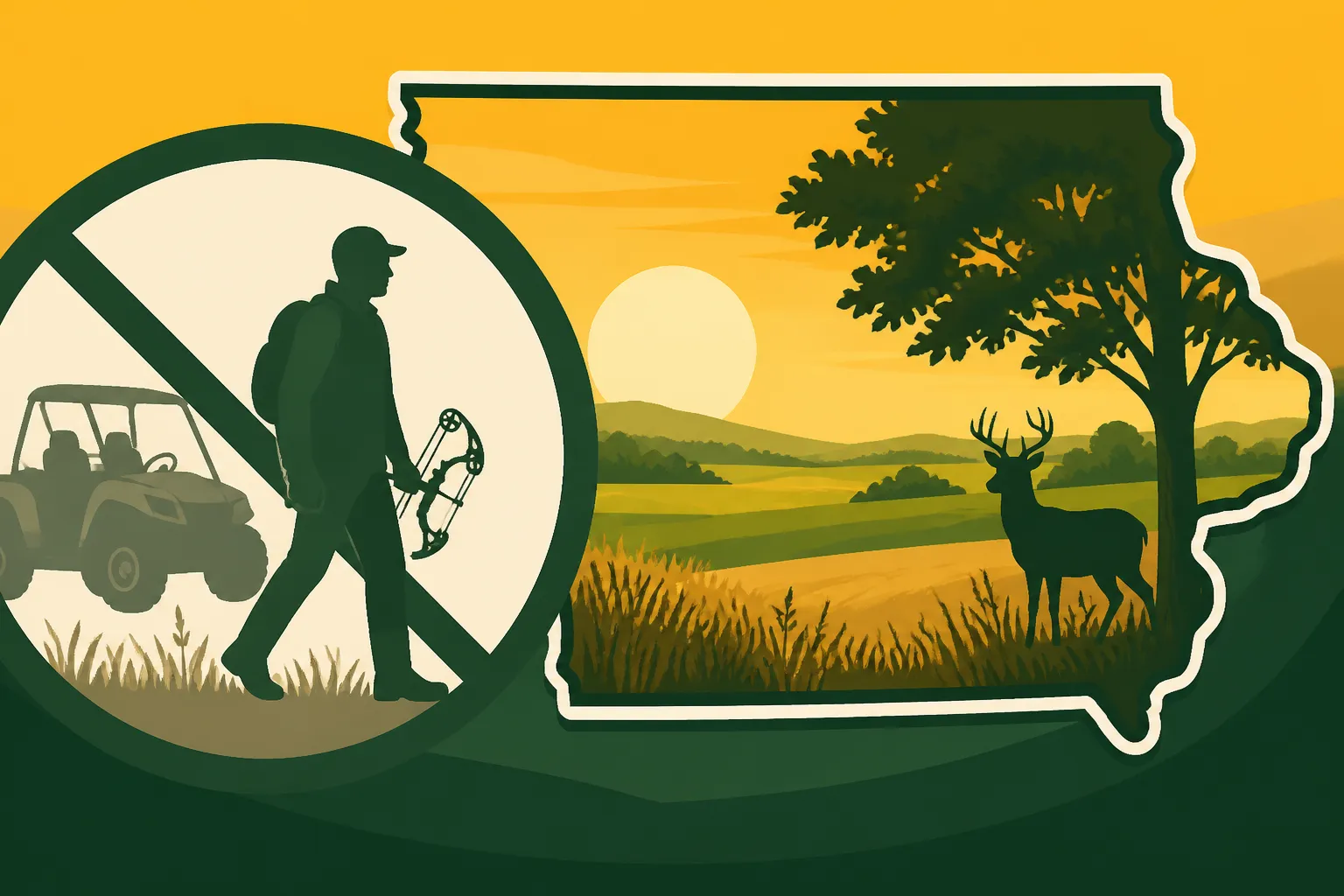
When you encounter the "walk-in only" designation on an IHAP tract, it means precisely what it implies: no motorized vehicles are permitted beyond the clearly marked designated parking areas. This restriction extends to ATVs, UTVs, dirt bikes, and even electric bicycles. Your own two feet are your sole mode of transportation once you pass that boundary. This stricture is intentionally put in place to achieve several objectives: primarily, to minimize human disturbance and pressure on the interior of these properties, to provide a more wild and immersive experience for hunters, and to diligently protect sensitive habitats from the potential damage caused by vehicular traffic.
The inherent beauty of the "walk-in only" rule is that it serves as a self-regulating mechanism, often deterring hunters who prioritize convenience, prefer easier access, or require vehicles to transport heavy equipment. This natural filtering process can result in significantly less hunting pressure the deeper you venture into an IHAP tract, particularly on larger parcels of land. However, this advantage comes with a clear expectation: you must be fully prepared for the physical demands that come with carrying all your gear, undertaking the strenuous task of retrieving harvested game, and covering substantial distances on foot. It necessitates a more thoughtful approach to your packing list, your physical conditioning, and your overall hunting strategy, forcing you to truly earn your access.
Often, IHAP walk-in areas consist of smaller parcels of private land that have been carefully leased by the Iowa DNR. These specific properties are selected not just for access, but also for their high habitat value and strategic locations, frequently bordering existing public lands or forming crucial links in wildlife corridors. You might find these areas to be diverse, encompassing pockets of dense timber, expansive CRP fields, or fertile river bottom ground that seamlessly connect larger blocks of vital habitat. The unwavering "walk-in only" designation ensures that these often-fragile and critical ecosystems remain undisturbed, providing essential sanctuary and feeding grounds for everything from robust whitetail deer to vibrant pheasants and spring gobblers.
It's absolutely imperative to remember that "walk-in only" is not a mere suggestion; it is a legally binding regulation. Any violation of this rule can lead to substantial fines, other legal penalties, and, most critically, can undermine the integrity and continuation of the entire IHAP program. Respecting this boundary is paramount to ensuring the sustained success of IHAP and preserving these invaluable hunting opportunities for current and future generations of hunters. It is an integral part of every hunter's responsibility to fully understand and strictly adhere to all Iowa regulation booklet release date rules and guidelines.
Navigating the Iowa Hunting Atlas and IHAP Maps
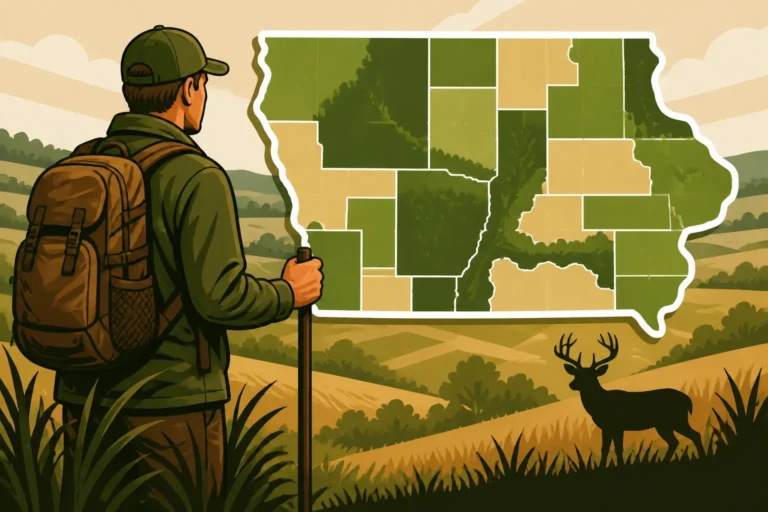
For any hunter contemplating an adventure on IHAP walk-in ground, the single most powerful and indispensable tool at your disposal is the Iowa DNR's comprehensive online Iowa Hunting Atlas. This interactive mapping system is an absolute game-changer for modern hunters, offering a wealth of detailed information on both public and IHAP lands spread across the entirety of the state. It essentially serves as your digital compass, providing crucial insights into precise property boundaries, pinpointing designated parking locations, and clarifying the specific access rules that apply to each individual tract. To even consider heading into the field without first consulting this vital resource would be a significant oversight.
The Iowa Hunting Atlas employs clear and distinct visual cues, typically highlighting IHAP tracts in specific colors, making them easy to identify amidst other land classifications. More importantly, it meticulously indicates where official parking areas are situated and clearly marks all designated access points. For "walk-in only" areas, you'll generally observe a parking icon, and then the entirety of the property beyond that point will be explicitly marked as accessible exclusively by foot. This tool is also incredibly valuable for identifying landlocked public land in Iowa that might necessitate more creative or specific access strategies.
Beyond the official DNR atlas, a new generation of sophisticated mapping applications, such as onX Hunt, has become utterly indispensable for contemporary hunters. These advanced apps offer a suite of enhanced features, including high-resolution satellite imagery, detailed topographic maps, and the invaluable ability to precisely mark waypoints, accurately measure distances, and meticulously track your movements. Many savvy hunters, including those who rely on tools like "GoHunt," now leverage these applications as their primary scouting and navigation aids. This allows them to scrutinize potential entry points, identify optimal stand locations, and plan secure escape routes all from the comfort and convenience of their home before ever setting foot in the field.
When you're meticulously studying IHAP maps, make it a point to pay exceptionally close attention to the surrounding private properties. The atlas will clearly delineate these boundaries, which is absolutely critical for preventing any accidental trespass. Look for natural barriers or distinctive land features that could serve as reliable visual markers once you're on the ground. Familiarizing yourself thoroughly with the precise shape of the property and its relationship to nearby roads and adjacent parcels will prove invaluable, especially when you are making a quiet approach into the woods before legal shooting light.
Planning Your Hunt on IHAP Walk-In Ground
While effective planning is undeniably the cornerstone of any successful hunting endeavor, it takes on an absolutely critical importance when you are specifically dealing with "walk-in only" IHAP areas. The sheer amount of physical effort required to simply get in and out, combined with the absolute necessity of being completely self-sufficient in the field, means that every single decision you make—from selecting your initial entry point to choosing each piece of gear—demands meticulous and thoughtful consideration. A haphazard approach here can quickly turn a promising hunt into a frustrating, and potentially dangerous, experience.
Key Considerations for Entry and Exit Routes
The careful selection of your entry and exit routes on IHAP walk-in ground is of paramount importance, particularly if your goal is to pursue elusive whitetails that are highly sensitive to human intrusion. Unlike areas where you might have the luxury of driving close to your desired hunting spot, every single step you take here carries weight. You must painstakingly identify routes that will minimize your environmental impact, drastically reduce the chances of inadvertently spooking game, and remain eminently practical for the strenuous task of hauling out a harvested animal, especially if you are fortunate enough to connect with a large Iowa whitetail buck.
Always begin by carefully considering the prevailing wind direction for your chosen stand location or ambush point. Your entry route must be meticulously planned to allow you to approach with the wind directly in your face or at least as a favorable crosswind, ensuring that your human scent is never carried ahead of you into potential bedding areas or primary feeding zones. This might very well necessitate taking a longer, more circuitous, and perhaps less direct path, but frequently, this strategic detour is the critical factor that determines whether you actually observe deer or inadvertently send them fleeing before you’ve even had a chance to get settled. Thorough scouting Iowa timber and river bottoms will prove invaluable in identifying these crucial, often subtle, corridors that dictate deer movement.
Next, give considerable thought to the inherent nature of the terrain you'll be traversing. Will you be navigating through dense, knee-high CRP grass, slogging across a muddy creek bottom, or perhaps climbing steep, timbered hillsides? Each of these distinct environments presents its own unique set of physical challenges and logistical hurdles. A route that appears deceptively short and straightforward on a two-dimensional map might, in reality, be incredibly arduous and time-consuming on the ground, particularly when you are burdened with a treestand, climbing sticks, and the eventual prospect of dragging out a deer. Always, without exception, prioritize quiet access routes that do not bump deer, even if doing so means adding a quarter-mile or more to your overall trek.
Finally, and perhaps most crucially, always establish a comprehensive plan for game retrieval before you even set foot in the woods. This is where the "walk-in only" designation truly tests a hunter's physical endurance and strategic foresight. The act of dragging a mature Iowa buck several hundred yards through dense cover, over uneven terrain, or up and down steep hills is an utterly exhausting and often back-breaking endeavor. If the terrain is relatively flat or gently rolling, seriously consider bringing a deer cart for Iowa walk-in ground to ease the burden. If the topography is too rugged for a cart, familiarize yourself intimately with the process of quartering a deer in the field to transform the load into more manageable portions. Always contemplate how challenges like getting a deer out of an Iowa creek bottom might impact your chosen route and prepare accordingly.
Scouting Techniques for IHAP Walk-In Areas
Scouting, both remote and on-the-ground, is undoubtedly the ultimate force multiplier for successfully hunting IHAP walk-in ground. Given the explicit restriction against vehicular access, efficient and intelligent scouting becomes absolutely crucial for pinpointing productive spots and meticulously understanding deer movement patterns, all while meticulously avoiding contaminating the area with excessive human scent. Your effort here directly correlates to your success.
Initiate your scouting process with thorough E-scouting Iowa farm country from home. Leverage your preferred mapping applications—whether it’s the Iowa Hunting Atlas, onX Hunt, or even "GoHunt"—to meticulously identify potential travel corridors, prime bedding areas, and crucial food sources. Look for distinct topographical features such as pinch points, saddles, or areas where different types of cover converge. These often serve as natural funnels for deer movement. Systematically mark all potential stand locations and viable access routes directly onto your digital map. This initial, in-depth digital reconnaissance is invaluable for significantly narrowing down the specific areas that warrant a more detailed, boots-on-the-ground exploration.
Once you’ve identified a select few promising spots through your e-scouting, it's time for the boots-on-the-ground phase of your scouting. Choose days that feature high winds or schedule your trips during off-peak times, such as midday or during less-pressured small game seasons, to further minimize your impact on the area. During your physical scouting, concentrate relentlessly on discovering fresh deer sign – this includes distinctive rubs, active scrapes, clear tracks, and recent droppings – to unequivocally confirm current deer activity. Identify the specific trees that would provide optimal placement for your treestand or suitable natural cover for a ground blind. Pay exceptionally close attention to the intricate interplay of wind and thermals in river breaks or within rolling timber, as these meteorological factors can profoundly dictate daily deer movement patterns.
During all of your scouting excursions, remain acutely aware of any existing human sign. If you observe numerous boot tracks or discover older, abandoned stand locations, it can strongly indicate areas that experience higher hunting pressure. While it's generally impossible to completely avoid other hunters on public land, possessing this knowledge about where others are concentrating their efforts can skillfully guide you towards identifying overlooked, less-pressured pockets of habitat. Actively search for subtle, less-obvious deer trails that might signify less-traveled routes; these are often ideal candidates for a mobile saddle hunting in Iowa setup, allowing you to adapt quickly to changing conditions.
Rules and Etiquette for IHAP Walk-In Hunters
Hunting IHAP "walk-in only" ground isn't just about understanding the lay of the land; it comes with a nuanced set of implicit and explicit rules that every ethical hunter must internalize. Beyond the clear-cut legal regulations, there exists an unwritten code of conduct that is absolutely vital for preserving these invaluable resources and for cultivating a positive, respectful hunting community. To disregard these principles can lead to the erosion of hunting opportunities for everyone involved.
Respecting Boundaries and Private Property
The unique structure of the IHAP program means that the vast majority of these tracts are private lands that have been generously leased for public hunting. This specific arrangement often places you hunting immediately adjacent to active agricultural operations, private residences, or other private property that is unequivocally not open to public hunting. Therefore, respecting these crucial boundaries is not merely a legal mandate; it represents a profound moral obligation that directly impacts the long-term viability and success of the entire IHAP program.
Always be meticulously aware of your precise location and, more importantly, the exact placement of all property lines. Consistently use your mapping application (whether it's the Iowa Hunting Atlas, onX Hunt, or GoHunt) to frequently verify your position. Even inadvertently stepping a few yards onto private land without explicit permission constitutes trespassing. This offense can result in significant legal ramifications, severely tarnish the reputation of hunters as a whole, and, most critically, could compel landowners to withdraw their participation from the IHAP program, thereby diminishing the total available hunting ground for everyone.
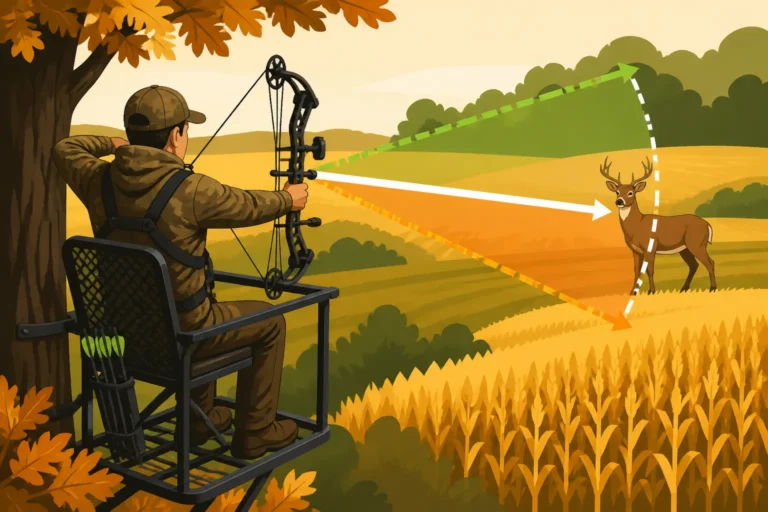
It is equally crucial to be acutely aware of where your shots might potentially travel, especially during Iowa shotgun season tactics for party hunting or when pheasant hunting Iowa grass and crop edges. Under no circumstances should you ever discharge a firearm or bow across private property lines. Always ensure that you have a safe and clear backdrop for your shot. This careful consideration is not just an essential safety protocol, but it also reflects good neighborly conduct, which is paramount when interacting with the landowners who have so generously provided this invaluable access.
Should you happen to encounter a landowner while you are hunting on an IHAP tract, a simple, friendly wave and a polite, appreciative greeting can go an incredibly long way. Seize the opportunity to express your gratitude for their participation in the program. Maintaining positive and respectful relationships between hunters and landowners is a foundational element for the continued and future success of public access initiatives like IHAP. Always remember, this is fundamentally their land, and as hunters, we are privileged guests.
Portable Stands, Blinds, and Leaving No Trace
The explicit "walk-in only" designation, coupled with the inherent nature of IHAP leases, generally dictates that any form of semi-permanent hunting structures are strictly prohibited. Hunters utilizing these tracts are under a clear expectation to adhere rigorously to a "leave no trace" ethic, ensuring that the property is returned to its original state, exactly as it was discovered. This commitment to minimal impact is vital for the program's success.
As a general rule, are screw-in steps legal in Iowa? No, they are not legal on most public or IHAP land, primarily because they inflict damage upon trees. Instead, hunters must strictly adhere to portable stand rules on Iowa public ground, which typically involve using hang-on stands equipped with strap-on steps, specialized climbing sticks, or highly mobile saddle hunting setups. The crucial principle here is that every item you bring onto the property, including your entire treestand setup, must be completely removed at the conclusion of your hunt. There are often strict timeframes for removal, sometimes requiring daily removal, while other regulations may permit overnight stand storage on public ground for a limited period after the season closes. Always, without exception, meticulously check the specific regulations for the particular IHAP area you intend to hunt.
Ground blinds are frequently a popular and versatile choice for IHAP areas, particularly in more open terrain or when a quick and adaptable setup is desired. If you opt to use a ground blind, it too must be readily portable and completely removed after each hunt or at the close of the season, in strict accordance with local regulations. Brushing in a ground blind with naturally occurring, detached materials from the immediate vicinity is generally permissible, but the act of cutting down or otherwise damaging live vegetation for the purpose of creating cover is typically prohibited. Ensure that you remove all remnants of your blind and any added brush when you depart, leaving no sign of your presence.
The overarching and foundational principle for all activities on these lands is to "leave no trace on Iowa walk-in ground." This profound commitment means diligently packing out every single item you brought in, including all spent shell casings, any food wrappers, and any other refuse or personal belongings. Do not create new, unauthorized trails, fell trees, or in any other way alter the natural landscape. IHAP areas are meticulously managed with habitat conservation as a primary goal, and as hunters, our presence should be as minimal, respectful, and transient as humanly possible, ensuring the land remains pristine for wildlife and future users.
Maximizing Your Success on Walk-In Only IHAP Tracts
Hunting "walk-in only" IHAP ground inherently presents a unique set of challenges, but these very challenges also unlock incredible opportunities for the persistent and strategic hunter. The restrictions and requirements that might deter some individuals can, in fact, be skillfully leveraged to your distinct advantage, ultimately helping you find success where others might simply give up or overlook prime areas. The key lies in adapting your tactics and cultivating a resilient mindset specifically tailored to this particular hunting environment.
Strategies for Handling Hunting Pressure
Hunting pressure is an ever-present and perennial concern on nearly all public lands, and even "walk-in only" IHAP tracts, despite their access limitations, are not entirely immune to it. However, the unique characteristics of these areas allow for the implementation of specific and highly effective strategies to escape the crowds and locate less-pressured game. A deep understanding of how other hunters move and how deer react to varying levels of pressure is absolutely fundamental to your success here.
The primary and most significant advantage inherent in "walk-in only" areas is that this restriction fundamentally compels hunters to exert more effort. A considerable number of hunters will invariably choose to stick close to the designated parking areas, naturally gravitating towards the path of least physical resistance. This predictable behavior creates a discernible "pressure gradient," where the deepest and most remote parts of a property often experience a dramatically reduced level of human disturbance. Therefore, be prepared to put in the miles. Consistently walk further than you anticipate anyone else will. This often translates to accessing areas that might require a mile or even more of hiking, but this sustained effort can frequently lead to surprising and rewarding encounters with mature, less-wary animals.
Consider strategically planning your hunts during weekdays, specifically outside of the hectic opening weekends. The difference in pressure between weekday versus weekend public land can be astonishingly stark. Given that most hunters have jobs or other weekly commitments, Tuesday through Thursday often present significantly quieter and more serene hunting conditions. Similarly, exploring less popular hunting seasons, such as the late muzzleloader deer hunting in Iowa, can also provide a notably less pressured and more enjoyable hunting experience, allowing you to often have vast tracts of land to yourself.
Another highly effective strategy involves utilizing obscure or more difficult-to-access entry points. While the main parking lot might be crowded with vehicles, if there exists an unmarked pull-off, a less obvious approach, or a route that demands navigating some tricky or challenging terrain, that is frequently where you will discover genuine solitude and less-pressured game. Always consider how hunting pressure patterns on Iowa public land evolve and shift throughout the season and adjust your tactical approach accordingly. Sometimes, even a slight deviation from the most obvious or well-worn path can position you squarely in a prime, overlooked location.
Best Times to Hunt IHAP Walk-In Ground
Knowing precisely when to hunt IHAP walk-in areas is just as critically important as knowing where to focus your efforts. The inherent "walk-in only" nature of these properties can make them particularly stellar performers during specific periods of the hunting season, offering unique and significant advantages to the diligent and persistent hunter who is willing to put in the effort.
Early-season bowhunting over water can prove to be exceptionally productive on IHAP tracts, particularly if they harbor secluded, hidden ponds or winding creek bottoms. During the often-warm conditions of October bow season heat strategy, deer possess a strong and undeniable need for water, and these walk-in areas can offer undisturbed, vital access to these critical resources. Since relatively few hunters are willing to undertake the arduous trek deep into these areas specifically for water sources, these spots can truly be golden, often holding unpressured deer.
The Iowa rut, typically peaking in when the Iowa rut peaks during late October and early November, represents another undeniably prime time to be in these walk-in areas. During the intense peak of the rut, bucks are constantly cruising, covering vast amounts of ground relentlessly in their search for does. The significantly reduced human pressure in the interior portions of IHAP tracts means these bucks are far more likely to move naturally and boldly during daylight hours, making them susceptible to aggressive tactics. This period is an ideal time for highly mobile hunting, allowing you to cover ground effectively and employ rattling and grunting during the Iowa rut to entice a curious or dominant buck.
Late-season food source hunting in Iowa, especially during the bitter cold of December and into January, can be incredibly effective on IHAP walk-in areas. If these specific tracts contain isolated pockets of standing corn, unpicked bean fields, or rich natural browse that other hunters are not accessing due to the difficulty, deer will instinctively gravitate to them for crucial, calorie-dense sustenance. The unwavering willingness to walk deep into these often-frigid areas during harsh winter conditions can frequently lead to surprising and memorable encounters with deer that have not been pressured out of their established routines.
Regardless of the specific season you choose to hunt, always carefully consider the prevailing weather conditions. A sharp cold front coupled with stable wind can be absolutely fantastic for deer movement. A day characterized by light, steady rain might deter many other hunters, leaving the woods significantly quieter and more conducive for your hunt. However, always make it a point to avoid conditions that would render the trailing of a wounded deer exceptionally difficult, such as heavy snowfall that could obscure blood trails or torrential downpours that could wash them away. The added inherent challenge of game recovery on "walk-in only" ground means that careful consideration of potential tracking conditions is paramount.
| IHAP Walk-In Hunting Strategy | Description | Key Advantage |
|---|---|---|
| Deep Penetration | Consistently hike significantly further from parking areas than the average hunter is willing to go. | Directly accesses less-pressured bedding, sanctuaries, and primary feeding areas that others overlook. |
| Utilize Obscure Access | Actively seek out and use less obvious entry points that necessitate more effort or unique navigation to reach. | Effectively avoids crowds at main parking lots; increases chances of surprising deer in undisturbed zones. |
| Weekday Hunting | Prioritize hunting efforts during Monday through Friday, consciously avoiding the inherently crowded weekends. | Results in significantly reduced human presence and activity; fosters more natural and predictable deer movement patterns. |
| Mobile Hunting | Employ a lightweight treestand saddle or a highly portable hang-on stand setup to move and adapt throughout the day. | Allows for quick adaptation to changing deer movement, effective chasing of rutting bucks, and avoidance of stale stand locations. |
| Focus on Water (Early Season) | Strategically target hidden ponds, secluded water sources, or discreet creek bottoms during warmer early season days. | Deer have an undeniable need for water; ensures less pressure on remote water sources where deer feel safe. |
| Food Source (Late Season) | Meticulously identify isolated, undisturbed food plots, overlooked crop remnants, or key natural browse areas. | Deer concentrate heavily on caloric food sources during cold weather; offers less competition for prime feeding areas. |
| Leave No Trace | Commit to packing out absolutely everything you pack in; strictly avoid creating any permanent or semi-permanent setups. | Crucial for maintaining positive landowner relationships, preserving pristine habitat, and ensuring future program access. |
| E-Scout & Boots-on-Ground | Master the combination of in-depth online mapping with minimal, calculated physical scouting trips. | Enables efficient identification of prime areas and strategic planning without over-pressuring or contaminating the hunting ground. |
Disclaimer
Please be aware that hunting regulations and land access rules in Iowa are subject to change by the Iowa Department of Natural Resources (DNR) without prior notice. Always consult the absolute latest official Iowa DNR regulations and the official Iowa Hunting Atlas before planning any hunting trip. This guide is for informational purposes only and should not be considered a substitute for official legal advice or the most current regulatory information.