Portable Stand Rules on Iowa Public Land
There's nothing quite like finding that perfect tree on public land, visualizing the deer path, and dreaming of the perfect shot. But that excitement can quickly turn to frustration and confusion when you start wondering if you can even leave your stand there, and for how long. The rules around portable stands on Iowa public land can feel like a minefield, with different regulations for various types of properties and seasons. This guide is going to cut through that confusion, giving you a clear, realistic understanding of what's allowed and, more importantly, what isn't, so you can hunt with confidence and avoid any unwelcome surprises.
Understanding the "Why" Behind Public Land Stand Rules
Before we dive into the nitty-gritty of dates and definitions, it helps to understand why these rules exist in the first place. It's not just to make your life harder, I promise. Public land, whether it's a state forest, a Wildlife Management Area (WMA), or a county park, is a shared resource managed by the Iowa Department of Natural Resources (DNR) or local county conservation boards. Their primary goals are often to ensure fair access for all users, protect natural resources, and maintain the aesthetic value of the land.
Protecting Natural Resources and Wildlife Habitat
One of the biggest drivers behind regulations on portable stands is the protection of the trees themselves. Many older hunting practices, like using screw-in steps or permanently affixing stands to trees, can cause significant damage. These injuries can make trees susceptible to disease, insects, and even premature death. When you multiply that by hundreds or thousands of hunters, the impact on the forest ecosystem can be substantial. The DNR is trying to minimize this cumulative damage, ensuring healthy timber for both wildlife and future generations of hunters.
Think about it from the perspective of a land manager: if every hunter left a semi-permanent mark on a tree, eventually the most popular hunting spots would look like a war zone. By requiring stands to be temporary and non-damaging, they're preserving the integrity of the habitat. This also helps ensure that the land remains productive for deer, turkeys, and other game species.
Ensuring Fair Access and Preventing Claim Jumping
Another crucial reason for these rules is fairness. Imagine spending hours scouting a phenomenal pinch point or a secluded bedding area, only to show up on opening day and find that someone else "claimed" the spot by leaving a stand there all year. Public land is, by its very definition, for everyone. Leaving stands out for extended periods can be seen as an attempt to monopolize prime locations, which goes against the spirit of public land hunting.
The rules aim to create a level playing field. If everyone has to remove their stands by a certain date, it ensures that every hunter starts fresh, scouting and setting up their stands each season, or at least pulling them out and putting them back in according to the regulations. It prevents the perception (and often the reality) of individuals permanently owning a piece of public ground. It also helps reduce theft, a real concern for hunters who invest good money in their gear.
Core Rules for Portable Stands on Iowa Public Land
Okay, let's get down to brass tacks. While specific dates and nuances can vary slightly by management area, there are some fundamental rules that apply across most Iowa public hunting lands. Understanding these is key to staying legal and respectful.
The "Temporary" Principle and Removal Deadlines
The most important concept to grasp is that all stands on public land must be considered "portable" and "temporary." This means they are not to be permanent fixtures. The critical aspect of "temporary" revolves around strict removal deadlines. Generally, you cannot leave any portable tree stand or ground blind out on Iowa public lands year-round.
Currently, for most Iowa DNR-managed lands, including Wildlife Management Areas (WMAs) and state forests, any tree stand or ground blind must be removed by January 10th of each year. They cannot be placed back on public land until September 1st. This gives the land a crucial "rest period" and allows managers to clean up any forgotten gear. For many hunters, this means scrambling after the late muzzleloader or January antlerless seasons to get their gear out of the woods. It's a common oversight that can lead to stands being confiscated or even fines. You can learn more about Overnight Stand Storage on Public Ground to ensure you're compliant.
It's absolutely essential to check the specific regulations for the area you plan to hunt. County conservation board lands might have slightly different dates or more restrictive rules, so don't assume statewide uniformity. Many counties have their own regulations that you can find on their respective websites or by calling their offices.
No Damage to Trees: The Screw-In Step Dilemma
This rule is pretty straightforward but often violated, sometimes unknowingly. No stand, step, or any other device should be used if it causes damage to a tree. This includes things like:
- Screw-in steps: These are a definite no-go on virtually all Iowa public land. While they were once popular for creating semi-permanent access points, the holes they leave in trees are considered damaging. If you're wondering if you can still use them, our article on Are Screw-In Steps Legal in Iowa? delves into this specifically.
- Tree spikes or nails: Similar to screw-in steps, anything hammered or drilled into a tree to create a step or support is prohibited.
- Ladders nailed to trees: This is more common with homemade stands, but any permanent ladder that damages the tree is illegal.
- Cabling or wiring that girdles a tree: Over time, cables or wires wrapped tightly around a tree can grow into the bark, effectively girdling and killing the tree. Ensure any attachment methods use straps that distribute pressure and don't embed into the bark.
The spirit of this rule is to leave the tree as undisturbed as possible. That means using non-damaging attachment methods like ratchet straps, cam buckles, or chains that wrap around the tree without penetrating the bark. Modern climbing sticks and hang-on stands are designed with these principles in mind, using straps and rubber coatings to protect the tree.
Tagging Requirements and Personal Identification
Most public land rules require that any portable tree stand or ground blind left unattended (even if temporarily) must be clearly tagged with the hunter's name and address or Iowa DNR customer ID number. This allows conservation officers to identify the owner and enforce the regulations.
Forgetting to tag your stand is a simple mistake that can have consequences. If a stand is found without proper identification, it can be considered abandoned and may be removed by DNR staff. Think of it as leaving your wallet in a restaurant – without identification, it’s just unclaimed property. Taking the extra minute to properly tag your gear ensures that if there's ever a question, they can contact you directly.
Permitted and Prohibited Equipment
Navigating the equipment landscape can feel like a maze, especially with so many innovative products on the market. Let's break down what's generally accepted and what you should definitely leave at home when hunting Iowa's public grounds.
Accepted Portable Stands and Methods
For the most part, modern, commercially manufactured portable stands are designed with these public land regulations in mind. You're generally in good shape if you're using:
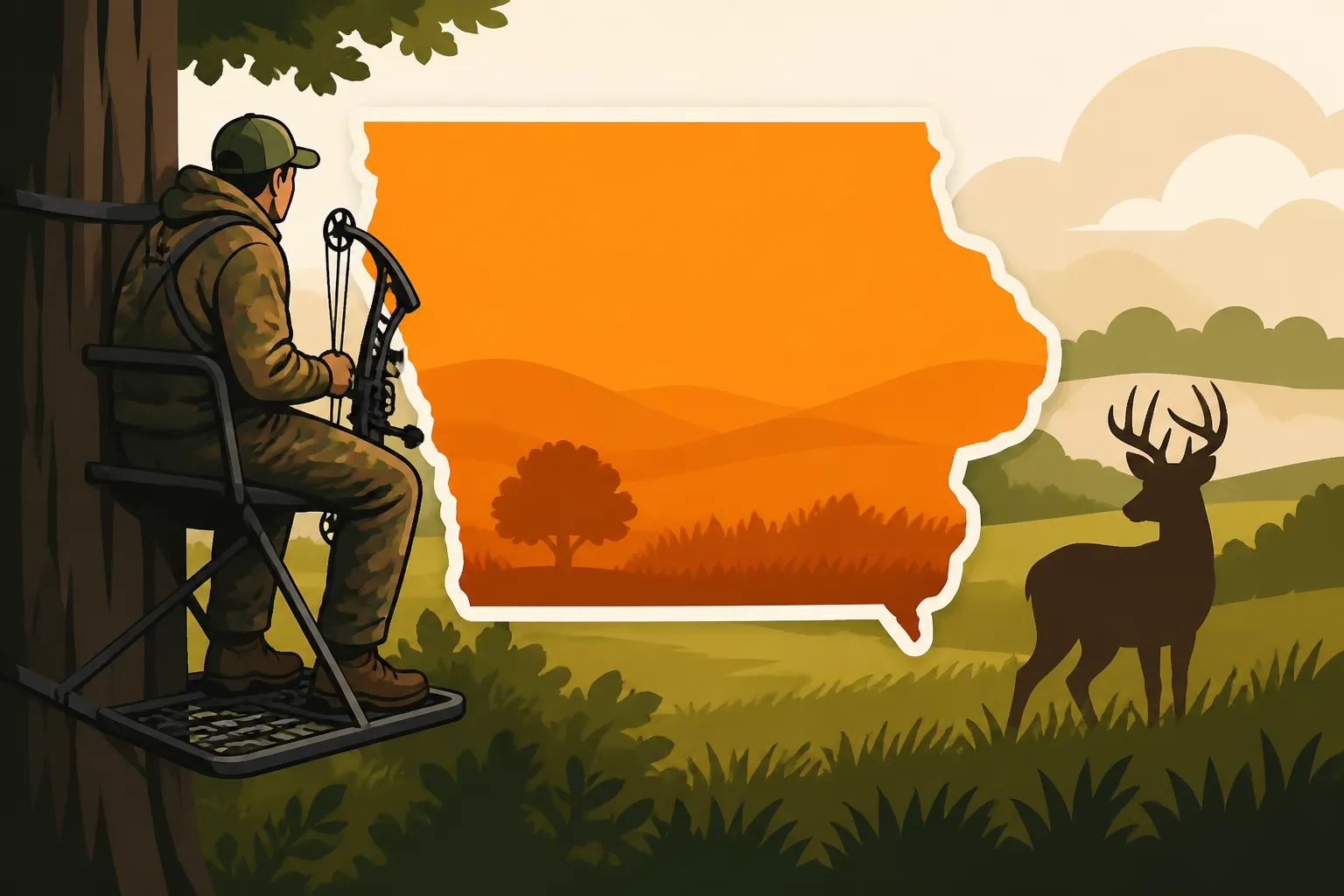
- Hang-on stands: These are popular choices for public land hunters. They attach to a tree with straps or chains and are typically lightweight enough to carry in and out. Many hunters will leave a few hang-on stands out during the season, but they must be removed by the January 10th deadline.
- Climbing stands: Ideal for mobile hunters, these stands allow you to ascend a tree without needing separate climbing aids (though some models benefit from an initial stick). They are inherently portable and, by their nature, leave no lasting impact on the tree.
- Saddle hunting setups: This method has gained massive popularity for its extreme portability and minimal footprint. A saddle system requires a climbing method, like sticks or an aider, and then you hunt suspended in a harness-like saddle. These are fully compliant as long as the climbing method doesn't damage the tree and is removed by the deadline. If you're interested in this highly mobile approach, you might want to check out Mobile Saddle Hunting in Iowa.
- Ground blinds: Fabric ground blinds are generally permitted, again, with the same "temporary" and "removal" caveats. You can brush them in effectively, as discussed in Brushing In a Ground Blind, but they can't become permanent structures and must be removed by the designated date.
The key takeaway is that if it's designed to be put up and taken down with relative ease, without damaging the tree, and you adhere to the seasonal removal dates, you're likely on the right track. Many hunters utilize apps like GoHunt to scout areas and identify good trees for these types of stands before they even set foot on the property, helping them plan ahead for easy setup and removal.
Prohibited Equipment and Practices
These are the items and methods that are almost universally prohibited on Iowa public hunting lands:
- Permanent stands: Any stand that is built into a tree, uses lumber, or is intended to remain in place indefinitely is illegal. This includes homemade wooden ladder stands that are left out year after year.
- Screw-in steps and tree spikes: As mentioned, these are out. Even if you only use them for a single hunt and then remove them, the act of screwing them into the tree is damaging.
- Any device that damages the tree: This is a broad category, but it essentially means anything that penetrates the bark, cuts the tree, or causes structural damage. Using heavy chains that dig into the tree without protective material is another example of what could be considered damaging.
- Stands left past the deadline: This is perhaps the most common violation. Forgetting or simply not bothering to retrieve your stand by January 10th (or whatever the specific date is for that property) means it could be confiscated. If you're serious about Public Land Deer Hunting in Iowa, staying on top of these deadlines is non-negotiable.
Table: Common Portable Stand Regulations on Iowa Public Land
| Stand/Method Type | Generally Permitted? | Key Restrictions |
|---|---|---|
| Hang-on Stand | Yes | Must be removed by Jan 10th, no tree damage, tagged |
| Climbing Stand | Yes | Must be removed by Jan 10th, no tree damage, tagged |
| Saddle Hunting Setup | Yes | Must be removed by Jan 10th, no tree damage, tagged |
| Ground Blind | Yes (seasonal) | Must be removed by Jan 10th, no permanent fixtures, tagged |
| Ladder Stand | Generally No (if left) | Considered semi-permanent if left unattended; often only for temporary daily use |
| Screw-in Steps | No | Prohibited due to tree damage |
| Tree Spikes/Nails | No | Prohibited due to tree damage |
| Permanent/Homemade Wood | No | Illegal; considered non-portable and damaging |
Best Practices for Using Portable Stands on Public Land
Understanding the rules is one thing, but actually implementing them in the field and being a good steward of our public hunting resources is another. Here are some best practices that can help you stay legal, ethical, and successful.
Scout Thoroughly and Plan Your Setup
The best way to avoid issues is to be prepared. Before you even set foot on public land with a stand, do your homework. Use online resources like the Iowa DNR Hunter Atlas or mapping applications such as GoHunt to identify public boundaries, access points, and potential stand locations. Pay close attention to the specific regulations for that WMA, state forest, or county property – they are often listed right on the maps or linked from the DNR website.
When you're actually scouting, look for trees that are suitable for your portable stand and that allow for clear shooting lanes without needing to hack away at branches. Think about your ingress and egress routes to avoid bumping deer, a topic covered well in Access Routes That Do Not Bump Deer. Having a plan for where your stand will go, how you'll get it there, and when you'll remove it will save you a lot of headaches later.
Minimize Your Footprint: Leave No Trace
The "Leave No Trace" principle is paramount on public land. This extends beyond just your stand. When you're setting up, avoid excessive cutting of shooting lanes. Trim only what's absolutely necessary and remove any cut branches from the area. After your hunt, take out everything you brought in, including trash, flagging tape, and any other items.
This commitment to leaving the land as you found it (or better!) benefits everyone. It preserves the natural beauty of the area, reduces negative impacts on wildlife, and ensures that the next hunter coming through finds an undisturbed landscape. It's about being a responsible outdoor enthusiast and respecting the resource, a concept highlighted in Leaving No Trace on Iowa Walk-In Ground.
Be Mindful of Other Hunters
While public land is for everyone, it can get crowded, especially during peak seasons. Even if you're perfectly legal in where and how you place your stand, being courteous to other hunters goes a long way. If you find another hunter's stand, respect their space and move on to another area. Similarly, if you're Hanging Stands on Iowa Public Ground, be aware that others may be doing the same.
Consider the potential for Hunting Pressure Patterns on Iowa Public Land. If you know an area receives heavy pressure, it might be wise to choose a more mobile strategy or hunt deeper in, where fewer hunters are willing to go. Utilizing apps like GoHunt can help you identify less-pressured parcels or even private land that borders public access, giving you an edge.
Always Review Current Regulations
I cannot stress this enough: always consult the current Iowa Hunting and Trapping Regulations booklet. Rules can change from year to year, or even be modified mid-season in rare circumstances. The DNR website is also an excellent resource for the most up-to-date information. Don't rely solely on what you "heard" or what was true five years ago. A quick check before the season starts can prevent a costly fine or, worse, losing your valuable hunting gear. This goes hand-in-hand with Scouting Iowa Public Land Before the Opener, ensuring you're up-to-date on all rules before you even hang a stand.
Remember, the responsibility to know and follow the rules falls squarely on you, the hunter. By taking a proactive approach, you ensure a smoother, more enjoyable, and compliant hunting season on Iowa's fantastic public lands.
Disclaimer
Please note that hunting regulations are subject to change. Always consult the most current Iowa Department of Natural Resources (DNR) hunting and trapping regulations booklet or their official website before heading afield to ensure you are fully compliant with all state and local laws. This article is intended for informational purposes only and should not be considered legal advice.