Whitetail Home Range in Farm Country
One of the most perplexing challenges for any hunter in Iowa, especially when chasing whitetails, is trying to figure out where those deer actually live. You scout a perfect timber block, hang a stand, and for a few days, you see movement. Then, poof, they're gone, only to reappear a quarter-mile away in a freshly picked bean field. It’s enough to make you pull your hair out! This guide is all about peeling back the layers on whitetail home ranges in Iowa's farm country, helping you understand why deer move the way they do and how you can adapt your strategy to their ever-shifting world.
Understanding the Farm Country Challenge
Hunting in Iowa means hunting in an agricultural state, and that comes with a unique set of challenges and opportunities when it comes to understanding deer movement. Unlike vast, unbroken wilderness, farm country is a patchwork, and a deer's home range here is often a complex, dynamic beast.
The Dynamic Nature of Agricultural Landscapes
Imagine trying to keep track of your groceries when your pantry items are constantly changing locations, sometimes disappearing entirely, and then reappearing in different aisles. That's a bit like a whitetail's world in Iowa farm country. The landscape isn't static; it's a living, breathing, and constantly altering ecosystem driven by the rhythm of the seasons and the hand of the farmer.
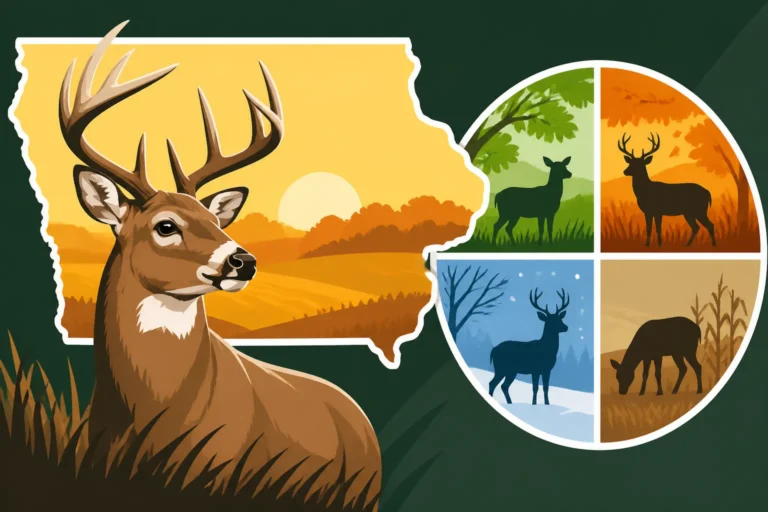
In the spring, everything is fresh growth and open ground. By summer, towering cornfields provide incredible cover and an abundant food source. Come fall, combines sweep through, turning a secure haven into an exposed stubble field overnight. These dramatic shifts in cover and food directly impact where deer feel safe, where they eat, and therefore, what constitutes their "home range" at any given moment. A prime bedding area in July might be a wide-open, barren field in November, forcing deer to relocate their core security zones. This dynamism means that a set understanding of a home range is less effective than an adaptive one.
Why Your Deer Disappear (and Reappear)
It's a classic hunter's frustration: you've patterned a nice buck for weeks, seen him use a particular creek bottom, and then, without warning, he vanishes. The most common reason for this "disappearing act" is often tied directly to these agricultural cycles. When a standing cornfield, which offered perfect thermal cover and a buffet of food, is suddenly harvested, the deer that called it home are displaced. They don't just cease to exist; they simply shift their focus to the next available resources.
This means their home range expands or contracts, or their core activity area moves, to encompass new bedding, different food sources, and updated travel routes. What might seem like a disappearance is often just a relocation within an adapted, though still relatively confined, home range. Understanding that these shifts are often predictable based on farming activity, weather patterns, and hunting pressure is key to anticipating their movements and finding them again. They don't have infinite space, but they will exploit every bit of it to find security and sustenance.
Core Components of an Iowa Whitetail Home Range
Despite the ever-changing agricultural landscape, certain fundamental elements define an Iowa whitetail's home range. These are the non-negotiables: secure bedding, consistent food, reliable water, and safe travel corridors.
Bedding Cover is King
In Iowa farm country, security is paramount for a whitetail, and that security starts with quality bedding cover. This isn't always vast timber; it can be incredibly dense, often overlooked spots. Think about those gnarly Cedar and Locust Thickets as Bedding Cover that are almost impossible for a human to walk through, especially in late fall when other foliage has dropped. These provide thermal cover from cold winds and visual security from predators, two crucial needs for a deer trying to conserve energy.
Then there's the CRP Grass and Where Bucks Bed, which offers incredible concealment, especially in areas with little timber. Bucks will often bed on the downwind side of a ridge in CRP, using their noses to cover their back trail and their eyes to watch for frontal threats. Creek bottoms, with their thick undergrowth, fallen timber, and often diverse vegetation, also serve as critical bedding havens. During the harvest, even remnants of Standing Corn Late in the Iowa Season can provide temporary, but highly effective, bedding cover, especially for mature bucks looking to avoid pressure. Identifying these specific types of cover is step one in finding where deer spend the majority of their time.
Food Sources Throughout the Seasons
The availability of food drives much of a whitetail's daily movement and, by extension, shapes their home range. In Iowa, this is almost exclusively tied to agriculture. In the early season, newly planted alfalfa fields or lush clover plots can be major draws. As summer progresses, soybeans become a highly preferred food source, offering protein-rich forage. When August hits, cornfields provide not just cover but also a bounty of caloric energy as the ears mature.
After the harvest, the dynamics shift dramatically. Deer will move into picked corn and bean fields, gleaning the dropped kernels and beans. While this isn't as high-quality as standing crops, it's still a crucial caloric intake source. Beyond the row crops, keep an eye on mast crops like acorns in timbered areas, especially if there's a good oak stand. These natural food sources can become incredibly attractive when agricultural options dwindle. Deer are constantly assessing the risk-reward of food sources, balancing caloric intake with security. The better the food, the more likely they are to incorporate it into their regular routine, even if it means a slightly longer trek.
Water, Travel Corridors, and Escape Routes
Just like us, deer need water to survive, though they often get a fair amount from the vegetation they eat. However, during dry spells or late season, consistent water sources like ponds, creeks, and even damp depressions in fields become focal points. These can often be found along natural drainages or in the lowest points of a landscape, often tying directly into a Hunting a Narrow Creek Corridor.
Travel corridors are the highways and byways within a deer's home range, connecting bedding areas to food sources and water. These can be timber edges, fencelines, drainage ditches, river bottoms, or even just subtle changes in topography that offer concealment. Deer prefer to move with cover, and understanding these "veins" of movement is critical. Finally, every deer needs an escape route – a quick way to vanish if danger presents itself. These are often the same dense thickets used for bedding, or simply a quick path into a deep ravine or brushy draw. Recognizing these components on a map and on the ground allows you to predict movement patterns and understand the boundaries of a whitetail's world.
Factors Influencing Home Range Size and Location
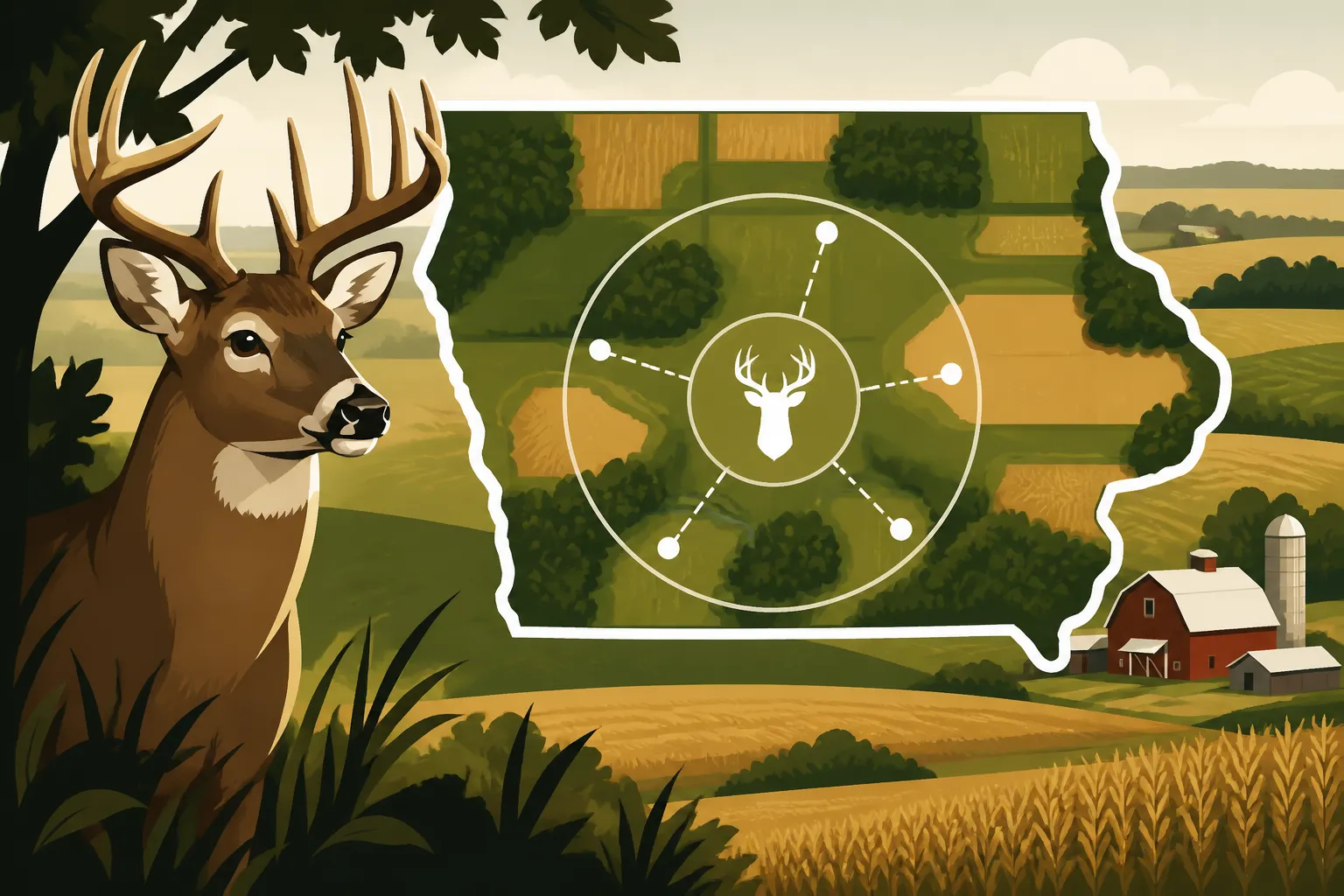
A whitetail's home range isn't a fixed circle on a map; it's a flexible concept that can stretch and shrink based on a variety of internal and external pressures. Several key factors dictate just how large or small an individual deer's range might be.
Resource Availability and Quality
This is perhaps the most significant determinant of home range size. If an area offers abundant, high-quality food, dense cover, and reliable water all within a small footprint, a whitetail's home range can be surprisingly compact. A mature buck might live his entire life within a 200-acre section if it contains everything he needs, year-round. Conversely, if resources are scarce or widely dispersed, deer are forced to expand their home ranges significantly to find what they need.
Consider a property with a small, isolated timber block surrounded by vast, open fields. Deer living there will have to travel much further to access both food and security, resulting in a larger home range. The quality of the resources also plays a role; a deer might expand its range to access a highly preferred food source, like a prime acorn flat, even if other food is closer but less appealing. This is why knowing the lay of the land, and the current state of agricultural fields, is so vital. A tool like GoHunt's mapping features can be invaluable here, letting you zoom in and analyze the type of terrain and potential resources available in any given area.
Pressure from Hunters and Predators
Deer are incredibly sensitive to pressure, and this can dramatically influence their movement patterns and the effective size of their home range. Areas with high human activity – whether it's hunting pressure, hikers, or even farming operations – will often see deer become more nocturnal or shift their core bedding areas to more remote, secure locations. This can effectively expand their home range as they seek out pockets of undisturbed sanctuary.
On public lands, this effect is particularly pronounced, leading to complex Hunting Pressure Patterns on Iowa Public Land. Deer learn very quickly where the pressure is, and they will adapt their movements to avoid it. A buck that once routinely fed in a field edge could move to bedding deeper in a timber block or even shift to a completely different part of his range that offers more seclusion. Similarly, predator populations, whether coyotes or even domestic dogs, can also influence where deer feel safe enough to bed and forage, potentially causing them to use a wider area for security.
Age, Sex, and Social Dynamics
The life stage and sex of a whitetail also play a huge role in home range characteristics. Does, particularly those with fawns, tend to have smaller, more stable home ranges. They often live in matriarchal family groups and are less inclined to venture far from known safe zones, especially when caring for young. Their movements are often dictated by the needs of their offspring and the availability of immediate resources.
Young bucks, on the other hand, often undergo a period of dispersal, where they strike out from their birth range to establish their own territory. This can mean a temporary, much larger range as they seek new areas, eventually settling down. For mature bucks, the rut is a game-changer. While they have a core home range they frequent most of the year, during the breeding season, their movements expand dramatically as they search for receptive does. This is When the Iowa Rut Peaks, and you see them cruising far from their typical haunts, potentially leading to a much larger temporary home range. Understanding this Buck Dispersal Distance in Iowa is key to locating older deer. Even outside the rut, mature bucks will often utilize a larger home range than does, especially if quality cover and food are spread out, or if they need to avoid pressure.
Applying Home Range Knowledge to Your Iowa Hunt
Knowing about home ranges is one thing; actually applying that knowledge to put yourself in front of a deer is another. It requires a blend of modern tools, traditional scouting, and a healthy dose of adaptability.
E-Scouting and Boots-on-the-Ground
Before you even step foot in the woods, the best place to start understanding a whitetail's home range is from your couch. E-Scouting Iowa Farm Country From Home using aerial imagery, topographical maps, and public land overlays can reveal hidden funnels, potential bedding thickets, and access points that you might otherwise miss. Look for convergence points of timber, brush, and water. Identify subtle draws that offer concealed travel. Applications like GoHunt provide robust mapping platforms that let you layer different data sets, marking potential food plots, bedding areas, and pinch points. This digital groundwork helps you form a hypothesis about where deer are living and moving.
Once you have your digital roadmap, it's time to hit the field. Boots-on-the-ground scouting validates your e-scouting observations. Look for fresh rubs, scrapes, defined deer trails, and actual bedding sign. Pay attention to how deer are using the terrain. Is there a faint trail leading directly from a dense cedar thicket to a picked cornfield? Is there a subtle dip in the landscape that offers a hidden travel route? Combining these two methods allows you to confirm assumptions and uncover the subtle nuances that define a whitetail's actual home range within a given area.
Adapting to Seasonal Shifts
The biggest mistake a hunter can make in Iowa farm country is to assume a deer's home range is static. It's not. You have to be a chameleon, ready to adapt as the seasons change and the agricultural landscape transforms. What works in early archery season when soybeans are green will likely not work once those beans are brown and harvested.
As crops come down in the fall, deer will shift their bedding and feeding habits. They might move from hiding in standing corn to retreating into the densest timber or CRP fields. Their primary food source will change from lush crops to gleaning, acorns, or even brassicas in food plots. This means your stand locations, your approach, and even your target areas need to change with them. Think about those crucial transition periods, like late October when the first corn comes out, or late November when the last beans are picked. These are key times when deer will be adjusting their core home ranges, and if you can predict those shifts, you'll be one step ahead.
Minimizing Your Impact
Finally, understanding a whitetail's home range means respecting it. Every time you enter a deer's world, you create a disturbance. The more you disturb them, the more likely they are to shift their home range to an even more secure, and often harder to hunt, location. This is why careful planning of Access Routes That Do Not Bump Deer is so crucial.
Always consider wind direction, thermals, and the quietest path to and from your stand. Try to avoid walking through known bedding areas or across heavily used travel corridors during peak deer activity. Even your scent trail can alter how a deer uses its home range. The goal is to slip in, hunt effectively, and slip out, leaving as little trace as possible. By minimizing your impact, you encourage deer to continue using their established home ranges, making them more predictable and, ultimately, more huntable. This strategy of low-impact hunting is vital, especially when you've finally pinpointed a promising area within a deer's core range.
Home Range Dynamics: A Quick Reference
Understanding these shifts can make all the difference in your Iowa hunting strategy.
| Factor | Early Season (Sept-Oct) | Rut (Late Oct-Mid Nov) | Late Season (Dec-Jan) |
|---|---|---|---|
| Dominant Food Sources | Green soybeans, corn, alfalfa, mast | Scraped beans, picked corn, mast | Picked corn, standing beans (if any), brassicas, browse |
| Primary Bedding Cover | Standing corn, dense timber, CRP, creek bottoms | Dense timber, deep draws, CRP, cedar thickets | Thick thermal cover (cedar, south-facing slopes, thickets) |
| Buck Home Range Size | Moderate, centered on food/cover | Significantly expanded (seeking does) | Moderate to small, concentrated on best food/cover |
| Doe Home Range Size | Small, stable, near fawns | Stable, but may move more due to buck pressure | Small, stable, focused on food |
| Travel Patterns | Consistent dawn/dusk, direct to food | Cruising, erratic, searching | Focused on warmth, food, daylight movement often limited |
| Human Pressure Impact | Moderate, pushes to nocturnal | Moderate, bucks still rut-driven | High, pushes to nocturnal, shifts bedding to remote cover |
Disclaimer
This article is for general informational purposes only and does not constitute professional advice. Laws, prices and regulations vary by location and change over time. Consult a qualified professional for guidance on your specific situation.