County Park Hunting Access in Iowa
It’s a common scenario: you’re scanning a map, perhaps after a long day at work, looking for new places to hunt in Iowa, and you spot a patch of green land near your home. "Aha!" you think, "Public land! This must be open." But when it comes to Iowa's county parks and recreation areas, that assumption can quickly lead to disappointment or, worse, a violation. These local gems often have their own unique, and sometimes surprisingly restrictive, hunting regulations that can catch even seasoned hunters off guard. This guide is here to untangle those complexities, helping you understand how to identify, research, and ethically hunt these often-overlooked opportunities.
The Complexities of County Park Hunting in Iowa
Unlike the larger state-managed Wildlife Management Areas (WMAs) or federal lands, Iowa's county parks and conservation areas operate under the jurisdiction of individual county conservation boards. This crucial difference means that hunting rules aren't uniform across the state. What's allowed in one county's park might be strictly prohibited just across the county line, even if the habitat looks identical. This patchwork of regulations is the biggest hurdle for hunters hoping to explore these areas.
You might pull up your favorite mapping app, like onX Hunt, see a green boundary indicating public ownership, and assume it's fair game. While onX Hunt is an invaluable tool for visualizing property lines and public land boundaries, it’s critical to remember that county-level hunting regulations aren't always fully detailed within its layers. The app can show you where the public land is, but it can’t always tell you what you can legally do there. This is where hunters often get into trouble, relying solely on visual cues without digging into the specific local ordinances. Many of these parks are designed primarily for hiking, picnicking, fishing, and other forms of passive recreation, and hunting is often a secondary, or even prohibited, activity.
Why County Rules Differ So Much
The variation in rules stems from several factors unique to local management. Each county conservation board has its own priorities, influenced by local populations, perceived recreational needs, and the specific characteristics of the land they manage. For instance, a county park situated right on the edge of a bustling town might have strict "no hunting" policies to ensure public safety for hikers and dog walkers, or it might be archery-only with limited access points. Meanwhile, a more remote county conservation area further out in the countryside might allow a broader range of hunting activities, including firearm seasons, precisely because it receives less general recreational use.
These boards also face pressure from various user groups. Hikers, birdwatchers, mountain bikers, and hunters all want to use these public spaces, and county staff must balance these often-conflicting interests. This balance often results in compromises, such as restricting hunting to certain seasons, specific parcels within a larger park, or mandating archery equipment only. It’s not about making hunting harder, but about managing diverse recreational demands within limited spaces. Understanding this local context can help you approach your research with the right mindset.
How to Research and Verify County Park Regulations
Navigating the unique rules for each county park requires a proactive and diligent approach. You can't just show up with your gear and hope for the best; that's a recipe for disappointment, or worse, a citation. Here’s a step-by-step method to ensure you’re hunting legally and ethically in Iowa’s county conservation areas.
The first step is always to identify the specific county conservation board responsible for the land you're interested in. Once you know the county, a quick internet search for "[County Name] County Conservation Board" will usually lead you to their official website. This website is your primary source of information. Look for sections titled "Hunting," "Ordinances," "Park Rules," or "Wildlife Management." Many boards will have a dedicated page or even a downloadable brochure outlining their hunting regulations. For broader state regulations and draw insights for other opportunities, resources like GoHunt offer excellent overviews, but for county parks, that direct local contact is king.
Digging into the Details: Websites and Phone Calls
When you're on a county conservation board's website, pay close attention to the specifics. Don't just skim the headlines. Look for details on:
- Permit Requirements: Some county parks require a special permit or application, sometimes even a draw, separate from your state hunting license.
- Weapon Restrictions: Is it archery-only? Are straight-wall cartridges allowed? Are shotguns with slugs permissible? This is one of the most common restrictions.
- Season Dates: County seasons might be shorter than state seasons, or restricted to specific times of the week (e.g., weekdays only).
- Specific Tracts: Often, only certain portions of a larger county park are open to hunting, with other areas designated as no-hunting zones due to proximity to trails, structures, or residential areas. You'll need to know Reading an Iowa Public Land Boundary to understand these nuances.
- Access Points: Some areas might have designated hunting access points, while others are closed off to prevent conflict with other users.
If the information online is unclear, incomplete, or outdated (which, unfortunately, can happen), the absolute best thing you can do is pick up the phone and call the county conservation office directly. Ask to speak to a park ranger or a wildlife biologist. They are typically very helpful and can provide the most current and accurate information. Write down the name of the person you spoke with and the date of your conversation, just in case any questions arise later. This direct communication can save you a lot of headache and ensures you’re fully compliant with local rules.
Common Rules and Restrictions You'll Encounter
When you start digging into the regulations for various Iowa county parks, you'll notice some recurring themes in the restrictions. These common rules are put in place for safety, to manage wildlife, and to ensure harmonious use among different recreational groups. Being aware of these will help you quickly assess whether a particular county park is a viable hunting option for you.
| Restriction Category | Common County Park Rules | Explanation & Impact for Hunters |
|---|---|---|
| Weapon Type | Archery-only (bow/crossbow) | Most frequent restriction, especially in smaller parks or those near populated areas. Limits hunting opportunities to specific seasons and equipment. |
| Season Dates | Shorter seasons, specific segments, or no firearm seasons at all. | May not align with state season dates. Hunters must check local schedules carefully. Example: Iowa Deer Season Dates by Weapon |
| Permit/Draw | Special county-issued permits or draw hunts required. | State license isn't enough. Adds an extra application step and potentially limits hunter numbers. |
| Access/Boundaries | Designated parking, walk-in only, specific hunting zones. | Restricts where you can park, enter, and hunt within the park. Use onX Hunt to pinpoint exact boundaries. |
| Stand/Blind Use | Temporary stands only, no screw-in steps, specific setup dates. | Mimics state public land rules but can be stricter. Check Portable Stand Rules on Iowa Public Ground. |
| Blaze Orange | Required during specific seasons, even if hunting archery. | Often enforced more broadly than state minimums for safety due to other users. See Blaze Orange Rules During Iowa Gun Season. |
Navigating Weapon and Season Specifics
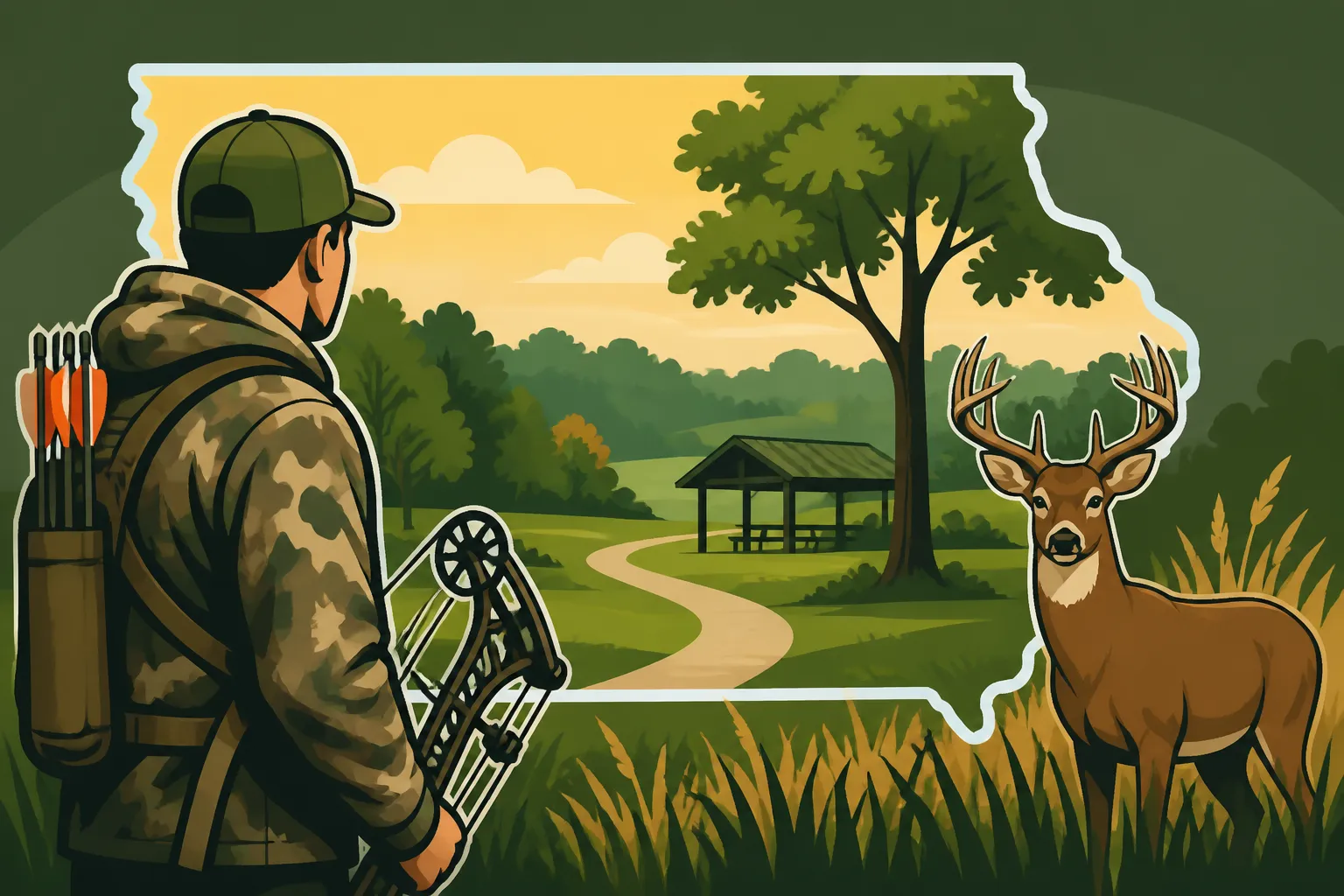
Perhaps the most common restriction you'll find is the "archery-only" rule for deer hunting. Many county parks, particularly those closer to towns or with extensive trail systems, will only allow bow and crossbow hunting. This is primarily a safety measure to reduce the risk associated with firearms in areas popular with non-hunters. If you’re a shotgun or straight-wall cartridge enthusiast, these areas might be off-limits for deer. However, don't rule them out entirely, as they might still be open for spring turkey hunting or small game with specific firearms, so always check each species’ regulations.
Another crucial detail is the season length and timing. Even if a county park allows firearms, its hunting season might be significantly shorter than the statewide season or confined to specific weeks or even weekdays. You might find that firearm deer season is only open for a limited period in December, or perhaps only during the youth or disabled hunter seasons. These shorter windows are often designed to minimize conflict with other recreational users during peak activity times, or to manage local deer populations in a targeted way. Always cross-reference the county’s specific dates with the state’s Iowa Archery Deer Season Segments or other weapon seasons to avoid any misunderstandings.
Making the Most of Limited County Park Opportunities
Even with all the rules and restrictions, county parks can still offer fantastic hunting opportunities, especially for those willing to put in the effort to understand the local nuances. These areas are often overlooked by hunters who prefer the larger, more uniformly regulated state and federal lands, which can translate into less competition and higher success rates for the diligent hunter.
One of the biggest advantages of smaller, locally managed parcels is the potential for reduced hunting pressure. While a large state WMA might see a flurry of activity on opening weekend, a county park with complex rules or limited access might attract fewer hunters. This can be a goldmine if you’re willing to do your homework and find those hidden gems. Less pressure often means deer and other game are less educated and stick to their natural patterns more readily. Iowa Public Land Hunting Pressure can be intense on some larger tracts, making these smaller areas a welcome alternative.
Strategies for Success in County Parks
To truly maximize your chances, embrace a philosophy of detailed preparation and adaptable hunting.
- Scout, Scout, Scout (Legally!): Before you ever consider hunting, spend time scouting these areas. Even if hunting isn't allowed during your scouting trip, familiarize yourself with the terrain, pinch points, bedding areas, and potential food sources. Always check if scouting itself has any restrictions or specific access rules. Knowing the lay of the land will give you a significant advantage when the season opens. This is especially true for bowhunters, as understanding subtle terrain features like benches and saddles can make all the difference. Scouting Iowa Public Land Before the Opener is crucial, and even more so on smaller, often-used county land.
- Focus on Overlooked Areas: Look for parcels within county conservation areas that are less obvious. These might be smaller, isolated timber blocks, difficult-to-access creek bottoms, or areas that require a longer walk than most hunters are willing to make. Sometimes the best spots are just beyond the easiest access point.
- Consider Diverse Species: If deer hunting is highly restricted, consider other opportunities. Many county parks allow small game hunting for rabbits and squirrels, or offer excellent spring turkey hunting. These can be less pressured and provide enjoyable outings even if the deer tags remain unfilled. Check the local regulations for specific species you are interested in pursuing.
- Be a Good Steward: Because county parks are often shared-use areas, it's even more critical to be an exemplary hunter. Park legally, pack out everything you pack in (and maybe a little extra trash you find), respect non-hunters, and leave no trace of your presence. Adhering to Leaving No Trace on Iowa Walk-In Ground is paramount, not just for the environment, but for maintaining a positive image of hunters and ensuring these opportunities continue into the future. Your responsible behavior helps solidify the case for continued hunting access.
By understanding the unique rules of each Iowa county park and approaching your hunt with respect and preparation, you can unlock some truly rewarding experiences that many other hunters might miss. These small, local public lands might not be as expansive as state forests or federal refuges, but their accessibility and potential for low-pressure hunting make them invaluable resources for the dedicated Iowa hunter.
Disclaimer
This article is for general informational purposes only and does not constitute professional advice. Laws, prices and regulations vary by location and change over time. Consult a qualified professional for guidance on your specific situation.