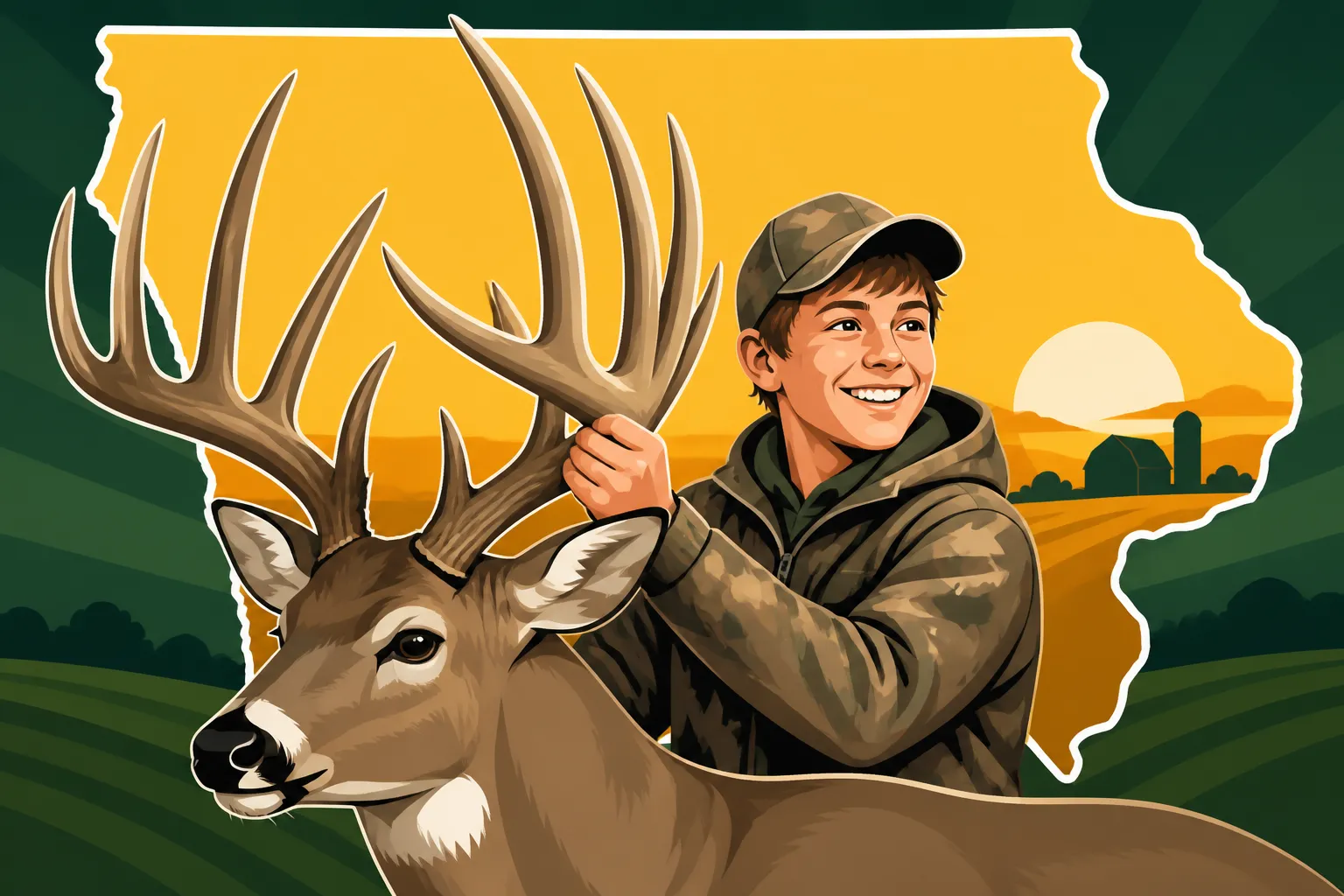
How a Youth Hunter Took Iowa’s Record Buck
Every young hunter dreams of that once-in-a-lifetime buck, the kind that makes your heart pound and your hands shake long after the shot. In Iowa, with its legendary whitetail genetics, these dreams sometimes become incredible realities, and it's particularly inspiring when a young hunter, full of passion and dedication, takes an animal that makes the record books. This guide delves into the elements that often come together in such a monumental hunt, illustrating how a focused youth hunter can achieve what many seasoned veterans only ever fantasize about.
The Seed of a Dream: Passion Meets Potential
The journey to an Iowa record buck almost always begins long before the season opener, often planted in the mind of a young hunter who spends countless hours thinking about deer. Iowa is renowned for its ability to produce giant whitetails, a fact that fuels the dreams of many. The fertile soil, abundant crops like corn and soybeans, and diverse habitat provide an ideal environment for deer to not only thrive but also to reach impressive body and antler size. It's a place where dedicated scouting and understanding deer movement can truly pay off.
For a youth hunter, this passion often starts with a deep connection to the outdoors, perhaps fostered by a parent, grandparent, or mentor who instilled a love for hunting. They might spend summers exploring timber, crunching through picked fields in the fall, or simply observing deer from a distance. This early exposure builds a foundational knowledge of deer behavior and habitat, which is crucial for success. They learn the difference between fresh rub lines and old ones, how deer use thick cover during the day, and where to look for bedding areas near prime food sources. This hands-on experience, often coupled with pouring over maps and aerial imagery, really sets the stage. Many young hunters also benefit from resources that help them visualize the landscape, and tools like the GoHunt platform can be invaluable for understanding terrain features, property boundaries, and potential travel corridors, even before stepping foot in the woods.
Understanding Iowa's Whitetail Ecosystem
Iowa's reputation for growing trophy whitetails isn't just folklore; it's rooted in the state's unique agricultural landscape and deer management philosophy. The rich farmlands provide an almost unlimited buffet of high-protein, high-energy food sources, which directly translates to exceptional antler growth. When you combine this nutrition with a management approach that often allows bucks to reach older age classes, the formula for big deer becomes clear.
Consider a typical scenario in southern Iowa, where sprawling tracts of timber break up vast agricultural fields. This mosaic provides everything a mature buck needs: secure bedding cover in thickets of cedar and multiflora rose, travel corridors along creek bottoms and timber edges, and endless food in the adjacent corn and soybean fields. Young hunters who grasp these dynamics start to see the landscape not just as trees and fields, but as a giant puzzle, where each piece hints at deer movement. They learn to identify key features like pinch points, saddles, and inside corners of crop fields, all of which act as natural funnels for deer movement. This understanding is key to predicting where a big buck might show up.
The Role of Mentorship in a Youth Hunter's Journey
No hunter, especially a young one, achieves a significant harvest entirely on their own. Mentorship plays a colossal role. A seasoned mentor can teach everything from tracking deer sign to the proper way to field dress an animal. More importantly, they teach patience, ethical hunting practices, and respect for the animal and the land. They impart wisdom that can't be found in books or online forums.
Imagine a grandfather teaching his grandson how to identify a rub line made by a heavy-horned buck, or explaining how wind direction influences a deer's approach to a food plot. These are the moments that build character and provide invaluable lessons that lead to success. The mentor helps the youth scout, place trail cameras, understand the nuances of the wind, and even helps them process the emotional roller coaster of a big hunt. This support system is critical for a youth hunter to develop the skills and confidence needed to pursue and eventually harvest a record-class animal. It's not just about pulling the trigger; it's about the entire process, the learning, the failures, and the eventual triumph.
The Chase Begins: Scouting and Strategy
Finding a true giant whitetail isn't usually a matter of luck; it's a testament to diligent scouting and strategic planning. For a youth hunter to take Iowa's record buck, it would undoubtedly involve a meticulous pre-season effort, often stretching from summer into the early fall. This isn't just a weekend scouting trip; it's an ongoing commitment to understanding a specific piece of land and the deer that inhabit it.
This process often involves covering miles on foot, looking for tell-tale signs like rubs, scrapes, and heavy trails. It means spending hours glassing fields from a distance at dawn and dusk, trying to pattern deer movement. Understanding how to read an Iowa timber draw for deer sign can be a game-changer. It also means relying on modern tools like trail cameras, which have revolutionized how hunters gather intelligence on elusive deer. These cameras provide a glimpse into the nocturnal world of big bucks and can help pinpoint when and where a specific animal is most likely to appear. The use of advanced mapping applications, which many experienced hunters find on platforms like GoHunt, allows youth hunters to analyze terrain, identify bedding areas, and plan optimal access routes without bumping deer.
E-Scouting and Boots-on-the-Ground Reconnaissance
In today's hunting world, e-scouting is an indispensable first step. A youth hunter, guided by a mentor, would likely spend hours poring over aerial imagery and topographic maps. They'd identify potential bedding areas, often dense cedar thickets or creek bottom tangles, and trace natural travel corridors that connect these to prime food sources. They'd look for hidden pockets of cover that might hold a mature buck.
Once potential spots are identified, it's time for boots-on-the-ground reconnaissance. This involves physically walking the property, verifying what was seen on the maps, and looking for fresh deer sign. A youth hunter might be taught to look for heavily used trails leading from a thicket to a corn field, or rub lines on trees indicating a buck is actively marking his territory. This phase is crucial for confirming theories and finding the exact ambush locations. It’s also where they might identify key features like a fence crossing worth hanging a stand on, or a narrow creek corridor that funnels deer movement. This combination of digital and physical scouting creates a comprehensive picture of the deer's world.
Patterning the Target Buck
The ultimate goal of all this scouting is to pattern a specific buck. For a record-class animal, this means understanding his habits down to a science. A youth hunter would analyze trail camera photos, noting the time of day, wind direction, and any other correlating factors when the buck appears. Is he using a particular trail only on a north wind? Is he showing up at a specific time in the evening before legal light?
This level of detail allows for strategic stand placement. If the buck is consistently cruising a timber point between two fields, that becomes a prime location. If he's using river oxbows for bedding, understanding his entry and exit points becomes critical. The challenge is that mature bucks are incredibly wary, and their patterns can shift with changes in weather, food sources, and hunting pressure. A youth hunter learns that patience and adaptability are just as important as the initial scouting effort. This patterning stage also teaches the importance of checking trail cameras sparingly and accessing locations quietly to avoid alerting the buck to human presence.
The Moment of Truth: The Hunt and Harvest
After countless hours of scouting, preparation, and perhaps a few close calls, the actual hunt for a record buck becomes the culmination of all that effort. For a youth hunter to successfully tag an animal of this caliber, the stars often have to align perfectly: the weather, the wind, the buck's movement, and the hunter's ability to remain calm under immense pressure.
Imagine a crisp November morning, the air still and cold, perhaps just before the peak of the Iowa rut. Our young hunter is nestled quietly in a treestand, high in an ancient oak overlooking a natural funnel between a picked soybean field and a dense timber block. The stand was carefully chosen weeks ago, taking into account prevailing winds and the buck's known travel routes. As the sun begins to paint the eastern sky, the woods slowly come alive. A rustle in the leaves, a distant grunt call, and then, a massive set of antlers appears silently through the underbrush. The moment is electrifying, a mix of adrenaline and disbelief, but the training takes over.
Execution Under Pressure
The true test of a hunter's skill often comes in those few intense seconds when a target buck finally presents a shot opportunity. For a youth hunter, this can be particularly challenging due to the overwhelming excitement. Taking Iowa's record buck requires a steady hand, a calm mind, and precise shot placement. The mentor's lessons on breath control, finding a solid anchor point, and focusing on a specific spot on the deer become paramount.
The shot itself must be ethical and effective. This means waiting for the deer to offer a quartering-away shot on whitetails, aiming for the vitals, and executing the shot without flinching. In Iowa, where many hunters use shotguns during the gun seasons, understanding slug range limits on a deer drive is crucial. For archery hunters, knowing the effective range of their bow and practicing regularly ensures they are ready when it counts. The ability to remain composed, even as a massive rack materializes from the timber, is a skill honed through practice and experience, and it's what separates a good shot from a missed opportunity.
The Recovery: A True Test of Skill and Patience
Once the shot is taken, the immediate aftermath can be one of the most agonizing waits in hunting. The impulse to rush in is strong, but a youth hunter, again guided by a mentor, would learn the critical importance of waiting before taking up a blood trail. This patience allows the deer to lie down and expire peacefully, rather than being pushed further into dense cover.
After a suitable waiting period, the painstaking process of blood trailing begins. Following a trail in thick CRP and multiflora rose can be incredibly difficult, often requiring keen eyes and methodical searching. The mentor teaches the youth how to identify tiny specks of blood, broken branches, or overturned leaves that indicate the deer's path. This is often where a tracking dog legally in Iowa can be a huge asset, if available. For a record buck, every drop of blood, every piece of broken antler, or every tuft of hair becomes a clue in the puzzle of recovery. The feeling of finally finding the magnificent animal is one of profound relief, respect, and deep satisfaction, a moment etched into memory forever.
The Aftermath: Scoring and Significance
Once the magnificent animal is recovered, the full impact of the harvest truly sinks in. For a youth hunter, taking a record-class buck in Iowa is not just a personal achievement; it often becomes a story that inspires others and highlights the incredible whitetail resources the state possesses. The process that follows, from field care to official scoring, is an integral part of understanding the buck's true place in hunting history.
Field dressing in sixty-degree weather in October presents its own challenges, requiring quick action to cool the meat. The next step is often getting the deer out of an Iowa creek bottom, which can be a strenuous task. Whether it's dragging, using a deer cart on Iowa walk-in ground, or quartering a deer in the field, the effort continues. Then comes the official scoring, a moment of anticipation and pride. This meticulous process determines the buck's standing, not just by gross score but also by net score, accounting for symmetry and deductions. It's a formal recognition of the animal's impressive size and the hunter's skill.
The Scoring Process: Typical vs. Non-Typical
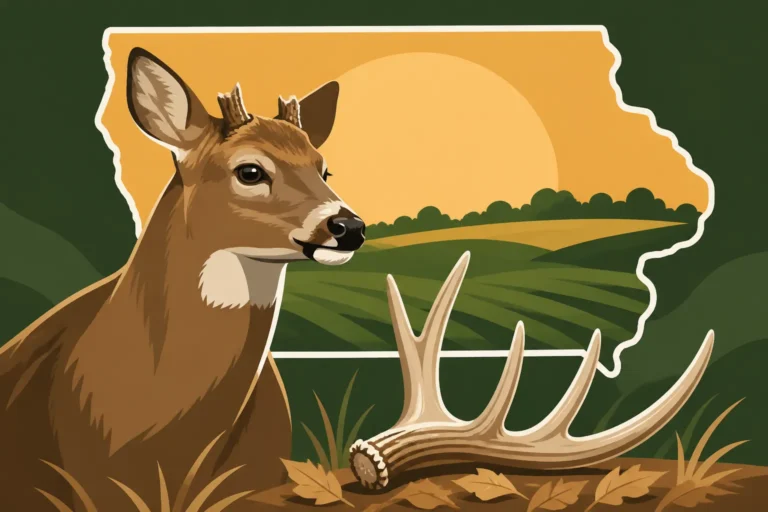
Scoring a whitetail rack is a precise process, typically done by a certified measurer from organizations like Boone and Crockett or Pope and Young. These systems quantify the various measurements of the antlers, including beam length, tine length, spread, and circumference. The total sum of these measurements, before any deductions for asymmetry, is called the gross score.
What sets record bucks apart is often their unique antler configuration. Most record books categorize deer into "typical" and "non-typical" racks.
| Category | Description | Scoring Focus | Iowa Record Examples (Conceptual) |
|---|---|---|---|
| Typical | Antlers display strong symmetry, with tines growing in a conventional, symmetrical pattern from the main beams. | Emphasizes balance and uniformity. Deductions are made for differences between corresponding measurements. | A perfectly symmetrical 10-point rack with long, well-defined tines, scoring high due to its classic form and size. |
| Non-Typical | Antlers feature abnormal points (kickers, drop tines, stickers) that deviate from the typical pattern. | Gross score includes all antler material; deductions for asymmetry between typical points, but abnormal points add to the total. | A buck with multiple drop tines, extra points off the main beams, or a wild, irregular crown, demonstrating unique genetic expression. |
For a youth hunter to take Iowa's record buck, it often means an animal with exceptional mass, length, and either perfect symmetry for a typical score or a wild array of non-typical points that add significant inches. This is where a buck like the Tony Lovstuen Buck from Appanoose County, often cited for its incredible non-typical score, showcases what Iowa is capable of producing. Understanding these distinctions helps appreciate the unique qualities of each trophy.
The Legacy of a Record Buck
A record buck taken by a youth hunter leaves a lasting legacy. It's a story that will be told for generations, inspiring other young hunters to pursue their dreams in the Iowa outdoors. It demonstrates that with dedication, mentorship, and a deep understanding of the local ecosystem, anyone, regardless of age, can achieve remarkable success. This isn't just about the inches of antler, but about the journey, the lessons learned, and the profound connection to nature that hunting provides.
It also brings attention to why Iowa produces big whitetail bucks. The harvest contributes to the state's hunting heritage and reinforces its reputation as a premier destination for trophy whitetails. Every such story underlines the importance of good wildlife management and habitat conservation. The youth hunter becomes an ambassador for the sport, demonstrating the responsible and ethical pursuit of game, which is something we all can be proud of.
Disclaimer
This article is for general informational purposes only and does not constitute professional advice. Laws, prices and regulations vary by location and change over time. Consult a qualified professional for guidance on your specific situation.