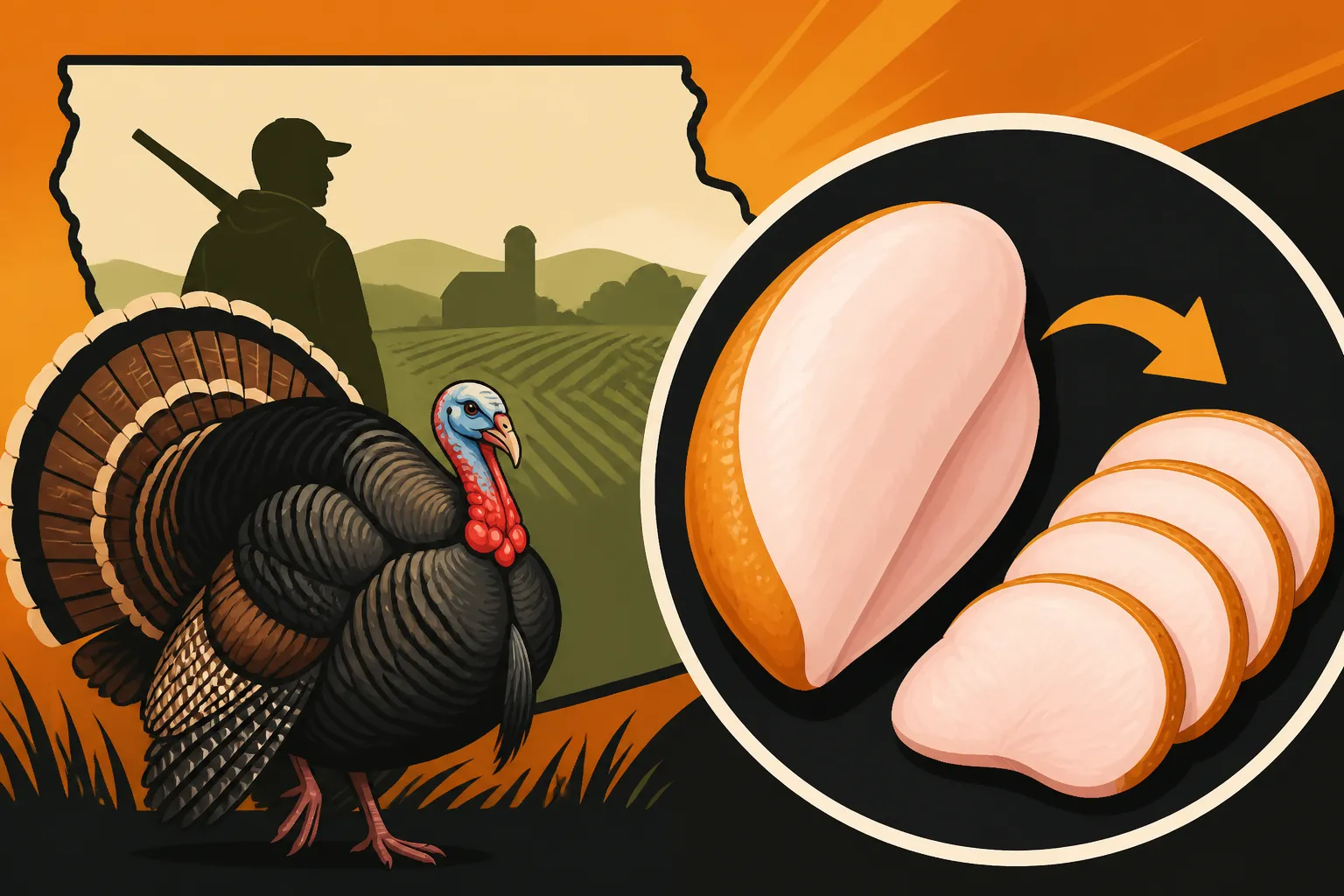
Turkey Breast Meat Yield
There's nothing quite like the thrill of a big gobbler coming in, chest puffed out, red head blazing, spitting and drumming. After the shot, the adrenaline rush is palpable, but then a very practical question often comes to mind: how much actual meat am I going to get from this bird? It's a common thought, especially for those who cherish every ounce of wild game, and frankly, it can be a bit disappointing if you don't know what to expect or how to maximize your yield. This guide is all about setting realistic expectations and giving you the tips and tricks to get the absolute most delicious breast meat from your hard-earned Iowa longbeard.
Understanding the Factors That Influence Turkey Breast Meat Yield
When you're out there chasing those elusive Iowa gobblers, it's easy to get caught up in the moment. But the size and condition of the bird, as well as how you handle it post-harvest, play a huge role in how much delectable breast meat actually makes it to your dinner plate. It's not just about the weight of the bird; there's a science and an art to it.
Age and Sex of the Turkey
Let's be honest, we all dream of those monster mature toms, the ones with ropes for beards and spurs like daggers. And there's a good reason for that, beyond just the trophy aspect. A mature tom, typically two years old or older, is going to yield significantly more breast meat than a young jake. Jakes, which are yearling birds, are still growing. Their breast muscles haven't fully developed, and while they make for excellent table fare, you'll simply get less meat from them.
Think of it like this: a jake might weigh 12-16 pounds live, but a prime Iowa longbeard could easily tip the scales at 20-25 pounds or even more. That difference in live weight translates directly to a greater mass of muscle, especially in the breast. These older birds have spent more seasons foraging, building strength, and packing on muscle, leading to those larger, more robust breast fillets we all covet. It's not just a few ounces; it can be a substantial difference, making that extra effort to target an older bird well worth it for the freezer.
General Health and Nutrition
Just like any animal, a turkey's overall health and the nutrition it receives throughout its life directly impact its body condition, and therefore, its meat yield. Iowa is a fantastic place for wild turkeys precisely because of the abundant food sources. From vast corn and soybean fields to rich oak timbers dropping acorns, these birds have a smorgasbord at their disposal. A turkey that has consistent access to high-quality food will be healthier, heavier, and have more developed musculature.
Consider a spring gobbler that's just come through a mild winter with plenty of residual corn in the fields. It's likely going to be in prime condition, well-fed, and ready for breeding, which means its breast muscles will be robust. On the flip side, a bird that has struggled through a harsh winter with deep snow and limited food might be a bit leaner, even if it's a mature tom. Factors like insect availability in the summer, mast crops in the fall, and accessible agricultural fields all contribute to a turkey's ability to pack on muscle. You can often tell a well-fed bird just by its overall plumpness and weight when you pick it up. Iowa Turkey Population Trends can give you an idea of how environmental factors might be affecting the herd's overall health.
Processing Techniques and Efficiency
This might sound obvious, but how you process your turkey after the shot can make a monumental difference in the actual amount of usable meat you end up with. Many hunters simply "breast out" their birds, taking only the main breast fillets. While this is the most common approach and certainly yields the primary prize, even within this method, efficiency varies. Ripping the skin off and quickly carving out the breasts might leave a good chunk of meat still clinging to the bone or embedded in the ribs.
The goal is to be meticulous. Take your time, use a sharp knife, and understand the anatomy of the bird. Every little bit counts, especially if you're like me and want to honor the animal by utilizing as much as possible. A sloppy job can easily mean losing a quarter to a half-pound of perfectly good meat that could have been part of a delicious meal. It's not just about the big chunks, but also the "tenderloins" and scraps that can be collected for grinding or stewing.
Estimating Average Turkey Breast Meat Yield in Iowa
So, you've got your bird. Now, let's talk numbers. What can you realistically expect from that Iowa gobbler you just carried out of the timber? It's not an exact science, as every bird is an individual, but we can give you some pretty solid estimates to work with.
Typical Weights for Iowa Gobblers
Iowa is known for growing some impressive turkeys. While specific weights can fluctuate year to year based on environmental conditions and hunter pressure, you can generally expect good numbers. A typical mature tom in Iowa might weigh anywhere from 18 to 25 pounds live. Some exceptional birds can certainly exceed this, pushing into the upper twenties or even breaking the 30-pound mark, though those are rare trophies. Jakes, as mentioned, are lighter, usually in the 12 to 16-pound range.
It's important to remember that this "live weight" includes feathers, bones, organs, and everything else. When you're thinking about breast meat yield, you're looking at a much smaller percentage of that total weight. Knowing the live weight is simply your starting point for a more precise estimation of what will end up in the freezer. Don't be discouraged if your 20-pound bird doesn't yield 20 pounds of meat – it's simply not how it works!
Percentage of Live Weight as Breast Meat
This is where the rubber meets the road. For most wild turkeys, the boneless, skinless breast meat typically accounts for about 25% to 35% of the bird's live weight. This is a general rule of thumb, and again, individual factors like the bird's age, condition, and your processing skill will influence where you fall within that range.
Let's do some quick math to give you a clearer picture:
| Turkey Type | Average Live Weight (lbs) | Estimated Breast Meat Yield (25%-35% of Live Weight) |
|---|---|---|
| Jake | 12-16 | 3 – 5.6 lbs |
| Mature Tom | 18-25 | 4.5 – 8.75 lbs |
| Trophy Tom | 26+ | 6.5+ lbs |
As you can see, a nice 20-pound tom will likely yield anywhere from 5 to 7 pounds of pure breast meat. That's a substantial amount of delicious protein, perfect for many meals. This calculation helps temper expectations and gives you a concrete idea of what you'll be working with in the kitchen.
Factors Affecting "Good" Meat Yield
Beyond the inherent size of the bird, several practical elements can impact how much good, usable meat you get. The most critical, in my opinion, is shot placement. A turkey's breast is a large target, but if you hit it directly with a shotgun pattern, especially at close range, you're going to have a lot of damaged, shot-filled meat that needs to be cut away. No one wants to bite into a piece of lead or steel.
Clean removal of any damaged tissue is essential for both safety and taste. Bruising from the impact can also render certain areas unappetizing, even if there aren't any pellets. That's why many experienced turkey hunters advocate for head or neck shots – they drop the bird instantly and preserve every last ounce of that prized breast meat. If you do take a body shot, aiming for the vitals just behind the wing butt can be more meat-friendly than a direct chest shot. Proper field dressing immediately after the kill also prevents spoilage and ensures the meat remains in top condition. Field Dressing in Warm October Weather offers principles that can be applied to spring turkeys, emphasizing quick cooling.
Maximizing Your Turkey Breast Meat Yield
Okay, so you've sealed the deal on a big Iowa gobbler. Now, how do you make sure you get every possible ounce of that succulent breast meat? It comes down to a few key strategies, both in the field and when you get your bird home.
Shot Placement for Meat Preservation
This is probably the single most impactful thing you can do to maximize your meat yield. While the turkey's breast presents a large target, a head or neck shot is king for meat preservation. When you drop a bird with a clean shot to the head or neck, the entire breast remains untouched and free of pellets or extensive bruising. This means 100% of that breast meat is clean and ready for the freezer. It takes practice and steady aim, but many hunters swear by it for the pure meat benefits.
If a head/neck shot isn't feasible, and you opt for a body shot, aim for the vitals, which are generally clustered behind the wing butt, rather than directly into the breastplate. This vital area, while still a body shot, tends to minimize damage to the large breast muscles. Understanding the turkey's anatomy and where those critical organs lie can help you make a more ethical and meat-preserving shot. Remember, an ethical kill is always the priority, but a clean kill can also mean a cleaner meal. Even for deer, proper aiming is critical for meat preservation, so thinking about Shot Placement on a Whitetail at Twenty Yards can translate well to turkeys.
Prompt Field Dressing and Cooling
Once your bird is down, time is of the essence, especially if you're hunting during a warm Iowa spring day. Heat is the enemy of good meat. The faster you can get the internal organs out and begin the cooling process, the better the quality and longevity of your meat will be. This is true for any game animal, and turkeys are no exception.
The most common method for field dressing a turkey is to simply open the body cavity and remove the entrails. However, for maximum cooling and ease of transport, some hunters will breast out the bird right there in the field. This involves removing the breast fillets and often the legs and thighs, leaving the rest of the carcass behind. This significantly reduces the bulk and weight you have to carry, and more importantly, allows the muscle tissue to cool much faster. If you decide to carry the whole bird out, make sure to get it into a cooler with ice as soon as possible. Don't let it sit in the sun or in a hot truck bed for hours. Even an hour can make a difference in meat quality.
The Art of Breast Filleting
This is where technique truly shines. You want to get every last morsel of that breast meat. Here's a common method:
- Lay the bird on its back.
- Pull the skin back. Some prefer to skin the entire breast first, others will just pull it back as they go.
- Locate the keel bone. This is the prominent bone running down the center of the breast.
- Make an incision along one side of the keel bone, running from the top of the breast down to the bottom.
- Use your knife and fingers to gently separate the meat from the bone. Keep the knife blade tight against the bone, making long, smooth strokes. You'll feel the meat release. Work your way outwards from the keel bone towards the wing joint.
- Don't forget the "tenderloin." On the underside of each main breast fillet, there's a smaller, more tender strip of meat often called the "turkey tenderloin." Make sure to carefully peel this away from the bone as well. It's often overlooked but incredibly delicious.
Repeat this process on the other side. With practice, you'll be able to remove two large, clean, boneless, skinless breast fillets in just a few minutes, leaving very little meat behind. Having a detailed mapping app like GoHunt on your phone can really help here, not just for scouting, but for marking the spot where you dropped your bird and even plotting an efficient route back to your vehicle after you've got it field dressed and ready for transport. This attention to detail in processing will significantly boost your final yield.
What to Do with the Rest of the Bird
While the breast meat is undoubtedly the star of the show for many, a wild turkey offers so much more if you're willing to put in a little extra effort. There's a satisfaction in utilizing as much of the animal as possible, and frankly, some of the "other" parts are incredibly delicious when prepared correctly.
Beyond the Breast: Legs, Thighs, and More
Don't discard those legs and thighs! Unlike a domestic turkey, wild turkey legs and thighs are very muscular and tend to be tough if simply roasted. However, they are absolutely phenomenal when slow-cooked. Think braising, stewing, or making confit. The connective tissue breaks down beautifully, leaving you with rich, flavorful meat that pulls right off the bone. They're perfect for adding to chili, making tacos, or shredding for sandwiches.
The wings, neck, and carcass also have immense value. The neck and carcass, in particular, are goldmines for making incredible homemade turkey stock. This stock can then be used as a base for soups, gravies, risottos, or anything that calls for a rich, savory liquid. It's far superior to anything you'll buy in a carton at the grocery store. Even the small scraps of meat that you can't cleanly fillet from the breastplate or ribs can be saved for grinding to mix with pork or beef for flavorful burgers or sausage. Truly, very little needs to go to waste. Processing Your Own Deer at Home shares a similar philosophy of nose-to-tail utilization that applies to any wild game.
Preparing and Storing Wild Turkey Meat
Once you've got your beautiful breast fillets, and perhaps some legs and thighs, proper preparation and storage are key to preserving their quality. Wild turkey meat has a distinctly richer, gamier flavor than store-bought birds, and it's also much leaner. This means it can dry out quickly if overcooked.
For cooking, consider brining the breast meat to help retain moisture. Pan-searing, grilling, or even cutting it into cutlets for breading are popular methods. For the legs and thighs, low and slow is the way to go – think crock-pots, Dutch ovens, or smokers. When it comes to storage, vacuum sealing is your best friend. It removes air, preventing freezer burn and greatly extending the shelf life of your meat. Label everything with the date and type of meat (e.g., "Turkey Breast – Spring 202X"). Properly wrapped and frozen, your wild turkey meat can easily last for a year or more. Knowing where you are and planning your route with a robust mapping tool like GoHunt can help ensure you get your harvest home and cooled efficiently, especially when those spring temperatures can climb quickly.
Disclaimer
This article is for general informational purposes only and does not constitute professional advice. Laws, prices and regulations vary by location and change over time. Consult a qualified professional for guidance on your specific situation.