Iowa Turkey Hunting Tactics for Spring Gobblers
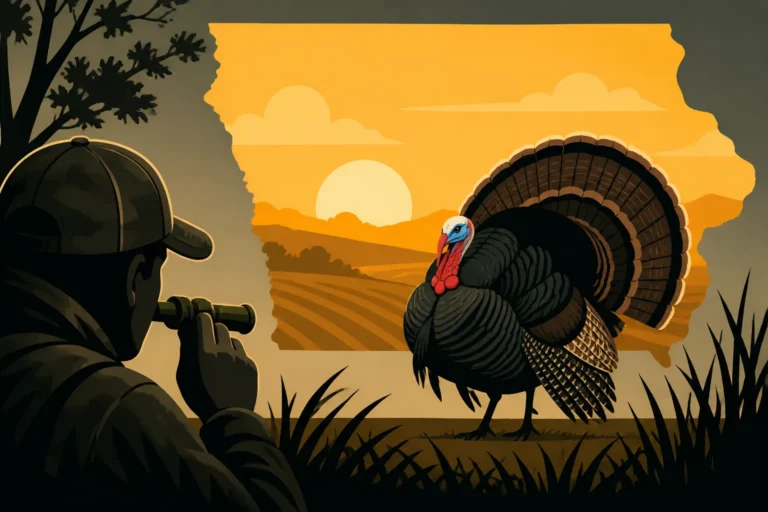
There's nothing quite like the sound of a spring gobbler hammering on the roost, but for many hunters, turning that thrilling sound into a bird in hand can feel like a near-impossible puzzle. We've all been there: setting up on a hot gobbler only for him to hang up, or worse, to go completely silent as soon as you try to engage. This guide is dedicated to dissecting effective turkey hunting tactics for spring gobblers in Iowa, helping you understand their behavior, master calling, and adapt to the unpredictable nature of these wily birds, especially on public land.
Understanding Iowa Spring Gobblers
Iowa boasts a robust population of Eastern wild turkeys, known for their strong gobbling and often challenging behavior. To consistently put a tag on one, you first need to understand what makes them tick during the spring breeding season. It's a game of love and war out there, and you're stepping right into the middle of it.
The Spring Mating Ritual and Gobbling Patterns
As the days lengthen and temperatures rise, Iowa's spring gobblers transition into their full breeding mode. This is when the magic happens for turkey hunters, as the drive to breed makes them vocal and, at times, more susceptible to calling. They'll start gobbling aggressively from the roost before first light, signaling their presence to hens and rival toms. This early morning vocalization is often your best chance to locate birds and plan your initial move.
The intensity of gobbling can vary dramatically throughout the day and the season. Early in the spring, when fewer hens are bred, gobblers might be more eager to respond to your calls as they search for available mates. However, as the season progresses and more hens become bred, gobblers might "hen up" – meaning they gather with real hens and become far less responsive to artificial calls. They've already got what they want, so why bother with your yelps? Understanding this shift is critical; an un-henned gobbler in early April might come running to a simple hen yelp, while a "henned-up tom midday" in late April might require far more subtle or aggressive tactics, or even a different setup entirely, perhaps using a jake decoy to challenge his dominance.
Habitat Preferences: Timber, Fields, and Roosting Areas
Iowa's diverse landscape of hardwood timber, rolling hills, and expansive agricultural fields provides excellent turkey habitat, but understanding how turkeys utilize these areas is key. Gobblers will typically roost in the tallest timber available, often near creek bottoms, river bluffs, or on prominent ridges that offer good visibility and safety from predators. These roost trees are prime locations for them to gobble loudly at dawn, projecting their calls across a wide area. Identifying these preferred roosting spots is often the first step in successful hunting.
Throughout the day, turkeys will move between these timbered areas for roosting and security, and open fields or food plots for feeding and strutting. Strut zones are often found in open areas within or adjacent to timber, such as field edges, old logging roads, or small clearings. These are the stages where gobblers display their dominance, puffing up and fanning their tails to attract hens. Recognizing these transitional areas, feeding grounds, and strut zones on a map or through scouting allows you to anticipate their movements and set up an ambush. Think about how a mature gobbler might move from his roost high on a bluff, down to a creek bottom for water, and then out to a picked cornfield to strut and feed – each step offering a potential setup opportunity.
Pre-Season Scouting for Iowa Turkeys
While the spring woods are alive with sound, showing up blind and hoping for the best is rarely a recipe for consistent success, especially on public lands where birds might be more wary. Effective pre-season scouting is your secret weapon, allowing you to learn the terrain and pinpoint turkey activity long before opening day.
E-Scouting From Home: Maps and Aerial Imagery
Before you even step foot in the woods, the power of digital tools can give you a significant advantage. Using platforms like Google Earth, onX Hunt, or the Iowa DNR's Hunting Atlas, you can meticulously examine potential hunting areas from the comfort of your home. Start by identifying large tracts of timber, especially those adjacent to open agricultural fields or pastures. Look for natural funnels, pinch points, and topographical features like creek drainages, ridgelines, and benches that turkeys might use as travel corridors. You're trying to predict where a bird might want to go once it leaves the roost.
Pay close attention to potential roosting areas – often the tallest trees on high ground overlooking open areas, or along prominent river bends. Identify access points and plan your approach routes to ensure you can get into position silently and without disturbing birds. Remember, your goal is to locate potential hot spots and access strategies before you ever hit the ground. Many successful hunts begin with a thorough e-scouting session, mentally walking the terrain and visualizing where birds might be. GoHunt also offers some fantastic mapping tools that can help visualize these critical features.
Boots-on-the-Ground Reconnaissance: Locating Sign and Roosts
While e-scouting is a powerful starting point, nothing beats boots-on-the-ground scouting. Once you've identified promising areas on your maps, it's time to physically explore them. This doesn't mean calling birds or disturbing them, but rather looking for tangible evidence of their presence. Fresh turkey tracks in mud, droppings (larger and J-shaped for gobblers), scattered feathers, and wingtip drag marks from strutting are all clear indicators of turkey activity.
The holy grail of pre-season scouting is locating active roost sites. These will have significant turkey droppings, often in concentrated piles, directly beneath the roost trees. You might also find shed feathers or even hear faint clucks or yelps at dawn or dusk if you're scouting very close to the season. Once you've identified a roost, you can then plan your setup for opening morning, knowing exactly where birds are likely to be. However, be cautious not to over-scout or disturb the birds too much; you want them to feel comfortable in their routines. For a deeper dive into locating birds the night before, consider checking out this guide on Roosting Iowa Turkeys the Night Before.
Calling Strategies for Iowa Toms
Calling is often seen as the heart of turkey hunting, but it's not just about making sounds; it's about communicating. The goal is to convince that wary tom that there's a hen (or a rival jake) interested in him, drawing him into your kill zone.
Mastering the Basic Calls: Yelps, Clucks, and Purrs
Before you can get fancy, you need to master the fundamental sounds. The yelp is arguably the most important, mimicking a hen looking for a gobbler. Start with a soft, pleading tree yelp from the roost, and gradually increase the volume and urgency as the day progresses or as the bird gets closer. Clucks are short, sharp notes that indicate contentment or curiosity; they can be excellent for getting a hung-up bird to take those last few steps. Purrs are soft, rolling sounds, often used when hens are feeding or socializing, and can be deadly when a gobbler is very close and needs just a little more convincing.
Practice with various calls – slate calls, box calls, and mouth diaphragms. Each has its own unique tone and learning curve. A slate call offers incredible versatility in tone and volume, while a box call is often louder and easier for beginners. Diaphragm calls allow for hands-free calling, which is invaluable when a bird is closing in and you need to remain absolutely still. The key is not just volume, but authenticity and rhythm. A few well-timed, realistic yelps are far more effective than a barrage of poor-sounding calls.
Advanced Calling: Cutting, Fly-Down Cackles, and Aggressive Tactics
Once you've got the basics down, you can start incorporating more advanced and aggressive calls. Cutting is a series of rapid, sharp yelps and clucks, often used by an excited hen to get a gobbler's attention or challenge another hen. This can be incredibly effective on silent or hung-up gobblers, often provoking a shock gobble or spurring them to come investigate. A fly-down cackle, mimicking a hen flying down from the roost, combined with wing beats (slapping your hat on your leg), can be deadly first thing in the morning. It tells the gobbler that a hen is now on the ground and ready to meet.
Sometimes, a quiet approach is best, but other times, you need to be assertive. If a gobbler is with hens or being particularly stubborn, mimicking a jake gobble or even a two-hen fight (using multiple calls at once) can trigger his dominance instinct, making him march right into your setup to break up the "fight" or confront the "intruder." However, remember that aggressive calling can sometimes scare off wary birds, so it's a tactic best employed when other, softer approaches have failed or when you're dealing with a particularly cocky tom.
Reading the Bird: When to Be Aggressive, When to Be Subtle
The true art of turkey calling isn't just about making the right sounds, but knowing when to make them and how to adjust. Every gobbler is different, and every situation is unique. If a bird is gobbling hard and closing fast, less calling is often more. You don't want to overdo it and make him suspicious; a few soft clucks or purrs to confirm his direction might be all that's needed. If he's hanging up at 100 yards, barely gobbling, it might be time to get more aggressive with some cutting or a jake gobble to challenge him.
Conversely, if you're dealing with a "henned-up" tom, constant, loud calling might actually push him away. He already has real hens, and your persistent squawking might just annoy him. In these scenarios, subtle clucks and purrs, or even going silent for a period, can sometimes pique his curiosity enough to break from his flock. The key is to listen intently to the bird's responses – his gobbling intensity, frequency, and changes in direction – and adjust your calling accordingly. Sometimes, the most effective call is no call at all. Learning to adapt your calling style, much like in Calling a Henned-Up Iowa Gobbler, is a skill honed through experience.
Setup and Concealment for Spring Turkey Hunting
You can be the best caller in the world, but if your setup is poor, that gobbler will bust you every time. Turkeys have incredible eyesight, and their ability to spot unnatural movement or shapes is legendary. Proper concealment and a well-thought-out setup are paramount.
Natural Blind Building and Camouflage Discipline
When hunting without a ground blind, your surroundings become your best friend. Look for natural cover like large oak trees, blowdowns, thick cedars, or brush piles that can break up your outline. Always set up with your back against something wider than your shoulders to prevent movement from being silhouetted. This also offers a degree of protection from an unexpected approach from behind. Ensure you have a clear shooting lane in the direction you expect the turkey to approach, but don't clear so much brush that you expose yourself.
Camouflage discipline is non-negotiable. Wear full camo, including gloves and a head net, even if you think you're perfectly hidden. Turkeys can spot a glint of skin or an unnatural shadow from a surprising distance. Stay absolutely still when a gobbler is looking your way. Even the slightest twitch of a finger can send him running. Practice drawing your shotgun or bow slowly and silently at home so it becomes second nature when the moment of truth arrives.
Decoy Spreads: When, Where, and How Many
Decoys can be a game-changer, drawing a gobbler's attention away from you and providing a target for him to focus on. However, proper placement is crucial. Generally, set decoys 15-20 yards in front of your position, slightly off to the side of your shooting lane. This places the bird within easy shotgun range and gives you a better shot angle. Consider the wind direction; if a gobbler approaches, he often wants to face the decoy into the wind, so placing the decoy facing away from you can encourage him to walk past your shooting lane to get into position.
For a single gobbler, a simple hen decoy is often effective. If you want to challenge a dominant tom, adding a jake decoy can be deadly. Place the jake decoy aggressively, perhaps facing the hen, to simulate a young challenger trying to breed. Be cautious with multiple hen decoys, especially on public land where other hunters might mistake them for real birds. Always consider safety first. For more in-depth strategies, check out Turkey Decoy Spreads That Work. Remember, the goal of the decoy is to be a distraction and an attractant, not necessarily to mimic an entire flock.
Ground Blinds for Stationary Hunting
Ground blinds offer an unparalleled level of concealment and are particularly useful for hunting with kids or when hunting in open country with limited natural cover. A good ground blind, well-brushed in, effectively makes you invisible. This allows for more movement, which can be a huge advantage for hunters who struggle with stillness or those who need to adjust their position.
When setting up a ground blind, choose a location with good visibility and shooting lanes, preferably overlooking a field edge, a strut zone, or a travel corridor between timber and open areas. Brush in the blind thoroughly with local vegetation – branches, leaves, grass – to break up its outline and make it blend seamlessly into the environment. Don't just set it out and expect it to disappear; naturalizing it is key. Give birds a few days to get used to its presence if possible, though this isn't always feasible on public land. Ensure you have a comfortable chair that allows you to remain still for extended periods, and quiet any potential squeaks or rubs from your clothing or gear that could give you away.
Run-and-Gun Tactics for Public Land
Public land turkeys, especially in Iowa, can be notoriously difficult. They've seen it all, and they've heard it all. This is where a dynamic, aggressive "run-and-gun" approach often shines, allowing you to cover ground and find less pressured birds.
Covering Ground and Listening for Gobbles
The essence of run-and-gun is mobility. Instead of hunkering down in one spot all morning, you're actively moving through the timber, stopping frequently to listen for distant gobblers. Use locator calls – owl hoots, crow calls, or even a hawk scream – to elicit shock gobblers without sounding like a turkey yourself. These calls can often get a tom to gobble and give away his position, allowing you to pinpoint his general direction.
Once you hear a gobble, move quietly and quickly towards it, cutting the distance as much as possible without being detected. This isn't about sneaking up on the bird, but about getting into his comfort zone without him knowing you're there. Use terrain features like creek beds, ridges, and thickets to mask your approach. The goal is to get within 100-200 yards, sometimes even closer, before setting up. This aggressive style of hunting, often associated with Run-and-Gun Turkey Tactics on Iowa Public Land, demands patience in listening but urgency in movement.
Closing the Distance and Setting Up Fast
The moment you hear a gobble and confirm a general direction, it's a race against time. A gobbler on the move, especially one with hens, can quickly change his location. Your strategy should be to get ahead of him or intercept his most likely travel path. If he's on a ridge, try to get on the same ridge or a parallel one. If he's in a bottom, find a vantage point overlooking it. Speed and stealth are crucial here.
Once you're within what you believe is optimal range (e.g., 100-150 yards), quickly scout for a suitable setup location. This means finding sufficient cover to break your outline, a clear shooting lane, and a backdrop to prevent silhouetting. You don't have time to build a perfect blind, so utilize existing natural cover. Get your calls ready, maybe set a single hen decoy if the situation allows, and become absolutely still. Start with soft calls, letting the gobbler know you're there, and gauge his reaction. If he's interested, work him in. If he's not, be ready to reposition or try another tactic.
Dealing with Hunting Pressure
Iowa's spring turkey season is popular, and public lands can see a fair amount of pressure. Dealing with other hunters and birds that have been called at constantly is a skill in itself. It requires patience, adaptability, and often, a willingness to work harder and smarter than the next guy.
Finding Untouched Pockets on Public Land
The first rule of thumb for pressured public land is to go where others aren't willing to go. This often means walking farther, tackling thicker cover, or exploring areas that aren't easily accessible from parking lots. Use your e-scouting to identify areas of public land that are deep within larger tracts, away from roads or obvious trails. Look for natural barriers like creeks, steep ravines, or dense thickets that deter casual hunters. These "untouched pockets" are where you're more likely to find less wary birds.
Consider hunting during weekdays if your schedule allows, as public land pressure often drops significantly after the opening weekend. Also, think about hunting midday or in the late afternoon. Most hunters focus on the first few hours of daylight, leaving the middle of the day largely unpressured. While gobbling might be less frequent midday, a lonesome tom might be more responsive to your calls. Don't be afraid to think outside the box – sometimes the toughest walks lead to the best rewards.
Hunting Pressured Birds: Adapting Your Approach
When dealing with pressured birds, your tactics need to change. Aggressive, loud calling that might work on an unpressured tom will often send a wary public land gobbler running for the hills. Instead, opt for a more subtle and patient approach. Use soft tree yelps and clucks early in the morning. When on the ground, stick to soft purrs, clucks, and occasional soft yelps. Mimic the sounds of a contented hen, not an excited one.
If a gobbler hangs up, resist the urge to hammer him with more calls. Instead, try going silent for 15-20 minutes, then offering a single, soft purr or cluck. Sometimes, the lack of continuous calling makes him think the "hen" is moving away or losing interest, prompting him to come investigate. Decoys can also be less effective on pressured birds, as they've likely seen them before. If you use one, consider a very simple, realistic hen decoy, perhaps even a Montana Decoy that folds flat and is less intrusive. Remember, these birds have learned to be cautious; your job is to make them feel safe enough to commit.
Post-Shot Procedures and Recovery
Bringing down a big gobbler is exhilarating, but the hunt isn't truly over until the bird is recovered, tagged, and cared for properly. Knowing what to do in the moments after the shot is vital.
Shot Placement for Turkeys
For turkeys, the head and neck are the primary target zones. A well-placed shot to the head and neck area typically results in an instant, clean kill. This is because the head and neck are mostly bone and soft tissue, lacking the dense muscle and vital organs that can absorb a body shot. Aim for the "kill zone" where the neck meets the head. Using a tight choke and heavy turkey loads with dense patterns is crucial for consistent performance at typical turkey hunting ranges (usually within 40 yards, often closer).
Body shots are generally discouraged unless absolutely necessary, as they can result in wounded birds that escape and are difficult to recover. A body-shot bird can run or fly a considerable distance, making tracking a real challenge. Always wait for a clear, ethical shot at the head and neck. If the bird presents an awkward angle or is too far, wait for a better opportunity. Patience here ensures a humane harvest.
Tracking and Recovery
Even with a perfect headshot, a turkey can sometimes flop around or make a short run. If the bird drops immediately and lies still, approach cautiously. It's always a good idea to put another shot into the head if there's any doubt about it being expired. If the bird runs or flies off after the shot, mark the spot where it was standing and where you last saw it. Wait a few minutes (5-10 minutes for a turkey, unlike the longer wait for a deer to stiffen up after a body shot) to let it expire if it's wounded.
Begin your search at the point of impact. Look for feathers, blood, or disturbed ground. Turkeys, even when mortally wounded, can cover ground quickly. Methodically grid search the area in the direction you last saw the bird. If you have a hunting partner, spread out and communicate. Remember that a turkey might try to hide in thick brush. Don't give up quickly; a diligent search often leads to a recovered bird. For tough recovery situations, recalling advice on Blood Trailing in CRP and Multiflora Rose can be surprisingly helpful, as turkeys can dive into similarly dense cover.
Field Dressing Your Turkey
Once the bird is recovered, it's time for field dressing. The quickest way to cool down a turkey and preserve its meat, especially on a warm spring day, is to field dress it immediately. Start by removing the entrails. Make an incision from the breastbone to the vent, being careful not to puncture the intestines. Reach in and pull out all the organs. You can then also remove the crop, which is a pouch near the neck that holds undigested food.
Some hunters also like to remove the beard and spurs at this stage, if they wish to keep them as trophies, carefully cutting them away from the bird. Once field dressed, find a cool, shady spot to let the bird cool down, or get it into a cooler with ice as soon as possible. Transport your turkey properly, ensuring it's tagged according to Iowa regulations. Rapid cooling is especially important in warm weather, similar to how one might approach Field Dressing in Sixty-Degree Weather for deer, to prevent spoilage and ensure delicious table fare.
Gear Essentials for Iowa Spring Turkey Hunting
Having the right gear won't guarantee a turkey, but it will certainly make your hunt more comfortable, safer, and more effective. Here’s a rundown of essentials for chasing Iowa gobblers.
Shotguns and Ammunition Choices
For spring turkey hunting in Iowa, a 12-gauge or 20-gauge shotgun is the standard choice. While 28-gauge and .410 options have gained popularity with modern loads, the 12 and 20 still offer reliable performance. The key is finding a shotgun that patterns well with your chosen ammunition and choke. Most turkey hunters opt for a tight choke, such as a full or extra-full, to achieve a dense pattern necessary for head and neck shots at distance.
Ammunition choice is equally critical. Modern tungsten super shot (TSS) loads have revolutionized turkey hunting, offering incredible density and penetration even from smaller gauges. While more expensive, TSS allows for tighter patterns and extended range compared to traditional lead or bismuth loads. Whichever you choose, rigorously pattern your shotgun before the season starts. Shoot at least three different loads and choke combinations at 20, 30, and 40 yards to understand your effective range and to choose the setup that gives you the densest pattern in the kill zone. Knowing your shotgun’s limitations is crucial for ethical shots.
Calls, Decoys, and Optics
Beyond your shotgun, a selection of calls is paramount. Most hunters carry at least two types – typically a mouth call (diaphragm) for hands-free calling, and either a slate or box call for versatility. Practice with all of them until you're proficient. A good set of binoculars, even a compact 8×32 or 10×42, can be invaluable for spotting distant birds, confirming they are gobblers, or scouting new areas from a distance without moving.
Decoys are an excellent tool. A lightweight, collapsible hen decoy is a great starting point. Adding a jake decoy can be very effective for challenging dominant gobblers. Brands like Avian-X, Montana Decoy, and Primos offer realistic options. While not strictly necessary for every situation, having options allows you to adapt to the bird's mood and the terrain. Remember to carry them safely, potentially in a dedicated decoy bag, and to always prioritize safety when using them, especially on public land.
Comfort, Safety, and Navigation Gear
Spring weather in Iowa can be unpredictable, ranging from chilly mornings to warm afternoons, sometimes with rain. Layered clothing is a must. Start with a moisture-wicking base layer, add a fleece or synthetic mid-layer, and finish with a durable, quiet, camouflage outer shell that is ideally water-resistant. Good quality, comfortable, waterproof boots are essential, as you'll be covering varied terrain.
Safety gear includes an orange safety vest or hat to wear while walking in and out of your hunting area, especially during shotgun seasons (which might overlap with other activities). A small first-aid kit, a sharp knife for field dressing, a headlamp for early morning or late evening walks, and plenty of water are also crucial. For navigation, a GPS unit or a reliable hunting app like GoHunt on your smartphone (with downloaded offline maps) is indispensable for understanding property lines, marking gobble locations, and safely navigating public lands. Don't forget bug spray, especially as ticks and mosquitoes become more active in the spring.
| Gear Category | Essential Items | Recommended Qualities |
|---|---|---|
| Firearm/Ammo | 12 or 20 Gauge Shotgun, Turkey Loads, Choke | Patterns well, reliable; TSS or high-density loads; Extra-Full |
| Calls | Diaphragm Call, Slate Call, Box Call | Versatile, realistic sounds; hands-free option (diaphragm) |
| Decoys | Hen Decoy, (Optional) Jake Decoy | Realistic, lightweight, collapsible |
| Optics | Binoculars (8×32 or 10×42) | Clear image, compact, good low-light performance |
| Clothing | Layered Camo System, Waterproof Boots, Hat | Quiet fabric, scent control, breathable, durable, comfortable |
| Safety/Navigation | Orange Vest/Hat, First-Aid Kit, Headlamp, GPS/App | Highly visible for travel; comprehensive kit; reliable light |
| Miscellaneous | Knife, Water, Bug Spray, Small Pack | Sharp blade; hydration; pest control; comfortable for all-day |
Disclaimer
Hunting is an inherently dangerous activity. Always prioritize safety, follow all local and state regulations, and ensure you have proper training and licensing before heading into the field. The information provided in this guide is for informational purposes only and should not replace professional instruction or official Iowa DNR regulations. Be sure to consult the most current Iowa Hunting Regulations for specific rules and season dates.