Mississippi River Island Hunting in Iowa
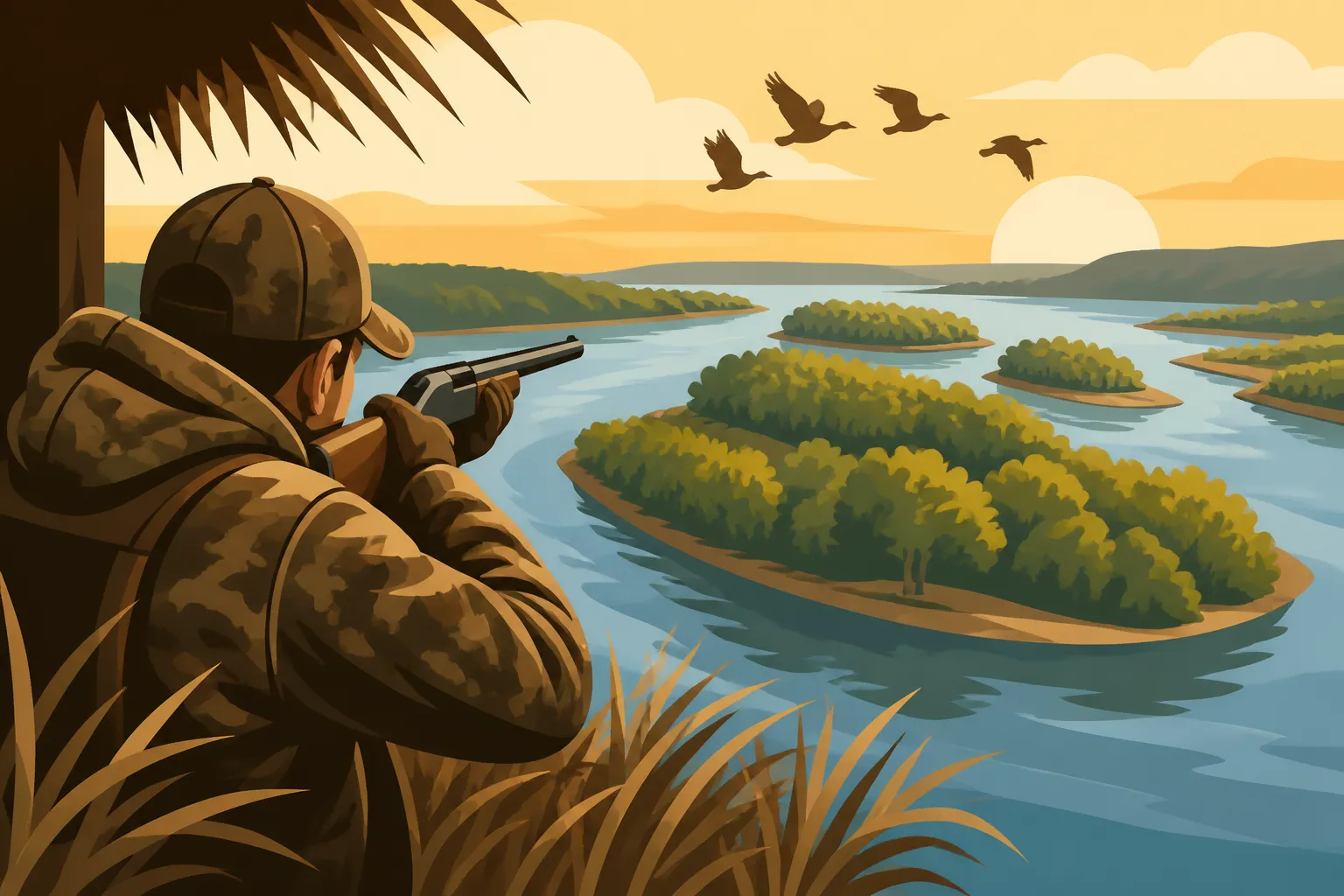
The Mississippi River, winding its way along Iowa's eastern border, holds a secret many hunters overlook or find too daunting: its countless islands. These dynamic landforms, shaped by current and time, offer incredible hunting opportunities for everything from whitetails to waterfowl, but they come with unique challenges. Hunters often struggle to decipher land ownership, navigate ever-changing water levels, and understand the specific rules that apply to these unique environments. This guide will help you understand the allure and intricacies of hunting these often-forgotten slivers of wild Iowa, giving you the confidence to explore this exceptional resource.
The Unique Appeal and Challenges of Mississippi River Islands
Hunting the islands of the Mississippi River in Iowa is an experience unlike any other. It offers a distinct blend of solitude, diverse wildlife, and the thrill of navigating a truly dynamic landscape. However, this unique environment also brings with it a set of challenges that require careful consideration and preparation.
Dynamic Ecosystems and Diverse Game
One of the most compelling aspects of Mississippi River islands is their ever-changing nature. The river's flow constantly carves away and deposits sediment, creating new sandbars and eroding old banks. This continuous process fosters incredibly rich and diverse ecosystems. You'll find everything from mature cottonwood and silver maple timber on older, more stable islands to thick willow and brushy growth on newer formations, alongside sloughs and backwaters brimming with aquatic life. This variety means that a single island or a cluster of islands can support a wide array of game species.
For the waterfowl hunter, these islands are a paradise. They often feature shallow backwaters, submerged timber, and brushy edges that provide ideal feeding and loafing areas for ducks and geese utilizing the Mississippi River Backwater Waterfowl migratory pathway. Deer, especially mature bucks, often seek refuge on the larger, more secluded islands to escape hunting pressure from the mainland. They understand that fewer hunters are willing to make the effort to reach these spots. Small game like squirrels and rabbits also thrive in the varied cover, from oak stands to dense briar thickets. The sheer biodiversity makes every trip an adventure, as you never quite know what opportunities might present themselves.
The Elusive Nature of River Island Access
While the potential for incredible hunting is high, actually getting to these islands is where many hunters hit their first major hurdle. Unlike a typical walk-in public land tract, river islands almost always require boat access. This immediately elevates the complexity and equipment requirements. Water levels are constantly fluctuating, sometimes daily, especially during spring thaws or heavy rains. A landing you used comfortably last week might be completely submerged or a muddy quagmire this week, or conversely, too shallow to navigate. This means you can't just pick a spot on a map and assume access will be straightforward; constant vigilance of river conditions is absolutely necessary.
Furthermore, the currents can be surprisingly strong, especially in the main channel or during periods of high water. Navigating a boat, even a small one, requires experience and caution. Sandbars can appear seemingly out of nowhere, posing a significant hazard to propellers and hulls. For hunters without a boat, or those unfamiliar with river navigation, these islands can feel completely out of reach. It's a true test of preparedness and river savvy, but for those who overcome these challenges, the reward is often a hunt far removed from the typical crowds.
Decoding Public vs. Private and River Regulations
One of the biggest headaches for any hunter looking at Mississippi River islands is figuring out who owns what, and what rules apply. The river is a patchwork of jurisdictions, dynamic boundaries, and specific regulations that can easily trip up even seasoned hunters. Getting this right is not just about being a good steward; it's about staying legal.
Understanding Land Ownership on Shifting Sands
Many of the islands along the Mississippi River are indeed public land, often managed by the U.S. Fish and Wildlife Service, the U.S. Army Corps of Engineers, or the Iowa Department of Natural Resources (DNR). However, this isn't universally true. Some islands are privately owned, and others are a mix of both. Compounding this complexity is the fact that river channels shift, sandbars form and erode, and what was once firmly on one side of a property line might now be on another – or even gone entirely. Relying on outdated paper maps or general knowledge can lead to unintentional trespassing, which nobody wants.
This is where modern mapping technology becomes truly indispensable. Tools like onX Hunt are game-changers for identifying property boundaries on these fluid landscapes. You can zoom in and see the ownership lines clearly, even noting federal lands, state areas, and private parcels. It's crucial to cross-reference this with local signage where present, and if there's any doubt about ownership or access to an area, always err on the side of caution. Remember that just because an island is surrounded by public water doesn't mean the island itself is public. Understanding these nuances is critical for ethical and legal hunting. When in doubt, it’s always better to find another spot or seek definitive clarification from the managing agency. Reading an Iowa Public Land Boundary becomes especially important here.
Navigating State and Federal Regulations
The Mississippi River is a major waterway, and as such, it falls under a complex web of regulations that can vary depending on the specific stretch of river, the type of land, and even the species you're pursuing. Many islands are part of larger wildlife management areas (WMAs) or national wildlife refuges, each with its own set of rules regarding hunting seasons, allowed weapons, access points, and even things like camping or the use of ATVs. What might be perfectly legal on one island might be prohibited on another just a few miles away.
Beyond land-specific rules, general state hunting regulations for Iowa still apply, but often with additional federal layers for things like waterfowl. You'll need to know the specific Iowa Waterfowl Zones and Splits and adhere to federal duck stamp requirements. Pay close attention to rules regarding baiting, permanent blinds, and even how you retrieve game. Before any hunt, a thorough review of the Iowa DNR regulations and any specific rules for the federal lands you intend to hunt is non-negotiable. Websites and apps can help, but nothing beats reading the official regulations. GoHunt, for example, often provides summaries and alerts for regulation changes that can affect your plans, making it easier to stay informed without having to comb through dense legal text every time.
Essential Mapping Tools for River Hunters
Given the intricate and ever-changing nature of the Mississippi River islands, having reliable and detailed mapping tools is not just a convenience—it's a necessity. Traditional paper maps can quickly become obsolete due to shifting sandbars and river channels, and they often lack the granular detail needed for precise land ownership identification.
Modern digital mapping applications, such as onX Hunt, provide hunters with up-to-date satellite imagery, property lines, and topographic information right on their phone or GPS device. These apps can highlight federal lands (like US Fish & Wildlife Service or Army Corps of Engineers areas), state public lands, and private property boundaries with remarkable accuracy. This is invaluable for ensuring you stay on legal hunting ground, especially when islands are partially public and partially private. Furthermore, many of these apps allow you to download maps for offline use, which is critical because cell service can be spotty or non-existent in many remote river sections. Plotting potential access routes, marking productive spots, and understanding the topography of an island before you even launch your boat can significantly increase your chances of a successful and safe hunt. Always remember to check for any Checking Iowa Area Closures Before You Go that might be listed on these digital platforms or official DNR sources.
Tactics for Success on the Mississippi's Islands
Once you've navigated the complexities of access and regulations, the real fun begins: hunting these unique river islands. Success here often hinges on understanding how different game species use these isolated environments and adapting your tactics accordingly.
Waterfowl Strategies in Island Backwaters
The Mississippi River is a major artery of the Central and Mississippi Flyways, making its islands prime territory for waterfowl. Ducks and geese regularly utilize the quiet backwaters, sloughs, and protected channels between islands for resting and feeding. To successfully hunt waterfowl here, scouting is paramount. Look for areas with submerged vegetation, shallow mudflats, or flooded timber where birds are actively feeding. Often, these areas are hidden from the main channel, requiring careful navigation to locate.
Setting up decoys in these secluded backwaters can be incredibly effective. Consider a spread that mimics dabbling ducks in shallow water or a small group of Canada geese loafing on a sandbar. Concealment is key; natural vegetation on the islands provides excellent cover. A layout blind or a brushed-in ground blind can work wonders. Pay close attention to the wind direction, as birds will almost always land and take off into the wind. If you're hunting in an area with a strong current, anchor your decoys securely to prevent them from drifting downstream. Remember to check local regulations for specific rules on Iowa waterfowl hunting tactics for river backwaters, especially concerning blind construction or leaving equipment overnight.
Deer Hunting the Timbered Island Core
Larger, more stable islands on the Mississippi often host significant deer populations, including trophy-class bucks. These islands serve as natural refuges, providing excellent cover and food sources with minimal human disturbance compared to mainland areas. Deer often bed down in the thickest brush or timbered interiors, moving to browse on natural vegetation or access agricultural fields on the mainland under the cover of darkness.
When hunting deer on these islands, consider a mobile approach. Scouting for fresh sign—tracks, rubs, scrapes, and bedding areas—is crucial. Since deer movement patterns might be slightly different on an island, focus on natural funnels created by water, dense cover, or changes in elevation. A mobile treestand or saddle setup can be ideal, allowing you to quickly adapt to new sign or changing wind conditions. Mobile Saddle Hunting in Iowa offers a quiet and lightweight option for getting deep into island timber. Access routes that prevent you from bumping deer are even more critical here, as deer have fewer escape routes than on the mainland. Always approach from downwind, considering the thermals that might be influenced by the water.
Small Game Opportunities and Scouting
Beyond deer and waterfowl, Mississippi River islands also offer fantastic opportunities for small game hunting. Squirrels, particularly fox and gray squirrels, thrive in the mature timber found on many islands, especially those with oak and hickory trees that provide a consistent food source. Rabbits often inhabit the denser brush piles, briar thickets, and willow stands that line the edges of islands or fill in younger growth areas.
Hunting small game on islands can be a great way to introduce new hunters to the sport or to enjoy a more relaxed outing. For squirrels, a quiet still-hunt through the timber, pausing frequently to listen and scan the canopy, is often productive. For rabbits, working through brush piles with a partner can be effective, though thick cover can make shots challenging. Always be mindful of your surroundings and any other hunters that might be present, especially during gun seasons. Scouting for small game is similar to deer; look for mast crops for squirrels and dense escape cover for rabbits. These islands, with their relative isolation, often harbor healthy small game populations that see less pressure than mainland areas.
Preparing for Your Island Adventure: Gear and Safety
Hunting the Mississippi River islands is a truly rewarding endeavor, but it's not without its risks. Proper preparation, both in terms of gear and safety protocols, is absolutely paramount to ensure a successful and, most importantly, safe adventure. The river itself demands respect, and being underprepared can quickly turn a memorable hunt into a dangerous situation.
Boat and Water Safety Essentials
Your boat is your lifeline when hunting river islands, so ensuring it's in top working order is the first step. Always perform a pre-trip inspection: check your motor, fuel lines, battery, and ensure you have enough fuel for the entire trip, plus a reserve. Carry a spare propeller and the tools needed to change it – hitting a submerged log or sandbar is a real possibility. Your safety gear is non-negotiable:
- Personal Flotation Devices (PFDs): Have a properly fitting PFD for every person on board, and wear it, especially in cold water or when navigating tricky currents.
- Anchor: A robust anchor with plenty of rope is crucial for holding your position against currents or in windy conditions.
- Navigation Lights: If there's any chance you'll be out before sunrise or after sunset, ensure your boat's navigation lights are functional and properly displayed.
- Bailing Device: A bucket or bilge pump is essential for removing any water that might come into the boat.
- Sound-Producing Device: A whistle or air horn can alert other boaters to your presence.
- Fire Extinguisher: For boats with an engine, a marine-rated fire extinguisher is a must.
- First Aid Kit: A comprehensive kit for minor injuries.
- Communication: A fully charged cell phone (in a waterproof bag) and potentially a marine radio are vital. Tell someone your float plan, including your intended route and expected return time. Boat Access to Iowa River Islands often means navigating unpredictable waters.
River conditions can change rapidly. Wind can whip up waves, and currents can strengthen after heavy rain. Always know the capabilities of your boat and your own experience level. Never overload your vessel.
Clothing and Navigation for Remote Hunting
Beyond your boat, the right personal gear will make or break an island hunt. Given the likelihood of getting wet, even if it's just from dew or marshy areas, waterproof outerwear and sturdy, waterproof boots are essential. Many hunters opt for chest waders, especially for waterfowl hunting or retrieving game in shallow sloughs. Layering is key, particularly during the cooler months, as river environments can feel colder than upland areas due to wind and humidity. Consider Layering for Iowa December Sits even if the day starts mild.
For navigation on the island itself, a reliable GPS unit or a smartphone with a mapping app like onX Hunt is crucial. The dense vegetation and often featureless terrain of some islands can make it surprisingly easy to get disoriented, especially as daylight fades. Mark your boat's location and any key features like game trails or bedding areas. A headlamp with fresh batteries is also a necessity for walking to and from your stand in the dark. Carry a compass as a backup. Due to the remote nature of many islands, consider a satellite communication device like a Garmin inReach if you're venturing far off the beaten path, as cell service can be nonexistent.
Contingency Planning for River Hunts
The unpredictable nature of river hunting demands a strong emphasis on contingency planning. What if your boat breaks down? What if the weather turns severe? What if you or a hunting partner gets injured? Thinking through these scenarios beforehand can save lives and prevent panic.
Always carry a well-stocked emergency kit that includes extra water, high-energy snacks, a shelter (like an emergency blanket or small tarp), fire-starting materials, and additional first-aid supplies. If you're hunting with a partner, establish clear communication protocols and never split up without a plan to reconnect. Inform someone back home of your detailed itinerary, including which islands you plan to visit and when you expect to return. This "float plan" is critical. Be aware of changing weather forecasts and local river conditions, including potential floods or high wind warnings, and be willing to postpone or cut short a hunt if conditions become unsafe. Even on public land, respecting the power of the Mississippi is paramount. If you're planning on an overnight stay, ensure you understand and follow Iowa Public Land Camping Rules. Being prepared for the unexpected is not just about comfort; it's about survival when you're hunting in such a wild and isolated environment.
| Hunting Type | Primary Challenge | Key Tactic | Recommended Gear |
|---|---|---|---|
| Waterfowl | Dynamic water levels, concealment | Scouting for active feeding areas, decoy spreads | Boat, waders, decoys, layout blind, PFD |
| Whitetail Deer | Access, dense cover, unpredictable movement | Mobile stand setup, scent control, thorough scouting | Boat, treestand/saddle, binos, GPS, PFD |
| Small Game | Thick brush, navigating dense cover | Still-hunting, working brush piles | Boat, brush pants, small caliber firearm/bow, PFD |
| General | River currents, isolation, weather | Detailed mapping, emergency kit, communication | Reliable boat, PFDs, first aid, charged phone |
Disclaimer
This article is for general informational purposes only and does not constitute professional advice. Laws, prices and regulations vary by location and change over time. Consult a qualified professional for guidance on your specific situation.