Penalty for Missing an Iowa Harvest Report
You've just wrapped up a thrilling day in the Iowa timber or fields, the hard work paid off, and you've got a fantastic deer or turkey tagged. Amidst the excitement of field dressing, calling friends, and making plans for processing your game, it's incredibly easy to overlook one vital step: the harvest report. Many hunters mistakenly think it’s just a formality, but missing this critical step can lead to unexpected and often frustrating penalties. This guide will meticulously break down exactly what happens if you miss an Iowa harvest report, the real-world consequences, and how to effortlessly ensure you're always compliant with Iowa's hunting regulations.
Why Harvest Reporting Matters Beyond Just the Rules
It's easy to view harvest reporting as just another bureaucratic hurdle, a tiny piece of paperwork (or digital form) that the DNR requires. But trust me, as someone who's spent countless hours in the field and seen how regulations impact our hunting opportunities, it's much more profound than that. These reports are the backbone of sound wildlife management, directly influencing the seasons, tag quotas, and even the future of hunting in our state.
The Data's Impact on Future Seasons
Imagine trying to manage a massive livestock operation without knowing how many animals you have, how many are being born, or how many are being sold each year. It would be a disaster, right? The same principle applies to Iowa's deer and turkey populations. Every single harvest report you submit provides a crucial data point for the Iowa Department of Natural Resources (DNR). They use this information to:
- Estimate population trends: Is the deer herd growing, stable, or declining in a particular county? Are turkey numbers robust enough to sustain current hunting pressure?
- Assess hunter success rates: This helps understand the effectiveness of different seasons and tactics, and also gauges hunting pressure.
- Determine future tag quotas: If harvest numbers are consistently high, the DNR might consider increasing antlerless tags in certain zones to balance the herd, or conversely, if numbers are low, they might reduce quotas to allow populations to rebound. This directly affects how many deer you can shoot in a given year, or if you can even get an antlerless tag for your preferred county.
- Monitor CWD spread and impact: In counties where Chronic Wasting Disease (CWD) is a concern, harvest data helps target sampling efforts and understand disease prevalence, which is vital for the long-term health of our deer herd. For more detailed information, check out Iowa's CWD Mandatory Sampling Counties.
- Evaluate season structures: Are the current archery, shotgun, and muzzleloader seasons effectively managing the population? Do changes need to be made to spread out pressure or target specific age classes of deer?
Without accurate harvest reports, the DNR would essentially be flying blind. This could lead to overly conservative seasons that limit our opportunities, or worse, unchecked population growth that results in widespread crop damage or disease outbreaks, neither of which benefits hunters or landowners. It’s a collective effort, and your individual report, while seemingly small, is a vital part of the bigger picture.
How Hunter Compliance Builds Trust
Beyond the hard data, consistent harvest reporting also builds a crucial layer of trust between hunters and the Iowa DNR. When hunters consistently follow the rules, it demonstrates a commitment to ethical hunting and responsible wildlife management. This trust is invaluable when new regulations are proposed, or when defending hunting rights against those who oppose them.
Conversely, widespread non-compliance can erode that trust. It can make it harder for the DNR to justify current seasons or advocate for hunter-friendly policies if they can't accurately demonstrate the health of the wildlife populations. It might even lead to stricter regulations in an attempt to gather better data or enforce compliance. We all want to protect our hunting heritage, and part of that involves being good stewards of the resource and responsible participants in the regulatory framework. Think of it as investing in the future of Iowa hunting. By accurately reporting, you're not just avoiding a penalty; you're actively contributing to a robust, data-driven approach that ensures healthy wildlife populations and continued hunting opportunities for generations to come.
The Specifics: What Happens If You Don't Report?
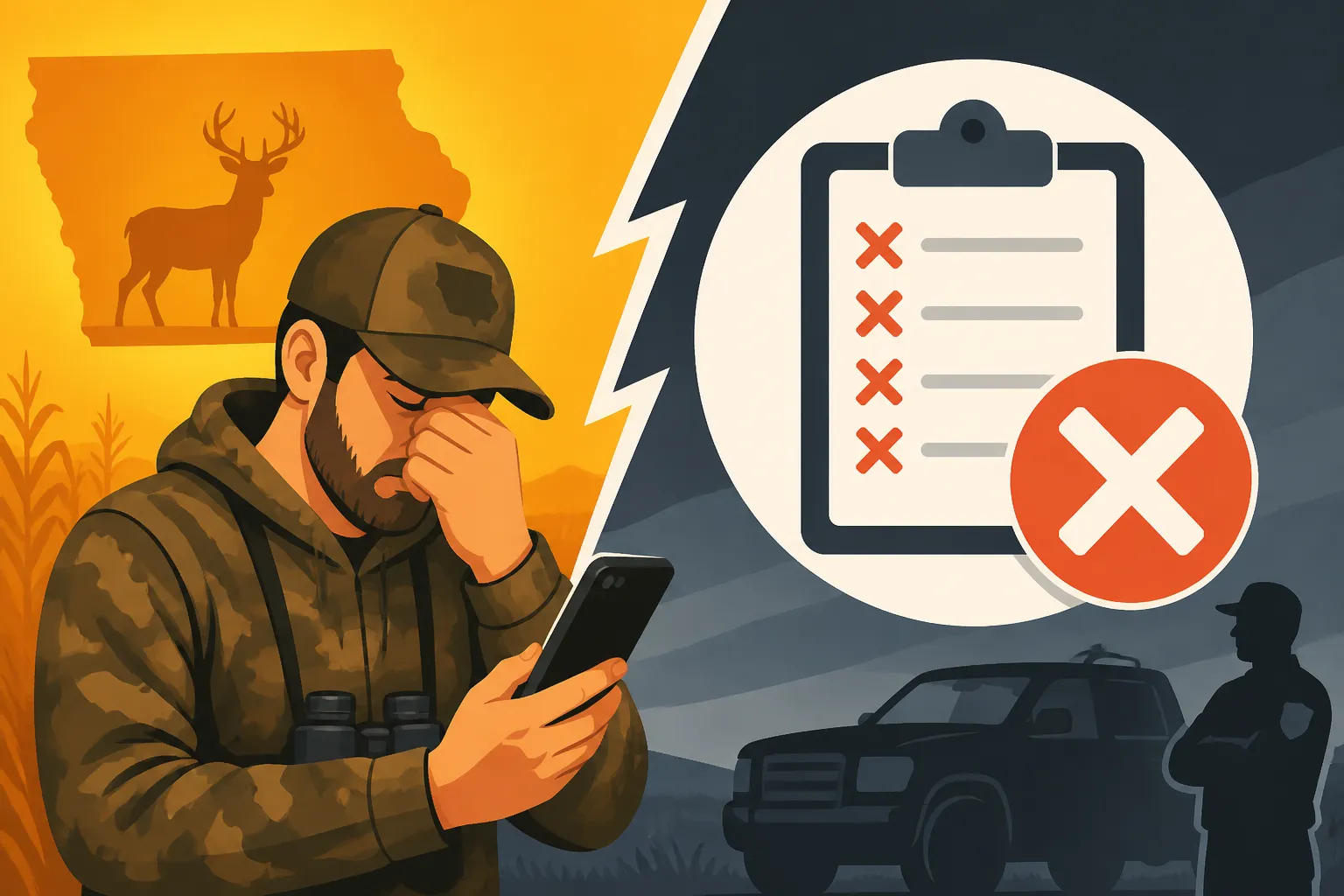
So, you missed the deadline. Maybe you forgot in the excitement, or perhaps you just genuinely didn't realize the strictness of the reporting requirement. Whatever the reason, the Iowa DNR takes harvest reporting seriously, and there are tangible consequences for non-compliance. It's not just a polite reminder; it's a legal obligation.
Understanding the Iowa Code and Violations
In Iowa, the requirement to report your harvest is outlined in the Iowa Administrative Code. Specifically, for deer, it's found under 571 Iowa Administrative Code, Chapter 106. For wild turkey, it falls under 571 Iowa Administrative Code, Chapter 99. The rules clearly state that all deer and turkey harvested must be reported. This isn't just for that monster buck, but every antlerless deer, every spring gobbler, every fall turkey.
The crucial part to remember is the deadline: you must report your harvest by midnight on the day the animal is tagged. If you tag an animal on the very last day of a specific season, you have until midnight on that final day to get your report in. This is a hard and fast rule, and there's no grace period.
If you fail to report a harvest within this timeframe, it constitutes a scheduled violation of Iowa's hunting laws. Scheduled violations are minor offenses that typically don't require a court appearance if you simply pay the fine. However, they are still legal violations that go on your record. It's similar to a traffic ticket – you can pay it, but it's still a mark against you. While it might seem like a small thing, understanding the nuances of Iowa Wildlife Violation Penalties is crucial.
Potential Fines and Court Costs
The immediate consequence of missing a harvest report is a financial one. For a scheduled violation related to harvest reporting, the fine can vary, but it's typically in the range of $100 to $200. This base fine, however, is rarely the total cost. You will also be assessed court costs and surcharges, which can easily add another $60-$100 or more to the total. So, what started as a simple oversight can quickly become a $200-$300 expense out of your pocket.
Let's put that into perspective: that's money that could have gone towards new hunting gear, a fresh set of arrows, or even gas for your next scouting trip. It's a preventable cost that many hunters regret deeply when it hits them. It’s not about the DNR trying to get rich; it’s about enforcing a critical regulation that supports scientific wildlife management.
It's also worth noting that while these are "scheduled" violations, repeated offenses could lead to a conservation officer deciding to write you up for a more serious charge, especially if they suspect intentional non-compliance or if you have a history of other infractions. The goal is always to comply, and avoid that interaction altogether.
Impact on Future Hunting Privileges: Licence Revocation/Suspension
This is where the consequences become much more serious than just a fine. While a single missed harvest report might not immediately result in your hunting privileges being revoked, repeated violations or combining a missed report with other offenses (like hunting without a valid tag or violating bag limits) can absolutely lead to the suspension or revocation of your hunting licence.
The Iowa DNR has the authority to suspend or revoke hunting, fishing, and trapping privileges for various infractions. A pattern of non-compliance, even with scheduled violations like missed harvest reports, signals to wildlife authorities that a hunter may not be taking their responsibilities seriously. This isn't something to take lightly. Losing your hunting privileges, even for a year, means no more deer seasons, no more turkey hunting, no upland bird pursuits – essentially, being cut off from a passion you likely cherish.
Furthermore, if your privileges are suspended in Iowa, it can also impact your ability to hunt in other states through interstate wildlife violator compacts. Many states share information on license revocations, meaning a suspension in Iowa could make it impossible to hunt in neighboring states like Missouri, Illinois, or Nebraska as well.
It's a stark reminder that responsible hunting goes beyond just knowing Shot Placement on a Whitetail at Twenty Yards or Field Dressing in Warm October Weather; it includes understanding and adhering to the administrative rules that govern our sport.
Navigating the Reporting Process and Avoiding Penalties
The good news is that avoiding penalties for a missed harvest report is incredibly easy once you understand the system. The Iowa DNR has streamlined the process to make it as convenient as possible for hunters. There are essentially two main ways to report your harvest, and both are designed to be quick and user-friendly.
Step-by-Step Online Reporting
The most common and often preferred method for reporting your harvest is online through the Go Outdoors Iowa system. This platform is your one-stop shop for purchasing licenses, applying for draws, and yes, reporting your successful hunts. Here’s a simple breakdown of the process:
- Access the Go Outdoors Iowa Website: Head to the official Go Outdoors Iowa website. You'll need to log in to your account. If you've purchased a license before, you likely already have one. If not, it's simple to create.
- Navigate to the Harvest Reporting Section: Once logged in, look for a section specifically labeled "Harvest Reporting" or "Report Harvest." This is usually clearly visible on your dashboard or in the main menu.
- Select the Appropriate Tag: The system will typically show you a list of your purchased tags. Select the tag corresponding to the animal you just harvested. For example, if you shot an antlerless deer during the first shotgun season, select that specific tag.
- Enter Required Information: You'll be prompted to enter several pieces of information about your harvest. This usually includes:
- Date of harvest: The day you actually tagged the animal.
- County of harvest: The county where the animal was taken.
- Sex of the animal: Buck, doe, or unknown (for turkeys, tom, hen, or unknown).
- Antler points (for deer): For antlered deer, you'll need to indicate the number of points on one side, or if it's a shed antler.
- Type of weapon used: Bow, shotgun, muzzleloader, straight-wall cartridge, etc. This helps the DNR analyze harvest data by weapon type.
- Approximate time of day: This helps the DNR understand deer movement patterns.
- Review and Submit: Double-check all the information you've entered for accuracy. Once you're confident everything is correct, hit the submit button. You should receive a confirmation message or email that your harvest has been successfully reported.
It literally takes a few minutes, even from your phone out in the field, assuming you have cell service. This convenience means there's really no excuse for missing the deadline. It's often easier to report your deer or turkey than it is to figure out the best approach for Getting a Deer Out of an Iowa Creek Bottom!
Phone Reporting Options
For those times when you're deep in the timber with no cell signal, or perhaps you just prefer the old-fashioned way, Iowa also offers a phone reporting option. This is a fantastic backup to ensure you meet that midnight deadline.
You can call the toll-free harvest reporting line at 1-800-771-4692.
When you call, you'll be guided through an automated system. You'll need your licence number and the tag number of the animal you harvested. The system will then ask you the same questions as the online portal (date, county, sex, weapon, etc.). Follow the prompts carefully, and make sure you receive confirmation that your report was successful. Keep a pen and paper handy to jot down any confirmation numbers they provide.
This phone option is a lifesaver if you're out in a remote area without internet access or if you're having technical difficulties with the online system. Make sure to save this number in your phone before you head out for your hunt, just in case!
Common Pitfalls and How to Avoid Them
Even with convenient reporting options, hunters sometimes still miss the mark. Here are some common pitfalls and practical ways to avoid them:
- Forgetting in the Excitement: It's easy to get caught up in the moment. To combat this, make reporting an immediate part of your post-harvest routine. As soon as you've tagged the animal, and before you even start thinking about dragging it, make the report. Some hunters even keep the GoHunt app or website open on their phone.
- Assuming Someone Else Will Do It (Party Hunting): In Iowa, if you're Party Hunting Rules and Safe Drives, the person who actually kills the deer is responsible for tagging and reporting it, even if another hunter in the party plans to use their antlerless tag. Don't assume your buddy will take care of it for you. Clarify who is reporting what, and make sure everyone understands their individual responsibility.
- Lack of Cell Service: If you know you'll be hunting in an area with spotty service, plan ahead. Make it a point to drive to the nearest town or an area with reliable service as soon as possible after tagging. Don't wait until you're home late at night, exhausted, and risk forgetting. Alternatively, carry the phone reporting number with you.
- Technical Difficulties: Websites can have glitches, and phone lines can be busy. If you encounter an issue, don't give up. Try the other method (if you can't report online, try by phone, and vice-versa). If problems persist, try contacting the DNR directly during business hours the following day – but remember, the deadline is still midnight on the day of harvest. Document any issues you experience, including screenshots or error messages, just in case.
- Not Understanding the Deadline: The "midnight on the day of harvest" rule is absolute. Don't confuse it with the final day of the season. If you shoot a deer on November 10th during the archery season, you must report it by midnight on November 10th, not by the end of the entire archery season. For more about specific dates, refer to the Iowa Deer Season Dates by Weapon.
By being diligent and incorporating harvest reporting into your hunting routine, you can easily avoid fines, protect your hunting privileges, and contribute positively to Iowa's wildlife management efforts.
Here's a quick summary table to keep you on track:
| Aspect | Detail | Important Notes |
|---|---|---|
| Reporting Requirement | All harvested deer and turkey | Applies to every animal taken, regardless of sex or size. |
| Reporting Deadline | By midnight on the day the animal is tagged | If tagged on the last day of a season, report by midnight on that final day. No exceptions. |
| Online Method | Go Outdoors Iowa website (www.iowadnr.gov/gooutdoorsiowa) | Requires login; fill in date, county, sex, weapon, antler points (if applicable). Get confirmation. |
| Phone Method | Toll-free line: 1-800-771-4692 | Automated system; requires licence and tag numbers. Best for no cell service areas or technical difficulties. Get confirmation number. |
| Violation Type | Scheduled Violation (failure to report) | Similar to a traffic ticket; usually resolved by paying a fine. |
| Potential Fines | Base fine: $100 – $200 | Plus additional court costs and surcharges, potentially bringing total to $200 – $300 or more. |
| Impact on Privileges | Licence suspension/revocation for repeated violations or combined offenses | A single offense might not revoke, but a pattern of non-compliance can lead to loss of hunting privileges in Iowa and potentially other states. See also: Iowa Hunter Education and Licensing Basics. |
| Purpose of Reporting | Crucial data for Iowa DNR wildlife management | Influences population estimates, tag quotas (e.g., Iowa Antlerless Tags and Quotas), season structures, and CWD monitoring, ensuring sustainable hunting opportunities. Also helps with Iowa Deer Herd Management and Harvest. |
Remember, your active participation is vital for the health of Iowa's wildlife and the future of our hunting traditions. Whether you're tracking a pheasant, calling a gobbler, or chasing a whitetail buck, doing your part by accurately and timely reporting your harvest is a fundamental aspect of being a responsible hunter.
Disclaimer
The information provided in this guide is for general informational purposes only and does not constitute legal advice. Hunting regulations and penalties can change, and interpretations may vary. It is your sole responsibility to consult the most current Iowa Department of Natural Resources hunting regulations and Iowa Code to ensure full compliance. If you have specific legal questions, please contact the Iowa DNR or a qualified legal professional.