Iowa Record Book Whitetails
Every deer hunter who sets foot in Iowa dreams of it: that moment when a genuinely massive whitetail buck steps into view, a rack so big it barely looks real. It's not just a dream, though; Iowa consistently produces some of the biggest deer in the world, making those coveted record book entries a tangible, albeit challenging, goal. This comprehensive guide will dive deep into why Iowa is a whitetail mecca, what truly constitutes a "record book" animal, and how you can maximize your chances of encountering, and hopefully harvesting, one of these legendary beasts.
Why Iowa is the Land of Giant Whitetails
Iowa has earned a reputation that precedes it, whispered in hushed tones around campfires and displayed proudly in trophy rooms across the nation. It's not just a fluke; a perfect storm of environmental factors, genetics, and deer management practices have converged to create an unparalleled environment for growing truly colossal whitetails. The sheer number of impressive bucks harvested here year after year is staggering, and it’s why so many hunters, both resident and nonresident, spend years trying to draw a tag.
The Golden Triangle of Genetics and Nutrition
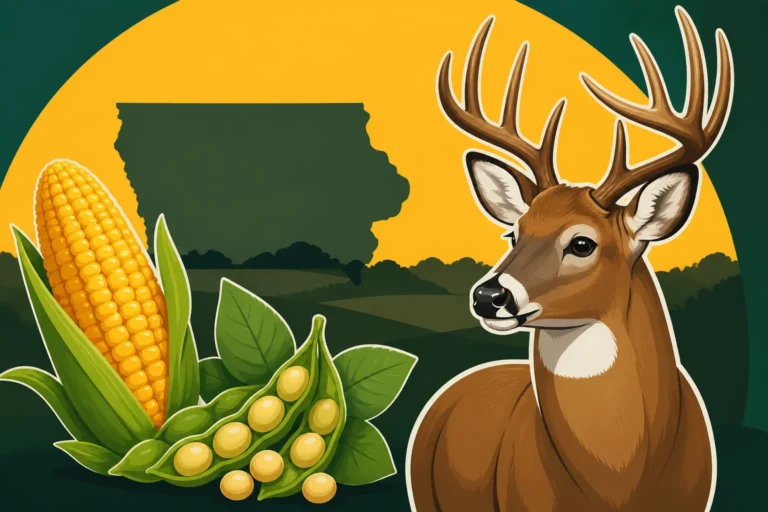
When you hear hunters talk about "trophy states," Iowa is almost always at the top of the list, and for good reason. Our fertile soil isn't just great for corn and soybeans; it's a superfood buffet for whitetail deer. The robust agricultural landscape provides an almost year-round supply of high-protein forage, critical for antler growth and overall deer health.
The genetics of Iowa's whitetails are also top-tier. These deer have evolved in an environment that allows them to reach their full potential. With abundant food, they can express those superior genetics, putting on incredible antler mass and width. It’s a dynamic cycle: great genetics are fueled by exceptional nutrition, leading to larger, healthier deer with impressive racks. This combination is a major reason why Iowa consistently produces some of the biggest bucks in North America, with many reaching impressive scores. For more on this, check out our piece on "Why Iowa Grows Trophy Whitetails".
Consistent Age Structure for Mature Bucks
One of the most crucial, yet often overlooked, elements in growing record-book deer is age. A buck simply needs time to develop his full antler potential. In Iowa, a combination of conservative harvest practices, robust tag demand, and hunter ethos has historically contributed to a healthy age structure within the herd. This means more bucks are making it to those older age classes – four, five, six years old, and beyond – where they can truly maximize their antler growth.
It's a testament to both the deer management strategies of the Iowa Department of Natural Resources (DNR) and the patience of Iowa hunters. While some states have high harvest rates for younger bucks, Iowa's system, especially for nonresidents, often means hunters are specifically targeting mature animals, letting the younger ones walk to grow. This intentional approach, combined with ample cover and food, ensures that a significant portion of the buck population survives long enough to sport those massive, high-scoring racks we all dream of. Understanding the "Buck Age Structure in Iowa" is key to appreciating this phenomenon.
Understanding Record Book Categories
For many hunters, the term "record book" conjures images of massive antlers stretching across a wall. But what exactly qualifies a whitetail for a place in these prestigious registries? It's more than just a big rack; there are specific criteria, measurements, and categories that define what makes a deer "record book" material. Knowing these distinctions is crucial for anyone hoping to someday etch their name alongside Iowa's giants.
Boone & Crockett: The Gold Standard for Gun Hunters
The Boone and Crockett Club is arguably the most recognized authority for North American big game records, particularly for firearms. Established over a century ago by Theodore Roosevelt, it promotes fair chase hunting and wildlife conservation. For whitetails, their minimum entry scores are high, reflecting truly exceptional animals.
A typical whitetail needs a minimum net score of 170 points to qualify for the All-Time Records book, while a non-typical needs 195 points. These scores are calculated down to the eighth of an inch, taking into account main beam length, tine length, mass, and inside spread. For a gun hunter, harvesting a Boone & Crockett whitetail is the pinnacle of achievement, a testament to years of dedication and, often, a bit of luck in the field. The detailed scoring system ensures a level playing field and celebrates truly outstanding specimens.
Pope & Young: Celebrating Archery Excellence
For bowhunters, the Pope & Young Club holds the equivalent prestige. Also dedicated to ethical bowhunting and conservation, Pope & Young recognizes trophy animals taken exclusively with archery equipment under fair chase principles. Their minimum entry scores are slightly lower than Boone & Crockett, acknowledging the inherent challenges and closer ranges typically associated with bowhunting.
A typical whitetail must net 125 points to qualify for Pope & Young, and a non-typical requires 155 points. These thresholds still represent an incredibly impressive animal, one that most bowhunters will pursue their entire lives. The Pope & Young record book is a chronicle of bowhunting history, filled with inspiring stories of dedication, skill, and reverence for the animals pursued. For Iowa archers, punching a tag on a Pope & Young buck is a monumental accomplishment, cementing their place in the state’s rich bowhunting heritage.
Iowa's Own Big Buck Registry
While Boone & Crockett and Pope & Young are national and international registries, many states also maintain their own local big buck programs. Iowa is no exception, celebrating its own monster deer with dedicated recognition. These state-level programs often have slightly more accessible entry requirements or additional categories, allowing more hunters to celebrate their impressive harvests.
The Iowa Department of Natural Resources maintains records of the state's largest whitetails, often highlighting them in publications or at local events. These state registries serve a vital role in showcasing the quality of a state's deer herd and inspiring local hunters. They also provide valuable data for wildlife biologists, helping them track trends in antler growth and overall herd health. While the national records grab headlines, the local registries underscore the incredible hunting opportunities available right here in the Hawkeye State, often featuring bucks that, while not quite B&C or P&Y, are still absolute giants in their own right.
Key Factors for Growing Trophy Whitetails in Iowa
It's no secret that Iowa consistently ranks at the top for producing monster whitetails. This isn't just happenstance; it's a convergence of specific environmental and management factors that create the ideal conditions for bucks to reach their maximum potential. Understanding these elements is crucial for appreciating why the Hawkeye State holds such a coveted spot in the deer hunting world.
Unbeatable Agricultural Nutrition
The bedrock of Iowa's trophy whitetail success lies in its incredibly rich agricultural landscape. Miles and miles of corn and soybean fields don't just feed the world; they provide an unparalleled buffet for deer. These high-protein, high-carbohydrate crops offer a nutritional foundation that is hard to beat anywhere else in the country.
Think about it: from the moment fawns are born, they have access to nutrient-dense forage that fuels rapid growth. As bucks age, this consistent, rich diet is directly translated into antler development. Without this consistent influx of quality food, even deer with great genetics would struggle to grow the massive main beams, impressive mass, and long tines that define a record-book buck. The vast acres of corn and beans, especially in the central and northern parts of the state, mean bucks have a seemingly endless supply of what they need to put on bone. This excellent nutrition directly contributes to the exceptional "Soil Fertility and Antler Growth" seen across Iowa.
Diverse and Abundant Habitat
While row crops provide the calories, robust and diverse habitat provides the cover, bedding areas, and security that mature bucks need to thrive and evade predators and hunters. Iowa, despite its agricultural dominance, still boasts significant pockets of timber, creek bottoms, CRP (Conservation Reserve Program) fields, and dense brush. These areas offer the perfect sanctuary for deer.
River systems like the Des Moines, Skunk, and Mississippi, along with their numerous tributaries, create essential timber corridors. These natural highways allow bucks to travel safely between food sources and bedding areas, growing old in relative peace. Dense CRP fields provide excellent fawning cover and security for bucks seeking solitude. This mosaic of habitat types ensures deer have everything they need: food, water, and most importantly, security to reach maturity. These varied landscapes are often where you'll find the most concentrated deer sign, especially in areas where these habitat types converge.
Responsible Harvest Management and Age
Perhaps one of the most critical factors is the commitment to responsible deer management and the resulting age structure of the buck herd. Iowa has historically implemented strategies that encourage hunters to pass on younger bucks, allowing them to reach full maturity. This, combined with the difficulty of drawing certain nonresident tags, means that older, more mature bucks have a greater chance of survival.
For nonresident hunters, drawing a coveted Iowa tag, especially in the highly sought-after archery or early muzzleloader seasons, can take several years of accumulating preference points. This often means that when hunters finally do draw, they are highly motivated to hold out for a truly mature animal, further protecting the younger age classes. The Iowa DNR also monitors deer populations closely, adjusting antlerless quotas to maintain a healthy buck-to-doe ratio, which can positively impact rut behavior and buck survival. This holistic approach to "Iowa Deer Herd Management and Harvest" ensures that the state continues to be a trophy whitetail hotspot.
Iowa's Most Fabled Bucks and Their Stories
Iowa's reputation as a trophy whitetail destination isn't built on hearsay alone; it's cemented by the legendary bucks that have been harvested within its borders. These are the deer that make national headlines, inspire countless hunters, and fuel the dreams of every individual who sets foot in an Iowa deer stand. Their stories are a testament to the state's incredible deer genetics and hunting opportunities.
The Lovstuen Buck: A Youth Hunter's Dream
Perhaps the most famous Iowa whitetail, and certainly one of the most incredible stories, belongs to the Tony Lovstuen Buck. Harvested in 2003 by then 15-year-old Tony Lovstuen in Monroe County, this buck redefined what was possible for a non-typical whitetail. It scored an astonishing 307 5/8 inches, making it the world record non-typical whitetail for a youth hunter, and one of the highest-scoring non-typicals ever taken.
The story of "The Tony Lovstuen Buck From Appanoose County" (Monroe borders Appanoose) is truly inspiring. Tony was hunting with his father when this incredible deer, nicknamed "The Walking Mount" by locals, stepped out. The hunt captured the imagination of hunters everywhere, proving that dreams can come true in the Iowa timber. This buck wasn't just big; it was a marvel of nature, showcasing the extreme antler growth potential of Iowa whitetails. It stands as a beacon of hope for every young hunter and a testament to the state's unparalleled trophy potential.
Other Legendary Non-Typicals
While the Lovstuen buck is the pinnacle, Iowa has produced a host of other legendary non-typical whitetails that have graced the pages of record books. These are often unique, asymmetrical monsters with impressive mass, drop tines, kickers, and abnormal points that add character and score. Hunters often spend years chasing specific non-typical bucks, identifiable by their unique racks.
One such legend was a massive non-typical taken in 2017 by Chris Scarbrough in Davis County, scoring over 280 inches. These stories of persistence, patience, and often a bit of luck are common across Iowa. From the rolling timber of southern Iowa to the river bottoms of the eastern part of the state, these abnormal giants seem to emerge from every corner, captivating hunters with their sheer size and intricate antler formations. Each one represents a unique narrative, proving that Iowa truly is where the giants roam.
Notable Typical Racks from the Hawkeye State
While the non-typicals often grab the most attention due to their wild antler configurations, Iowa also produces some of the cleanest, most symmetrical typical racks in the world. A perfect typical 10-point or 12-point buck, with incredible tine length, mass, and wide spread, is a sight to behold and a true trophy. These bucks showcase pure genetic potential and optimal health.
Iowa boasts numerous typical whitetails scoring well into the 180s and even 190s, making them prime Boone & Crockett material. These are the bucks that illustrate the classic whitetail form at its absolute peak. For instance, the legendary Mel Johnson buck from Illinois, the long-standing world record typical, shares similar genetic and environmental advantages to many Iowa deer, highlighting the region's overall capacity for growing these magnificent animals. Every year, hunters across Iowa punch tags on typical bucks that are true giants, clean and majestic, showcasing why the state is a consistent producer of world-class whitetails.
Navigating the Scoring System
Understanding how a whitetail deer's antlers are officially scored is fundamental for any hunter aspiring to enter a buck into the record books. It's a precise science, governed by strict rules set forth by organizations like Boone & Crockett and Pope & Young. The distinction between typical and non-typical, and gross versus net scores, can sometimes be confusing, but grasping these concepts is crucial for truly appreciating a trophy animal.
Typical Scoring: Symmetry is King
For a whitetail buck to be scored as a "typical," symmetry is paramount. The scoring system heavily rewards racks that are mirror images from one side to the other. Each measurement on one side, such as main beam length, G-tine length (points off the main beam), and circumference (mass), is compared to its corresponding measurement on the other side.
Any deductions are applied when there's an asymmetry. For example, if a G2 tine on the right side is 10 inches long but the G2 on the left side is only 9 inches, that 1-inch difference is a deduction from the gross score to arrive at the net score. Abnormal points, which are points that don't originate from the main beam in the typical fashion (like a kicker off a G2 or a drop tine), are also deducted. This emphasis on symmetry means a typical score truly represents a deer with a balanced, classic rack. Mastering how to calculate a score is part of "Scoring a Whitetail Rack".
Non-Typical Scoring: Character Counts
Non-typical scoring, on the other hand, embraces and rewards those unique, wild characteristics that make a buck's rack truly distinctive. While basic typical measurements are still taken, the focus shifts to the accumulation of abnormal points and overall antler mass, rather than penalizing asymmetry.
In non-typical scoring, the length of all abnormal points is added to the total score, not deducted. This means those impressive drop tines, kickers, and gnarly points that would be deductions on a typical rack actually contribute positively to the non-typical score. While a symmetrical frame is still present, the beauty of a non-typical lies in its deviations, its character, and its sheer number of points. Many hunters are drawn to these unique racks, appreciating the distinct story each abnormal point tells. The minimums for non-typical are generally higher, reflecting the potential for greater overall antler material.
Gross vs. Net Scores and What They Mean
This is often where hunters get tripped up. Understanding the difference between a gross score and a net score is critical for record book aspirations.
-
Gross Score: The gross score is the total sum of all symmetrical measurements (main beams, tines, circumferences, and spread) plus any abnormal points. It's essentially the total amount of antler material a buck carries, without any deductions for asymmetry. Many hunters consider the gross score to be a truer representation of a buck's overall antler mass and size, as it doesn't penalize for natural variations between sides.
-
Net Score: The net score is what's used for official record book entries with Boone & Crockett and Pope & Young. It's derived by taking the gross score and then subtracting any deductions for asymmetry between corresponding points on each side of a typical frame. For non-typical scoring, the net score is essentially the typical frame's net score plus the length of all abnormal points. This emphasis on net score ensures a high standard of symmetry for typical racks and a distinct method for valuing the unique characteristics of non-typicals.
Here's a quick comparison of the main record book minimums:
| Category | Boone & Crockett (Typical) | Boone & Crockett (Non-Typical) | Pope & Young (Typical) | Pope & Young (Non-Typical) |
|---|---|---|---|---|
| Minimum Net Score | 170 inches | 195 inches | 125 inches | 155 inches |
| Weapon Type | Firearm | Firearm | Archery | Archery |
| Primary Focus | Symmetry & Size | Size & Abnormal Points | Symmetry & Size | Size & Abnormal Points |
Hunting Strategies for Record Book Potential
Hunting a record book whitetail in Iowa is not just about luck; it's a culmination of meticulous planning, strategic execution, and often, incredible patience. While you can't control the genetics of the deer, you can certainly influence your chances of encountering a truly mature, high-scoring buck. These strategies revolve around understanding deer behavior, leveraging technology, and maximizing your time in the field.
Intense Pre-Season Scouting and E-Scouting
The work for a record book buck begins long before the season opens. Pre-season scouting, both on the ground and from the comfort of your home, is paramount. This involves identifying key habitat features, understanding deer movement patterns, and pinpointing potential bedding and feeding areas. Using tools like mapping software can make this process incredibly efficient.
Platforms like GoHunt, with their detailed satellite imagery, topo maps, and land ownership overlays, can help you identify secluded timber blocks, overlooked creek drainages, and hidden food plots that hold mature deer. You can use these tools to scout potential stand locations, map out silent access routes that avoid bumping deer, and identify pinch points or funnels that deer are likely to use. Ground scouting confirms your e-scouting observations, looking for rubs, scrapes, large tracks, and other fresh sign from mature bucks. Remember, a mature buck's survival often hinges on his ability to remain unseen, so finding those out-of-the-way sanctuaries is key. For more detailed tips, refer to "E-Scouting Iowa Farm Country From Home".
Timing Your Hunts with the Rut
If there's one time of year when a record book buck is most vulnerable, it's during the whitetail rut. This period of intense breeding activity throws caution to the wind for even the most reclusive mature bucks as they become preoccupied with finding does. Timing your peak hunting efforts to coincide with the main phases of the rut can dramatically increase your odds.
In Iowa, the pre-rut often kicks off in late October, with bucks beginning to cruise and spar. The peak of breeding activity typically hits the first two weeks of November, though this can vary slightly year to year based on factors like weather and moon phase. During this time, bucks are on their feet more often, often moving during daylight hours, making them more susceptible to hunter encounters. Understanding "When the Whitetail Rut Peaks in Iowa" allows you to prioritize your vacation days and focus your efforts when a monster buck is most likely to make a mistake.
Patient, Low-Impact Hunting
Once you've done your scouting and you're in the stand during the rut, patience and a low-impact approach become your most valuable assets. Hunting pressure is a major factor in whitetail behavior, especially for mature bucks. These animals are highly attuned to human presence, and repeated disturbances can quickly turn a daytime pattern into a nocturnal one.
This means minimizing your scent, moving quietly, and being extremely selective about when and where you hunt. Avoid hunting a stand if the wind isn't perfect, and be willing to walk away rather than blow out an area. Consider all-day sits, especially during the peak rut, as big bucks can cruise at any time. Mobile hunting tactics, like saddle hunting, can also reduce your footprint and allow you to adapt to changing deer movement without committing to a fixed stand. The goal is to be invisible, silent, and scent-free, allowing deer to move naturally around you, increasing the chances that a record book contender will pass within range. If you want to increase your odds during this crucial period, consider our "Iowa Whitetail Hunting Tactics Through the Rut" guide.
Where to Find Big Bucks in Iowa
Iowa is often referred to as a "sleepy giant" when it comes to whitetail hunting, quietly producing world-class bucks year after year. While trophies can technically come from any county with the right habitat and age structure, certain regions and specific types of cover have historically proven to be more consistent producers of true giants. Understanding these hotbeds can help focus your hunting efforts.
Southern Iowa's Timbered Hills
When most hunters think of Iowa trophy deer, their minds immediately drift to the timbered hills of southern Iowa. Counties like Monroe, Appanoose, Davis, Van Buren, Lucas, and Wayne are synonymous with big bucks. This region is characterized by extensive blocks of hardwood timber, deep draws, creek bottoms, and rolling topography, all interspersed with productive agricultural fields.
The sheer amount of contiguous cover provides incredible security for mature bucks, allowing them to grow old and develop massive antlers. These timber pockets often act as unpressured sanctuaries, even on private land. The mix of cover and food creates ideal conditions. While permission can be tough to secure here, public land opportunities like Stephens State Forest offer a chance to hunt these fabled areas, though competition can be high. This is the heartland of Iowa's trophy tradition.
North-Central and Eastern Iowa's Farm-to-Timber Transition
While southern Iowa often gets the spotlight, hunters shouldn't overlook the potential of north-central and eastern Iowa. Areas where the extensive row crops begin to transition into more fragmented timber and river corridors can be absolute sleeper cells for giant bucks. Counties along major river systems like the Cedar, Iowa, Wapsipinicon, and Mississippi often hold exceptional deer.
Here, mature bucks use the smaller, dense pockets of timber, brushy draws, and river breaks as bedding and travel corridors, venturing out into the surrounding corn and soybean fields to feed. These smaller coverts can be overlooked by hunters focusing on larger timber blocks, sometimes offering less pressured opportunities. The key is to find those isolated havens where a mature buck feels secure enough to spend his days, knowing a short walk will lead him to abundant food. This landscape requires careful e-scouting and permission acquisition but can yield incredible results.
River Bottoms and Isolated Coverts
Regardless of the specific region, river bottoms and other isolated pockets of dense cover are consistently high-potential areas for encountering big bucks. River systems, even smaller ones, create natural travel corridors and provide dense, often swampy or overgrown, habitat that is difficult for hunters to access and for predators to navigate.
These areas can be particularly rich in diverse forage, from mast crops in the timber to aquatic plants and browse. Additionally, isolated woodlots, dense cedar thickets, or neglected fence rows surrounded by vast agricultural fields can act as "islands" of cover. A mature buck might live his entire life within a few hundred acres, rarely venturing far from these secure bedding areas. The challenge is often in gaining access to these small, out-of-the-way spots and hunting them with minimal disturbance. Finding these overlooked gems requires perseverance, keen observation, and sometimes, a little luck in securing permission.
The Future of Iowa's Trophy Whitetail Hunting
Iowa's status as a trophy whitetail haven is well-established, but like all natural resources, it faces ongoing challenges and opportunities. The future of hunting these magnificent animals in the Hawkeye State depends on a combination of effective wildlife management, proactive conservation efforts, and the continued dedication of the hunting community. Understanding these factors is key to ensuring Iowa remains a top destination for record book whitetails for generations to come.
The Challenge of Chronic Wasting Disease
Perhaps the most significant long-term threat to Iowa's deer herd, and its trophy potential, is Chronic Wasting Disease (CWD). This fatal neurological disease affects cervids and has been slowly spreading across North America. While Iowa's CWD prevalence has historically been low compared to some neighboring states, it has been detected in a growing number of counties, particularly in the eastern and central parts of the state.
CWD can lead to localized declines in deer populations and, critically, can impact the age structure of buck herds, as older animals are often more susceptible to infection. The Iowa DNR has implemented mandatory testing in certain counties and continues to monitor the spread, but it remains a serious concern for the long-term health and trophy quality of the herd. Hunters play a vital role in surveillance by submitting samples and adhering to carcass transport restrictions. Staying informed about "How Many Iowa Counties Have CWD" and participating in sampling efforts is crucial for mitigating this threat.
Ongoing Habitat Initiatives and Conservation Efforts
Despite the challenges, numerous habitat initiatives and conservation efforts are continually working to enhance and protect Iowa's whitetail habitat. Programs like the Conservation Reserve Program (CRP) pay landowners to convert marginal cropland back into grasslands, providing essential bedding cover and fawning habitat. Organizations like Pheasants Forever, Ducks Unlimited, and the National Wild Turkey Federation also play a significant role in creating and restoring diverse habitats that benefit deer and other wildlife.
The Iowa DNR, through various funding mechanisms (including hunting license fees), acquires and manages public lands, ensuring that critical habitat is preserved and enhanced for future generations of deer and hunters. These efforts, combined with individual landowners who practice good stewardship, are vital for counteracting habitat loss and fragmentation, ensuring deer have the food, water, and cover they need to thrive. Continued investment in these initiatives is paramount for sustaining Iowa's reputation as a trophy whitetail state.
Maintaining Hunter Ethic and Respect for the Resource
Ultimately, the future of Iowa's trophy whitetail hunting rests heavily on the shoulders of its hunters. Maintaining a strong hunter ethic, which includes fair chase principles, respect for wildlife, and adherence to regulations, is foundational. This means making responsible decisions in the field, passing on younger bucks, and making ethical shot choices.
For many, the pursuit of a record book buck isn't just about the score; it's about the experience, the challenge, and the deep connection to nature. Promoting mentorship programs for new hunters, educating about wildlife biology, and fostering a conservation mindset are all part of nurturing a culture that values the resource. By continuing to be responsible stewards of the land and its wildlife, Iowa hunters can help ensure that the dreams of pursuing and harvesting a magnificent whitetail remain a vibrant reality for years to come.
Disclaimer
Please remember that hunting regulations, season dates, and specific rules for public access or CWD management can change. Always consult the official Iowa Department of Natural Resources (DNR) regulations booklet and website before planning any hunting trip. This guide is for informational purposes only and does not supersede state or federal hunting laws.