Walk-In Distance From Iowa Parking Areas
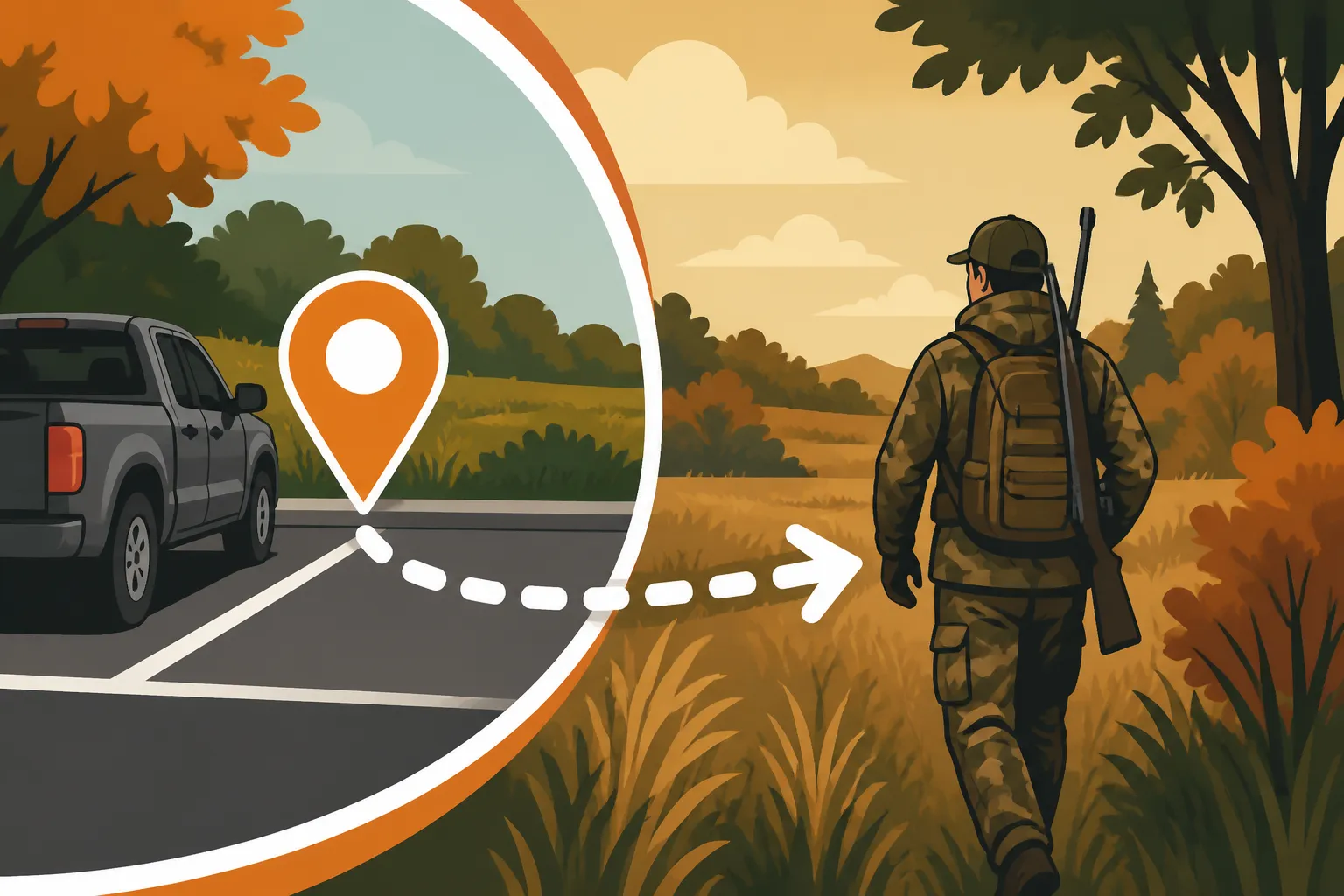
It's a familiar scenario for many Iowa hunters: you pull into a public land parking lot on opening morning, full of anticipation, only to see it packed with trucks. The immediate thought is, "How far do I have to walk to get away from these folks and find some undisturbed deer?" Understanding the reality of walk-in distances from parking areas on Iowa's public hunting lands is absolutely crucial, not just for physical preparedness but for increasing your chances of success. This guide will walk you through what to expect, the factors that shape your effective range, and strategies to make those miles count.
The Reality of Walk-In Distance on Iowa Public Lands
Let's be honest, when we picture "walk-in access," sometimes we imagine a quick stroll from the truck, and then we're in prime, unpressured territory. The reality in Iowa, especially on heavily hunted public ground, is often far different. Most folks aren't willing or able to hike more than a quarter or half-mile, which means anything beyond that can start to hold less pressured game. But even within that understanding, the specifics vary wildly across our diverse landscapes.
Many of Iowa's public hunting areas, like the popular Iowa Wildlife Management Areas, are often designed with parking lots at accessible points, typically along county roads or main entrances. These spots are fantastic for ease of access, but they also act as magnets for hunters. If you're only walking a few hundred yards from one of these main lots, you're almost certainly hunting ground that's been disturbed, or at least heavily scouted, by many other people. It's not to say you can't kill a deer there, but you're working with a much smaller margin for error. Think about the late morning after opening day, when every easily reached patch of timber has seen multiple boot prints and perhaps even a few deer drives. The deer aren't stupid; they learn quickly where the pressure is coming from.
Then you have programs like Iowa's Habitat and Access Program Explained, or IHAP, which are a godsend for hunters seeking less crowded areas. These tracts of private land are leased by the state for public hunting, often marked with distinctive yellow signs. While many IHAP properties have designated parking, sometimes it's just a pull-off along a gravel road. The beauty of these areas can be that the perceived difficulty of access, or simply the lack of a large, obvious parking lot, can deter some hunters. However, even on IHAP, the quarter-mile rule still applies. If it's easy to get to, chances are someone else is already there or has been there recently. Don't underestimate the willingness of a dedicated hunter to put in a good mile or more, especially when they've done their e-scouting homework.
Iowa's Iowa State Forests Open to Hunting, like Stephens or Yellow River, present another challenge and opportunity. These are often much larger blocks of timber compared to typical WMAs, and they can have more varied terrain. You might find designated parking lots, but also many small pull-offs or even just access roads where you can legally park. The sheer size of these areas means that truly remote pockets often require a significantly longer walk. We're talking multiple miles in some cases, often over hilly, rugged terrain. This kind of physical demand naturally filters out a large percentage of hunters, leaving those deeper areas for folks who are truly prepared to earn it. The initial walk might feel daunting, but the reward of finding unpressured deer sign can be immense.
Factors Influencing Your Effective Walk-In Distance
Just saying "walk further" isn't enough. The truth is, how far you can effectively walk, and how far you need to walk, depends on a whole host of factors beyond just the property line. Understanding these can help you plan your hunts more intelligently and realistically.
One of the biggest considerations is the terrain itself. Are you walking through flat, open CRP fields, where every step is easy but cover is scarce? Or are you navigating steep, timbered ridges and creek bottoms, where every hundred yards feels like a quarter-mile? A mile walk through a cornfield in October is a different beast entirely from a mile through a thick, muddy creek bottom full of multiflora rose in December. Hills, ditches, and dense cover will slow you down, sap your energy, and make every foot feel like more. This is particularly true if you're trying to be quiet for a bowhunt, as stealth adds time and effort to every step.
The season and weather conditions play a huge role too. An early October bowhunt, when the leaves are still mostly on the trees and the ground is relatively dry, might allow for a quicker, quieter entry. However, that same walk in late November after a week of rain could mean slogging through heavy mud, slipping on wet leaves, and fighting through thick brush that's now fallen over. Add a layer of snow and ice, and even a short walk can become treacherous. This dramatically impacts your ability to cover ground and maintain stealth. No one wants to arrive at their stand exhausted and soaked in sweat because the walk was unexpectedly difficult.
Your chosen hunting style also dictates how far you need to walk. If you're setting up a ground blind for a Late-Season Food Source Hunting in Iowa hunt on a field edge, your walk might only be a few hundred yards from a discreet parking spot. But if you're trying to still-hunt a timber block or get to a specific ridge top for Iowa Whitetail Hunting Tactics Through the Rut, you might need to cover a mile or more to get into position without disturbing the entire area. For mobile saddle hunting, where you might move several times in a day, every step adds up, and your initial walk-in needs to be calculated for efficiency. Think about how much gear you're carrying; a heavy pack for an all-day sit limits your speed and distance compared to a minimalist bowhunting setup.
Finally, and perhaps most importantly, is hunting pressure. If you're on a popular WMA during shotgun season opener, even walking a mile might not be enough to truly get away from other hunters. In these situations, you're often looking for the least pressured spots rather than entirely unpressured ones. However, on a quiet Tuesday afternoon in late archery season, a half-mile walk could put you in prime, undisturbed territory. The goal is always to get to where the deer feel safe, and on public land, that often means getting beyond where most hunters are willing to go. Tools like onX Hunt can show you property boundaries and aerial views, helping you identify pockets of cover that are hard to reach from common parking areas. Meanwhile, services like GoHunt offer data and tools that might give insights into hunting pressure trends on certain types of public lands, helping you anticipate how far you might need to walk on any given day.
Strategies for Managing Walk-In Distances
Okay, so we know that walking further often equals better hunting on public land, but how do we realistically manage that? It's not about being a marathon runner; it's about being smart and efficient.
One of your absolute best tools is e-scouting and planning. Before you ever set foot on the property, spend time with a mapping application like onX Hunt. Zoom in, look at the topography, identify terrain features like saddles, pinch points, and creek crossings. Look for areas that are difficult to access, either because of thick cover, water, or just a long distance from any obvious road. These are often your golden tickets. Pay close attention to subtle changes in elevation, timber density, and field edges. Where are the potential bedding areas, and how can you get to an advantageous downwind position near them without disturbing them? This level of detail can help you choose an entry route and stand location that maximizes your stealth and minimizes your effort, even if it's a long walk. Don't forget to look for secondary, less obvious parking spots or legal pull-offs that might offer a shorter route to a promising area than the main lot. Check out E-Scouting Iowa Farm Country From Home for more tips on this.
Strategic parking goes hand-in-hand with e-scouting. Instead of pulling into the main, obvious parking lot, can you find a less-used access point? Sometimes this means parking a mile down the road from your desired entry point, or even on a different road altogether to approach from an unexpected direction. Remember, deer are highly sensitive to human presence, and simply seeing multiple trucks at a main lot can push them deeper into cover. By using a less visible parking spot, you reduce the perceived pressure on that area. Always be mindful of local regulations regarding parking; you don't want a ticket or, worse, to be towed. Also, consider parking further away from your specific stand location than you might on private land. This allows for a quieter approach and exit, minimizing the chance of bumping deer close to your hunting spot. Access Routes That Do Not Bump Deer is a great resource for thinking about this.
Gear selection is absolutely critical for managing longer walk-in distances. If you're planning on hiking a mile or more with your stand, harness, bow, and backpack, every ounce matters. Investing in lightweight climbing sticks, a hang-on stand, or even a mobile saddle hunting setup can make a huge difference. A comfortable, well-fitting backpack is non-negotiable. For retrieving a deer from deep within public land, especially in thick cover or across varied terrain, a good deer cart can be a lifesaver. Dragging a mature Iowa buck more than a quarter-mile by hand is an incredibly arduous task. Planning for extraction is just as important as planning for the hunt itself. We've got more tips on Deer Carts on Iowa Walk-In Ground if you're interested.
Here's a quick look at how walk-in distances can vary:
| Public Land Type | Typical Parking Access | Average Hunter Walk-In | Potential Remote Walk-In | Notes |
|---|---|---|---|---|
| Iowa Wildlife Management Areas (WMAs) | Dedicated parking lots, often visible | 0.25 – 0.5 miles | 0.75 – 1.5+ miles | Heavily used, especially near obvious access. Go deep to find solitude. |
| Iowa Habitat and Access Program (IHAP) | Designated parking, gravel pull-offs | 0.2 – 0.75 miles | 1 – 2+ miles | Less obvious access points can reduce initial pressure. Check map on GoHunt. |
| Iowa State Forests | Main lots, dispersed pull-offs | 0.5 – 1 mile | 1.5 – 3+ miles | Large blocks of timber, often rugged. Rewards for those willing to hike. |
| County Conservation Areas | Varied, sometimes smaller lots | 0.1 – 0.5 miles | 0.5 – 1 mile | Can be highly pressured due to smaller size and local access. |
Finally, consider timing your hunt. If you can hunt on weekdays rather than weekends, or later in the season after the initial rush has died down, you might not need to walk quite as far to escape pressure. Weekends, especially opening weekends of any season, are notorious for high hunter traffic. How Many Hunters an Iowa WMA Sees Opening Weekend might make you think twice about only walking a few hundred yards from your truck. By waiting until mid-week, or even late in the season when many have filled their tags, you'll often find that the immediate areas around parking lots are much quieter, and deer might be moving more freely. Of course, this isn't always an option for everyone, but if your schedule allows, it's a fantastic way to increase your chances. Or, conversely, if you're limited to weekends, then truly committing to those longer walk-ins becomes even more vital to finding Public Ground That Sees Fewer Hunters.
Balancing Effort and Reward
It's easy to get caught up in the idea that you must walk miles to find success on Iowa public land. While it's true that the deeper you go, the less pressure you're likely to encounter, there's a point of diminishing returns, and it's different for everyone. The key is to find your personal balance between the effort you put in and the potential reward.
For some, an extra quarter-mile walk might mean the difference between a high-pressure stand and one that sees very little human disturbance. For others, particularly those who are highly mobile or very fit, a two-mile hike might be their minimum to feel they've truly gotten away from the crowd. The reality is that consistent long walks require a certain level of physical fitness and mental grit. If you're constantly exhausted and uncomfortable, your ability to stay focused, remain still, and make a good shot will be compromised.
Start by gradually increasing your effective range. If you typically walk 400 yards, try pushing it to 600 yards on your next hunt. See how it feels, how it impacts your energy, and what kind of sign you find. Use your mapping tools like onX Hunt to precisely measure distances and identify those slightly more remote pockets. Don't be afraid to experiment with different entry points, even if they add a bit more walk time, if they promise a quieter approach to your target area.
Ultimately, the best walk-in distance is the one that allows you to feel comfortable, hunt effectively, and put you in an area where you believe deer are moving naturally and without excessive pressure. It's about working smarter, not just harder, and making those boots on the ground count.
Disclaimer
This article is for general informational purposes only and does not constitute professional advice. Laws, prices and regulations vary by location and change over time. Consult a qualified professional for guidance on your specific situation.