Iowa Urban Deer Zone Hunting
It's incredibly frustrating when deer, usually admired from a distance, become a real nuisance right in your own backyard or local park. From devouring carefully tended landscaping to creating hazardous road conditions, urban deer populations can quickly reach unsustainable levels, leaving homeowners and city officials scratching their heads for solutions. This guide is here to shed light on how Iowa addresses these challenges through urban deer hunting programs, offering a comprehensive look at the rules, strategies, and responsibilities involved for hunters looking to help manage these localized herds.
The Growing Challenge of Urban Deer in Iowa
Iowa is renowned for its incredible whitetail deer, and while seeing a majestic buck or a graceful doe can be a beautiful sight, the reality in many developed areas is far more complicated. As suburbs expand and green spaces intermingle with residential zones, deer often find an ideal habitat with abundant food and reduced predation, leading to rapidly increasing populations right where people live.
Why Deer Thrive in Developed Areas
Deer are incredibly adaptable creatures, and urban environments inadvertently provide them with a buffet and a safe haven. Think about it: our neighborhoods often feature lush, well-watered lawns, ornamental shrubs, and gardens bursting with delicious vegetables and flowers, all of which are prime forage for deer. These are often easier pickings than navigating dense timber or expansive fields, especially when those areas are under intense agricultural pressure. Furthermore, predators like coyotes and bobcats, while present in some rural-urban fringes, are generally less prevalent and impactful within city limits. This means fewer natural population controls, allowing deer numbers to climb unchecked. It’s a perfect storm for deer to proliferate, often without their natural checks and balances, right in the midst of human activity.
The constant human presence, ironically, also provides a measure of security. While hunters are often concerned about human scent in the woods, urban deer quickly become accustomed to the sights, sounds, and smells of people, cars, and pets. They learn to navigate traffic, understand safe zones within parks or undeveloped lots, and even timing their movements to avoid peak human activity. This behavioral adaptation allows them to exist comfortably in close proximity to us, making them less wary of human presence than their rural counterparts might be. This can lead to a false sense of security for the deer, but also presents a unique challenge for those attempting to manage them through traditional means.
Common Conflicts and Community Concerns
The growing number of deer in urban settings inevitably leads to a variety of conflicts that impact residents' quality of life and public safety. One of the most common complaints revolves around property damage. Homeowners invest significant time and money into their landscaping, only to wake up and find their hostas munched to nubs, their rose bushes stripped bare, or their vegetable gardens decimated overnight. This isn't just an annoyance; it can represent a substantial financial burden for repairs and replacements, especially year after year. Beyond individual gardens, deer can also damage community parks, arboretums, and even golf courses, disrupting recreational spaces and requiring costly mitigation efforts.
Beyond vegetation, deer pose a significant public safety hazard, particularly on roadways. Deer-vehicle collisions are a frequent occurrence in many Iowa towns and cities, leading to costly vehicle damage, potential injuries to drivers and passengers, and, tragically, the loss of animal life. These incidents spike during the breeding season (the rut) and during dawn and dusk hours, when deer are most active and visibility is lower. When the Iowa Rut Peaks is a good time to be extra vigilant on the roads. Moreover, the presence of deer can raise concerns about disease transmission, such as Lyme disease from ticks that deer carry, or even Chronic Wasting Disease (CWD) in the deer population itself, although CWD in urban areas is monitored like any other population. The emotional aspect is also considerable; many residents enjoy seeing deer but are also troubled by their suffering when hit by cars or when populations appear unhealthy due to overcrowding.
How Iowa Cities Tackle Deer Overpopulation with Hunting Programs
When non-lethal methods like fencing, repellents, or habitat modification prove insufficient to control burgeoning urban deer populations, many Iowa municipalities turn to controlled hunting programs. These programs are carefully designed to reduce deer numbers effectively while ensuring public safety and addressing community concerns.
The Role of Municipalities and Local Ordinances
Unlike traditional hunting seasons that are broadly managed by the state, urban deer hunting programs often involve a significant degree of local control. Individual cities and towns in Iowa, in conjunction with the Iowa Department of Natural Resources (DNR), develop specific ordinances and guidelines tailored to their unique circumstances. This localized approach allows them to consider population density, available green space, resident sentiment, and specific safety concerns within their boundaries. For instance, a small town might implement a bow-only hunt in designated park areas, while a larger city might utilize a combination of archery and shotgun zones on specific private properties with landowner permission.
These local ordinances typically outline crucial details such as the duration of the hunt, designated hunting areas, allowed hunting methods, and specific safety requirements like setback distances from residences or public areas. Hunters interested in participating absolutely must consult the specific rules for the city they intend to hunt in, as these can vary dramatically from one municipality to another. It's not enough to just know the state hunting regulations; you need to understand the micro-regulations put in place by the city council or local parks and recreation department. Understanding these City Deer Management Hunts in Iowa is paramount before you ever step foot into an urban hunting zone.
Understanding Special Urban Deer Seasons and Permits
Urban deer hunts often operate under special seasons or extended periods that differ from the statewide deer seasons. This extended timeframe allows for more flexibility and opportunity to reduce herd numbers outside the peak pressures of the general statewide seasons. For example, some cities might run an archery season that begins earlier and ends later than the regular state archery season, or they might offer specific antlerless-only opportunities throughout the winter months to maximize doe harvest and impact population growth.
Participating in these programs almost always requires a special permit in addition to your regular Iowa hunting license and deer tag. These permits are issued by the local municipality, often after attending an orientation meeting, passing a proficiency test (especially for archery hunts), and demonstrating a clear understanding of the local rules and designated hunting zones. The permitting process helps cities track hunter numbers, manage harvest quotas, and ensure that only qualified, responsible individuals are participating. This often means applying directly through the city's parks department or local government office, rather than through the general state licensing system, though you'll still need your state-issued deer tags for harvest reporting.
Weapon Restrictions and Safety Considerations
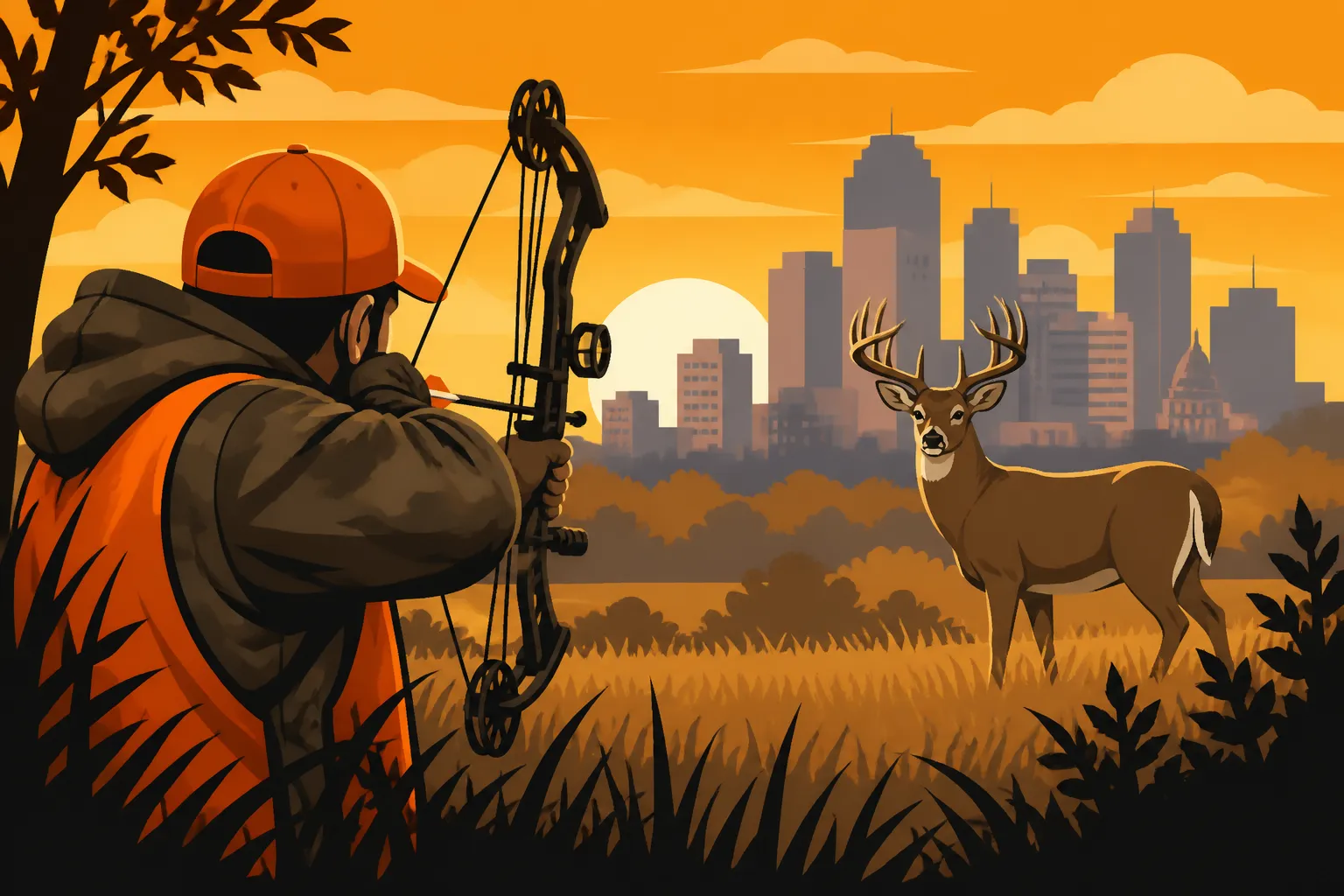
Safety is, without a doubt, the number one concern when it comes to urban deer hunting. With homes, businesses, and public spaces often in close proximity, municipalities place strict restrictions on the types of weapons allowed to minimize risk to residents and property. In most Iowa urban deer programs, archery equipment (bows and crossbows) is the primary, and often sole, permitted method. This is due to the limited range and inherent safety of arrows compared to firearms. Archers must typically demonstrate proficiency by passing a shooting test before receiving a permit, ensuring they can make clean, ethical shots within designated ranges. Crossbow Rules for Archery Season and Bow Draw Weight and Arrow Rules in Iowa are still critical to follow, even in urban settings.
In some very specific, highly controlled situations, usually on larger, more isolated tracts of land within city limits or during specialized depredation hunts, shotguns or straight-wall cartridge rifles might be allowed, but this is far less common for general urban deer management programs. When firearms are permitted, there are usually very strict restrictions on slug types, shot sizes, and often mandates for specific stands or blinds that ensure shots are taken downward and into safe backstops. Furthermore, "safety zones" or "no-discharge zones" are strictly enforced, often requiring hunters to be a certain distance from occupied dwellings, schools, or public roads. These zones are clearly defined in local ordinances and hunters are expected to know and adhere to them without exception. Ignoring these safety guidelines can lead to severe penalties, including fines, loss of hunting privileges, and even criminal charges.
Navigating the Process: Finding and Securing Urban Hunting Access
The idea of hunting deer within city limits might seem daunting, almost like a secret club, but with the right approach and resources, it's entirely possible to find opportunities. It just requires a different kind of scouting and communication than you might be used to for a typical Iowa hunt.
Identifying Participating Cities and Program Details
The first step is to figure out which Iowa cities actually have urban deer management programs. This isn't always widely advertised, as these programs are often tailored to specific local needs. Your best bet is to start by checking the official websites of larger Iowa cities or county conservation boards that you're interested in. Many will have a "Parks and Recreation" section or a "Police Department" section that addresses wildlife management or nuisance animals. Sometimes a quick call to the local city hall or police non-emergency line can point you in the right direction. Don't be afraid to ask about City Deer Management Hunts in Iowa.
Once you've identified a city, delve into their specific program details. Do they have a general archery season, or is it by specific lottery or application? Are there limited permits? What are the dates and specific regulations? Some programs might focus on specific public parks, while others primarily facilitate hunting on private land where landowners have opted into the program. Knowing these nuances upfront will save you a lot of time and potential frustration. Remember, these programs are often dynamic, so confirm the latest rules and dates each year.
Obtaining Permission on Private Urban Land
A significant portion of urban deer hunting in Iowa, especially in areas with scattered green spaces and larger residential lots, relies heavily on obtaining permission from private landowners. This isn't like knocking on a farmer's door for access to a large timber block; it's often approaching homeowners with a unique proposition. You're offering a service – deer management – rather than just asking for a place to hunt. This makes the conversation different. You'll need to explain the benefits of deer reduction, emphasize your commitment to safety, and reassure them that you are a responsible and ethical hunter. Asking an Iowa Landowner for Permission in an urban setting requires even more finesse and professionalism.
When seeking permission, be prepared to discuss your experience, provide references if necessary, and clearly outline your plan: what weapon you'll use, where your stand will be, how you'll access the property, and how you'll handle a harvested deer quietly and respectfully. Offer to share venison, help with other tasks, or simply maintain a positive relationship. Persistence is key, as is a willingness to build trust. Many landowners might be hesitant at first but will come around when they see your dedication to safety and discretion.
Utilizing Mapping Tools for Urban Scouting
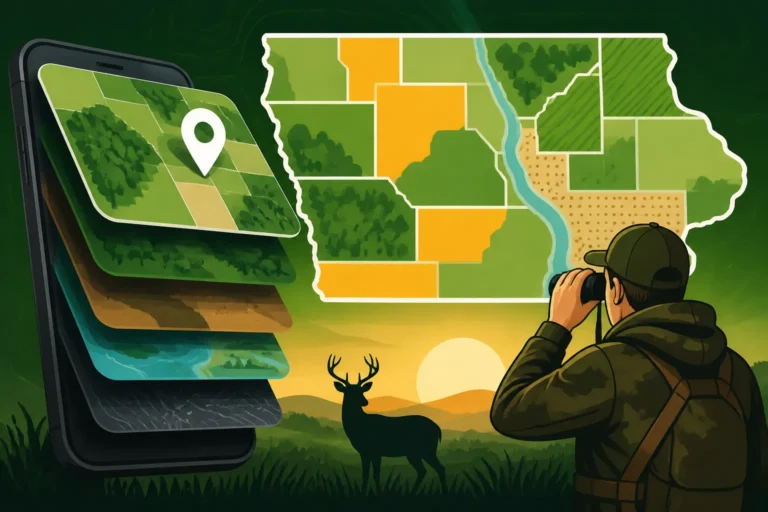
Just like rural hunting, scouting is crucial for urban deer hunting, but it takes on a different flavor. Instead of looking for distant food plots or timber draws, you're focusing on smaller green spaces, creek bottoms, unmaintained lots, and natural corridors that deer use to move between properties. This is where modern mapping tools become absolutely indispensable. Applications like onX Hunt are invaluable for understanding property boundaries, identifying landowners, and locating potential access points. You can quickly see private property lines, public parcels, and even pinpoint potential bedding areas or travel routes within the urban sprawl.
By using the aerial and topo maps on onX Hunt, you can identify hidden pockets of cover, thickets along drainage ditches, or brushy fence lines that serve as deer highways. You can also use these tools to measure distances to homes and roads to ensure you are well outside any safety zones, a critical factor in urban environments. While a tool like GoHunt might be more traditionally known for broader hunting strategies and draw odds in other states, for localized urban scouting in Iowa, nothing beats the detailed parcel information and mapping capabilities of onX Hunt for understanding the immediate landownership and topography. This digital scouting allows you to narrow down your focus and approach landowners with a well-researched plan, showing them you’re serious and prepared.
Effective Strategies for Hunting Deer in Urban Environments
Urban deer hunting presents a unique set of challenges and opportunities. The deer are often accustomed to human activity, yet hunting pressure can make them incredibly nocturnal and wary. Success requires adapting your traditional Iowa hunting tactics to fit the constraints and sensitivities of a suburban backdrop.
Adapting Tactics to Small Parcels and High Pressure
Forget expansive timber blocks or sprawling cornfields; urban hunting often means operating within much smaller parcels of land, sometimes just a few acres. This necessitates a more surgical approach. Your stand placement becomes even more critical, focusing on natural funnels, pinch points, and the thickest cover available, even if it's just a dense honeysuckle patch along a property line. Deer in these areas learn to utilize every shred of cover and every shadow to their advantage, often moving primarily during low light or under the cover of darkness. Hunting Saddles and Pinch Points in Rolling Timber principles still apply, but on a miniature scale within a fragmented urban landscape.
Because deer are used to human scent and movement, they can sometimes be less alarmed by distant sounds or general activity, but they will absolutely key in on specific hunting pressure. Avoid overhunting a small area. Quick, in-and-out hunts are often more effective than all-day sits that leave too much scent. Consider hunting midday if allowed, as deer might feel safer moving during times when human activity is less concentrated, or when people are at work or school. Remember that even a slight shift in wind can carry your scent across multiple properties, so paying meticulous attention to wind direction and thermals, even in a seemingly flat urban landscape, is crucial.
Mitigating Scent and Remaining Undetected
While urban deer are accustomed to human presence, they are still wild animals, and their sense of smell is incredibly keen. In small, close-quarter hunting areas, scent control becomes paramount. Every puff of wind carries your odor further, potentially alerting deer on neighboring properties. This means practicing rigorous scent control, including washing hunting clothes in scent-eliminating detergents, showering with unscented soap, and storing gear in airtight containers. Consider using ozone treatments or liberal applications of scent-reducing sprays, though remember their limitations.
Beyond chemical controls, focus on natural concealment and quiet movement. Utilize the existing cover – dense bushes, mature trees, shed rows – to break up your silhouette. Ground blinds can be exceptionally effective in urban settings, allowing for maximum concealment and controlled movement, especially if brushed in naturally. Brushing In a Ground Blind helps it disappear into the background. Move slowly and deliberately, especially when accessing your stand or blind. Every twig snap or rustle of leaves will be amplified in the quieter urban environment, and deer will be quick to pick up on anything out of the ordinary. Minimizing your impact on the property and surrounding areas is not only good hunting practice but also a sign of respect for the landowner and neighbors.
Ethical Shots and Recovering Game in Sensitive Areas
Taking an ethical shot is always critical in hunting, but in an urban environment, it carries an even higher degree of responsibility. Missed shots or poorly placed shots that result in a wounded animal can quickly lead to negative public perception, jeopardize the entire program, and create ethical dilemmas if the animal travels onto properties where you don't have permission. Therefore, only take shots where you are absolutely confident in your ability to make a clean, humane kill within your effective range. For archers, this often means limiting shots to 20-30 yards or less. Shot Placement on a Whitetail at Twenty Yards takes on paramount importance here.
Recovery of a harvested deer also requires meticulous planning and discretion. You cannot afford to have a deer run across several backyard fences or expire in someone's prize-winning flower bed. Hunters must have a clear plan for blood trailing and retrieving the animal quickly and quietly. Always wait a sufficient amount of time after the shot before beginning your trail, especially for bow shots, to ensure the animal has expired. If the deer crosses a property line where you don't have permission, you must gain permission from that landowner before entering to retrieve your game. This is non-negotiable and failure to do so is trespassing. Be prepared to quarter the deer in the field if necessary to make removal easier and less conspicuous. Having a deer cart or a plan for discreet removal is essential.
Important Rules and Responsibilities for Urban Hunters
Being an urban deer hunter isn't just about knowing how to find deer; it's about being an ambassador for hunting, understanding heightened legal and ethical responsibilities, and maintaining positive community relations. The stakes are higher, and a single misstep can have broad consequences.
Carcass Tagging and Harvest Reporting Requirements
Just like any deer harvested in Iowa, those taken within an urban deer program must be immediately tagged with your valid Iowa deer tag. This is a non-negotiable legal requirement. Make sure the tag is securely attached to the carcass as soon as you reach the animal. Following that, you are still responsible for reporting your harvest to the Iowa DNR. Most Iowa deer harvest reporting is done online or by phone. Iowa Deer Harvest Reporting Rules are the same whether you harvested the deer in a remote timber block or a suburban park.
Beyond state requirements, some urban programs may have additional local reporting mandates. This might involve checking in with a city official, providing details on the location of the harvest, or even showing proof of harvest to ensure quotas are being met and controlled effectively. It is your duty to be aware of and comply with both state and local reporting rules. Failure to properly tag or report a deer can result in fines, loss of hunting privileges, and damage to the reputation of urban hunting programs.
Adhering to Blaze Orange and Legal Shooting Hours
Even in urban environments, state regulations for hunter safety, such as blaze orange requirements, typically remain in effect during specific gun seasons, even if you are bowhunting concurrently. However, because most urban programs are archery-only, blaze orange might not always be required by state law during those specific periods. Still, it's a good practice to wear some blaze orange when walking in or out of your hunting area, especially if you are hunting during regular gun seasons or if other hunters might be in the vicinity. Always double-check the local city ordinances for any specific blaze orange requirements, as they can sometimes impose stricter rules than the state.
Legal shooting hours are also critical. In Iowa, these generally extend from half an hour before sunrise to half an hour after sunset. These hours are particularly important in urban areas where deer often become most active during the low light periods of dawn and dusk. Setting up early and staying until the very end of legal light can be productive, but you must cease all hunting activity once those legal hours conclude. Iowa Legal Shooting Hours are strictly enforced. Hunting outside these hours, especially near residences, is not only illegal but also incredibly dangerous and can be perceived poorly by non-hunting neighbors. Use a reliable watch or hunting app to accurately track sunrise and sunset times for your specific location.
Respecting Public Perception and Local Ordinances
Perhaps more than any other form of hunting, urban deer hunting demands an acute awareness of public perception and strict adherence to local ordinances. Many city residents may not understand or support hunting, and any perceived recklessness or disrespect can quickly turn public opinion against the program. This means being meticulously clean, quiet, and discreet in all your actions. From parking your vehicle to field dressing a deer, every step should be taken with minimal disturbance. Iowa Wildlife Violation Penalties exist for a reason and can be even more impactful in highly visible urban environments.
This includes how you transport your gear, how you access properties, and how you interact with non-hunters. Avoid walking through highly visible public areas in full camo with a bow unless absolutely necessary, and if you do, do so with purpose and a friendly demeanor. Be prepared to answer polite questions about what you're doing, and always be respectful and informative. Treat every interaction as an opportunity to positively represent hunting. Understanding Iowa County Conservation Board Hunting Rules can also be important, as some urban areas might encompass or be adjacent to these properties.
Dealing with Unique Challenges: Neighbors and Non-Hunters
One of the biggest differences between urban and rural hunting is the constant presence of non-hunting neighbors. In a rural setting, your nearest neighbor might be a quarter-mile away; in a city, they could be 50 feet away, peering out their window. This proximity demands exceptional conduct. Noise, visible activity, and certainly any appearance of danger will immediately raise concerns. It’s a good idea to introduce yourself to neighboring landowners (with permission from your primary landowner, of course) and let them know, professionally and respectfully, what you are doing. This transparency can preempt complaints and foster understanding.
Being prepared for questions, curiosity, or even outright opposition from non-hunters is part of the territory. Remain calm, polite, and articulate. Focus on the positive aspects of the deer management program – reducing car accidents, protecting gardens, and ensuring a healthy deer population – rather than debating the ethics of hunting itself. Your actions and demeanor speak volumes, and a courteous, responsible hunter does far more to improve public perception than any argument could. Remember that these programs are often delicate balancing acts between wildlife management needs and community comfort, and your role as a hunter is to uphold that balance.
Comparing Urban Hunts to Traditional Iowa Deer Hunting
While the thrill of the chase and the goal of harvesting venison remain constant, urban deer hunting in Iowa is a world apart from traditional hunting experiences in the state’s vast agricultural fields and timber tracts. Understanding these differences is key to success and ethical participation.
Differences in Pressure, Habitat, and Deer Behavior
In a traditional Iowa hunting scenario, you might be scouting Reading an Iowa Timber Draw for Deer Sign or identifying Standing Corn and Bean Field Deer Patterns across hundreds of acres. Hunting pressure, while a factor, is often spread out. In contrast, urban deer habitat is highly fragmented, consisting of small woodlots, creek corridors, undeveloped parcels, and backyards. This means deer are often concentrated in small, often linear, slivers of cover. This forces hunters to operate in very confined spaces, where every movement and every scent molecule carries more weight.
Deer behavior is also markedly different. While rural deer might be accustomed to tractors and farm noise, they're generally highly wary of human foot traffic and scent. Urban deer, however, are often acclimated to constant human activity—cars, barking dogs, joggers, children playing. They learn to ignore much of this background noise, but they are exceptionally sensitive to new or unusual human activity associated with hunting pressure. They become masters of nocturnal movement, using the quiet hours to travel and feed. This can make them incredibly challenging to hunt, requiring extreme stealth and a deep understanding of their micro-movements within their small home ranges.
The Value of Urban Hunting for Deer Management
Despite the unique challenges, urban hunting programs in Iowa serve a vital function in wildlife management. Without these controlled efforts, urban deer populations can quickly spiral out of control, leading to widespread environmental degradation (over-browsing of native vegetation), increased disease transmission risk, and escalating human-wildlife conflicts like deer-vehicle collisions and property damage. By carefully managing deer numbers in these localized areas, urban hunting contributes directly to healthier ecosystems and safer communities.
From the hunter's perspective, these programs offer unique opportunities. They provide additional hunting days outside of regular seasons, often close to home, and allow hunters to contribute directly to conservation efforts by helping solve a pressing community problem. While the experience might lack the remote wilderness feel of a deep-woods hunt, it offers a different kind of satisfaction – knowing you're part of a solution, providing healthy venison for your family, and honing skills in some of the most challenging hunting environments imaginable. It truly is a unique facet of Iowa Deer Herd Management and Harvest, demonstrating how hunting can adapt to serve modern conservation needs.
Disclaimer
This article is for general informational purposes only and does not constitute professional advice. Laws, prices and regulations vary by location and change over time. Consult a qualified professional for guidance on your specific situation.