Shooting From an Iowa Road Right-of-Way
That moment when you spot a deer just off a gravel road and your heart pounds, then the inevitable question pops into your head: Can I shoot that deer from here? Is this even legal? It's a common dilemma, and one that trips up even seasoned Iowa hunters. Understanding Iowa's nuanced laws regarding shooting from or across a road right-of-way is crucial for staying legal and safe. This guide will help you decipher the regulations and make informed decisions when hunting near any public road in the Hawkeye State.
Defining the "Right-of-Way" in Iowa Hunting
Before we dive into the legality of shooting, it's absolutely vital to understand what "right-of-way" actually means in the context of Iowa roads. It’s not just the paved or graveled surface you drive on; it extends much further, and often into areas that look like private property. This misunderstanding is where a lot of hunters get into trouble.
More Than Just the Ditch
When we talk about a road right-of-way, we’re referring to the strip of land dedicated for public use, which includes the road itself, the shoulders, and often a significant portion of the ditch and adjacent ground. The width of this right-of-way isn't uniform across the state; it can vary greatly depending on whether it's a state highway, a county blacktop, or a minimum maintenance gravel road. For many rural gravel roads, the right-of-way can extend 33 feet or even 50 feet from the center line, meaning a significant strip of land on either side of the road. This often encompasses areas that appear to be a field edge or timber fringe but are technically part of the public right-of-way.
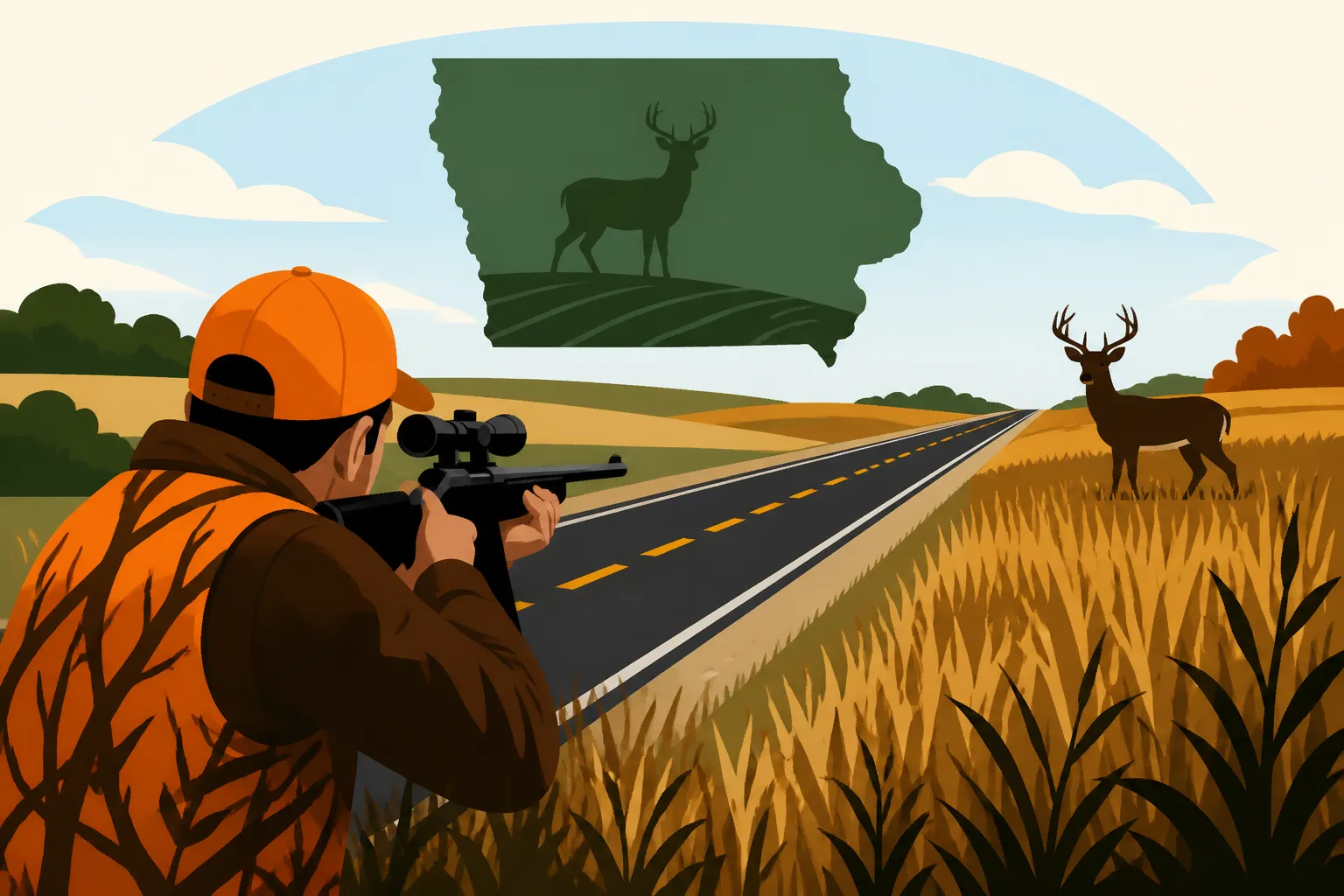
Imagine you're driving down a county road, and you see a beautiful buck standing just inside what looks like a picked cornfield. Your first instinct might be to pull over and get ready for a shot. However, that "field edge" might still be within the road's established right-of-way, an area where specific hunting restrictions apply. It's a gray area for many, and the visual appearance can be very deceiving. Knowing these boundaries is your first line of defense against an accidental violation.
Understanding Land Ownership Versus Public Easement
It’s crucial to distinguish between who owns the land beneath the right-of-way and who has the right to use it. In most cases, the adjacent landowner still owns the land under the road and its right-of-way. However, the public, typically through the county or state, has an easement for transportation purposes. This easement dictates what activities are allowed within that strip. While a landowner might pay taxes on that strip, the public's right-of-way takes precedence for certain activities, including hunting regulations.
For a hunter, this distinction is critical because while you might feel you're "on public land" when standing in the ditch, your presence and actions are still governed by specific rules that differ from traditional public hunting ground like a Wildlife Management Area. You might be legally standing on public easement, but the rules for discharging a firearm are unique. Tools like onX Hunt are incredibly helpful here, as they often have layers that can help delineate property lines, but even these can sometimes be ambiguous about the exact extent of a right-of-way versus private property, which makes understanding the underlying rules even more important. Always be sure to consult official county maps or resources when in doubt about these specific boundaries.
The Letter of the Law: Iowa Shooting Rules Near Roads
Iowa's hunting regulations are designed to ensure public safety, and this is especially true when it comes to discharging firearms or bows near public roads. The laws might seem straightforward on the surface, but there are nuances that every hunter needs to internalize. Simply put, directly shooting from the traveled portion of a road is a huge no-no, but the rules extend beyond that.
Prohibitions on Shooting From or Across a Public Highway
Iowa law is quite explicit: it is illegal to shoot a firearm or bow from or across any public highway. This isn't just about the paved or graveled portion you drive on; it includes the entire right-of-way, which, as discussed, can stretch quite a distance into the ditch and beyond. This means if you're standing in the ditch, even on what you perceive as the "shoulder," and you take a shot, you could be in violation. The intent is to prevent projectiles from crossing the road or endangering those who might be using it.
Consider a scenario: You see a pheasant flush from a CRP field, and it flies across a gravel road into another field. If you're standing on the gravel road or even in the ditch, swinging your shotgun to take that shot as the bird crosses the road is illegal. The same goes for deer. If a deer steps into the road right-of-way, and you shoot from private land, but your bullet crosses the right-of-way to hit the deer, you've likely committed a violation. The danger isn't just hitting a car; it's about stray bullets, unpredictable ricochets, and the general safety of the public who have a right to travel those routes unimpeded and without fear. This is one of the most fundamental rules of hunting safety in Iowa, right up there with knowing your target and what's beyond it.
Minimum Distance Requirements and Safety Zones
While the primary rule is "no shooting from or across," Iowa also has general safety regulations regarding discharging firearms near occupied buildings. It is illegal to shoot a firearm within 200 yards of a building inhabited by people or livestock without the express permission of the owner or tenant. This rule, combined with the right-of-way rules, creates significant "safety zones" that hunters must respect, especially in agricultural areas where homes and barns dot the landscape.
Let's say you've permission to hunt a farmer's field, and the field borders a county road, across from which is a farmhouse. Even if you're on private land, far from the right-of-way, if you're within 200 yards of that farmhouse and don't have permission from the occupant to shoot, you're breaking the law. These layers of regulations require diligent scouting and awareness. Mapping apps like onX Hunt can be incredibly useful for marking these kinds of structures and establishing your own mental or digital safety perimeters. Always err on the side of caution; a missed opportunity is always better than a legal entanglement or, worse, an accident. Remember, responsible hunting is about protecting both people and the privilege to hunt. Iowa Legal Shooting Hours also play into this, ensuring visibility during hunting periods.
Practical Considerations and Safety When Hunting Near Roads
Hunting near roads, even when adhering to all legal requirements, comes with a unique set of ethical and safety considerations. It’s not just about avoiding legal trouble, but also about maintaining a positive public image for hunters and ensuring everyone's safety.
The Appearance of Impropriety
Even if you are technically within the law, taking a shot very close to a road can create a negative perception among non-hunting motorists or nearby residents. Seeing a hunter with a firearm aiming near a road can be alarming for those unfamiliar with hunting practices or legal distances. This can lead to calls to law enforcement, increased scrutiny on local hunting areas, or even anti-hunting sentiment. As hunters, we are ambassadors for our sport, and our actions reflect on the entire hunting community.
Imagine you've got a perfect quartering-away shot on a buck on private property, fully legal and well within the boundaries. But that buck is only 10 yards from the edge of the ditch along a busy county road. While you know you're safe and legal, a passing motorist might not. They might see the gun, the deer, and the road, and instantly perceive danger. They don't know the nuances of setback rules or right-of-way definitions. Choosing to pass on a shot that, while legal, looks questionable, can go a long way in fostering good will. Sometimes, the wisest choice is not just the legal one, but the one that ensures the greatest public acceptance and safety.
Road Noise and Disturbance to Wildlife
Hunting near roads also introduces an element that can make your hunt more challenging: noise. Vehicle traffic, whether constant or intermittent, can significantly impact wildlife behavior. Deer, turkeys, and other game animals are often accustomed to road noise to a degree, but sudden stops, slamming doors, or loud conversations can still alert them to your presence and push them further into cover.
This is especially true on less-traveled gravel roads where a vehicle's approach might be more surprising. If you're trying to sneak along a timber edge that parallels a road, every passing car could potentially blow your cover, or make the deer you're after even warier. It also means that when you do make a move, you have to be extra cautious about minimizing your own noise. Think about where you park your vehicle – away from the main road if possible, and in a spot that doesn't draw undue attention. Access Routes That Do Not Bump Deer are key here; sometimes the best route means avoiding the road edge entirely. Using mapping resources to scout out alternative parking and access points, perhaps a field drive with permission, is always a smarter play.
| Scenario | Legality (General Iowa Rules) | Best Practice for Safety & Ethics |
|---|---|---|
| Shooting from the traveled portion of a road | ILLEGAL. Includes pavement, gravel, and often the shoulder. | Never shoot from any part of the road. Park safely and move well off the road. |
| Shooting across a public highway/right-of-way | ILLEGAL. Projectiles should not cross the right-of-way. | Ensure your shot angle is always into private or public land, away from the road, and that your projectile will not pass over the right-of-way. |
| Shooting in the ditch, within the right-of-way | ILLEGAL. The ditch is generally considered part of the right-of-way. | Always position yourself clearly off the right-of-way, on legal hunting land. Confirm your position using a GPS or mapping app. |
| Shooting near a road, on private land | Generally LEGAL, provided you are not within the right-of-way, not within 200 yards of an occupied building without permission. | Be mindful of public perception. If a shot is legal but extremely close to the road, consider if it's worth the potential negative impact or risk of a misunderstanding. Prioritize backstops over convenience. |
| Hunting small game in road ditches | Check local county ordinances, but generally prohibited for discharging firearms/bows due to right-of-way rules. | Avoid hunting small game in ditches. Focus on fields, timber, and designated public areas. |
Minimizing Risk and Finding Legal Hunting Spots
Navigating the complexities of hunting near roads requires proactive planning, careful scouting, and a solid understanding of both state law and local geography. It's about being prepared long before you ever pull the trigger.
Diligent Scouting and Mapping Tools
The best way to avoid issues with road rights-of-way is to scout your hunting areas thoroughly, both in person and with digital tools. Before you even set foot in the field, use mapping applications like onX Hunt or even the Using the Iowa DNR Hunter Atlas to study property lines, road classifications, and potential right-of-way widths. While these apps can show you property ownership, remember that the exact width of a right-of-way might require cross-referencing with county plat maps or local ordinances.
Pay close attention to where timber lines meet roads, or where CRP fields butt up against a ditch. These are the areas where the visual cues can be most deceptive. Identify natural barriers or clear property lines that keep you well away from any questionable areas. Look for spots where you can create a clear, safe shooting lane that directs your projectile away from roads and towards a solid backstop. E-Scouting Iowa Farm Country From Home is an excellent way to pre-plan these details and mark potential stand locations or stalking routes that keep you on solid legal ground.
Seeking Permission and Respecting Boundaries
Even when you're sure about right-of-way laws, never forget the importance of landowner permission. The vast majority of Iowa hunting occurs on private land. If you're hunting private ground, ensure you have explicit permission from the landowner, and understand their specific rules regarding where they want you to hunt, especially near property lines or roads. A good relationship with a landowner is invaluable, and respecting their wishes, even if it means foregoing a shot near a road, strengthens that relationship. You can read more about Iowa Trespass Law and Posted Land to ensure you're always on the right side of things.
Furthermore, always be aware of adjacent properties. Even if you have permission for one parcel, you still need to respect the boundaries of neighboring land. A mapping app can clearly show you property lines. Never assume that because you have permission for one side of a road, you can cross over to the other side without explicit, separate permission. Ethical hunting means knowing exactly where you are, whose land you're on, and having a clear understanding of all the rules that apply. It's about being a responsible steward of the land and the hunting tradition in Iowa.
Disclaimer
This article is for general informational purposes only and does not constitute professional advice. Laws, prices and regulations vary by location and change over time. Consult a qualified professional for guidance on your specific situation.