Rattling and Grunting During the Iowa Rut
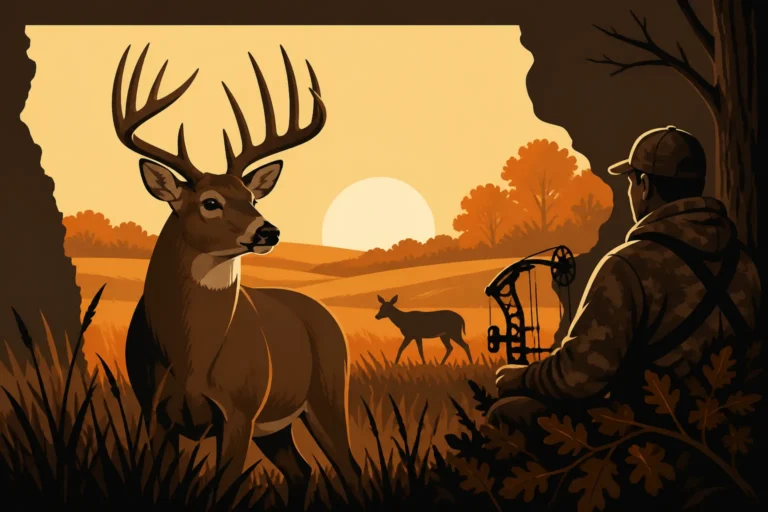
There’s nothing quite like the heart-pounding anticipation of the Iowa rut. You're nestled in your stand, the air is crisp, and you just know a big buck could step out at any moment. But sometimes, those cruising bucks seem just out of reach, ignoring your setup or simply passing through without a second glance. This guide is all about giving you the tools – specifically rattling and grunting – to not just observe but interact with those rutting whitetails, bringing them into range and turning those frustrating close calls into unforgettable hunting memories.
Understanding the Language of Whitetails in the Rut
Hunting the rut is often described as magic, but really, it’s about understanding the intense biological drive that changes deer behavior. During this frantic period, bucks are operating on a heightened sense of urgency, and their vocalizations and sparring are direct reflections of this. If we can learn to speak a little of their language, we can often turn the tables in our favor.
The Urgency of Rutting Behavior
Imagine the woods during the peak rut. Bucks are running on fumes, driven by the singular goal of finding and breeding does. This intense period of activity means they're constantly on the move, asserting dominance, and checking for receptive females. It’s a chaotic time, full of grunts, snort-wheezes, and the clashing of antlers. As hunters, we often hear these sounds from a distance and feel a mix of excitement and helplessness, wishing we knew how to draw them in. This is where understanding why they vocalize and spar becomes crucial. They're communicating dominance, challenge, and their presence to other deer in a high-stakes game of genetic propagation. Mimicking these communications correctly can exploit their territorial and breeding instincts, pulling them directly into your sphere of influence.
When two bucks clash antlers, it's not always a fight to the death. Sometimes it's a test of wills, a dominance display, or even playful sparring between younger deer. The sound of those antlers, whether light tapping or a full-blown smash, signals to every other deer in the vicinity that there's interaction happening. A lone cruising buck might interpret this as two rivals fighting over a hot doe, or simply a social gathering worth investigating. Understanding these nuances helps you choose the right intensity for your rattling sequence. Similarly, grunts can range from soft, inquisitive contact calls to aggressive, challenging vocalizations. Each sound has a purpose, and by learning them, you're not just making noise; you're sending a specific message.
When Vocalizations Peak in Iowa
In Iowa, the whitetail rut is famously intense, typically peaking in the first two weeks of November, though significant activity begins building in late October. This peak window is absolutely prime time for utilizing both grunting and rattling. The period often referred to as "When the Iowa Rut Peaks" is when bucks are most actively seeking does, leading to increased movement and a higher likelihood of them responding to calls. However, it's not a one-size-fits-all approach. The pre-rut (late October) sees bucks starting to challenge each other more frequently and cruise widely, making them receptive to aggressive calling. During the peak rut, when does are receptive, bucks might be more focused on a hot doe but can still be pulled away by a challenging grunt or the sound of a fight.
Even after the main breeding push, in the post-rut, bucks are often exhausted but still looking for any remaining unbred does. During this phase, lighter, more inquisitive grunts might work better than aggressive rattling, as the intensity of the breeding competition has waned somewhat. Understanding these phases is critical. For instance, rattling aggressively in early October before bucks are in the rutting mood might just spook them. But hit it right during late October or early November, and you could call in the buck of a lifetime. Always consider the stage of the rut and the general behavior you're observing in the field before deciding on your calling strategy.
Grunt Calls: The Foundation of Iowa Deer Vocalizations
Grunt tubes are arguably the most versatile and essential deer call in any Iowa hunter's arsenal. They mimic a range of deer vocalizations, from a gentle "hrrr" to a more aggressive, drawn-out challenge. The beauty of a grunt call is its simplicity and its power to get a deer's attention or even stop one in its tracks.
Types of Grunts and Their Meanings
It can feel overwhelming looking at all the different types of grunt calls out there, and even more confusing trying to figure out which sound means what. But really, it boils down to a few key vocalizations that every hunter should master. A short, soft grunt often signifies contentment or social contact, like deer casually communicating as they feed. This is a subtle call, useful for a curious buck or a doe passing by. Then there's the contact grunt, a slightly longer, more drawn-out "hrrr" often used by deer trying to locate each other, or by a buck looking for a doe. This is excellent for drawing in bucks that are cruising through an area and just need a little nudge to check out your location.
The trailing grunt is a rapid series of short grunts, often heard from a buck intensely pursuing a doe. This is a high-stakes sound that tells other bucks, "Hey, I've found a hot doe, stay away!" Using this can sometimes infuriate a dominant buck enough to come investigate and try to cut in on the action. Finally, the dominant grunt or grunt-snort is a much more aggressive, guttural sound, often followed by a snort. This is a direct challenge to other bucks, essentially saying, "This is my territory, and I'm here to breed." It’s a bold move, but during the right phase of the rut, it can pull a mature buck in from a surprisingly long distance, ready for a confrontation. Knowing these distinct meanings empowers you to choose the right call for the situation.
Mastering Your Grunt Call Technique
Having a grunt call is one thing; using it effectively is another. It’s not just about blowing into the tube; it's about making it sound like a real deer. Start by practicing soft, short grunts. Use your diaphragm and vary the duration and volume. A common mistake is blowing too hard and making an unnatural, reedy sound. Remember, you're trying to mimic a living animal, not a duck call. For Grunt Calls That Work in the Pre-Rut and beyond, focus on realism. For contact grunts, lengthen the sound slightly, keeping it soft and inquiring. When you move to trailing grunts, think about rapid, excited puffs of air. For the dominant grunt, a deeper, guttural sound with more air pressure is required, often with a slight "snort" at the end if your call can manage it.
The cadence is just as important as the sound itself. A few soft grunts every 20-30 minutes might be enough to get a curious buck to investigate, especially if he's not actively rutting. If you're seeing a buck cruising at a distance, a slightly more urgent series of contact grunts might be warranted. For a buck that seems to be hanging up, a single, sharp dominant grunt can sometimes push him over the edge. Always be ready with your bow or gun when calling, because deer can appear silently and quickly. Over-calling is a real risk; you don't want to sound like a deer convention. Instead, aim for realistic, intermittent calls that pique curiosity or provoke a challenge.
Situational Grunting for Iowa Whitetails
The real art of grunting comes in applying the right call to the right situation. Imagine you’re watching a nice buck working a field edge, heading away from you. A loud, assertive contact grunt or a trailing grunt can often get his attention, stop him, and even turn him towards your setup. This is particularly effective during the peak rut when bucks are desperate to find does. If he hesitates or looks your way, be prepared, because he might be coming straight in. Another common scenario is a buck moving through thick timber, just out of sight. A few soft, inquisitive grunts can sometimes draw him into an opening, giving you a shot.
One of the most frustrating things is when a deer is just out of range, or about to walk out of your shooting lane. A quick, sharp "snort-wheeze" (if your call allows, or with a separate call) followed by a deep grunt can often stop a buck dead in his tracks, giving you those precious seconds to make a shot. However, be cautious: an unnatural or poorly timed grunt can also send a wary buck fleeing. Always observe the deer's body language. If a buck starts to flag or shows signs of alarm, stop calling immediately. Patience is key; sometimes, a single well-placed grunt is all it takes, rather than a frantic series of calls. Understanding when to be quiet and when to speak is a skill that comes with practice and keen observation.
Rattling Antlers: The Sound of Dominance and Challenge
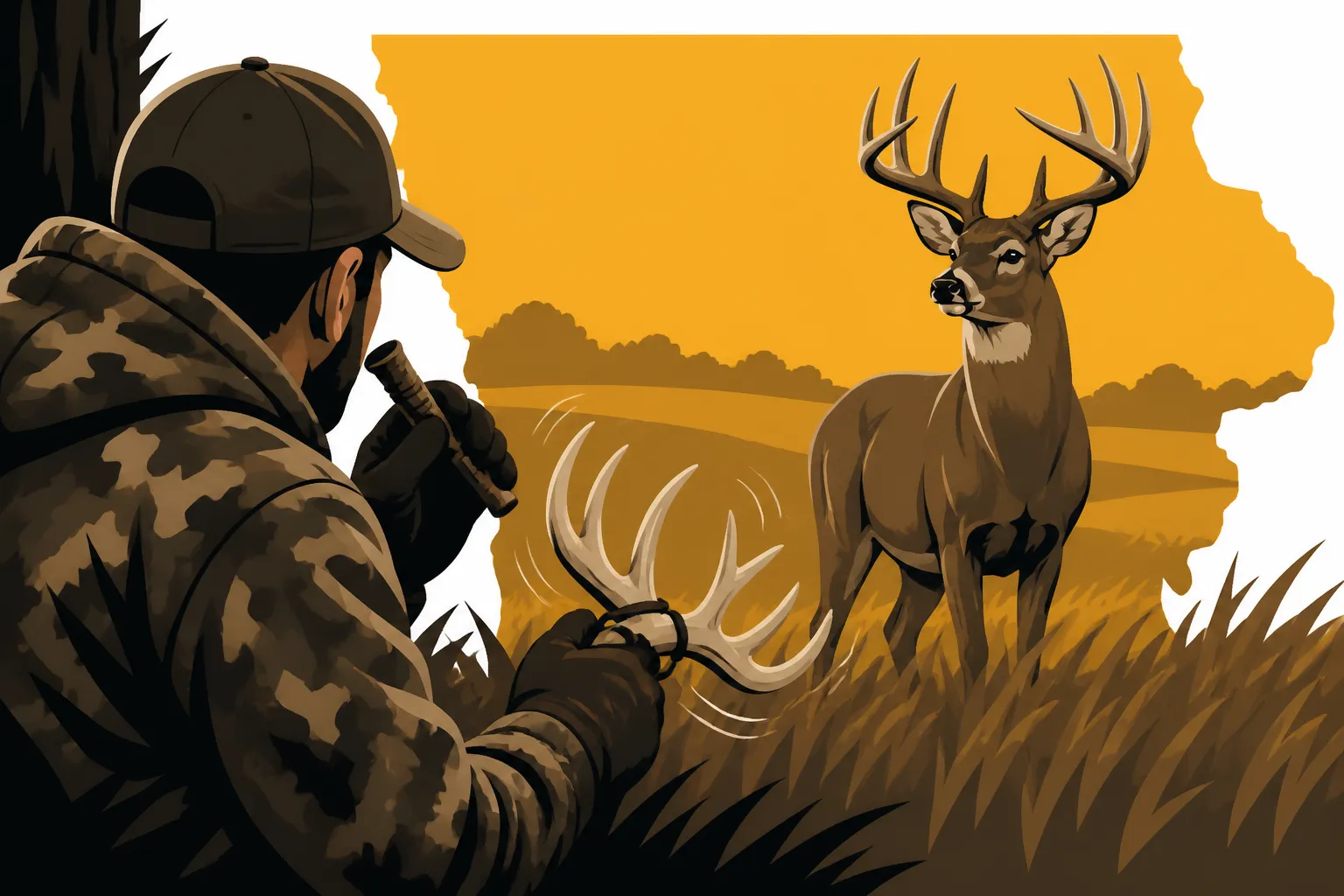
While grunts can pique a deer's curiosity or simulate a buck trailing a doe, rattling takes it to another level. It mimics the sound of two bucks fighting, a powerful trigger that can bring in curious or dominant bucks looking to assert themselves or steal a hot doe.
The Science Behind Rattling Sequences
Why do bucks respond to rattling? It's all about hierarchy and breeding rights. The sound of antlers clashing signals that there's competition afoot. During the pre-rut and peak rut, bucks are keenly aware of other males in their territory. The sound of a fight could mean a chance to challenge a rival, investigate an intruder, or even sneak in and breed a doe that two other bucks are fighting over. We've all seen videos or heard stories of bucks charging into rattling sequences, sometimes completely oblivious to the hunter. This isn't magic; it's instinct.
When you're rattling, you're not just banging antlers together. You're trying to tell a story. Think about the intensity. Are you mimicking light sparring, where two younger bucks are just testing each other out? That would be a softer, shorter sequence. Or are you creating the sound of an all-out brawl between two mature, dominant bucks? That requires more aggressive crashing, grinding, and pushing. The key is to make it sound as realistic as possible. Use real antlers if you can, as they produce a more natural sound than synthetic rattling bags, though modern rattling bags like those from Rattling Forks or Knight & Hale can be surprisingly effective and much easier to carry. Vary your intensity, throw in some pauses, and imagine the bucks actually pushing and shoving.
Effective Rattling Strategies for Iowa's Diverse Habitat
Iowa offers a mix of timber, river bottoms, and vast agricultural fields. Your rattling strategy needs to adapt to these different environments. In dense timber, where visibility is limited, you might need to be more aggressive with your rattling to cut through the cover. Remember, Rattling Volume in Thick Timber should be enough to be heard but not so loud it sounds unnatural close up. Start with a softer sequence, then escalate if there's no response. The goal is to make a buck think another buck is just beyond the next ridge or in the dense undergrowth.
When hunting field edges or more open terrain, you might not need to rattle as aggressively. The sound will carry further, and deer will be able to pinpoint the location more easily. In these open areas, it's often more effective to rattle for shorter durations, then listen intently for a response. Bucks might circle downwind, so always be aware of your surroundings and have your rangefinder ready. Consider the wind when setting up your rattling sequence; you want the sound to carry, but you never want a buck to circle downwind and scent you before you see him. This is where scouting tools like GoHunt, with its detailed mapping layers, become invaluable for identifying prevailing wind directions and likely approach corridors.
Combining Rattling and Grunting
The most potent calling strategy during the Iowa rut often involves a dynamic duo: rattling and grunting. This combination paints a more complete picture for a deer, suggesting a real interaction is taking place. Think of it as providing both the audio and visual cues (in the deer's mind, at least). A classic sequence often starts with a few aggressive grunts to grab attention, followed immediately by a rattling sequence that simulates a fight. Then, as the rattling subsides, a final series of dominant grunts or even a Snort-Wheeze on a Cruising Buck can add the finishing touch, making the scene sound incredibly realistic and urgent.
The cadence of your combined sequence should mimic a real interaction. Imagine two bucks circling, grunting, then clashing, pushing, and pulling, followed by more grunts. This isn't a continuous sound; there are pauses, breaks, and shifts in intensity. Experiment with different combinations. Sometimes, a series of light grunts followed by very light antler tickling can simulate younger bucks sparring. Other times, you might want to open with an aggressive rattle, then hit them with a dominant grunt as the rattling dies down. Always be patient after a calling sequence. Bucks might take several minutes to approach, often circling to get downwind. Keep your head on a swivel and your weapon ready.
Key Considerations for Successful Calling in Iowa
Calling deer is more than just making noise; it’s an art that integrates with all your other hunting skills. For it to be truly effective in Iowa, you need to think about wind, scent, observation, and your setup.
Wind Direction and Scent Control
This cannot be stressed enough: the wind is king in deer hunting, especially when calling. A deer, particularly a mature buck, is almost certainly going to try and circle downwind of the sounds he hears. It's their primary defense mechanism, and they use it flawlessly. If you’re calling with the wind blowing directly towards where you expect a buck to approach, you’re essentially setting yourself up for failure. He'll scent you long before you ever see him, and that’s a quick end to your hunt. The frustration of watching a promising deer disappear after catching your wind is something every Iowa hunter has experienced.
Always position yourself so the wind is blowing away from your likely approach corridors. Often, this means having the wind in your face or quartering. But when you’re calling, you need to consider where the deer will approach from and how they will circle. Sometimes, this means setting up with the wind quartering slightly behind you, but with a clear shooting lane downwind to intercept a circling buck. Moreover, rigorous Scent Control Products and What They Do are paramount. Use scent-eliminating sprays, wash your clothes in scent-free detergent, and store them properly. Even with perfect wind, a slight shift or an eddy can carry your scent, so minimize every possible factor. It’s an ongoing battle, but a necessary one to win.
Observation and Situational Awareness
Successful calling is as much about listening and watching as it is about making noise. After each calling sequence, silence is crucial. Listen intently for a response: a grunt, a stomp, the rustle of leaves, or the soft snap of a twig. Deer often approach cautiously and silently, taking their time. Don't immediately assume nothing is coming if you don't hear a direct response. Keep scanning the woods, looking for flicking ears, a horizontal backline, or just a subtle shift in texture that reveals a deer's presence.
Pay close attention to a buck's body language if he does respond. Is he looking intently, walking directly towards you, or acting wary? If he’s cautious, a softer, less aggressive call might be needed, or perhaps no further calling at all. If he's already committed and coming in, often the best thing to do is shut up and get ready for the shot. Remember, deer are individuals. Some bucks will charge in headfirst, others will sneak in with extreme caution. Your ability to read these cues and adapt your calling strategy on the fly is what separates good callers from great ones. Using detailed maps, perhaps through a GoHunt membership, to understand the terrain and likely deer travel routes can give you a significant advantage in predicting where a responding buck might appear.
Stand Placement and Calling Setup
Your stand placement is directly tied to the success of your calling efforts. You want to be in a position where your calls can carry, where you have good visibility to spot approaching deer, and crucially, where you have clear shooting lanes. Think about natural funnels, pinch points, or areas where deer are already traveling frequently during the rut. A good example is a timber point that bottlenecks between two fields, or a saddle connecting two ridges. Setting up in "Best Stand Locations in Rolling Timber" where sound can echo and carry, and deer naturally pass through, is ideal.
When calling, consider your backdrop. You don't want to be silhouetted. A dense tree or a clump of evergreens behind you can help break up your outline. If you're hunting from the ground, especially in open country, Ground Blinds in Iowa Farm Country can be incredibly effective. They offer excellent concealment, allow for movement, and help contain your scent. Make sure your ground blind is brushed in thoroughly and set up well in advance if possible. Always have an escape route in mind for any deer that might approach from an unexpected direction or try to circle completely behind you. The more you control the environment, the better your chances of a successful call-in.
Common Mistakes and Advanced Tips for Iowa Rut Calling
Even experienced hunters make mistakes when calling. The key is to learn from them and continually refine your approach. From the temptation to over-call to integrating advanced tactics like decoys, there’s always room to grow your rut calling prowess in Iowa.
Over-Calling and Under-Calling
One of the most common pitfalls, especially for eager hunters, is over-calling. It’s easy to get excited and blast away on your grunt tube or rattle antlers every few minutes. However, this can often sound unnatural and alarm deer. Imagine if you heard a continuous human shouting match in the woods – you’d probably avoid it, right? Deer are no different. A constant barrage of sound can signal danger, unnatural behavior, or simply make a buck lose interest. It's often better to call sparingly, listen intently, and give deer time to respond. Sometimes, a single, soft grunt is all it takes to turn a buck.
On the flip side, under-calling can also be a mistake. If you're too timid or wait too long between sequences, a curious buck might pass through your area before you get his attention. Finding the sweet spot means being patient but persistent. During periods of high activity, like the peak rut, you might increase your calling frequency slightly. In slower periods, back off. A good rule of thumb is to call every 15-30 minutes, varying the intensity and type of call, and always listening for a response in between. The woods are rarely silent, and your calls should integrate naturally into that environment, not dominate it.
Adapting to Pressure and Local Conditions
Iowa’s deer herd is robust, but areas, especially public land, can experience significant hunting pressure. This pressure significantly impacts how deer respond to calls. On heavily hunted public land, deer become warier and less likely to respond to aggressive or frequent calling. A loud rattling sequence in a high-pressure area might send deer scattering rather than drawing them in. Here, subtlety is your friend. Opt for softer grunts, contact calls, and less aggressive rattling sequences. You might even consider just grunting once or twice to stop a deer you already see, rather than trying to call one in from scratch.
Understanding Hunting Pressure Patterns on Iowa Public Land is vital. Weekdays often see less pressure than weekends, and some remote corners of public land might be less disturbed. Use scouting apps like GoHunt to analyze aerial imagery and topo maps to find these less-pressured pockets, as deer there might be more responsive. On private land with low pressure, you can often be more aggressive with your calling, as the deer are less educated. Always adjust your strategy based on the specific conditions you encounter. If deer are acting wary, back off the calling. If they seem curious, you can be a bit more bold.
Incorporating Decoys with Your Calls
While not always necessary, integrating a deer decoy can be a game-changer when calling, especially if you’re using aggressive rattling and grunting. A visual cue can add immense realism to your auditory story. When a buck hears a fight or a challenging grunt and then sees a deer (or two) in the distance, it can bypass some of his natural caution. Using a Decoy on a Field Edge or in an open timber setting can convince a buck to commit that extra distance.
The type of decoy matters: a dominant buck decoy can incite a challenge, while a doe decoy might attract a cruising buck, especially if paired with trailing grunts. Often, a combination of a buck and a doe decoy makes for a compelling scenario. However, Decoy Placement and Wind Direction is absolutely critical. You want the decoy to be visible but also positioned so that any approaching buck won't circle directly downwind of you. Have the decoy facing slightly quartering away, mimicking a deer that is focused elsewhere, inviting a buck to approach from the front or side. Be mindful that Doe Decoys Versus Buck Decoys can elicit different responses, so choose wisely based on the stage of the rut and the message you want to send. Decoys are not foolproof and can sometimes spook deer, but when conditions are right, they can seal the deal.
| Call Type | Purpose | When to Use | Intensity/Cadence | Expected Response |
|---|---|---|---|---|
| Short Grunt | Social/Contentment, Inquiry | Bucks cruising, out of range; to stop a deer for a shot | Soft, single "hrrrp" every 15-30 min | Curiosity, head turn, stop briefly |
| Contact Grunt | Locate other deer | Seeking bucks, deer out of sight in thick cover | Slightly louder, drawn-out "hrrr-uh" | Curiosity, approach, looking for source |
| Trailing Grunt | Buck chasing doe | Highly active rut; buck spotted at a distance following a doe | Rapid series of excited "hrrrp-hrrrp-hrrrp" | Provoke jealousy/challenge, direct approach |
| Dominant Grunt | Challenge/Assertion | Aggressive buck activity, pre-rut/peak rut for a mature buck | Guttural, deep "GRRR-UH" often with snort | Direct approach, confrontation |
| Light Rattling | Sparring/Testing | Early pre-rut, slower rut activity | Light taps, short sequences (15-30 sec) every 30-45 min | Curiosity, cautious approach, observation |
| Aggressive Rattling | Fight/Dominance | Peak rut, high competition; to challenge mature bucks | Crashing, grinding, pushing (60-90 sec) every 20-30 min | Direct approach, charge, investigation |
| Snort-Wheeze | Aggression/Challenge | Last resort for dominant buck; to stop a deer for a shot | Sharp, raspy inhale/exhale (use sparingly!) | Aggression, direct confrontation, or flee |
Disclaimer
Hunting is an inherently dangerous activity. Always prioritize safety, understand and obey all Iowa Department of Natural Resources regulations, and obtain proper landowner permission. The information provided here is for educational purposes only and does not guarantee hunting success. Conditions in the field can change rapidly, and individual animal behavior may vary.