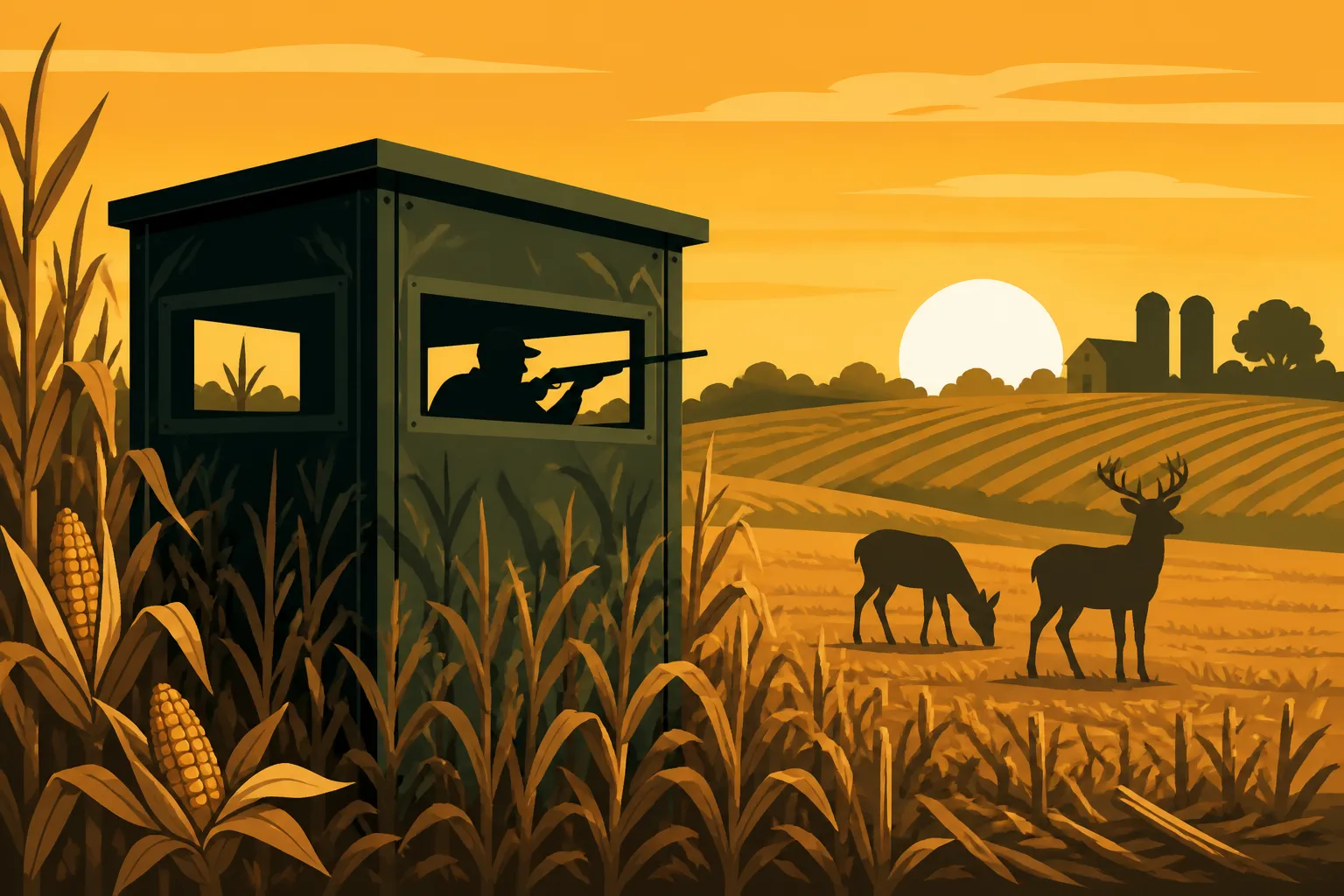
Ground Blinds in Iowa Farm Country
Hunting in Iowa's vast farm country can be a real head-scratcher when it comes to finding effective cover. You're often faced with wide-open fields, sparse timber, and deer that seem to vanish into thin air, leaving many hunters frustrated by the lack of natural concealment. This guide is all about tackling that challenge head-on, delving into the tactical advantages of ground blinds in these unique agricultural landscapes and how to maximize their potential for a successful hunt.
The Unique Challenges of Hunting Iowa's Agricultural Landscapes
Iowa is undeniably a deer hunting paradise, but it’s a specific kind of paradise. We're talking about sprawling fields of corn and soybeans, interspersed with small woodlots, creek bottoms, and fencelines. This isn't the big timber country you might find out west or in the far north; it's a patchwork of agriculture, and hunting it effectively requires a different playbook.
Sparse Natural Cover and Wide-Open Views
One of the biggest hurdles for any hunter in Iowa farm country is the sheer lack of consistent, thick cover. Once the crops are out, those vast fields become essentially barren, offering deer an almost unobstructed view for hundreds of yards. This means any movement you make, any silhouette you present, can be spotted instantly by a wary whitetail. It’s not uncommon to scout a perfect travel corridor, only to realize the only "stand" tree is a lone, spindly sapling that offers zero concealment. You might find a great scrape line along a fencerow, but setting up a traditional treestand leaves you silhouetted against the sky or a distant field. This wide-open nature demands creative solutions, especially for hunters who prefer not to be elevated or can't find suitable trees.
The deer themselves are experts at using the minimal cover to their advantage. They’ll hug the edges of those picked fields, dip into drainage ditches, or slip through narrow strips of timber. Their bedding areas might be tight cedar thickets, brushy creek banks, or even deep within standing corn late into the season. Trying to sneak into these areas or intercept them without getting busted requires an understanding of their movement patterns and a method of concealment that can adapt to these often exposed locations.
Adapting to Post-Harvest Landscapes
The landscape in Iowa changes dramatically throughout the hunting season, primarily due to the harvest cycle. Early archery season often sees towering cornfields offering incredible deer sanctuary and travel routes. You can sneak along the edge of a cornfield, using its height for cover, or even set up a stand looking into a standing corn field late in the season. However, once the combines roll through in October and November, those same fields become flat, open expanses. What was once a super highway for deer is now a brightly lit stage where every deer is on high alert.
This post-harvest transformation is when the challenge truly begins. Your early-season stand locations might become completely exposed, forcing you to reconsider your entire strategy. This is where ground blinds really come into their own. They offer a portable, adaptable solution that can be deployed quickly and effectively, even in areas where a treestand would be impractical or impossible. They provide that critical visual break, allowing you to set up on a crucial travel route or food source that would otherwise be unhuntable from the ground.
Why Ground Blinds Shine in Open Landscapes
Ground blinds, for all their simplicity, are incredibly versatile tools, especially for hunting the unique challenges of Iowa's agricultural terrain. They offer a host of advantages that make them a go-to choice for many successful hunters here.
Exceptional Concealment and Movement Forgiveness
Let's face it, we're not all statues when we're in the woods. Whether it's shifting to grab a grunt call, checking your phone, or simply adjusting your position after an hour of sitting, movement happens. In a treestand, especially in sparse timber, any fidget can spook a deer. But inside a well-set-up ground blind, you have a surprising amount of freedom. The solid walls break up your outline entirely, making you virtually invisible to passing deer. This is a huge benefit, especially during colder hunts when you need to move to stay warm, or when hunting with kids who might not be able to sit perfectly still.
The dark interior of most blinds further enhances this concealment. As long as you keep your window openings strategic and avoid silhouetting yourself against an open window, deer typically won't detect you, even if they're looking directly at the blind. This allows for comfortable, relaxed hunting, which in turn leads to longer sits and better opportunities. It also means you can often get away with wearing slightly less camouflaged clothing inside the blind, as long as it's dark and doesn't create bright reflections.
Versatility in Placement Where Trees Are Scarce
Think about hunting a fencerow that funnels deer between two picked bean fields. There might not be a single tree suitable for a stand within hundreds of yards. Or perhaps you've scouted a crucial ditch crossing in row crop country where deer consistently sneak from one bedding area to a distant food plot. These are prime locations, but without a tree, they're often overlooked. This is precisely where ground blinds shine. You can place them almost anywhere – along a hedgerow, tucked into a brush pile, against a single cedar tree, or even out in the middle of a field near a crucial pinch point if adequately brushed in.
This adaptability allows you to hunt specific deer patterns, rather than being limited by tree availability. It means you can set up on travel corridors that wouldn't otherwise be huntable, opening up new opportunities that traditional treestand hunting simply can't offer. From the expansive public tracts to those hard-to-access private parcels, ground blinds provide an answer to the "where do I put a stand?" dilemma.
Shelter from the Elements and Increased Comfort
Iowa weather can be, well, Iowa weather. You could start a hunt in crisp, cool air and end it battling driving rain, swirling snow, or biting winds. Staying comfortable is key to staying out longer, and longer sits often lead to more success. Ground blinds offer a much-needed respite from the elements. The enclosed space provides a significant wind break, and the waterproof fabric keeps you dry during unexpected showers or light snow.
This protection isn't just about comfort; it's about endurance. When you're not shivering uncontrollably or soaked to the bone, you're more focused, more patient, and less likely to cut your hunt short. This is particularly valuable during the late season when temperatures plummet, or during those all-day rut hunts where you need to be prepared for anything Mother Nature throws your way. Plus, the ability to bring in a comfortable chair, a small heater, or even a book for slow periods makes the experience far more enjoyable, which translates directly to more time spent in the field. This increased comfort also extends to hunters with mobility issues or those who prefer to hunt with younger children, offering a safe and warm environment.
Choosing the Right Ground Blind for Iowa Conditions
Not all ground blinds are created equal, and what works perfectly in dense timber might be a liability in the open expanse of an Iowa farm field. Selecting the right blind involves considering several factors related to the specific hunting conditions you'll encounter.
Size, Configuration, and Window Options
When choosing a ground blind, think about your hunting style and how many people will be inside. If it's just you and a bow, a smaller, lightweight pop-up blind might be ideal for mobility. If you're bringing a kid, a camera, or a partner, a larger hub-style blind will provide much-needed elbow room. Common sizes range from two-person models around 58"x58" to three or even four-person models at 70"x70" or larger. Remember, the bigger the blind, the harder it is to transport and conceal effectively.
The configuration of the blind, particularly its windows, is crucial. Look for blinds with multiple window options: large shooting windows for gun hunting, and smaller, strategically placed mesh windows for bowhunting that allow for clear shots while maximizing concealment. Some blinds offer a 360-degree view, which is fantastic for scanning, but remember that more open windows mean more potential for your silhouette to be visible if not managed properly. Mesh windows that allow you to see out but obscure vision coming in are a must. Brands like Primos and Barronett offer various window systems, from silent slide mechanisms to shoot-through mesh, each with its pros and cons. A blind with silent window adjustments is paramount – nothing busts a deer faster than velcro ripping open.
Durability and Weather Resistance for Iowa's Extremes
Iowa's weather can be notoriously unpredictable, from scorching early-season heat to late-season blizzards. Your ground blind needs to be built to withstand these extremes. Look for blinds constructed from heavy-duty, waterproof polyester fabric. A durable fabric not only stands up to rain and snow but also resists tears from brush and branches, which is inevitable when you're brushing in a ground blind to perfection. Reinforced corners and strong stitching are indicators of quality that will prevent the blind from falling apart after a few seasons.
The frame of the blind is just as important. Most modern hub-style blinds use fiberglass or carbon fiber poles that are flexible but strong. Check reviews for reports of poles breaking in high winds. A good quality blind will also have sturdy stakes and tie-down ropes included, essential for securing it against strong Iowa winds. There's nothing worse than showing up to your spot only to find your blind flattened or, worse, blown into a neighboring field. Investing in a blind known for its robust construction, even if it means a slightly higher price point, will save you headaches and money in the long run.
Strategic Placement and Brushing In Your Blind
Placing a ground blind isn't just about finding a clear spot; it's an art form that blends stealth, wind awareness, and understanding deer movement. The goal is to make your blind disappear into the landscape.
Identifying Key Terrain Features for Placement
In Iowa's farm country, deer often use subtle terrain features as their highways. Your job is to identify these and place your blind accordingly. Think about the inside corners of crop fields, especially where timber or a thick fencerow meets the field edge. Deer frequently cut these corners as they transition from cover to food. A blind tucked into an inside corner of a crop field can be deadly. Similarly, drainage ditches, even small ones, can act as natural travel corridors, providing a slight depression for deer to feel more secure. Placing a blind on the downwind side of such a ditch, overlooking a known crossing, can be highly effective.
Other prime spots include pinch points where cover narrows, forcing deer into a smaller area. This could be a narrow timber point between two fields or a break in a fencerow that deer habitually cross. Don't overlook the potential of isolated brush piles, old farm machinery, or even a lone standing cedar in a field; these can offer just enough existing structure to help break up the blind's outline. When scouting, use tools like GoHunt or other mapping apps to identify these features from afar, helping you narrow down potential spots before you even set foot on the property. Remember that access routes are paramount; choose a spot where you can get to and from your blind without disturbing the deer. Consider a route that utilizes a creek bed or a field edge farthest from bedding areas to minimize intrusion.
Mastering the Art of Brushing In
Once you've chosen your location, the most critical step is to brush in your blind. A naked ground blind, no matter how well camouflaged, sticks out like a sore thumb in open country. The goal is to break up its perfect geometric shape and make it look like a natural part of the environment. Start by placing the blind tight against existing cover – a fencerow, a thicket, the edge of a timber block. Then, collect natural materials from the surrounding area: branches, corn stalks, dead weeds, small logs, and tall grasses.
Begin by piling material around the base of the blind, gradually working your way up. Pay special attention to the corners and the roofline, as these are often the most unnatural-looking parts. Don't be afraid to overdo it; it's better to have too much natural material than not enough. Use zip ties or small bungee cords to secure branches to the blind's frame or fabric loops, ensuring they won't blow away in a strong gust of wind. Remember to leave your shooting lanes clear, but ensure any branches you use to frame those lanes are stable and won't sway in the wind. The more effort you put into blending your blind, the more confident deer will be walking past it, and the more success you'll experience. It’s also wise to set up your blind a week or two before you plan to hunt, if possible, to allow deer to get accustomed to its presence.
Hunting Effectively from a Ground Blind
Hunting from a ground blind requires a slightly different approach than treestand hunting, but with the right tactics, it can be incredibly productive. Maximizing your success involves careful attention to wind, scent, and shot angles.
Managing Wind and Scent Control
Just like with treestand hunting, wind direction is paramount when using a ground blind. Even though you're enclosed, scent can still swirl out of window openings or vent through the fabric. Always approach your blind and hunt with the wind in your favor, carrying your scent away from where you expect deer to approach. This often means having multiple blind setups for different wind directions, or being willing to move your portable blind as conditions change.
Beyond wind, diligent scent control is still crucial. Showering with scent-eliminating soap, washing your hunting clothes in unscented detergent, and storing them in airtight containers are all good practices. Consider using an ozone generator in your blind before a hunt, or even having a small personal ozone unit inside, though claims about their efficacy vary. While a blind offers visual concealment, it's not a foolproof scent barrier. Pay attention to how you enter and exit, trying to minimize disturbing the area around your blind. For more in-depth knowledge, consider reading about Ozone and Scent Control Claims.
Shot Angles and Shooting Lanes
When hunting from a ground blind, your shot opportunities will typically be lower to the ground, and potentially through mesh windows. This means you need to practice shooting from a seated position, and understand how your arrow or bullet will react to passing through a mesh screen. Many hunters prefer to cut out small sections of mesh for their primary shooting lanes, or use a blind with silent, easily manipulated window systems. Always ensure your broadhead or bullet will clear the bottom edge of the window.
Practicing shooting from a ground blind is non-negotiable. Set up your blind in the backyard and practice at various distances and angles, sitting in the chair you'll use for hunting. Pay attention to how your bow limbs or gun barrel clear the window openings. Remember that shot angles on deer will be flatter from a ground blind, so aiming for the vitals requires precise placement. For bowhunters, quartering-away shots are still ideal, but you might need to wait for a deer to clear obstacles more often than from an elevated position. Understanding shot placement on a whitetail at twenty yards from this lower perspective is crucial.
Minimizing Movement and Noise Inside the Blind
Despite the forgiveness of a ground blind, excessive movement or noise can still spook deer, especially close-range animals. The dark interior helps conceal you, but if you're constantly shifting around or making loud noises, deer will pick up on it. Choose a comfortable, quiet chair that won't squeak or creak. Organize your gear – calls, rangefinder, water bottle, snacks – so everything is easily accessible without fumbling. Pockets on the blind walls or a small hunting pack can help with this.
When preparing to shoot, move slowly and deliberately. If drawing a bow, practice drawing quietly without hitting the blind walls. For gun hunters, ensure your rifle or shotgun can be quietly shouldered and aimed without unnecessary banging. If you're hunting with a partner or kids, establish quiet signals or rules beforehand. The goal is to remain as stealthy as possible, even within the confines of the blind, allowing you to maximize your chances when a deer finally presents itself. Learning to hunt from a blind without movement takes practice and discipline, but the reward is often a close-range encounter.
Maintenance and Longevity of Your Blind
A ground blind is an investment, and proper care will ensure it lasts for many seasons, providing a reliable hide for your Iowa hunts. Neglect, however, can quickly turn it into a torn, moldy mess.
Proper Storage and Cleaning
After each hunting season, or even after a particularly wet hunt, your ground blind needs to be thoroughly cleaned and dried before storage. First, remove all natural brushing materials. Shake out any dirt, leaves, or debris from the interior. If the blind is muddy or has bloodstains, you'll need to clean it more thoroughly. Use a damp cloth and mild, unscented soap (like a hunter's laundry detergent) to wipe down the fabric. Avoid harsh chemicals or detergents that can damage the fabric's waterproofing or leave strong, unnatural scents.
The most critical step is to ensure the blind is completely dry before packing it away. Moisture is the enemy, leading to mildew, mold, and rot, which will quickly destroy the fabric and leave a foul odor that's hard to remove. Set the blind up in your garage, basement, or even outside on a sunny day and let it air out for several days. Ensure all windows are open to allow for maximum airflow. Once completely dry, fold it neatly and store it in its carry bag. Store it in a cool, dry place, away from direct sunlight, which can degrade the fabric over time.
Patching Tears and Replacing Components
Even with the best care, ground blinds can suffer wear and tear. A stray branch, a snag on barbed wire, or even a determined mouse can create a tear in the fabric. Don't let a small tear become a big problem. Many outdoor gear companies and blind manufacturers offer repair kits specifically for blind fabric. These often include adhesive patches that are easy to apply and can effectively seal small holes. For larger tears, you might need a sewing kit specifically designed for heavy-duty outdoor fabrics.
The poles and hubs are also components that can break or wear out. If a fiberglass pole splinters, many hardware stores sell repair kits that allow you to replace sections. If a hub mechanism breaks, check with the manufacturer; some offer replacement parts. It's often worth the effort and cost to repair a quality blind rather than buying a new one. A well-maintained blind that's free of holes and functions properly will give you years of service and improve your hunting success.
| Ground Blind Feature | Pros | Cons | Ideal Iowa Use Case |
|---|---|---|---|
| Hub-Style Blind | Very sturdy, easy setup, spacious, excellent concealment. | Heavier, bulkier to transport, can be more expensive. | Permanent setups, cold weather, hunting with multiple people or kids. |
| Pop-Up Blind | Extremely lightweight, compact, very fast setup/takedown. | Less sturdy in high winds, less spacious, can be flimsy. | Highly mobile hunting, quick reconnaissance sets, packing deep into public land. |
| Panel Blind | Highly adaptable, can be configured in various shapes, blends well. | Open-top (no roof), less weatherproof, requires more brushing in. | Specific fenceline setups, quick cover against existing features, fair-weather archery. |
| Shoot-Through Mesh | Allows full concealment until the shot, breaks up outline. | Can reduce arrow/bullet speed slightly, practice is critical, can be loud if not handled right. | Bowhunting primarily, close-range shotgun hunting where concealment is paramount. |
| Silent Window System | No noise when opening/closing, crucial for close encounters. | Can be more complex, sometimes less durable than zippers/velcro if cheaply made. | All hunting situations, especially when deer are within 50 yards. |
Disclaimer
Hunting rules and regulations in Iowa can change. Always consult the latest Iowa DNR regulations before heading afield to ensure you are up-to-date and hunting legally. This guide is for informational purposes only and does not replace official regulations.