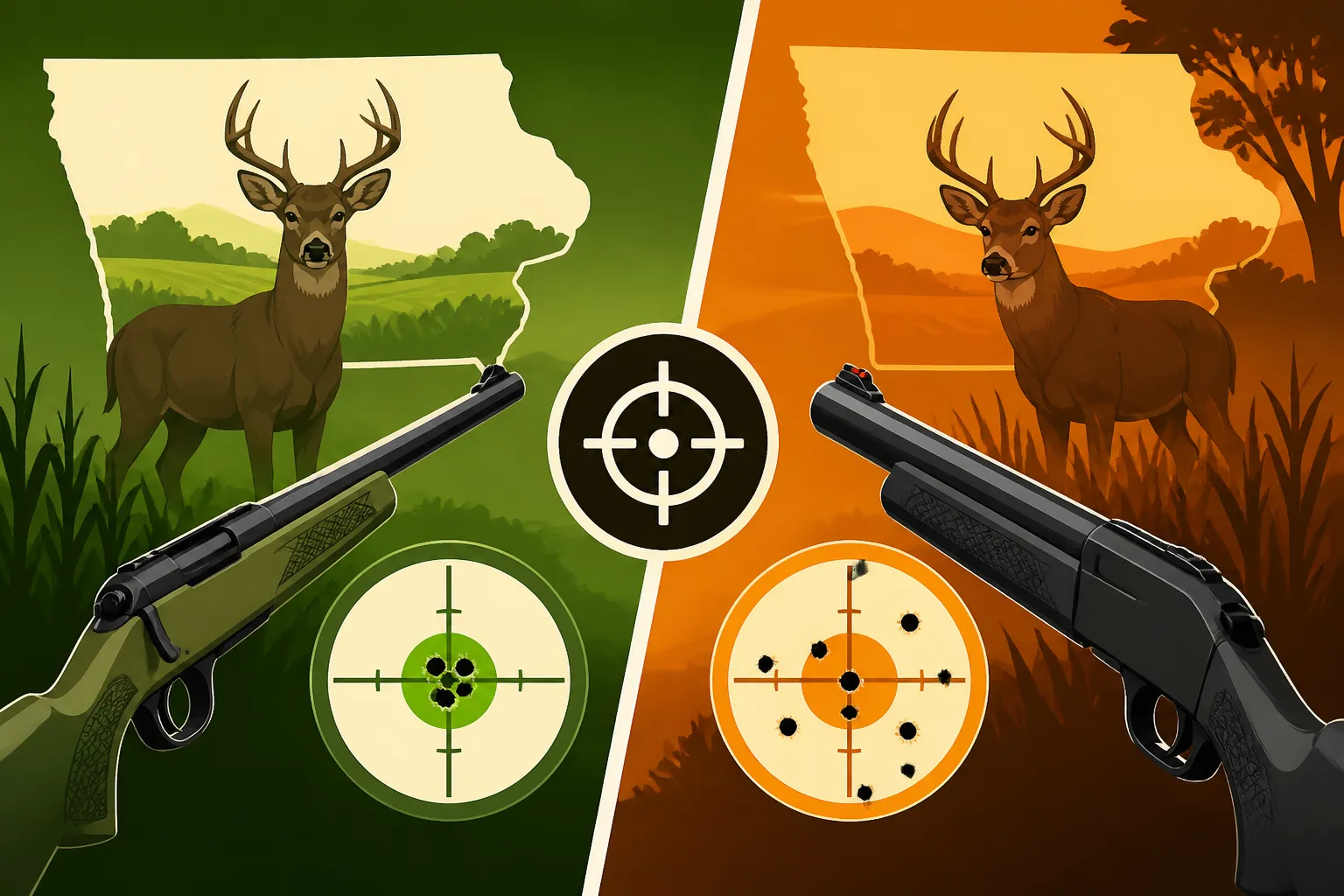
Straight-Wall Versus Slug Gun Accuracy
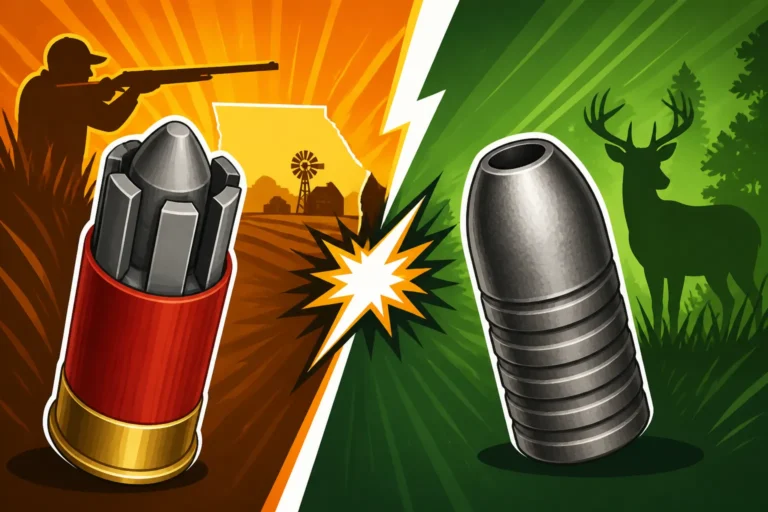
For Iowa deer hunters, the debate between slug guns and the newer straight-wall cartridge rifles can be a frustrating one, often boiling down to a single, critical question: which one offers better accuracy? When you're out in the field, making an ethical shot on a wary whitetail, confidence in your firearm's precision is paramount. This guide will meticulously break down the accuracy capabilities of both slug guns and straight-wall rifles, exploring their nuances, advantages, and limitations so you can make an informed decision for your next Iowa deer hunt.
Understanding the Landscape of Iowa Deer Hunting Firearms
Iowa's firearm regulations for deer hunting have evolved over the years, largely in response to hunter feedback and a desire to balance tradition with modern advancements. For decades, shotguns firing slugs were the primary firearms allowed during the popular gun seasons, creating a unique hunting culture in the state. However, the introduction of straight-wall cartridge rifles marked a significant shift, offering hunters a new category of firearm to consider.
The Enduring Role of the Slug Gun
For generations of Iowa hunters, the slug gun was deer season. Think back to those crisp December mornings, bundled up in layers, with the trusty 12-gauge slung over your shoulder. Many of us grew up with these firearms, learning to shoot them, and successfully filling our tags year after year. There's a deep-seated tradition there, and for good reason. Slug guns are robust, reliable, and get the job done at closer ranges.
However, many hunters have felt the sting of a missed shot or a less-than-ideal group on the target, leading to a lingering frustration about their perceived accuracy limitations. It's not uncommon to hear stories of slug guns that just "don't shoot straight" past 75 yards, leaving hunters feeling limited in their effective range. This perception isn't entirely unfounded, as we'll explore. Historically, smoothbore barrels paired with Foster slugs (the classic "rifled" slug) were designed for relatively short-range, brush-busting performance. While rifled slug barrels and sabot slugs vastly improved accuracy, the reputation for being a "short-range" gun stuck.
The Rise of Straight-Wall Cartridges
The introduction of straight-wall cartridge rifles into Iowa's deer hunting regulations was met with considerable excitement, particularly for those who had long desired rifle-like performance in the shotgun-restricted zones. The primary motivation behind this change was to offer hunters a more precise and extended-range option, addressing the very frustrations many felt with traditional slug guns. Imagine having a firearm that handles like a rifle, offers superior accuracy, and still fits within the legal framework of Iowa's deer seasons – it was a game-changer for many.
These cartridges, like the popular .450 Bushmaster, .350 Legend, and even the venerable .45-70 Government, offered a flatter trajectory and better energy retention downrange compared to most slugs. This meant more confident shots at distances previously considered borderline or out of reach for many slug gun setups. It opened up new possibilities for hunting larger fields or more open timber, allowing hunters to adapt their tactics without leaving the state or switching to an entirely different weapon platform, like a muzzleloader during its specific season.
Deconstructing Accuracy: Slug Guns in Detail
To truly understand the accuracy of a slug gun, we need to peel back the layers and look at the components that contribute to its performance, or sometimes, its limitations. It's not just about the gun itself, but the ammunition, the barrel, and even the shooter.
Factors Affecting Slug Gun Accuracy
The biggest determinant of a slug gun's accuracy lies in its barrel and the type of slug it's designed to shoot.
- Smoothbore vs. Rifled Barrels:
- Smoothbore barrels: These are your traditional shotgun barrels, lacking any internal rifling. They are best paired with Foster-style slugs, which have external rifling designed to impart a spin as they travel through the air, theoretically stabilizing them. However, this stabilization is often minimal, leading to relatively poor accuracy past 50-75 yards. At 100 yards, a 4-6 inch group might be considered good, and beyond that, performance drops off quickly.
- Rifled barrels: These barrels have spiral grooves inside, just like a rifle barrel, designed to spin the projectile as it travels down the bore. They are meant to be used with sabot slugs. A sabot is a plastic sleeve that encases a smaller, rifle-like projectile. The sabot engages the rifling, imparting a rapid spin to the projectile, which then separates from the sabot after leaving the barrel. This combination dramatically improves accuracy, making 100-yard shots quite attainable, and even pushing to 150 yards with practice.
- Slug Choice: Using the wrong slug for your barrel is a surefire way to compromise accuracy. Foster slugs in a rifled barrel can lead to excessive lead fouling and poor accuracy, while sabot slugs in a smoothbore will tumble and be wildly inaccurate.
- Optics: While some hunters still use iron sights, a good scope or red dot sight is crucial for maximizing accuracy with any slug gun, especially with a rifled barrel and sabot slugs. A Scope Magnification for Slug Guns that's appropriate for the typical ranges you'll be shooting can make a huge difference in precise aim.
- Recoil Management: Let's be honest, 12-gauge slugs pack a punch. Heavy recoil can lead to flinching, poor form, and inconsistent shot placement. This is a significant factor, especially for newer or smaller-framed hunters. Practice and proper technique are essential to mitigate recoil and maintain accuracy.
Many hunters find that with a good rifled barrel and sabot slugs, 2-3 inch groups at 100 yards are achievable. Beyond that, bullet drop and energy retention become more significant concerns, impacting ethical shot placement.
Maximizing Your Slug Gun's Potential
If you're sticking with a slug gun, there are definitely steps you can take to squeeze every bit of accuracy out of it and ensure you're making ethical shots.
First and foremost, match your slug to your barrel. If you have a smoothbore, use Foster-style slugs. If you have a rifled barrel, invest in good quality sabot slugs. But don't just stop there. Every gun has its preferred ammunition. You might need to try several different brands and grain weights of sabot slugs to find the one that groups best in your particular firearm. This isn't just a suggestion; it's a necessity. What shoots great in your buddy's identical shotgun might pattern like a blunderbuss in yours.
Once you've found a few promising loads, it's time to spend quality time at the range. Don't just shoot once or twice and call it good. Zeroing a Slug Gun at Fifty Yards is a great starting point, but you need to practice at the distances you expect to shoot in the field, typically 50, 75, and 100 yards. Pay attention to your stance, breathing, and trigger control. Recoil anticipation is a real thing with slug guns, and proper technique can help you manage it. Consider using shooting sticks or a bench rest to eliminate as much human error as possible during your accuracy testing.
Finally, set realistic expectations for your ethical shooting distance. While some hunters might push a rifled slug gun to 150 yards, for the majority, a comfortable and ethical range is often closer to 100-125 yards. Knowing your gun's limitations and, more importantly, your own limitations, is critical. It's better to pass on a shot that's too far than to wound a deer.
The Precision of Straight-Wall Cartridge Rifles
The introduction of straight-wall cartridges has genuinely reshaped firearm choices for Iowa deer hunters, bringing rifle-level precision to gun seasons. These aren't just new options; they represent a fundamental shift in ballistic performance available to hunters.
Inherent Accuracy Advantages
The inherent design of a straight-wall cartridge rifle provides a significant accuracy advantage over most slug gun setups. It boils down to a few key factors:
- Rifled Barrel Design: Unlike a smoothbore shotgun, every straight-wall rifle has a precisely rifled barrel specifically designed to stabilize a bullet, not a large slug. This consistent spin translates directly into superior accuracy. The bullet travels down a dedicated rifle bore, reducing wobble and improving flight path stability from the moment it leaves the muzzle.
- Cartridge Consistency: Straight-wall cartridges are manufactured to much tighter tolerances than shotgun shells. The bullets themselves are more aerodynamic, consistent in weight, and designed for optimal ballistic performance. This means less variation from shot to shot, leading to tighter groups on target.
- Flatter Trajectory: Rifle cartridges, even those with straight-wall designs, generally have a much flatter trajectory than slugs. This is a huge advantage in the field. A flatter trajectory means less guesswork on holdover at varying distances, especially when a deer might step out at an unexpected range. For example, a straight-wall caliber might only drop a few inches at 150 yards, whereas a slug could drop a foot or more, requiring significant compensation. This reduces the margin for error and increases confidence in your shot placement.
- Improved Energy Retention: While slugs are powerful at the muzzle, they shed energy very quickly due to their blunt design and heavy weight. Straight-wall rifle bullets, with their more aerodynamic profiles, retain kinetic energy much better downrange. This means they deliver more knockdown power and ensure a clean, ethical kill at greater distances.
For many hunters, the feeling of picking up a straight-wall rifle is akin to switching from driving a tractor to a sports car – both get you there, but one offers a much smoother, more precise experience, especially when dealing with longer distances.
Straight-Wall Calibers and Their Performance
Iowa hunters have embraced several straight-wall calibers, each with its own characteristics. Here’s a closer look at some popular choices:
- .450 Bushmaster: This caliber quickly became a favorite for many. It's known for delivering significant punch and excellent accuracy. Out to 200 yards, the .450 Bushmaster maintains a relatively flat trajectory and carries ample energy for whitetails. Its heavier bullet delivers substantial impact, making it a reliable choice for larger deer or those seeking definitive knockdown power. However, it does come with noticeable recoil, which some hunters find challenging during extended range sessions.
- .350 Legend: Designed specifically for states with straight-wall cartridge restrictions, the .350 Legend offers a fantastic balance of accuracy, moderate recoil, and effective range. It’s often touted as a great option for younger hunters, those sensitive to recoil, or anyone looking for a lighter-recoiling rifle that still performs admirably. It's known for good accuracy out to 175-200 yards, often delivering tighter groups than a .450 Bushmaster at those distances due to its slightly lighter recoil and bullet profile. Is .350 Legend Legal in Iowa? It certainly is, and it's gaining immense popularity.
- .45-70 Government: A true classic, the .45-70 has been around for over a century and offers tremendous power. While it's a straight-wall cartridge, its traditional heavy, slow-moving bullets can have a significant rainbow-like trajectory past 150 yards, requiring hunters to be very aware of bullet drop. However, with modern loads, particularly those designed for lever-action rifles, it can be quite accurate and potent for shots within 125-150 yards. Its sheer bullet mass is devastating on deer.
When considering these calibers, it's important to look at the ballistics charts for various manufacturers. Understanding their trajectory and energy at common hunting distances will help you choose the best fit for your hunting style and the terrain you typically hunt in Iowa. The availability of Ammunition Availability for Straight-Wall Rifles can vary, so always check stock for your chosen caliber well before the season.
Direct Comparison: Accuracy, Range, and Practical Considerations
Now, let's get down to the brass tacks and directly compare these two firearm types. It's not just about what they can do, but what they realistically will do in your hands out in the Iowa timber or across a picked cornfield.
The Numbers Don't Lie: Group Sizes and Effective Range
When we talk about "accuracy," we're generally referring to the size of the bullet group on a target at a given distance. Here’s a general comparison of what you can expect:
- Slug Guns (with rifled barrels and sabot slugs):
- 50 yards: Most well-tuned slug guns can achieve 1.5-3 inch groups.
- 100 yards: Expect groups to open up to 2.5-5 inches.
- 150 yards: This is where things get challenging. Groups of 4-8 inches are common, and bullet drop becomes significant (often 6-12 inches depending on the load).
- Ethical Range: For most hunters, the ethical maximum for a slug gun is around 125-150 yards, provided they have practiced extensively and know their specific gun's limitations.
- Straight-Wall Cartridge Rifles (.350 Legend, .450 Bushmaster):
- 50 yards: 1-2 inch groups are standard, often tighter.
- 100 yards: 1-3 inch groups are very common, with many rifles capable of sub-2-inch groups.
- 150 yards: 2-4 inch groups are typical, with much less bullet drop (often 2-5 inches depending on caliber and zero).
- 200 yards: Many straight-wall rifles can maintain 3-6 inch groups at 200 yards, still delivering sufficient energy for an ethical kill.
- Ethical Range: For well-practiced shooters, ethical shots with straight-wall rifles can extend to 175-200 yards, sometimes a bit more depending on the specific caliber and hunting conditions. Straight-Wall Rifle Range for Deer is a topic many hunters pore over.
Here's a quick comparison table:
| Feature | Rifled Slug Gun (Sabot Slugs) | Straight-Wall Rifle (.350 Legend / .450 Bushmaster) |
|---|---|---|
| Typical 100-yd Group | 2.5 – 5 inches | 1 – 3 inches |
| Typical 150-yd Group | 4 – 8 inches | 2 – 4 inches |
| Approx. 150-yd Bullet Drop | 6 – 12 inches | 2 – 5 inches |
| Max Ethical Range | 125 – 150 yards | 175 – 200+ yards |
| Recoil | Moderate to Heavy (12-ga) | Moderate to Heavy (.450), Light to Moderate (.350) |
| Ammunition Cost | Moderate to High | Moderate |
This table clearly illustrates the inherent accuracy advantage of straight-wall rifles. While a good slug gun can certainly be accurate enough for typical Iowa hunting ranges, the straight-wall offers a wider margin for error, a flatter trajectory, and extended ethical range.
Beyond the Target: Field Performance and Hunter Experience
Accuracy on paper is one thing, but how do these differences play out when you're perched in a frosty treestand or hunkered down in a ground blind?
- Recoil Comparison: This is a huge factor for many. A 12-gauge slug gun can have punishing recoil, especially for smaller-framed shooters or during extended practice sessions. While the .450 Bushmaster also kicks, many find it more manageable than a heavy slug load. The .350 Legend, on the other hand, offers recoil comparable to a .243 Winchester, making it much more pleasant to shoot and reducing the likelihood of flinching in the field. This comfort translates directly into better shot placement and more confidence.
- Weight and Maneuverability: Both types of firearms come in various weights and configurations. Generally, slug guns, particularly those with heavy rifled barrels, can feel quite front-heavy. Straight-wall rifles, being built on standard rifle platforms, often feel more balanced and can be lighter, making them easier to carry through thick cover or handle in tight quarters like a box blind or when you're trying to quietly adjust for a shot from a treestand.
- Cost of Ammunition and Firearms: The cost of sabot slugs can be surprisingly high, often exceeding that of many straight-wall rifle cartridges. While the initial investment in a straight-wall rifle might be higher than a budget slug gun, the long-term ammunition costs might balance out, especially if you consider the increased accuracy and confidence.
- The Confidence Factor: This is perhaps the most intangible, yet critical, aspect. Knowing that your firearm is capable of precise shot placement at varying distances, with minimal bullet drop, provides immense confidence. When that mature buck steps out at 140 yards on Shotgun Season Opening Day Strategy, you'll feel far more prepared and confident with a straight-wall rifle than with a slug gun that might be at the edge of its effective range. Many hunters use services like GoHunt to research and plan their hunts, and understanding weapon capabilities is a huge part of that preparation, helping them strategize based on expected shot distances and terrain.
- Ergonomics and Feel: Many hunters simply prefer the feel of a rifle. The ergonomics, trigger pull, and overall handling of a straight-wall rifle often feel more natural and precise to shooters accustomed to traditional rifles, even if they've spent years with a shotgun.
The advancements in straight-wall cartridges have really leveled the playing field, offering Iowa hunters a powerful, accurate, and ethical tool that can greatly enhance their hunting experience.
Making the Right Choice for Your Iowa Hunt
Choosing between a slug gun and a straight-wall cartridge rifle isn't a simple right or wrong decision. It's about finding the best fit for your personal hunting style, the terrain you hunt, and your comfort level with the firearm. Both can be incredibly effective tools for harvesting Iowa whitetails.
Factors to Consider for Your Style
Before you commit to either a slug gun or a straight-wall, take a moment to honestly evaluate your hunting situation and preferences.
- Hunting Terrain: Do you primarily hunt dense timber and thick creek bottoms where shots are almost always under 75 yards? A well-tuned slug gun with a rifled barrel is perfectly adequate for those close-range encounters. However, if your hunting grounds involve open crop fields, long power line cuts, or expansive timber where deer might offer shots at 100 to 200 yards, a straight-wall rifle will give you a significant advantage in terms of confidence and ethical range. Think about the difference between setting up for Hunting a Narrow Creek Corridor versus trying to cover a large picked bean field.
- Personal Comfort with Recoil: This is a genuine consideration. If heavy recoil makes you flinch or dread practice sessions, it will absolutely impact your accuracy in the field. The .350 Legend offers a much softer shooting experience than most 12-gauge slug loads or even the .450 Bushmaster, making it a great option for those who are sensitive to recoil. Don't let pride get in the way of choosing a firearm you can shoot confidently and accurately.
- Budget for Firearm and Ammo: Straight-wall rifles often come with a slightly higher initial price tag than many slug guns, especially if you already own a smoothbore shotgun and just need to add a rifled barrel. However, as noted, ammunition costs can be comparable or even cheaper for some straight-wall cartridges over time. Factor in the total cost of ownership, including optics, when making your decision.
- Shooter Experience: For brand new hunters, or those who rarely shoot, a lighter recoiling straight-wall like the .350 Legend might offer an easier learning curve for accuracy than a heavy-hitting slug gun. More experienced rifle shooters will likely feel right at home with a straight-wall, leveraging their existing skills.
- Specific Season: While this guide focuses on slug guns and straight-walls, remember that Iowa has different seasons. For example, if you hunt during Iowa First Shotgun Season Dates, you'll want to be ready for potentially higher deer movement and more hunters. If you're looking at Iowa Late Muzzleloader Season Dates, you'll have different considerations for primitive weapons. Your firearm choice should align with the regulations for the season you plan to hunt most.
The Importance of Practice and Confidence
Ultimately, the most accurate firearm in your hands is the one you practice with most consistently and feel most confident shooting. A hunter who practices regularly with their slug gun and understands its limitations will be more effective and ethical than a hunter who buys a straight-wall rifle but rarely shoots it.
No matter which option you choose, consistent range time is non-negotiable. Practicing Shots From a Treestand or from a ground blind, mirroring your actual hunting positions, is crucial. This builds muscle memory, familiarizes you with your optic, and helps you manage recoil effectively. Don't wait until the week before the season opener to dust off your gun. Regular practice throughout the year, even just a few shots each month, will pay dividends when that moment of truth arrives.
Many resources, including those found on platforms like GoHunt, emphasize the importance of preparation and knowing your gear inside and out. Understanding the regulations, scouting your hunting area, and becoming proficient with your chosen firearm are all pieces of the puzzle that lead to a successful and ethical hunt. Whether you stick with tradition or embrace the new technology, make sure your choice empowers you with the confidence to make the shot when it counts.
Disclaimer
This article is for general informational purposes only and does not constitute professional advice. Laws, prices and regulations vary by location and change over time. Consult a qualified professional for guidance on your specific situation.