Deer Carts Worth Buying
We’ve all been there: that incredible moment when you finally connect on an Iowa whitetail, only to be immediately hit with the daunting reality of getting that magnificent animal out of the timber, across a muddy field, or up a steep creek bank. Dragging a mature deer through tough terrain can turn a triumphant hunt into an exhausting, muscle-burning nightmare that leaves you questioning your life choices. This guide is all about making that recovery process easier, safer, and less back-breaking by exploring the best deer carts available and how they can be your best friend in the Iowa woods.
Why a Deer Cart is a Game Changer in Iowa's Diverse Terrain
Iowa might be known for its flat, fertile croplands, but any seasoned hunter will tell you that the actual hunting grounds are far from flat. We deal with deep, muddy creek bottoms, tangled multiflora rose thickets, steep river breaks, and endless row crop fields that turn into a quagmire after a good rain. Trying to drag a 200-pound buck through that mess solo, or even with a partner, is an experience most of us would rather forget. This is exactly where a good deer cart earns its keep, transforming a grueling haul into a manageable task.
Imagine you've taken a big bodied buck deep in a timber block that borders a river. The ground is soft, littered with fallen logs, and crisscrossed with small, muddy ditches. Without a cart, you're looking at hours of exhausting effort, stopping every few feet to rest, reposition, and curse. With a well-designed cart, however, you can navigate these obstacles much more efficiently, distributing the weight and saving your energy for the next hunt. It's not just about convenience; it's about preserving your body, preventing injury, and getting your hard-earned venison back to the truck and properly cooled down, especially on warmer October days. Getting a Deer Cooled in October is crucial for meat quality, and a faster extraction helps immensely.
The Realities of Iowa Terrain and Deer Weight
Let's be honest, Iowa bucks are often built like tanks. A mature Iowa whitetail can easily tip the scales well over 200 pounds field dressed, and sometimes much more. Add to that the occasional challenge of getting a doe out of thick cover during Iowa January Antlerless Hunts, and you quickly realize that dragging is simply not a sustainable long-term strategy for your back or your hunting future.
Think about hunting public land, where your vehicle might be parked a considerable distance from your stand. Walk-In Distance From Iowa Parking Areas can sometimes stretch for a mile or more, even on managed wildlife areas. When you're successful, that already long walk becomes a marathon if you're pulling a heavy deer by hand. A cart provides mechanical advantage, making those long hauls feasible. It becomes an extension of your physical capabilities, allowing you to venture deeper into promising areas, like remote river oxbows or timbered points between fields, without dreading the recovery if you punch a tag. Many hunters find that a cart frees them up to scout and hunt areas they might otherwise avoid due to recovery challenges.
Key Features to Look For in a Quality Deer Cart
Choosing the right deer cart isn't just about picking one off the shelf; it's about understanding the demands of Iowa hunting and finding a cart that can truly stand up to the task. There are several critical features that differentiate a good cart from a frustrating one, and knowing what to prioritize will save you headaches down the road.
Wheel Size and Type for Iowa Mud and Rough Ground
The wheels are arguably the most important part of any deer cart. You need wheels that can handle mud, rocks, roots, and uneven terrain without constantly getting bogged down or breaking spokes. Small, hard plastic wheels are generally a recipe for disaster in Iowa.
Look for carts with large, pneumatic (air-filled) tires, typically 16-20 inches in diameter. These larger wheels provide better ground clearance, allowing you to roll over obstacles rather than getting hung up. The air-filled tires offer some shock absorption, which is gentler on your load and your arms, and they also provide better traction in muddy or soft conditions. A wider tire tread can also help prevent sinking into soft soil. While flat tires are a possibility with pneumatic wheels, the trade-off in performance and ease of use is well worth carrying a small repair kit or sealant. Some higher-end carts might offer solid, puncture-proof wheels that mimic the ride of pneumatic ones without the flat risk, which can be a great investment if you frequently navigate thorn bushes or sharp rocks. When considering options, GoHunt often features reviews where hunters discuss how different wheel types perform in real-world conditions.
Frame Construction and Weight Capacity
A deer cart needs a robust frame to withstand heavy loads and the abuse of being dragged through the woods. Look for frames made from steel or heavy-duty aluminum. Steel frames are often heavier but incredibly durable, while aluminum offers a lighter package, which can be a huge benefit when you're already hauling gear.
Pay close attention to the advertised weight capacity. While a cart might claim to hold 300 pounds, think about the stress points: the axle, the welds, and the folding mechanisms. A cart that flexes or creaks under a heavy load is going to fail eventually. A good frame will feel rigid and stable even when loaded down with a large deer. Check how the axle is attached to the frame – a solid, through-axle design is usually more reliable than small bolts that could sheer under pressure. Many hunters prefer carts with a well-designed kickstand for easy loading, allowing you to position the deer without the cart tipping over.
Harnesses, Straps, and Tie-Down Points
Once you've got your deer on the cart, you need to secure it properly. Nothing is more frustrating than having your hard-won animal slide off the cart halfway back to the truck. A good deer cart will come with, or at least have ample attachment points for, strong straps or a cargo net. Some carts feature built-in harnesses or cam buckles that make securing the deer much easier.
Consider the ergonomics of the pulling harness. Some carts have a simple handle, which is fine for short, flat pulls, but for longer distances or uneven terrain, a shoulder harness or waist belt can significantly reduce strain on your arms and back. This allows you to use your legs and core muscles, which are much stronger and more enduring. If the cart doesn't come with a suitable harness, ensure there are sturdy points where you can attach your own, perhaps a high-quality aftermarket system. This detail is often overlooked but makes a world of difference during a long, arduous haul. For more on getting deer out of tough spots, check out Getting a Deer Out of an Iowa Creek Bottom.
Types of Deer Carts and Their Best Uses
Just like different tools are designed for different jobs, various types of deer carts excel in specific scenarios. Understanding these distinctions can help you pick the perfect companion for your Iowa deer hunts, whether you're navigating wide-open fields or dense timber.
Two-Wheeled Carts for General Purpose Hauling
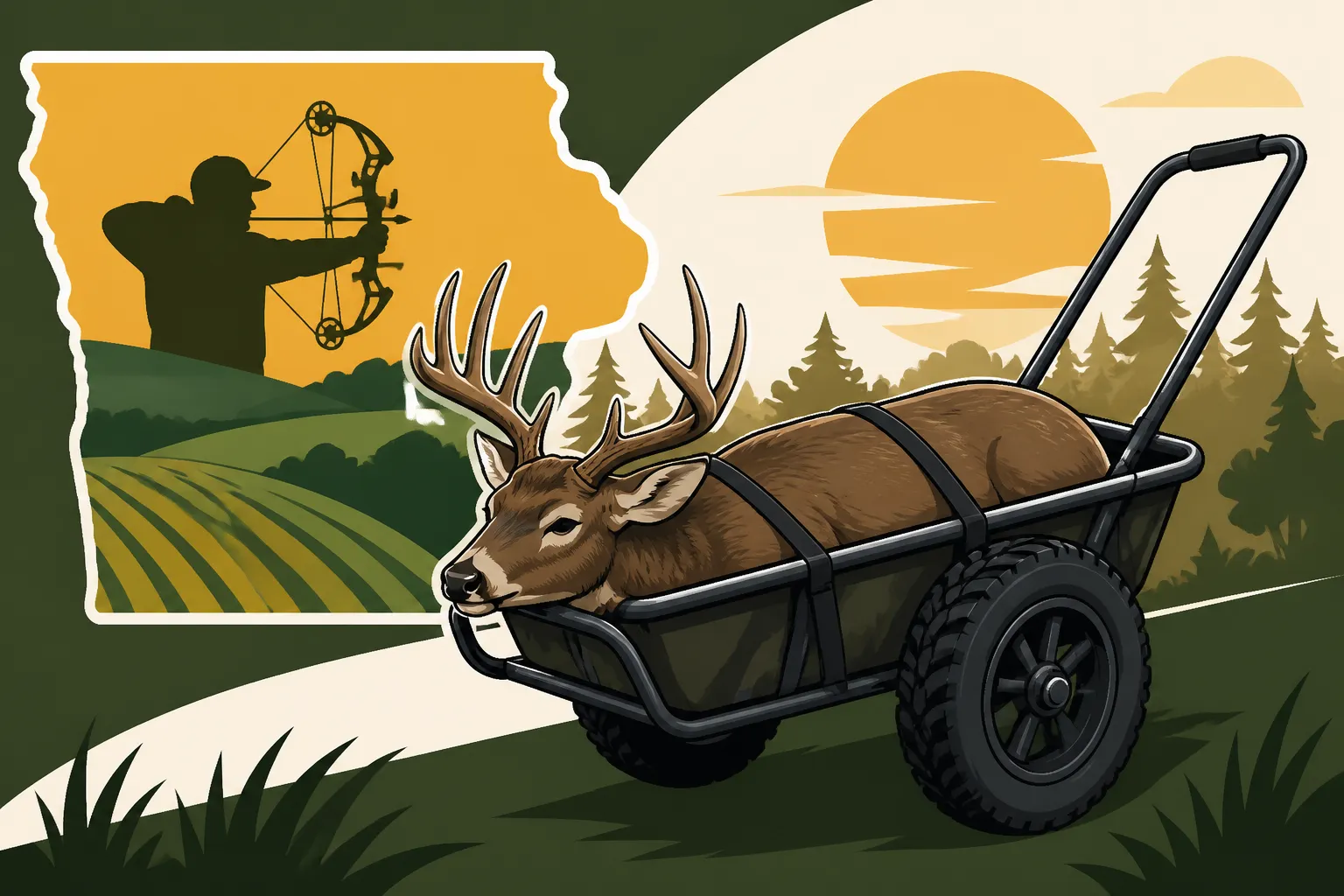
The classic two-wheeled deer cart is what most hunters picture, and for good reason. These carts are widely available, generally affordable, and incredibly versatile. They typically consist of a U-shaped frame, two large wheels, and a handle for pulling.
Pros:
- Stability: With two points of contact on the ground, they are inherently more stable than single-wheeled designs, making it easier to load and less prone to tipping over on uneven ground.
- Weight Distribution: They distribute the deer's weight over two wheels, reducing the rolling resistance compared to dragging.
- Versatility: Excellent for various terrains, from field edges and dirt roads to moderately rough timber. Many also double as gear haulers for treestands or blinds. Deer Carts on Iowa Walk-In Ground often refers to these types of carts as the most common choice.
Cons:
- Width: Their wider stance can sometimes be a hindrance in extremely dense brush or tight timber, especially if you're trying to sneak through thickets or narrow trails.
- Maneuverability: Turning in tight spaces can require a bit more effort than a single-wheeled cart, as you have to lift one side to pivot.
Two-wheeled carts are a fantastic all-around option for the average Iowa hunter. They are particularly effective when hunting over ground that transitions between fields and timber, or when your retrieve path includes ATV trails or gravel access roads. Many popular models are available at sporting goods stores, and a quick search on hunting review sites or forums like those frequented by GoHunt users will show countless examples and recommendations.
Single-Wheeled Carts and Game Carriers for Specialized Needs
While less common, single-wheeled carts, often referred to as game carriers or wheelbarrows, have their place, especially in highly specific scenarios. These are designed more like an oversized wheelbarrow, with a central wheel and two handles.
Pros:
- Maneuverability in Tight Spaces: Their narrow profile allows them to navigate very dense brush, thick timber, or narrow game trails where a wider two-wheeled cart might get stuck. If you're frequently hunting areas like cedar and locust thickets as bedding cover, this could be a major advantage.
- Agility: Easier to pivot and turn on a dime, which can be useful when working around obstacles.
Cons:
- Balance: Requires more effort to balance the load, especially on uneven terrain or sidehills. You're essentially bearing some of the deer's weight to keep it upright.
- Stability During Loading: Can be challenging to load a heavy deer onto without it tipping, often requiring a second person or careful propping.
Single-wheeled carts are niche but invaluable for hunters who consistently face extremely challenging, narrow terrain. If your typical recovery route involves navigating through incredibly thick multiflora rose patches or dense standing timber where you're squeezing through tight gaps, this type of cart might save you a lot of grief. They demand more physical input from the hunter to maintain balance but reward that effort with unparalleled maneuverability.
Heavy-Duty, Off-Road Carts for Extreme Conditions
For the hunter who regularly ventures into truly rugged, remote areas of Iowa – think deep river breaks, extremely muddy bottomlands, or areas with significant elevation changes – a heavy-duty, off-road cart might be the best investment. These carts often feature reinforced frames, oversized wheels with aggressive treads, and sometimes even suspension systems.
Pros:
- Durability: Built like tanks to withstand the harshest conditions and heaviest loads.
- Performance in Extreme Terrain: Designed to handle deep mud, large rocks, fallen trees, and steep inclines with greater ease than standard carts.
- High Weight Capacity: Can typically handle the largest Iowa bucks and sometimes even multiple smaller animals or extensive gear.
Cons:
- Weight: They tend to be much heavier than other carts, which can be a disadvantage when getting them to and from the hunting area, especially if you have to carry them any distance.
- Cost: Generally the most expensive option due to their robust construction and specialized features.
- Bulk: Their size can make them more difficult to store or transport in smaller vehicles.
These carts are for the serious trophy hunter or the individual who consistently hunts the most inaccessible spots. They represent a significant investment but can pay dividends in reducing effort and ensuring a successful recovery in places where other carts would simply give up. If you spend significant time hunting Scouting Iowa Timber and River Bottoms and expect to recover deer from challenging topography, this category is worth exploring.
Here's a quick comparison of the common deer cart types:
| Cart Type | Best Terrain | Key Feature Highlight | Pros | Cons |
|---|---|---|---|---|
| Two-Wheeled | Mixed terrain, field edges, moderate timber | Versatile, stable | Stable, good weight distribution, widely available, often foldable | Can be wide for dense brush, less agile than single-wheeled |
| Single-Wheeled | Dense brush, narrow trails, thick timber | Maneuverability | Excellent for tight spaces, highly agile, easier to pivot | Requires more balance, less stable during loading or on sidehills |
| Heavy-Duty/Off-Road | Extreme mud, rocks, steep inclines, rough river bottoms | Reinforced, oversized wheels | Highly durable, superior performance in rugged conditions, high capacity | Heavy, bulky, more expensive, can be harder to transport/store |
Tips for Maximizing Your Deer Cart's Effectiveness
Owning a great deer cart is one thing; using it effectively is another. A few practical tips can make a huge difference in how much effort you expend and how smoothly your recovery goes, ensuring you get that deer out of the woods efficiently and safely.
Load Management and Balance
Properly loading your deer onto the cart is crucial. Always try to center the deer's weight over the axle. If the weight is too far forward, it will press down on the handles, putting excessive strain on your arms. If it's too far back, the front of the cart will tend to lift, making it unstable and hard to control. For a typical two-wheeled cart, placing the deer with its head and shoulders just forward of the axle usually provides the best balance.
Use plenty of straps or a strong cargo net to secure the deer firmly to the frame. You don't want any shifting, especially when navigating uneven terrain or going up and down hills. If your cart doesn't come with enough tie-down points, consider adding a few heavy-duty zip ties or small bungee cords to create extra attachment spots. The more secure the load, the less you'll have to stop and readjust, which is a major time and energy saver. This becomes even more critical when hauling gear in for a long sit, where you might be using your cart to bring in a Stand Weight for a Long Walk In.
Navigating Challenging Obstacles
Even with the best cart, you'll encounter obstacles. When facing fallen logs, rocks, or steep embankments, approach them strategically. Instead of trying to brute-force your way over, try to lift and roll the wheels over the obstacle one at a time. If it's a very large obstacle, you might need to temporarily lift the deer off the cart, move the empty cart over, and then reload.
Mud is another common challenge in Iowa. If the mud is particularly deep, try to keep the wheels moving forward rather than letting them sink and spin. Sometimes, pulling from the side or having a buddy push can provide the extra momentum needed. For extremely soft ground, like a newly tilled field edge or a boggy creek bank, you might need to temporarily resort to dragging the deer off the cart for a short distance to get to firmer ground. Always assess the path ahead and pick the route of least resistance; sometimes taking a slightly longer path around an obstacle is less effort than trying to go straight through it.
Maintenance and Pre-Hunt Checks
Like any piece of hunting gear, a deer cart will perform best with a little TLC. Before each hunting season, and ideally before each major hunt, give your cart a quick once-over.
- Tires: Check the air pressure in pneumatic tires. Under-inflated tires are prone to flats and make hauling much harder. Carry a small hand pump or CO2 inflator with you, especially if you're venturing deep into public ground.
- Fasteners: Inspect all bolts, nuts, and pins to ensure they are tight and secure. Vibrations from rough terrain can loosen things over time.
- Frame: Look for any cracks or bends in the frame, especially around welds and folding joints. Address these issues before they become catastrophic failures.
- Straps/Harness: Check for fraying, cuts, or worn buckles on any integrated straps or your pulling harness. Replace anything that looks questionable.
A well-maintained cart is a reliable cart. You don't want to be miles from the truck with a broken cart and a deer on the ground. A quick check before you head out can prevent a massive headache. Remember, the goal is to make the recovery easier, not to add more problems.
Final Thoughts on Investing in a Deer Cart
For many Iowa hunters, a deer cart isn't a luxury; it's a necessity, especially if you're regularly harvesting mature animals or venturing beyond the closest field edge. While the initial cost might seem like an investment, consider the long-term benefits: less physical strain, faster recoveries, better meat quality due to quicker cooling, and the ability to access more remote, less-pressured hunting areas. From exploring Public Land Deer Hunting in Iowa to targeting specific food sources for Late-Season Food Source Hunting in Iowa, a reliable deer cart broadens your hunting opportunities.
There's a wide range of options out there, from basic models to heavy-duty, expedition-grade haulers. Take the time to research, read reviews (GoHunt is a great resource for hunter feedback), and consider your typical hunting conditions. Think about the terrain you most frequently encounter, the average size of the deer you pursue, and how far you usually have to transport them. With the right deer cart, that moment of success in the field will remain pure joy, unmarred by the dread of a brutal, back-breaking drag.
Disclaimer
This article is for general informational purposes only and does not constitute professional advice. Laws, prices and regulations vary by location and change over time. Consult a qualified professional for guidance on your specific situation.