Run-and-Gun Turkey Tactics on Iowa Public Land
There's nothing quite like the sound of a spring gobbler hammering back at your call, especially when you're working public land in Iowa. But let's be honest, those big, vocal birds don't always cooperate and march straight into your setup. Many hunters find themselves stuck in one spot for hours, hoping a tom will eventually show up, only to leave frustrated when the woods go silent. If you're tired of static setups and want to actively pursue those elusive Iowa longbeards, then embracing run-and-gun turkey tactics on public land is exactly what this guide aims to help you master.
Embracing the Run-and-Gun Mentality for Iowa Turkeys
The traditional image of turkey hunting often involves setting up a blind or sitting patiently against a tree, waiting for a tom to come to you. While that can certainly be effective in some situations, especially on private ground where bird patterns are predictable, public land in Iowa often presents a different challenge. Pressure, diverse habitats, and wary birds demand a more proactive approach. That's where the run-and-gun strategy shines.
What Defines Run-and-Gun Turkey Hunting?
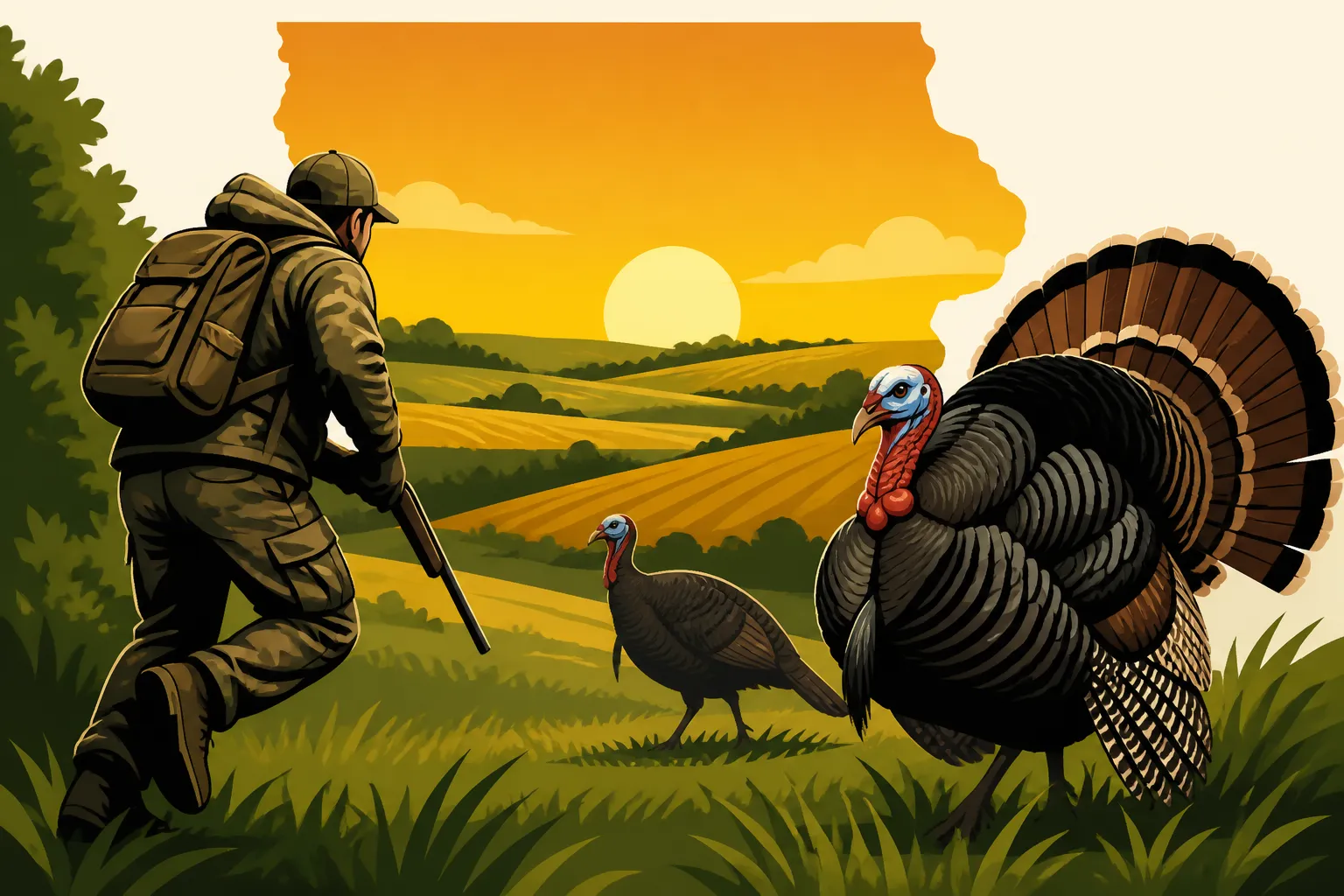
At its heart, run-and-gun turkey hunting is about being mobile, aggressive, and responsive to what the turkeys are telling you. Instead of committing to a single spot for an entire morning, you're constantly moving, calling, listening, and repositioning based on the birds' activity. You're covering ground, trying to locate active gobblers, and then quickly setting up to engage them. This means less waiting and more actively searching for opportunities. It's a method that truly embodies the spirit of an active hunter, rather than a passive observer. It's a fantastic way to experience the state's diverse turkey populations and improve your chances. If you're interested in learning more about the broader distribution of these birds, understanding Iowa Wild Turkeys Across the State can provide valuable context for where to apply these tactics.
Why Go Mobile on Iowa's Public Lands?
Public land in Iowa, while offering fantastic opportunities, also comes with its own set of challenges. One of the biggest is hunting pressure. Birds on public ground are often more educated and less tolerant of hunter presence. They're more likely to "hang up" out of range or circle a setup to get a visual before committing. A static setup often gives them too much time to figure things out. With a run-and-gun approach, you're disrupting their routine, catching them off guard, and presenting new scenarios. You're not waiting for them to come to your ideal spot; you're taking the fight to them. This active method is also incredibly rewarding when you finally close the distance on a bird that's been playing hard to get.
Common Frustrations and How Run-and-Gun Addresses Them
Let's face it, we've all been there: sitting quietly, meticulously camouflaged, only to hear gobblers sounding off a quarter-mile away, seemingly moving further with every call. Or perhaps you've had a tom gobble relentlessly from a ridge, but no matter what you do, he won't commit to coming closer. These "hung-up" gobblers are a classic frustration, and static hunting often leaves you powerless. Run-and-gun tactics directly confront these issues. If a bird is far off, you pick up and move closer. If a bird is hung up, you try to flank him, get to a new position, or even try a "decoy and retreat" strategy to make him think hens are leaving him. This active problem-solving is what makes the run-and-gun so effective and, frankly, so much more engaging. It keeps you in the hunt, making adjustments, rather than just hoping for a lucky break.
Pre-Season Reconnaissance for the Mobile Hunter
While run-and-gun implies a lot of in-the-moment decision-making, it doesn't mean you should just wander aimlessly. Effective mobile hunting actually starts long before opening day with thorough pre-season scouting. Knowing the general lay of the land, potential roosting areas, and travel corridors will give you a significant advantage, even when you're moving fast.
Mastering E-Scouting with Modern Tools
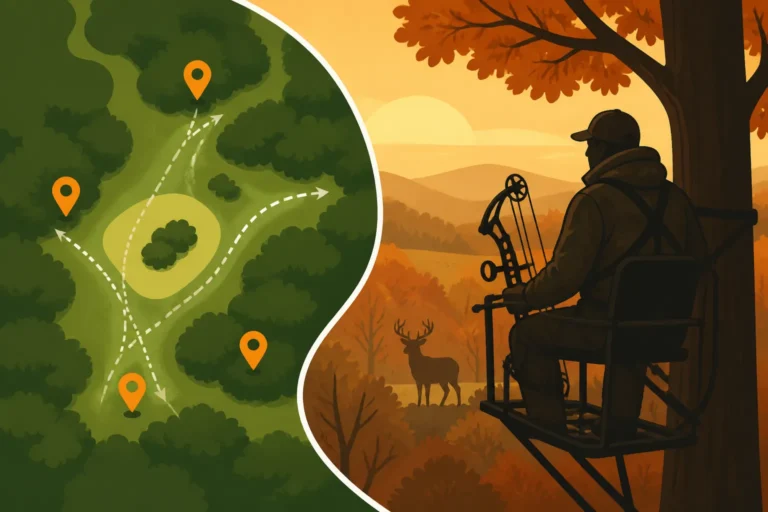
Before you ever step foot in the timber, your greatest asset is often a mapping application. Tools like GoHunt, OnX Hunt, or BaseMap allow you to literally "walk" the property from your couch. Look for distinct features: areas where timber meets open fields, creek bottoms, ridge lines, and potential food sources like standing corn or oak flats. These are all prime areas for turkeys. Pay close attention to subtle terrain changes, benches on hillsides, or pinch points in the cover—these often act as natural travel routes. Identifying these features helps you formulate a game plan for how you'll move through an area and where you might encounter birds. It's a critical first step, allowing you to narrow down vast tracts of public land into manageable, high-potential areas. For a more in-depth approach to digital scouting, check out our guide on E-Scouting Iowa Farm Country From Home.
Boots-on-the-Ground: Confirming Your Digital Hunches
E-scouting is fantastic, but nothing beats actual field reconnaissance. A good "boots-on-the-ground" scouting trip, preferably before the leaves fully pop, allows you to verify what you saw on the map. Walk those creek bottoms, check for old sign like droppings, tracks, and feather dusts from dusting bowls. Look for roosting trees – often the tallest trees near water or on a ridge line. These trips are invaluable for understanding the flow of the land, identifying natural obstacles you might encounter, and confirming potential setup locations. You'll get a feel for the accessibility of the area, understand the ground noise, and find those subtle features that don't always show up clearly on a map. This physical scouting helps you build a mental map that will serve you well when you're moving quickly on opening day. When scouting public lands, it's always good to revisit our tips on Scouting Iowa Public Land Before the Opener.
Locating Key Turkey Hotspots
During your scouting, whether digital or physical, focus on finding areas that offer a combination of resources turkeys need: food, water, roosting cover, and breeding grounds. Ridge tops with mature timber are often prime roosting spots. Creek bottoms provide water and travel corridors. Field edges, especially those bordering timber, offer feeding opportunities. Don't overlook areas with dense undergrowth or cedar thickets that provide security cover. By identifying these composite hotspots, you're not just looking for a single tree to sit under; you're looking for an area where turkeys are likely to be throughout the day. This intelligence allows you to develop a route that hits several high-potential locations, increasing your chances of running into a hot gobbler. When you're trying to figure out where those big birds might be bedding or feeding, understanding how to apply techniques like Reading Aerial Imagery for Bedding Cover can be a game-changer.
Essential Gear for the Agile Turkey Hunter
The beauty of run-and-gun is its simplicity. You're not hauling a blind, heavy chairs, or a ton of decoys. Your gear needs to be lightweight, efficient, and allow for quick, quiet movement. Every item in your vest should serve a purpose.
Packing Light: The Bare Necessities
When you're constantly moving, every ounce counts. Your turkey vest or small pack should contain only what's essential. Think lightweight calls, a compact decoy (or none at all), water, a headlamp, your license and tags, a small first-aid kit, and perhaps a snack. Avoid bulky clothing; layer up for warmth if needed, but prioritize quiet fabrics that won't snag on brush. A comfortable, supportive vest is key, as you'll be wearing it all day. Remember, the goal is to be nimble enough to pick up and move at a moment's notice without feeling burdened.
| Item Type | Essential Gear | Optional/Situation-Specific Gear |
|---|---|---|
| Calls | Diaphragm calls (2-3 styles), Box call, Pot call | Locator calls (owl hooter, crow call) |
| Decoys | Foldable hen decoy (single), Fan/strutter decoy | None (for ultimate minimalism) |
| Navigation | Phone with GPS app (GoHunt, OnX), External battery | Handheld GPS |
| Safety | First-aid kit, Headlamp, Blaze orange vest (when moving between setups) | |
| Comfort/Food | Water bottle/hydration pack, Light snacks, Bug spray | Small ground pad, Rain gear |
| Essentials | License/tags, Pen, Knife, Gloves, Face mask/net, Shells | Rangefinder, Small binoculars |
Calls and Decoys for Dynamic Situations
Your calling strategy will be dynamic, so your calls should be versatile. A good diaphragm call (or several with different cuts) is crucial for hands-free calling while moving or aiming. A small, lightweight pot call can add variety, and a compact box call offers loud, realistic sounds. Locator calls (owl hooter, crow call) are vital for getting those initial shock gobblers to reveal their position without alerting them to your presence as a turkey.
When it comes to decoys, less is often more. A single, foldable hen decoy is usually sufficient. Sometimes, even a fan or a strutter decoy can be used in specific, aggressive scenarios, but remember the safety implications, especially on public land. The idea is to quickly deploy a visual aid if a bird hangs up, not to commit to a elaborate spread.
Safety and Comfort in the Field
Being mobile on public land means you'll be covering more ground and potentially encountering other hunters. Safety is paramount. Always wear blaze orange when moving between setups, even if it's not legally required for turkey hunting in Iowa. Once you pick a setup spot, shed the orange. Carry a small first-aid kit for minor cuts or scrapes. Comfort is also key; well-broken-in boots, breathable camo, and a lightweight seat cushion will make those long hikes and quick setups much more bearable. Don't forget bug spray, especially in early season. Ultimately, you're responsible for your own safety and the safety of those around you, so always be aware of your surroundings and any potential risks. Public land turkey hunting requires a heightened sense of awareness, so consider revisiting some common sense practices like Public Land Turkey Safety to ensure a smooth hunt.
Dynamic Calling Strategies for Public Land Toms
The run-and-gun method demands a versatile and adaptive calling strategy. You can't just stick to one sequence; you need to be able to read the bird, the terrain, and the hunting pressure, and adjust your calls accordingly.
Aggressive Locator Calling to Incite a Response
When you're on the move, your first goal is to locate a gobbler. This is where aggressive locator calling comes in. Use loud crow calls, owl hoots, or even hawk calls to try and elicit a shock gobble. You're not trying to sound like a hen yet; you're just trying to get a turkey to reveal his location. Once you get a response, pinpoint his general direction and distance. Then, you'll close the gap, moving quickly and quietly to get within a reasonable calling range (usually 100-200 yards, depending on terrain and cover). Don't be afraid to be loud with your locator calls, especially in windy conditions or large timber blocks. It's the "cast and reel" part of the hunt. Understanding Gobbling Activity Through the Spring can help you time these aggressive calls to when birds are most responsive.
Adapting Your Calling to the Situation
Once you've located a bird and closed the distance, your calling strategy shifts from aggressive locating to subtle enticing. Start with soft hen yelps, clucks, and purrs. Listen intently to his responses. Is he gobbling hard and cutting you off? He might be coming. Is he gobbling softer, perhaps moving away? You might need to adjust your position or increase your call volume slightly. If he's "henned up," meaning he's with real hens, it can be incredibly challenging. In these situations, subtle, infrequent calling or even a "challenge" call like a lost yelp might pique his interest enough to pull him away. Sometimes, going silent for a period can make him curious enough to come looking. There's no single magic call; it's about listening and reacting. Trying to pull a tom off the roost is an art in itself, and some of the tactics for Calling a Gobbler Off the Roost might involve a more aggressive approach than later in the day.
The Art of Patience and Silent Observation
While "run-and-gun" emphasizes movement, patience is still a crucial component. After you make a series of calls and get a response, resist the urge to immediately call again. Wait. Listen. Often, a gobbler will come in silently, or you'll hear his drumming before he gobbles again. Set up quickly, get still, and be ready. If you don't hear anything after 10-15 minutes, then consider moving to a new position. Sometimes, the most effective call is no call at all. Just being in the right place, silent and still, can be enough to pull a curious tom into range, especially on pressured public land where they've heard it all before. This blend of aggressive movement and patient observation is what makes the run-and-gun strategy so deadly. Don't overlook the challenge of Working a Henned-Up Tom Midday, which often requires a more patient, finessed approach.
Executing Your Run-and-Gun Plan in the Field
With your scouting done and your gear packed light, it's time to put the plan into action. This phase is all about efficient movement, quick decision-making, and adapting to the always-changing behavior of wild turkeys.
Strategic Movement and Setting Up Quickly
The key to successful run-and-gun is efficient movement. Don't just charge through the woods. Move deliberately and quietly from one potential listening post to the next. Use terrain features like ridge lines, creek beds, or dense cover to conceal your movement. Stop frequently to call and listen. Once you get a response and decide to move in, do so with purpose, but still prioritize stealth. Your goal is to get into a good setup location—a tree that breaks up your outline, offers a clear shooting lane, and allows you to call effectively—as quickly and quietly as possible. Fumbling with calls or your gun while a gobbler is approaching is a recipe for disaster. Being ready to Setting Up Before Fly-Down can give you an edge at the start of the day, dictating the first moves.
Dealing with Hung-Up Gobblers
This is perhaps the most common frustration in public land turkey hunting, and where run-and-gun truly shines. A gobbler hammering away at 80 yards, just out of range, refusing to come closer. What do you do?
- Read the Terrain: Is there an obstacle? A fence? Thick brush? Maybe he can't see over a rise.
- Reposition: If safe and possible, try to flank him. Circle around, staying out of sight, and get to a new setup spot that offers a better angle or less obstruction. This can often be enough to make him curious.
- Aggressive Decoy Play: If you're confident in your safety and the situation allows, sometimes a quick fan or strutter decoy presentation can seal the deal. Hold it up, get his attention, then drop it and get ready to shoot as he closes the distance. Be extremely cautious with this on public land due to other hunters.
- The "Leaving" Strategy: This is a classic. If he's hung up, give him some soft calls and then slowly, quietly, walk away from your setup, maybe 20-30 yards. Continue with very soft, infrequent calls as if a hen is leaving. This can often make a hung-up tom panic and come rushing in. He doesn't want to lose a potential hen.
The point is, don't just sit there. Take action. The beauty of run-and-gun is that you always have options.
The Post-Shot Process: Recovery and Tagging
Let's assume your run-and-gun efforts pay off and you make a good shot. What's next? First, if the bird is flopping, give it a moment. Turkeys can be surprisingly tough. Approach cautiously, gun ready. Once you're certain the bird is dispatched, admire your trophy! Take a moment to appreciate the culmination of your efforts.
The next critical step is legally tagging your bird. In Iowa, you must immediately validate your license and attach the tag to the turkey's leg. Always review the latest regulations for specific tagging and harvest reporting requirements, as these can change. Once tagged, ensure your bird is properly visible and secure for transport. If you're deep in the woods, consider how you'll carry it out. A game vest with a large bag or even a simple rope can help. It’s always good practice to double-check the rules around Iowa Deer Tagging Requirements and other species to ensure full compliance.
Navigating Public Land Challenges with Run-and-Gun
Hunting public land is a privilege, and it comes with responsibilities, especially when employing a mobile hunting style. The run-and-gun approach can be incredibly effective, but it requires an extra layer of awareness and respect for fellow hunters and the resource.
Minimizing Hunting Pressure and Interferences
Iowa public lands can see significant hunting pressure, particularly during the early spring turkey seasons. This pressure can make birds wary and move them into harder-to-reach areas. The run-and-gun method can actually help mitigate some of this. By covering more ground, you're less likely to be stuck in a high-traffic area. If you encounter another hunter in your chosen area, be courteous and give them a wide berth. Sometimes, even if you don't hear a gobbler, moving to a less-pressured section of the property can put you on birds that other hunters have overlooked or pushed around. Using your E-scouting maps to identify harder-to-access pockets can be key to finding unpressured birds. Learn more about how human activity affects game by reading `Hunting Pressure Patterns on Iowa Public Land]().
Ethical Considerations and Respectful Hunting
Being a mobile hunter on public land means you'll likely encounter other hunters. Always practice the highest ethical standards. This includes:
- Clear Identification: Wear blaze orange when moving between setups to be visible to others, then remove it when stationary.
- Acknowledge and Avoid: If you hear another hunter calling or see their vehicle, try to work another area. Don't try to move in on a bird they're working.
- Leave No Trace: Pack out everything you pack in. Don't leave trash, spent shells, or flagging tape. Respect the land and leave it better than you found it.
- Shot Placement: Only take ethical shots within your effective range to ensure a clean kill.
Your actions reflect on all hunters, so make sure they're always positive and respectful.
Maximizing Your Chances on High-Pressure Ground
So, what do you do when the whole world seems to be on the same piece of public land?
- Hunt Midday: Many hunters give up by late morning. Turkeys, however, are often active all day. The midday lull can be a prime time for a run-and-gun hunter to find unpressured birds.
- Go Deeper: Identify areas on your map that require a longer walk or have challenging terrain. Most hunters won't venture far from the road. The deeper you go, the less pressure you'll likely encounter. The GoHunt app can be excellent for identifying these overlooked spots.
- Adapt to Pressure: Turkeys on pressured land will often go silent or become "call shy." Use softer, more infrequent calls. Try fanning without calling to draw out a curious gobbler. Sometimes, the silent approach is best.
- Embrace the Unexpected: High-pressure can push birds into unusual spots. Don't be afraid to check out smaller, overlooked pockets of timber or brush that might offer security for wary birds.
The run-and-gun strategy, combined with thorough scouting and a respectful, adaptable mindset, will dramatically increase your odds of success on Iowa's challenging yet rewarding public lands. Always remember that the state offers some fantastic opportunities; for more general information, take a look at our comprehensive guide on Public Hunting Land in Iowa.
Disclaimer
Hunting is an inherently risky activity. Always prioritize safety, follow all local, state, and federal regulations, and obtain proper licenses and permits. The information provided in this guide is for informational purposes only and should not be considered a substitute for professional instruction or official hunting regulations. Familiarize yourself with Iowa DNR regulations before heading afield.