Hunting Inside Corners of Crop Fields
For many Iowa deer hunters, the vastness of our agricultural landscapes can feel overwhelming when you're trying to pinpoint where that trophy buck might be traveling. Deer are incredibly efficient creatures, always looking for the path of least resistance and maximum security, but figuring out their preferred route through miles of corn or bean fields is a constant puzzle. This guide is all about demystifying one of the most consistent and often overlooked hotspots: the inside corner of a crop field. We'll break down exactly why these specific spots are deer magnets and how you can effectively scout and hunt them to your advantage.
Understanding Why Inside Corners Are Deer Magnets
Deer, especially mature bucks, are masters of efficiency and security. They avoid open areas when possible and gravitate towards cover, using it to conceal their movements, especially during daylight hours. Inside corners of crop fields become natural highways and staging areas precisely because they offer this dual benefit of travel efficiency and a sense of security that deer crave.
The Natural Funnel Effect
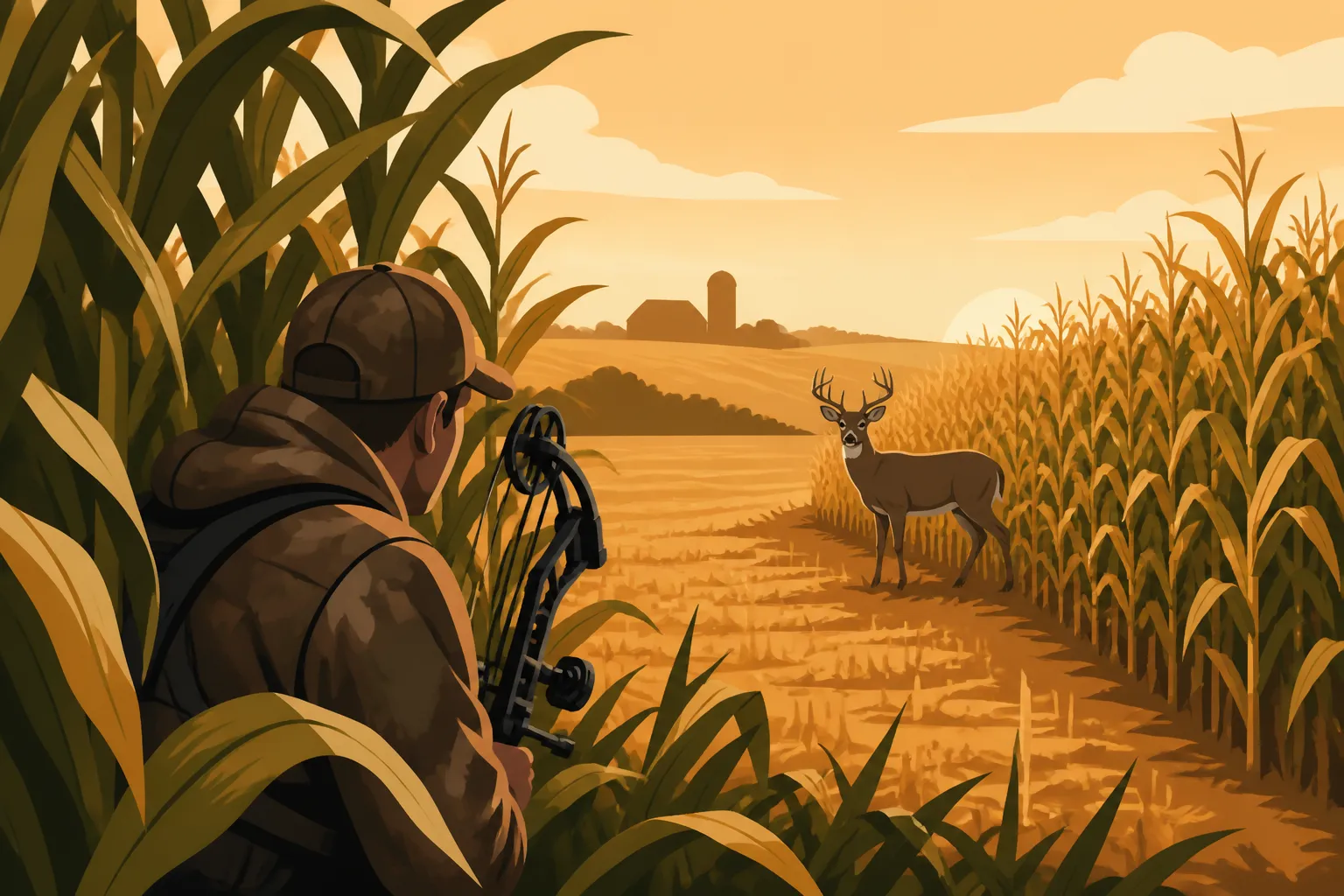
Imagine a large rectangular crop field bordered on two or three sides by timber, a thick creek bottom, or even dense CRP grass. Where these two distinct cover lines meet the crop field, forming an "L" shape, you've got an inside corner. Deer moving along one edge of the timber, wanting to shift to the other timber line, will naturally cut across that inside corner. It's the path of least resistance, minimizing their exposure to the open field while still allowing them to travel. They don't want to walk further into the timber only to turn, and they certainly don't want to walk out into the wide-open field. This corner becomes a natural pinch point, funneling deer movement through a predictable area, often just inside the timber line or right along the very edge of the standing crop. It's like a doorway between two rooms, and deer will always use the doorway.
Enhanced Security and Staging Areas
Beyond just being a travel corridor, inside corners offer an increased sense of security. A deer moving along a straight timber edge only has cover on one side. At an inside corner, they have cover on two sides, plus the visual break of the crop field itself. This makes them feel safer, especially if they are staging before entering the field to feed in the evening. They can peek out into the field, assess the situation, and take their sweet time without feeling fully exposed. Often, you’ll find bucks scent-checking the wind, rubbing small trees, or even making scrapes just inside these corners as they wait for dusk or for does to appear. This staging behavior is a golden opportunity for hunters, as deer are often moving slower and more deliberately in these spots, making for better shot opportunities. Think of it as a waiting room where deer feel comfortable pausing before their main event, which is hitting the food source.
Scouting and Pinpointing the Perfect Corner
Finding a good inside corner isn't just about spotting an "L" on a map. It's about detailed research and boots-on-the-ground confirmation to identify the best corners that deer are consistently using. This combination of e-scouting and physical scouting is absolutely crucial.
E-Scouting with Aerial Maps and Digital Tools
Before you even step foot in the woods, spend some serious time with aerial imagery. Platforms like GoHunt, or other popular mapping apps, are invaluable for this. Look for crop fields that have significant timber, thickets, or substantial CRP (Conservation Reserve Program) fields bordering them. Pay close attention to where these cover types form an acute angle or corner with the crop field.
What else should you look for?
- Connecting Corridors: Does the corner connect two larger blocks of timber or a timber block to a thick river bottom? These are super high-traffic zones.
- Water Sources: Is there a small pond, creek, or ditch nearby? Deer will often hit water before or after feeding.
- Elevation Changes: Even subtle changes can dictate deer movement, especially relating to thermal currents, which are important when considering Wind and Thermals in River Breaks. A slight ridge or dip might funnel deer even more tightly.
- Field Access Points: Are there old logging roads, cattle trails, or even faint deer trails leading directly into or out of the corner? These are indicators of heavy use.
When using your e-scouting tools, identify several potential corners and mark them as waypoints. This gives you a clear plan for your physical scouting trip.
Boots-on-the-Ground Confirmation
Once you've identified promising locations from your armchair scouting, it's time to hit the field. This is where you verify your hunches and find the hard evidence of deer activity. Focus your efforts on the specific inside corners you've marked.
Look for:
- Tracks: Fresh deer tracks leading into and out of the corner, especially heavily worn trails. This is your primary indicator.
- Rubs and Scrapes: Bucks will often rub saplings and create scrapes in these staging areas. Finding fresh rubs (shiny wood, torn bark) or active scrapes (freshly pawed earth, overhead licking branch) is like hitting the jackpot. These tell you a buck is not just passing through, but spending time there. For more on reading sign, check out Reading an Iowa Timber Draw for Deer Sign.
- Droppings: Piles of fresh deer droppings indicate recent activity and feeding patterns. The more you find, the more frequently deer are using that spot.
- Bedding Areas: Can you identify any thick bedding cover adjacent to the corner? Deer will often bed very close to their preferred entry/exit points to feeding areas. Thick cedar thickets, multiflora rose, or dense CRP Grass and Where Bucks Bed often serve this purpose.
Remember to scout smart. Approach these areas from downwind and try not to contaminate the area with your scent. Early morning or midday, when deer are likely bedded elsewhere, are ideal times for scouting.
Setting Up for Success: Stand Placement and Strategy
Once you've identified a hot inside corner through meticulous scouting, the next critical step is choosing the right stand location and having a solid strategy for your hunt. This isn't just about getting high in a tree; it's about being invisible, scent-free, and positioned for the perfect shot.
Treestand Versus Ground Blind Placement
Both treestands and ground blinds can be effective for hunting inside corners, but each has its pros and cons depending on the specific situation and your personal hunting style.
-
Treestands: A treestand offers an elevated vantage point, which significantly helps with scent control by carrying your scent over the deer's nose, especially crucial in Iowa's relatively flat terrain. It also provides a better view over brush and standing crops, offering more shooting lanes. When placing a treestand, look for a mature tree slightly back inside the timber or cover line, perhaps 10-20 yards from the actual corner. This provides a better backdrop for concealment and allows you to catch deer as they filter into the corner or move parallel to the field edge. Aim for a height that gives you good shooting angles into the corner and along the field edge. Consider a mobile setup, perhaps even Saddle Hunting on Iowa Public Land, if you anticipate needing to move often with changing deer patterns or wind shifts. However, finding the right tree with good cover and clear shooting lanes isn't always easy.
-
Ground Blinds: Ground blinds offer excellent concealment, especially if brushed in properly. They're also warmer in cold weather and provide a steady rest for your weapon, which can be great for youth hunters or those with physical limitations. For an inside corner, place your ground blind slightly back into the cover, facing the corner. Ensure you have ample natural brush and foliage to break up its outline. You want it to look like a natural part of the landscape. They can be particularly effective when you can't find a suitable treestand tree or when hunting spots adjacent to CRP or thick brush where elevation isn't possible. However, scent control is much harder from a ground blind, as your scent cone is closer to the ground, and visibility can be limited. For tips on minimizing movement, read Hunting From a Blind Without Movement.
Here's a quick comparison:
| Feature | Treestand | Ground Blind |
|---|---|---|
| Concealment | Elevated, uses tree as backdrop | Full enclosure, needs brushing-in |
| Scent Control | Elevated, scent disperses higher | Lower to ground, scent management critical |
| Visibility | Good, over brush & crops | Limited by windows, brush |
| Mobility | Can be mobile with climbers/saddles | Less mobile, often set up for longer periods |
| Ease of Setup | Requires suitable tree, climbing skill | Can be set almost anywhere with cover |
| Weather | Exposed to elements | Offers shelter from wind/rain/cold |
Wind Direction and Scent Control are Paramount
This cannot be stressed enough: Always hunt with the wind in your favor. Deer rely heavily on their sense of smell, and hunting an inside corner with the wind blowing your scent directly into the anticipated deer approach will guarantee a busted hunt. Use a wind checker frequently. For morning hunts, consider what the thermals are doing – often rising air currents can carry your scent upwards, making treestands even more effective. For evening hunts, falling thermals can drag your scent down into the creek bottoms or field edges.
Your entry and exit routes are also critically important. Plan your approach to avoid walking through bedding areas or directly across fresh deer trails. Using a creek bed, a ditch line, or the very edge of a picked field that deer aren't likely to use can be an effective way to get to and from your stand without alerting deer. Check out Access Routes That Do Not Bump Deer for more detailed strategies on this. Always park your vehicle well away from your stand location, especially if you're on public land or a frequently used farm access road.
Effective Hunting Tactics for Inside Corners
You've done your homework, found the spot, and set your stand. Now comes the exciting part: the hunt itself. Maximizing your chances at an inside corner means understanding deer movement patterns and knowing when and how to engage them.
Timing Your Hunt Just Right
Inside corners are generally most productive during prime deer movement times: early mornings and late afternoons/evenings.
- Morning Hunts: In the morning, deer are typically moving from feeding areas back to their bedding cover. An inside corner can be a great ambush point to catch a buck as he makes his way from the crop field, pausing to scent check or browse before disappearing into the timber. Set up well before legal light, using your planned Access Routes That Do Not Bump Deer to slip in undetected. Be prepared for a longer wait, as deer might linger in the fields until good light.
- Evening Hunts: This is often the more productive time for inside corners. Deer will move from their bedding areas towards the crop field to feed. They'll often stage in these corners for a while, waiting for optimal light, checking the wind, and assessing the field for danger. Setting up a few hours before dusk gives you time to settle in and allows the deer to begin their natural movement without being rushed.
During the rut, especially When the Iowa Rut Peaks in early to mid-November, these corners become even more active. Bucks are cruising more, scent-checking for does, and expanding their search patterns. This means daytime activity at these corners can increase dramatically. Don't be afraid to sit all day during the peak rut if you have a comfortable setup and the weather allows.
Calling and Decoying to Enhance Your Odds
While an inside corner is a natural funnel, you can sometimes enhance its attractiveness with calling and decoying tactics.
- Calling: Light grunt calls or doe bleats can be incredibly effective when you see a deer at a distance or need to draw one closer that's moving out of range. A subtle grunt might pique a buck's curiosity enough to bring him past your stand within shooting distance. During the pre-rut and rut, bucks are actively searching for does, so these sounds can be very enticing. For specific calls, look into Grunt Calls That Work in the Pre-Rut. If you spot a buck that seems to be ignoring your grunts, a sharp snort-wheeze can sometimes challenge a dominant buck and bring him in quickly, though this is a higher-risk play.
- Decoying: Deploying a deer decoy, especially a doe decoy, can be a game-changer on an inside corner setup. Place the decoy out in the field, perhaps 20-30 yards from the corner, quartering slightly away from your stand. This positioning often makes an approaching buck want to circle downwind to scent check the "doe," bringing him right into your shooting lane. Just make sure the wind is perfect for this strategy, as a buck circling downwind will also pick up your scent if you're not careful. Consider the pros and cons of Doe Decoys Versus Buck Decoys for your specific hunting scenario. Make sure your decoy setup is visible but still feels natural to an approaching deer.
Patience and Persistence Pay Off
Hunting an inside corner, like all deer hunting, requires immense patience. You might have several uneventful sits before the right deer shows up at the right time. Don't get discouraged. Stick with your chosen location, especially if your scouting revealed consistent sign. Deer are creatures of habit, and if they're using that corner, they will eventually come through when you're there. Make sure you're prepared for long sits, especially during colder weather. Having proper Cold Weather Stand Clothing and essential gear like a good headlamp for your walk out after dark will make your hunts more comfortable and effective.
The true beauty of hunting inside corners lies in their predictability. By understanding deer behavior, meticulous scouting, strategic setup, and patient execution, you can turn these agricultural landscape features into your most productive hunting spots in Iowa.
Disclaimer
Hunting is an inherently dangerous activity. Always prioritize safety by wearing a safety harness when in a treestand, handling firearms responsibly, and being aware of your surroundings. Consult the current Iowa DNR hunting regulations every year, as rules and seasons can change. This guide is for informational purposes only and does not replace official regulations or professional safety instruction.