Best Stand Locations in Rolling Timber
That familiar pang of frustration hits when you’re staring at a topo map, trying to decide where to hang a stand in rolling timber. It’s easy to get overwhelmed by all the ups and downs, the tangled draws, and the seemingly endless ridges. We’ve all been there, wondering if we're placing our bets on a deer highway or a barren wasteland. This guide is all about cutting through that confusion, helping you decipher the secrets of rolling timber to pinpoint those killer stand locations where Iowa whitetails feel safe enough to travel.
Deciphering the Lay of the Land: Ridges, Draws, and Saddles
Rolling timber isn't just a jumble of trees; it's a complex network of natural highways and hiding spots for deer. Learning to read the topography is like getting a secret map to where the deer are going to be. Forget just looking for tracks; you need to understand why they're there.
Ridge Top Travel Corridors
Think of ridges as the main arteries of a deer's world, especially in rolling timber country. Deer, much like us, often prefer the path of least resistance. Instead of constantly climbing and descending steep hills, they'll often cruise along the tops or just below the crests of ridges. These higher elevations also give them a vantage point to survey their surroundings, offering a sense of security.
When you're out Scouting Iowa Timber and River Bottoms, pay close attention to the contours of these ridges. Are there subtle breaks in elevation or benches along the side? These little nuances can become preferred travel lanes, especially when heading from bedding areas to food sources. For example, a long, winding ridge might have several faint trails running parallel to the top, where deer can move quickly and quietly through the woods. The key is finding where these main travel corridors bottleneck or intersect with other features. It's not just about the ridge itself, but how it connects different parts of the deer's world. Placing a stand overlooking one of these primary ridge-top trails, particularly where a secondary trail might join, can be incredibly effective, especially during the breeding season when bucks are constantly on the move.
The Importance of Draws and Funnels
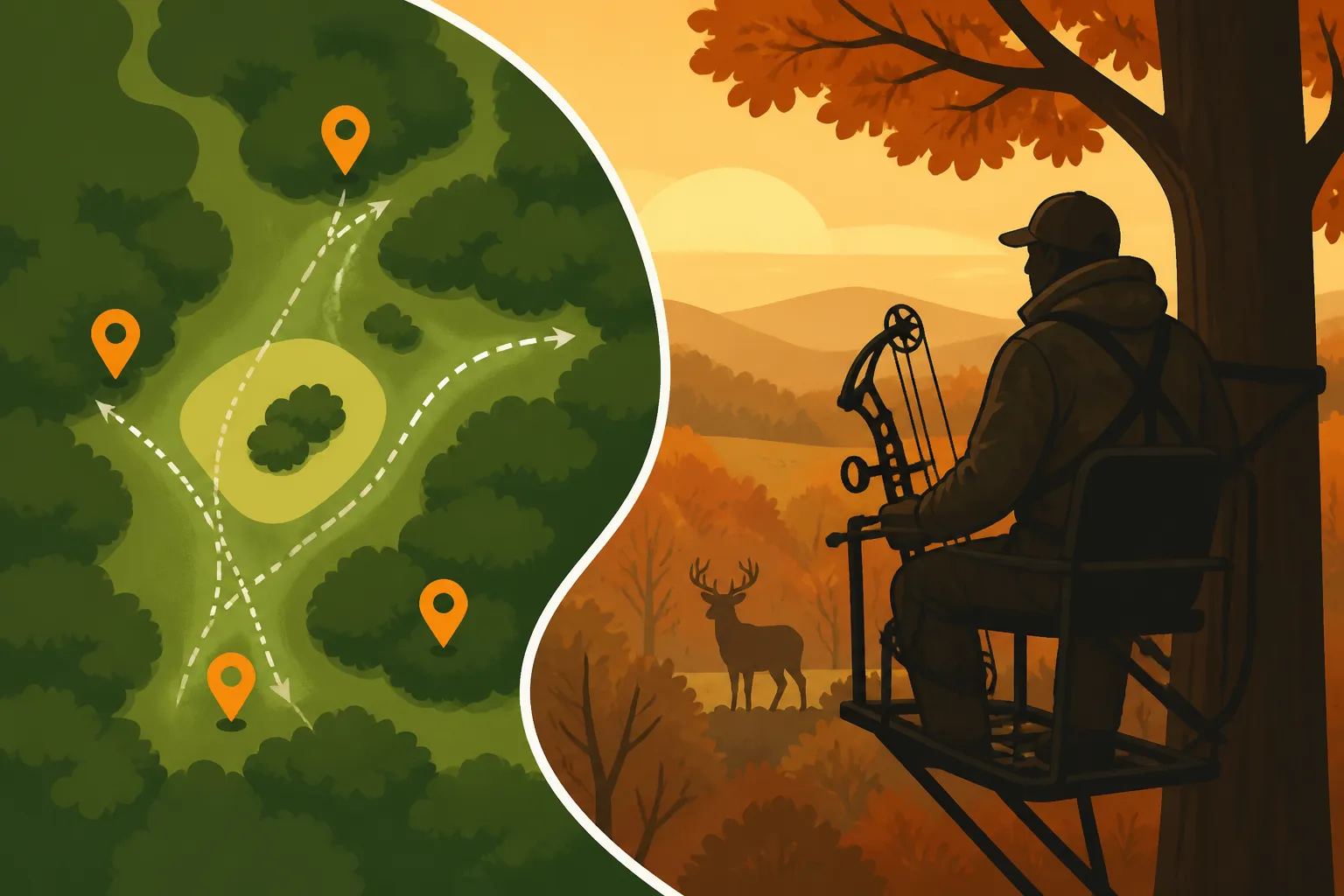
If ridges are the highways, then draws are often the hidden service roads and underpasses. A draw, essentially a small valley or depression in the terrain, can be an absolute magnet for deer movement. They offer concealment and protection from the wind, making them ideal for deer traveling between different areas without being exposed. In rolling timber, these draws often act as natural funnels, compressing deer movement into predictable pathways.
Picture a situation where two ridges run parallel, separated by a steep draw. Deer will frequently drop into the draw to cross from one ridge to the other, or to access a food plot tucked away in the bottomland. These low-lying areas are especially crucial during windy conditions or when deer are feeling pressured. You might find several faint trails converging into one dominant trail within a draw. That convergence point is gold. This is also where you might find more rub lines and scrapes, indicating that bucks are frequently using these sheltered routes. Identifying these funnels takes careful map study, perhaps using a tool like GoHunt to analyze elevation changes, and then confirming on the ground. A properly placed stand in a draw can offer close-range shots as deer move through, oblivious to your presence above. Pay attention to how the draws orient themselves relative to prevailing winds and food/bedding areas.
Finding Key Saddles and Benches Deer Cross Daily
Beyond ridges and draws, two other topographic features are absolute magnets for deer: saddles and benches. These are the subtle, yet critical, nuances that can make or break a stand location. A saddle is essentially a low point or dip along a ridge line, creating an easier path for deer to cross from one side to another without descending all the way into a valley and then climbing another ridge. Think of it as a natural bridge in the terrain.
Deer frequently use saddles, making them prime ambush points, especially during the rut when bucks are cruising for does. They offer both efficiency of travel and a degree of concealment. You can often identify a saddle by looking for a natural "hour-glass" shape on a topographic map or by noticing a slight dip in the tree line on the horizon. Similarly, benches are flat, shelf-like areas that interrupt a steep hillside. Deer love to bed on these benches, as they provide a commanding view of the terrain below while offering security above. They also serve as convenient travel routes along a hillside, rather than forcing deer to traverse steep, unstable ground. Learning how to identify Hunting Saddles and Pinch Points in Rolling Timber is a game-changer. Both saddles and benches concentrate deer movement, making them incredibly valuable for stand placement. Look for heavy sign like tracks, rubs, and droppings in these areas to confirm their use.
Reading the Whitetail Highway: Trails, Rubs, and Scrapes
Once you understand the lay of the land, it's time to read the actual signs left by the deer themselves. These "whitetail highways" – the trails, rubs, and scrapes – are essentially communication points and travel indicators that tell you exactly where deer are moving and what they're up to.
Interpreting Well-Worn Travel Routes
Deer trails are the most obvious signs of movement, but not all trails are created equal. In rolling timber, you'll find a mix of primary and secondary trails. Primary trails are like the interstate highways: well-defined, often deeply worn paths that indicate consistent, heavy usage. These typically connect major bedding areas to primary food sources or water. They're often found along ridge lines, in the bottoms of draws, or following Hunting a Narrow Creek Corridor through a timber block.
Secondary trails, on the other hand, are more like county roads – less distinct but still regularly used. These often branch off primary trails, leading to smaller pockets of browse, specific bedding thickets, or staging areas before deer move into open fields. When you're assessing a trail, look for fresh tracks, droppings, and signs of browsing. The direction of the tracks can tell you which way deer are frequently moving. Is it a bedding-to-food trail? A rut-cruising path? The fresher the sign, the more active the trail. While a primary trail might seem like the obvious choice, sometimes a stand on a secondary trail, especially one that leads to a staging area, can offer better shot opportunities as deer pause and mill around before committing to an open area. Remember, deer are creatures of habit, and these worn paths are their chosen routes.
Decoding Rub Lines and Scrape Locations
Rub lines and scrapes are more than just buck sign; they're direct indicators of buck presence and activity. Rubs are made when bucks rub their antlers on trees, leaving behind visible damage to the bark. A single rub might not mean much, but a series of rubs – a "rub line" – running in a consistent direction is a clear sign of a buck's travel route. These are often found along the edges of bedding areas, on ridge lines, or leading into food sources, indicating a buck's preferred path.
Scrapes are pawed-up spots on the ground where bucks urinate and rub their preorbital glands on an overhanging branch (the "licking branch"). These are communication hubs, telling other deer in the area who's around and what their status is. During the pre-rut and When the Iowa Rut Peaks, scrapes become highly active, especially community scrapes where multiple deer contribute. Look for rubs and scrapes on benches, in draws, or at key intersections of trails. When you find an area with multiple fresh rubs and scrapes, you're looking at a high-traffic area for mature bucks. A stand placed downwind of an active scrape line, particularly one with a dominant licking branch, can be incredibly effective, but you must be meticulous with scent control. GoHunt's mapping features can sometimes help you visualize areas where rubs and scrapes might naturally occur, guiding your boots on the ground.
Identifying Primary Food and Bedding Transition Zones
The magic happens in the transition zones between where deer bed and where they eat. In rolling timber, bedding areas are often found on thick, secluded slopes, in cedar or honeysuckle thickets, or within dense stands of young timber that offer excellent cover. Food sources, on the other hand, might be picked crop fields, acorn flats, areas of specific browse, or even small clearings with clover. The key is understanding how deer move between these two essential areas.
Transition zones are the paths deer take, often at dawn and dusk, to move from their daytime hideouts to their nighttime feeding grounds. These can be faint trails along the edge of a thicket, a specific draw leading out of a bedding area, or a small Timber Point Between Two Fields that provides cover before deer step out into the open. During the mid-day, deer might also use "staging areas" – pockets of cover just shy of the main food source – where they'll mill around, browse lightly, and wait for darkness before committing to the open. Placing a stand in a well-trafficked transition zone, especially on a downwind side, can intercept deer as they move naturally between these critical habitats. This requires careful scouting to identify both the bedding and feeding areas, and then locating the routes that connect them.
The Unseen Force: Wind, Thermals, and Scent Control
You can find the perfect terrain, loads of sign, and be right on a hot travel corridor, but if you don't account for the unseen forces of wind and thermals, your hunt is likely over before it begins. Deer live and die by their nose, and a misplaced stand can send your scent right into their detection zone.
Understanding Wind Direction and Swirls
Wind is arguably the most critical factor in stand placement. Deer use the wind constantly to detect predators, and if your scent is carried to them, they'll know you're there. In flat country, wind can be somewhat predictable, but in rolling timber, it's a whole different beast. Ridge lines, draws, and dense timber can cause significant "swirls" and unpredictable wind currents.
Before every hunt, you absolutely must check the wind direction for the exact time you plan to be in the stand. Then, you need to visualize how that wind will flow through the specific topography of your chosen stand location. If you're on a ridge, the wind might blow cleanly over it, but if you're in a draw, it could easily swirl and carry your scent up, down, or across. Sometimes, a stand that's perfect for a north wind will be a bust on a south wind. This is why having multiple stand locations for different wind directions is crucial. Many hunters carry a small bottle of scent-checker powder or a milkweed pod to visibly test the wind currents once they're on stand. Don't assume the wind at ground level is the same as it is 20 feet up in your stand, especially in turbulent terrain. Knowing how to adjust for Wind and Thermals in River Breaks can be a useful skill to adapt to rolling timber as well.
Leveraging Thermals in Rolling Terrain
Thermals are essentially localized air currents caused by temperature changes throughout the day. They're particularly pronounced in hilly or rolling terrain and can significantly impact scent dispersal, often more so than global wind patterns in certain conditions. In the morning, as the sun rises and warms the earth, air begins to rise. This "updraft" thermal will carry your scent up out of draws and up along hillsides. This makes morning hunts in draws tricky if deer are below you.
Conversely, in the evening, as the sun sets and the air cools, the air begins to sink, creating a "downdraft" thermal. This will carry your scent down into draws and down along hillsides. Understanding this phenomenon is critical for stand placement. For an evening hunt, setting up on a ridge top overlooking a draw might seem good, but if the thermals are falling, your scent will plummet into the draw, spooking anything below. A common strategy is to hunt higher in the morning (letting your scent rise over deer) and lower in the evening (letting your scent fall below deer). This isn't a hard and fast rule, as global wind often overrides thermals, but in calm conditions, thermals are the dominant force. Factor them into your planning, especially when deer are moving from bedding (often high) to food (often low) or vice versa.
Planning for Scent Management from Your Perch
Scent control isn't just about what you spray on your clothes; it's a holistic approach, starting long before you even leave your truck. In rolling timber, where wind and thermals can be so dynamic, every step of your scent management plan is critical. First, your clothing: wash it in scent-free detergent, store it in airtight containers, and only put it on when you arrive at your hunting location. This includes your boots, hat, and gloves.
Next, consider your body odor. A shower with scent-free soap is a good start, but avoid any scented products like deodorant, shampoo, or even certain brands of insect repellent. The goal is to be as neutral as possible. When you climb into your stand, be mindful of what you touch. If you have to grab branches or rub against the tree, you're leaving scent. Some hunters even wear rubber gloves from the moment they step out of the vehicle. Finally, be aware of what you eat or drink. Coffee breath or chewing tobacco scent can carry further than you think. While no one can be 100% scent-free, meticulously managing your scent trail and then positioning yourself according to the wind and thermals will drastically increase your odds of success. Think of it as creating a bubble of clean air around your stand that extends as far as possible downwind, away from the deer's likely travel path.
Mastering Access and Exit: Stealthy Approaches for Success
You can pick the perfect stand location with ideal wind, but if you spook deer getting in or out, all your efforts are wasted. Deer have an incredible memory for intrusions, and a busted entry or exit can ruin a spot for days, or even weeks. In rolling Iowa timber, where deer are often tucked into thick cover, your stealth is paramount.
Establishing Undetected Entry and Exit Routes
This is perhaps the most overlooked aspect of stand placement, yet it's absolutely crucial. An ideal entry route should utilize topography and cover to mask your movement, sight, and sound from deer. Think about using a deep draw, a thick fencerow, or the back side of a ridge to approach your stand. The goal is to stay out of sight, downwind, and down-thermal from where you expect deer to be.
An exit route requires similar planning, but often with the added consideration of not spooking deer that might have moved into the area during your hunt. Sometimes, the best exit is a longer, circuitous path that takes you even further away from active deer zones. If you're hunting near a field, for example, your entry might be through a deep timber draw, and your exit might be along the field edge after dark, assuming deer are already in the open and won't be in the timber. Using mapping tools like GoHunt can help you plot these routes meticulously, marking key landmarks and potential deer bedding areas to avoid. Always have a "Plan A" and a "Plan B" for both entry and exit, especially if wind conditions change or you notice unexpected deer movement. A good rule of thumb is that if you wouldn't walk that path in broad daylight without seeing a deer, it's probably not a good hunting access route. Consider Access Routes That Do Not Bump Deer as you plan.
The Art of Parking and Walking In
Your hunt truly begins the moment you park your vehicle. Parking in an obvious spot, or too close to a known bedding area, can immediately signal your presence to deer. Try to park out of sight, perhaps off a main road or in a spot that offers natural concealment. If you're hunting public land, be mindful of other hunters, but prioritize your own stealth.
The walk into your stand should be as quiet and deliberate as possible. Avoid crunchy leaves, snapping twigs, or heavy footfalls. Move slowly, listening for any deer blowing or running off. The timing of your walk-in is also critical. For morning hunts, you need to be in your stand well before legal light, giving the woods time to settle down after your disturbance. For evening hunts, getting in during the mid-day lull can be effective, as deer are often bedded and less likely to be moving. Some hunters even walk bare-footed or in stocking feet for the last hundred yards, carrying their boots. While extreme, it highlights the importance of minimizing sound. The goal is to melt into the woods, rather than stomp through it, Leaving No Trace on Iowa Walk-In Ground is a core tenet of ethical hunting.
Minimizing Impact in High-Traffic Areas
Hunting in high-traffic areas, like popular public land spots or transition zones, demands an even higher level of caution. Every time you enter, you're leaving human scent, sounds, and visual disturbance. If you overhunt a specific stand or enter/exit carelessly, deer will quickly learn to avoid that area during daylight hours. This is why having multiple stand locations is essential.
One strategy is to use your "A" spots only when conditions are absolutely perfect (right wind, right time of year, peak activity). For other days, you might use "B" or "C" spots that are less intrusive or less critical. If you hunt a spot and spook deer, it's often best to let that area rest for a few days, or even a week, before returning. This gives the deer a chance to forget the disturbance and resume their natural patterns. Also, consider using mobile hunting tactics, like a saddle setup, which allows you to quickly get in, hunt a specific tree for a few hours, and then get out with minimal impact. This helps spread your pressure and keep deer guessing. The less obvious your presence, the more likely you are to encounter mature deer. This applies whether you're setting up for a morning sit or employing Iowa Whitetail Hunting Tactics Through the Rut.
| Terrain Feature | Deer Movement Pattern | Stand Placement Considerations |
|---|---|---|
| Ridge Tops | Primary travel corridors, vantage points, often connect areas. | Best on downwind side of main trails, where secondary trails join. |
| Draws & Funnels | Concealed travel, compress movement, wind breaks. | Place to catch deer crossing or moving through, accounting for thermals. |
| Saddles | Natural low points for crossing ridges, efficiency of travel. | Excellent ambush points, especially during the rut; downwind side. |
| Benches | Bedding areas, secondary travel routes along hillsides. | Overlooking benches for bedding deer, or along travel path on bench. |
| Thick Cover | Bedding, escape routes, holding areas. | On downwind edges, intercepting movement into/out of cover. |
| Field Edges | Access to food sources, staging areas before entry. | Inside timber, downwind of entry points, or on transition trails. |
Disclaimer
Hunting is an inherently risky activity. Always prioritize safety, follow all local and state regulations, and ensure you have proper training and equipment. The information provided here is for educational purposes only and should not replace professional guidance or personal judgment. Be aware of your surroundings, understand property boundaries, and hunt ethically and responsibly.