Reaping and Fanning Rules in Iowa
For many turkey hunters, the allure of aggressively drawing in a gobbler with a fanned tail or a full decoy is undeniably strong, painting a picture of an intense, close-quarters encounter. However, the legalities and significant safety implications of these tactics, especially when hunting the rolling timber and field edges of Iowa, can be incredibly confusing and often misunderstood. This guide aims to meticulously demystify Iowa's specific rules and critical safety considerations surrounding reaping and fanning, helping you navigate the spring woods safely and legally.
Understanding Reaping and Fanning in Turkey Hunting
The terms "reaping" and "fanning" have surged in popularity among turkey hunters, mainly due to the thrilling, in-your-face encounters they can generate. But what exactly do these aggressive tactics entail, and why do hunters employ them, particularly when pursuing Iowa's wily gobblers? Let's dive into the core concepts and the important ethical and safety dimensions.
What Exactly is Reaping and Fanning?
At its heart, reaping or fanning involves using a turkey fan (either natural, artificial, or a mounted fan from a previous bird) or a full strut decoy to actively conceal yourself while approaching or positioning to attract a dominant gobbler. The hunter typically holds the fanned tail in front of them, mimicking a strutting tom or a receptive hen, often crawling across open ground or along field edges. The goal is to aggressively challenge a dominant gobbler, making him believe another tom has invaded his territory or is trying to breed his hens. This often triggers an immediate, aggressive response, causing the gobbler to charge straight at the fan, sometimes right into the hunter's lap.
The appeal is obvious: it's an exciting, adrenaline-pumping way to hunt, often resulting in incredibly close shots. It's a departure from the traditional sit-and-call method, requiring a different skillset and a bold approach. Many hunters find it exhilarating to actively stalk and challenge a bird rather than waiting for one to come to them. However, this active and visual approach to hunting introduces unique variables that aren't present in static decoy setups. For more on general turkey behavior, you might find our insights on Gobbling Activity Through the Spring helpful.
The Ethical Considerations and Safety Concerns
While the thrill of reaping and fanning is undeniable, it comes with a serious set of ethical and safety concerns, especially when hunting on public land or areas with high hunter density. The primary ethical dilemma revolves around the visual deception of the technique. By presenting a realistic turkey silhouette, you're not just attracting a turkey; you're potentially attracting another hunter who might mistake you for a real bird. This is particularly true when you are moving or presenting a highly realistic decoy, increasing the risk of being shot.
Safety is paramount, and this method inherently elevates risk. When you're behind a fan or full-strut decoy, your visibility to other hunters is severely limited, both for you seeing them and for them seeing you. Imagine crawling through tall grass or over a slight rise, only to find another hunter has also spotted your "turkey" and is preparing for a shot. The danger is real and has led to tragic accidents in other states. This is why many experienced hunters and wildlife agencies strongly discourage or outright prohibit the practice on public lands, or at least heavily regulate it. Even when the rules are unclear, common sense and a deep respect for hunter safety should always prevail. You can gain more insight into general safety guidelines in our article on Public Land Turkey Safety.
Iowa's Specific Regulations for Reaping and Fanning
Navigating the nuances of turkey hunting regulations can feel like deciphering ancient texts, and Iowa's approach to aggressive tactics like reaping and fanning is no exception. It's crucial to understand the letter of the law to ensure your hunt is both successful and fully compliant.
General Rules on Decoy Use in Iowa
In Iowa, the use of decoys for turkey hunting is generally permitted, and it's a very common, effective tactic. Most hunters deploy static decoys—often a hen or a jake—in front of their position, hoping to draw in a gobbler without any active movement on the hunter's part. These decoys are stationary, providing a visual focal point for the turkey and a clear shot opportunity for the hunter, all while the hunter remains concealed in a blind or behind natural cover.
The key distinction with reaping and fanning lies in the active, mobile nature of the decoy and the hunter's direct concealment behind it. While Iowa's regulations don't explicitly use the terms "reaping" or "fanning" to prohibit these methods outright for all turkey hunting scenarios, they do have rules regarding hunter safety and the use of artificial decoys that can be interpreted in a way that discourages or limits these practices. Hunters should always refer to the latest Iowa Hunting and Trapping Regulations booklet or check the Iowa DNR website directly. For broader context on turkey hunting, understanding Iowa Turkey Population Trends can be helpful.
Public Versus Private Land Distinctions
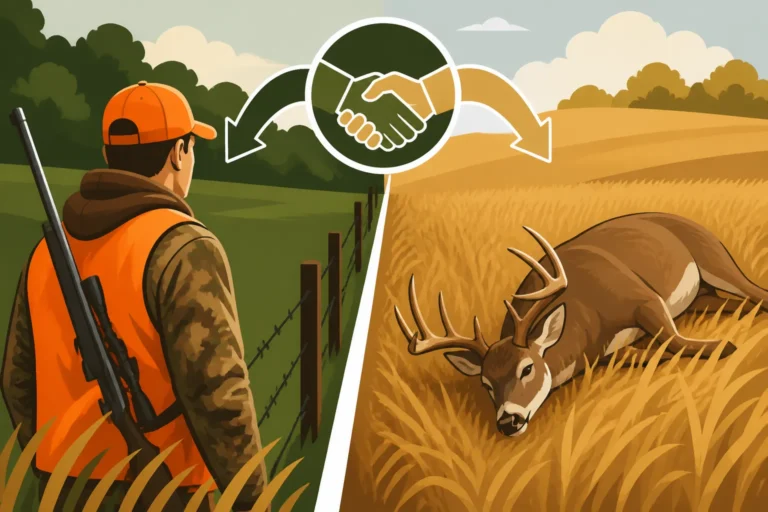
This is where things get particularly interesting and often cause the most confusion for Iowa hunters. On private land, generally, with the landowner's permission, you have more leeway regarding your hunting methods, as long as they don't violate state laws or local ordinances. If you're on a private farm, away from other hunters, and you've discussed your intentions with the landowner, the risk profile changes somewhat (though it never fully disappears). Many hunters who engage in reaping or fanning primarily do so on private parcels where they have exclusive access and a clear understanding of who else might be in the woods.
However, the situation drastically shifts when it comes to public land in Iowa. Due to the inherent safety risks associated with actively moving behind a turkey fan or decoy, particularly in areas where multiple hunters might be present, the Iowa Department of Natural Resources (DNR) strongly advises against or discourages these tactics on public hunting grounds. While a direct, blanket prohibition might not be explicitly stated for every type of aggressive decoy use, the spirit of the law and the emphasis on hunter safety effectively make reaping and fanning a highly risky and ill-advised practice on Iowa's Wildlife Management Areas, State Forests, and other public access properties. For more details on accessing public land, see our guide on Public Hunting Land in Iowa. It's always a good idea to consult resources like GoHunt or the Iowa DNR site for specific public land rules.
Safety Orange and Visibility Requirements
Iowa has specific blaze orange requirements for hunters during certain firearms seasons to enhance safety and prevent accidental shootings. For turkey hunting, however, during the spring seasons, blaze orange is not typically required. This lack of a blaze orange mandate makes aggressive visual tactics like reaping and fanning even riskier. If you're portraying a turkey, and you're not wearing any identifying hunter orange, another hunter could easily mistake you for game, especially during the excitement of a close gobbler encounter.
Even though it might not be legally required for turkey hunting, many responsible hunters choose to wear a strip of blaze orange when moving between calling locations, especially on public land. When considering aggressive tactics like fanning, the absence of blaze orange adds a layer of extreme danger. While you might be focused on the bird charging your fan, another hunter could be focused on what they perceive as a target. Always prioritize identifying yourself as a human hunter, even if it means sacrificing some stealth or choosing a different tactic. When scouting, resources like GoHunt can help you identify high-pressure public areas where such tactics are particularly dangerous.
Best Practices and Alternatives for Iowa Turkey Hunters
Given the legal ambiguities and significant safety concerns surrounding reaping and fanning in Iowa, it's wise to consider when, and if, these methods are truly appropriate, and to explore safer, equally effective alternatives that adhere to both the spirit of the law and responsible hunting ethics.
When and Where to Consider Reaping
If you are determined to try reaping or fanning, it’s imperative to do so under very specific, controlled conditions. First and foremost, this method is best reserved for private land where you have exclusive access and are certain no other hunters are present. This means checking with the landowner, knowing the property boundaries intimately, and having a system to ensure you are the only one hunting that specific parcel. The risk simply isn't worth it on shared public land.
Secondly, consider the terrain. Reaping is often most effective and least risky in very open environments, like large picked cornfields or sprawling pastures, where visibility is excellent, and you can clearly see hundreds of yards in every direction. This allows you to spot other hunters from a distance and avoid potential conflicts. Attempting to reap in dense timber or rolling terrain with limited sightlines dramatically increases the danger. Lastly, choose times of very low hunting pressure – perhaps weekdays, or late in the season when most hunters have gone home. Always be mindful of the current Iowa Spring Turkey Season Dates and how they might affect hunter numbers.
Safer Alternatives for Drawing in Toms
Thankfully, Iowa hunters have a plethora of highly effective and much safer ways to bring in those elusive gobblers. Traditional calling methods, using slate calls, pot calls, box calls, or diaphragm calls, remain the cornerstone of turkey hunting. Learning to mimic a variety of hen vocalizations—yelps, clucks, purrs, and cutts—can be incredibly enticing to a lovesick tom. For more on calling strategies, take a look at our article on Calling a Henned-Up Iowa Gobbler.
Another excellent strategy is the "run-and-gun" approach, especially effective on larger tracts of land, where you move from spot to spot, calling aggressively until you locate a responsive bird, then quickly setting up to intercept him. You can learn more about this approach in Run-and-Gun Turkey Tactics on Iowa Public Land. Additionally, static decoy setups—placing one or more hen or jake decoys in a visible spot while you are well-hidden in a ground blind or behind natural cover—are incredibly effective and reduce the risk significantly compared to reaping. Many hunters have great success with various Turkey Decoy Spreads That Work. Using a ground blind also offers superb concealment and safety, as detailed in Blind Hunting for Turkeys With Kids. Always utilize mapping applications like GoHunt to mark your setup locations and potential turkey travel corridors.
Pre-Season Scouting and Situational Awareness
No matter your chosen tactic, meticulous pre-season scouting is your most valuable tool for a successful and safe hunt in Iowa. Before the season even begins, spend time in the woods identifying roosting locations, travel corridors, dusting bowls, and feeding areas. This helps you understand where turkeys are, and just as importantly, where other hunters might be. Using mapping tools like those offered by GoHunt can provide invaluable insights into terrain features, property boundaries, and potential access points for other hunters. You can get a head start by learning how to Roosting Iowa Turkeys the Night Before.
During the hunt, situational awareness is critical. Constantly scan your surroundings, listen for other calls, and be aware of any movement that isn't a turkey. If you suspect another hunter is in the vicinity, make your presence known clearly and safely by calling out or even wearing a bright cap when moving. Never assume you are the only hunter in the woods. Being patient, observant, and prioritizing safety over aggressive tactics will not only enhance your chances of success but, more importantly, ensure you and your fellow hunters return home safely.
Iowa Turkey Hunting Tactics: Reaping & Fanning Overview
| Aspect | Private Land (Controlled Access) | Public Land (Shared Access) |
|---|---|---|
| Legality | Generally permissible, but check for local ordinances. | Strongly discouraged by Iowa DNR due to safety. |
| Safety Risk | Lower, if absolutely sure no other hunters are present. | Extremely High. Risk of mistaken identity. |
| Visibility | Hunter is concealed, may attract distant attention. | Hunter is concealed, may attract nearby hunter attention. |
| Best Use Case | Open terrain, low pressure, confirmed sole hunter presence. | Not recommended under any circumstances. |
| Alternatives | Traditional calling, static decoy setups, run-and-gun. | All traditional safe methods. |
| Blaze Orange | Not required for turkey, but consider for movement. | Not required, but its absence increases risk when fanning. |
Disclaimer
Please remember that hunting regulations can change. It is always your responsibility to consult the most current Iowa Department of Natural Resources (DNR) hunting regulations and any local ordinances before heading into the field. This article is for informational purposes only and does not supersede official legal guidelines. Stay safe and hunt responsibly.