Saddles and Benches Deer Cross Daily
Finding consistent deer movement in Iowa's patchwork of timber and agriculture can feel like a guessing game, especially when those mature bucks seem to vanish into thin air just when you think you've got them patterned. This guide will help you unlock some of the most reliable travel corridors—timber saddles and benches—showing you exactly how to identify these subtle yet crucial terrain features, understand why deer use them daily, and hunt them effectively to tip the odds in your favor.
Understanding the Lay of the Land: What Are Saddles and Benches?
It's easy to overlook these subtle land formations, but to a whitetail, they represent the path of least resistance or a strategic vantage point. In a state like Iowa, where timbered ridges and creek bottoms dissect agricultural fields, understanding how deer navigate this landscape is paramount. Saddles and benches are not just random bumps or flat spots; they are key pieces of a deer's daily puzzle, dictating their movements between bedding and feeding areas, or even just during the crucial cruising phases of the rut.
Defining Timber Saddles: Natural Funnels in Rolling Terrain
Imagine a prominent ridge line, maybe one that snakes for a quarter mile or more, with steeper terrain on either side dropping down into creek bottoms or fields. A saddle is essentially a low point, or a dip, along the top of that ridge. Think of it like a pass through mountains, but on a much smaller, more subtle scale. Instead of traversing directly up and over the steepest part of a ridge, deer, being creatures of efficiency, will naturally funnel through the lowest point. This is particularly true for mature bucks who are constantly conserving energy.
These saddles act as natural bottlenecks, concentrating deer movement from one side of a ridge to the other. They're often found connecting two larger timber blocks or linking different drainages. If you've ever felt frustrated by deer appearing and disappearing in dense timber, it's often because you haven't identified these subtle funnels. Deer will use these dips to avoid exposing themselves on a high, open ridge top, or to make their journey across a hill much easier. They can be incredibly subtle, sometimes just a few feet lower than the surrounding ridge, but that small elevation change is enough to create a distinct travel path. Recognizing these patterns is a huge part of Reading an Iowa Timber Draw for Deer Sign.
Decoding Benches: Elevated Deer Highways
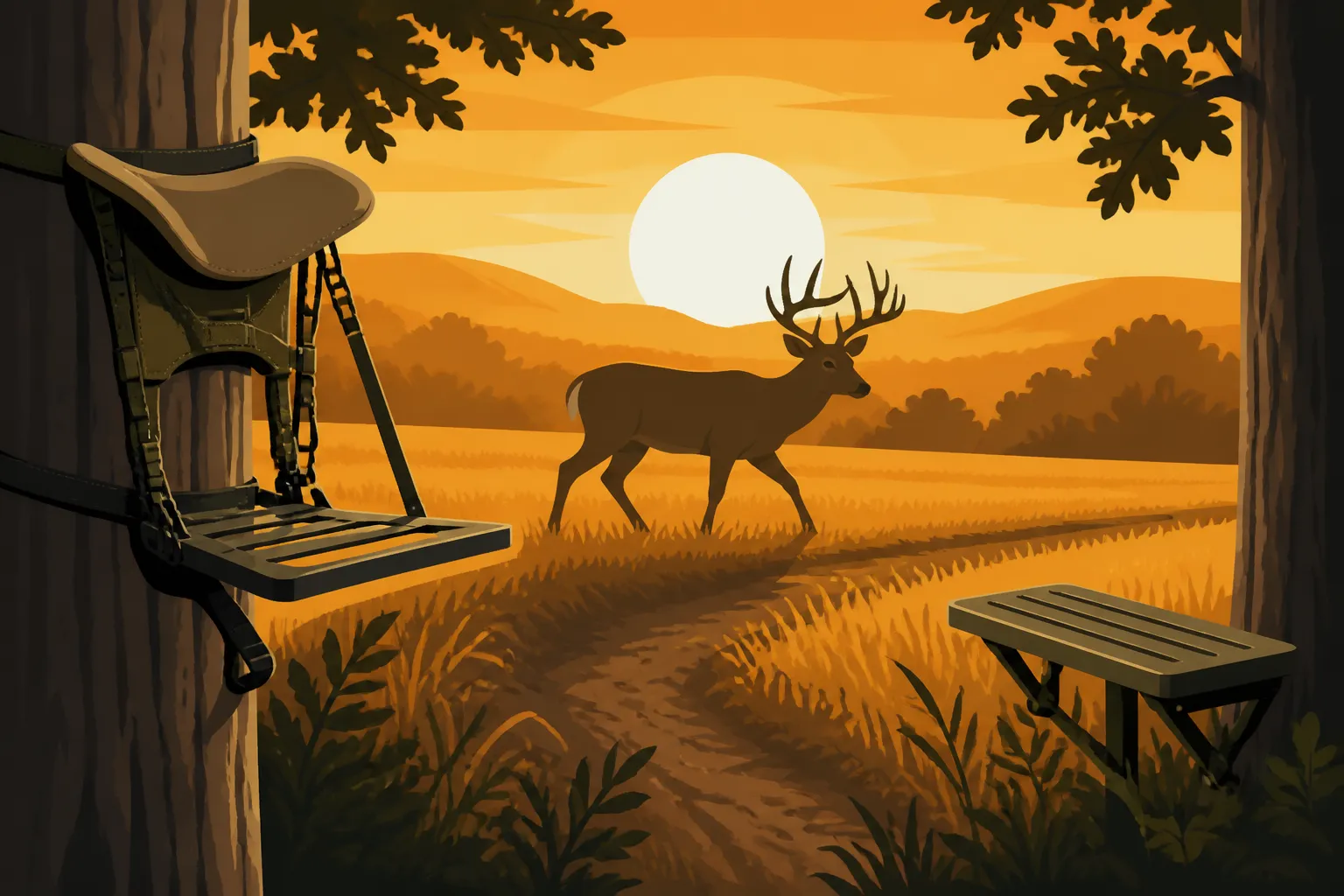
Benches are a bit different from saddles, though equally vital. A bench is a relatively flat or gently sloped section of terrain that runs horizontally along the side of a ridge or hill. Picture a steep hillside, and then imagine a narrow shelf or terrace partway up that incline. This shelf is a bench. Deer love benches for a few key reasons. First, they provide an easier walking path than trying to climb directly up or down a steep slope. Just like us, deer prefer a level walk when possible, especially if they’re moving between bedding and feeding.
Second, benches offer a strategic advantage in terms of visibility and wind. A deer traveling along a bench can often see down into the valley below and up the slope above, giving them a better sense of their surroundings than if they were just blindly plowing through thick cover. They also catch the wind differently, allowing them to scent-check the thermal currents more effectively. In southern Iowa's rolling timber country, these benches can be surprisingly long, acting as genuine deer highways that connect different parts of a drainage or link bedding cover to distant food sources. They're often carved out by erosion over time, or sometimes even old logging roads that have long since been reclaimed by nature.
Scouting for Success: Pinpointing Iowa's Deer Crossroads
Finding these crucial terrain features isn't always obvious from the ground, especially with the dense foliage of early season. However, with modern tools and a bit of boots-on-the-ground effort, you can pinpoint saddles and benches with surprising accuracy. The key is to combine your technological scouting with actual field verification to truly understand how deer are utilizing these spots.
E-Scouting from Your Couch: Tools and Techniques
Before you even step foot in the timber, your best friend will be a good mapping application. Tools like GoHunt, onX Hunt, or even Google Earth are invaluable for E-Scouting Iowa Farm Country From Home. Start by pulling up a topographic map layer. This will show you contour lines, which are the lines indicating elevation changes. For saddles, look for where contour lines on a ridge spread out or create a distinct dip. It's often where two drainages on opposite sides of the ridge begin to pinch towards each other. The tighter the contour lines, the steeper the terrain, so look for those spots where the lines widen or form a "U" or "V" shape pointing uphill—that's often your saddle.
For benches, you'll be looking for areas where contour lines run parallel to each other for a distance, but with a noticeable gap between them. This indicates a flatter section on a steeper slope. Sometimes, the lines might look like they "step" out, forming a small terrace. Spend time zooming in and out, mentally walking the terrain. GoHunt, for example, often provides public land overlays and aerial imagery that, when combined with topo maps, can reveal subtle features not immediately obvious. You can often spot fainter lines or subtle changes in vegetation that indicate benches, even before you confirm them on the ground. Look for areas with a mixture of timber and ag fields nearby; these often create the most consistent deer movement through saddles and benches.
Boots on the Ground: Confirming the Sign
E-scouting gets you in the ballpark, but nothing beats actual field reconnaissance. Once you've identified potential saddles and benches on your map, it's time to hit the woods. This is where Scouting Iowa Timber and River Bottoms really comes into play. Walk the areas you've identified, and don't just walk over them—walk through them. Look for tangible evidence of deer use. What you're hoping to find are well-worn trails, deep depressions in the leaf litter where deer have repeatedly walked. These trails will often converge into a saddle or run consistently along a bench.
Beyond trails, keep an eye out for other deer sign. Rub lines, especially those from mature bucks, can tell you a lot about the quality of the deer using these corridors. Scrape lines, particularly during the pre-rut and rut, are another strong indicator. Check for old beds near these features, indicating where deer might stage before moving to a food source, or bed down during the day while keeping an eye on their surroundings. Pay attention to how the wind and thermals feel on the ground. A saddle might funnel the wind, making it a tricky place to set up, while a bench might offer more consistent thermal drafts. Compare what you see on the ground with what you saw on your GoHunt map; this helps you refine your e-scouting skills for future hunts.
Hunting Strategies: Maximizing Your Chances on Saddles and Benches
Now that you know how to find these prime locations, the next step is learning how to hunt them effectively. This isn't just about hanging a stand; it's about understanding deer behavior, mastering scent control, and timing your hunt precisely to intercept those elusive Iowa whitetails.
Stand Placement and Wind Considerations
The success of hunting a saddle or bench hinges largely on your stand placement and how you manage the wind. For a saddle, you want to set up on the downwind side of the primary travel corridor, ideally 15-25 yards off the main trail. This allows your scent to blow away from the approaching deer. Remember, deer will often use these funnels with the wind in their face, or quartering to them, to sniff out danger ahead. Setting up directly in the saddle can often lead to deer busting you before you even see them. Look for a tree that offers good cover and allows you to shoot into the saddle effectively. Consider Best Stand Locations in Rolling Timber for more specific guidance.
On benches, similar principles apply. You might set up above or below the bench, depending on the prevailing wind, trying to catch deer moving along it. Always think about how your scent will carry. In Iowa's varied terrain, understanding Wind and Thermals in River Breaks is critical, as thermals can rise in the morning and fall in the evening, completely changing your wind advantage. A common mistake is not accounting for these thermal shifts. A good rule of thumb is to assume deer will approach from downwind, so place your stand to maximize your shot opportunities while keeping your scent clear.
Here's a quick comparison of saddles and benches:
| Feature | Description | Typical Deer Use | Ideal Hunting Conditions | Challenges |
|---|---|---|---|---|
| Saddle | Low point or dip along a ridge line, connecting two areas. | Funnel between bedding & feeding, cruising during rut, easy ridge crossing. | Pre-rut & rut, shifting winds, midday movement. | Swirling winds, deer approaching from multiple angles, limited visibility. |
| Bench | Flat or slightly sloped shelf running horizontally along a hillside. | Elevated travel corridor, staging areas, advantage in scent and sight. | Consistent wind, feeding transitions, morning/evening movement. | Identifying subtle benches, steep access, potential for "overlooking" deer. |
Entry, Exit, and Scent Control
You've found the perfect saddle or bench, and you've picked your tree. Now comes the most overlooked aspect: how you get in and out without bumping deer. This is absolutely critical. Access Routes That Do Not Bump Deer means planning your approach and departure routes to avoid known bedding areas or main travel paths. Often, this means taking a longer, more circuitous route that uses terrain features or dense cover to conceal your movement. Walk slowly, quietly, and use the cover to your advantage.
Scent control is your next line of defense. Even with a perfect wind, a deer can pick up residual human odor from your entry route or from your stand itself. Use scent-eliminating sprays, wash your hunting clothes in scent-free detergent, and store them properly. Rubber boots are a must to keep ground scent to a minimum. Remember, your goal is to be a ghost in the woods. Every step you take, every branch you brush, leaves a trace. Minimize that trace to maximize your chances. For those hunting public lands, consider Portable Stand Rules on Iowa Public Ground as setting up quickly and quietly is often key. A mobile saddle hunting setup can be particularly advantageous for these precise, low-impact approaches.
Timing Your Hunt: When These Spots Shine
While saddles and benches can be productive at various times, they truly shine during specific periods of the deer season. During the Hunting the Iowa Pre-Rut in Late October, and especially When the Iowa Rut Peaks, these features become high-traffic highways for cruising bucks. Bucks will use saddles to cross from one drainage to another in search of does, and benches to travel strategically along hillsides while scent-checking for receptive females.
Midday hunting, often neglected by many hunters, can be incredibly effective in saddles and benches during the rut. Bucks that have been pushing does or covering ground all night will often seek out these subtle features for a quieter, safer travel path during daylight hours. Similarly, during the early season, if food sources are scattered, deer might use these corridors to travel between a primary bedding area, perhaps a dense Cedar and Locust Thickets as Bedding Cover, and a distant food plot or agricultural field. Pay attention to weather fronts as well; the day before or after a significant cold front can often see increased deer movement through these key funnels.
Disclaimer
Please remember that hunting regulations and seasons can change. Always consult the latest Iowa Department of Natural Resources (DNR) regulations before heading into the field. Ensure you have all necessary licenses and tags, and understand local rules for public and private land access. Stay safe and hunt ethically.