Shot Angles From an Elevated Stand
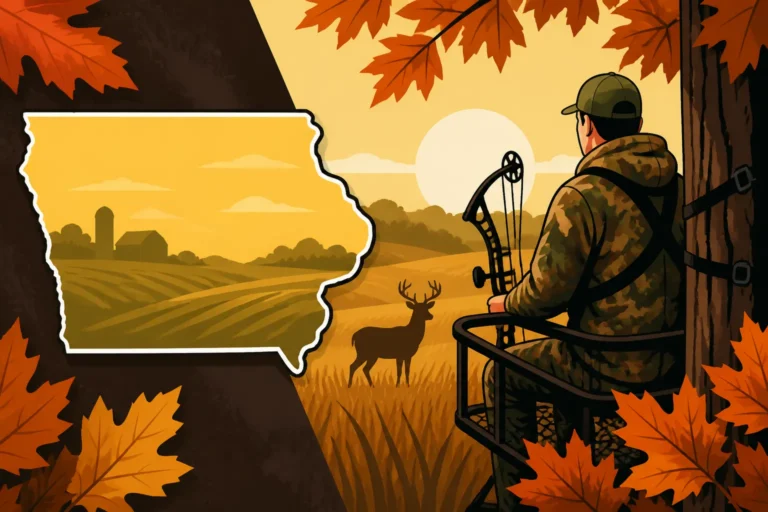
It's happened to all of us: you're finally in your treestand, the woods are quiet, and then a beautiful Iowa whitetail steps out. Your heart races, you draw your bow or shoulder your firearm, but then you hesitate. The deer isn't perfectly broadside, and suddenly, that easy shot you practiced all summer feels complicated from your elevated position. Misjudging these critical shot angles from a treestand is a common frustration, often leading to poor shot placement and the heartbreak of a lost animal. This guide is here to walk you through understanding and executing ethical, effective shot angles from an elevated stand, ensuring you make the most of your hard-earned opportunities for a quick, humane harvest.
Understanding the Anatomy of a Whitetail Deer from Above
When you're on the ground, a whitetail's anatomy seems pretty straightforward. You know where the heart and lungs are, and you can visualize that perfect double-lung shot. But hoist yourself twenty feet up into an oak, and suddenly, everything looks a little different. The angles shift dramatically, and what appeared to be a textbook shot from eye level can quickly become a risky proposition from above. Understanding this anatomical shift is paramount to making an ethical shot.
Locating the Vital Organs from an Elevated View
From an elevated position, the deer's back acts as the "top" of the target, and the ground is the "bottom." This changes how you perceive the placement of the vital organs – primarily the heart and lungs. Instead of being a horizontal target directly behind the shoulder, the vitals now appear slightly lower and further back in relation to the shoulder blade, depending on the deer's stance and your angle. The lungs are quite large, extending from behind the shoulder all the way back to the diaphragm, which sits just in front of the liver and stomach. The heart is tucked low and forward, behind the elbow and beneath the lungs.
When you're high up, visualizing the path your arrow or bullet will take is key. Imagine an invisible line extending from your broadhead or bullet, traveling through the deer, and exiting the other side. You're aiming to sever major blood vessels and destroy lung tissue to achieve rapid blood loss and organ failure. If you aim where you think the vitals are from a ground perspective, you risk shooting over the heart and through only the top portion of the lungs, or even worse, hitting the spine. You need to mentally adjust your aim point downward and slightly forward as if the deer were standing on a giant bullseye beneath you.
The "Sweet Spot" and Its Deviations
The "sweet spot" on a whitetail, regardless of your elevation, is the area that encompasses both lungs and the heart. From the ground, this typically means aiming for the crease behind the shoulder, about one-third of the way up from the chest floor. From a treestand, that sweet spot shifts. The ideal shot from an elevated position aims to enter high on one side, pass through both lungs and the heart, and exit low on the opposite side. This creates a massive wound channel and, importantly, two holes for blood to escape, making for a much easier blood trail.
However, the degree of deviation depends entirely on your height and the distance to the deer. The steeper the angle (closer distance, higher stand), the more you'll need to aim for a spot that appears lower on the deer's body from your perspective. This isn't because the vitals move, but because the angle of your shot path is now slicing through the animal on a downward trajectory. A common mistake is aiming for the middle of the body, which, from an elevated stand, can easily lead to a single lung hit or even striking the paunch (gut shot) because your projectile exits too high. The goal is to maximize the destruction of vital tissue, and a downward angle can actually help achieve this if aimed correctly, ensuring a clean exit wound.
Bone Structure and Shot Obstructions
Whitetail deer are surprisingly tough animals, and hitting heavy bone can quickly derail even a well-intentioned shot. From an elevated stand, the bone structure you need to be wary of is still the shoulder blade, but also the spine and, to a lesser extent, the sternum. The shoulder blade is a large, flat bone that protects the front portion of the lungs and heart. If a deer is standing with its leg forward, that blade will rotate, exposing more of the vitals behind it. If the leg is back, the shoulder blade covers more of the vital area.
Your elevated position also makes the spine a more direct target if you shoot too high. A spine shot will instantly drop a deer, but it’s a very small target, and a miss by even an inch can result in a superficial wound. The sternum, or breastbone, runs down the center of the chest. While not as thick as the shoulder blade, it can deflect an arrow or bullet, especially on a quartering-to shot. From above, it can sometimes appear as if you have a clear path when in reality, the top of the shoulder or the spine is in the way. Always visualize the bone structure beneath the hide and adjust your aim to avoid these high-risk areas. Remember, your goal is soft tissue.
Critical Shot Angles from a Treestand
Understanding deer anatomy from above is step one; applying that knowledge to various shot angles is step two. The angle the deer presents to you is the single most important factor in determining shot placement and whether or not you should even take the shot. Not all angles are created equal, especially when you're perched high in a tree.
Broadside and Quartering-Away Shots
These are almost universally considered the gold standard for elevated shots, whether you're bowhunting or using a firearm.
-
Broadside Shot: When a deer is standing perfectly broadside to your stand, the goal is to aim for an entry point that will allow your projectile to pass through both lungs and potentially the heart, exiting on the opposite side. Because of your elevated position, you'll want to aim slightly lower than you would from the ground. Think about aiming for a spot that, if the deer were flattened, would be just behind the shoulder and a little below the halfway point of its body. The downward angle of your shot will naturally bring the projectile through the vitals. This provides a clear path through the rib cage, avoiding heavy bone, and creates two holes for maximum blood loss. It's often the easiest shot to visualize and execute.
-
Quartering-Away Shot: This is arguably the most preferred shot angle for bowhunters from a treestand, and it's excellent for firearms too. The deer is angled away from you, presenting its far-side shoulder forward and opening up its rib cage on the near side. For a deep dive, check out our guide on Quartering-Away Shots on Whitetails. From an elevated stand, you want to aim for the crease of the far shoulder, imagining your projectile traveling through the deer to exit low on the opposite, front leg or chest. This angle gives you a huge window into the vitals, allowing your projectile to slip in behind the near-side shoulder and pass through the heart and both lungs before ideally exiting the far side. The quartering-away shot also minimizes the chance of hitting heavy shoulder bone upon entry. It often allows for excellent penetration and a clear exit, leaving an impressive blood trail. When the deer is slightly quartering away, it's a prime opportunity for a quick, ethical harvest.
Quartering-To and Head-On Shots
These angles are where caution truly becomes paramount. While tempting when a buck of a lifetime steps out, they are almost universally discouraged due to the extreme risk of wounding an animal.
-
Quartering-To Shot: A quartering-to shot means the deer is angled towards you, exposing its near-side shoulder and chest. From an elevated stand, this angle presents a very small, high-risk target area. To hit the vitals, your projectile would need to penetrate heavy shoulder bone on the near side, then travel through a significant amount of muscle and possibly the paunch before reaching the far lung or heart. The margin for error is incredibly small. A slight miscalculation, and you're looking at a wounded deer with a terrible blood trail, if any. The bone structure from the shoulder, sternum, and even the neck can deflect your shot, sending it into non-vital areas. It's simply not worth the risk for most hunters, and it's almost impossible to achieve a double-lung hit.
-
Head-On Shot: This is the most dangerous and unethical shot to take from an elevated stand (or any position, really). The deer is facing directly towards you. The only vital target is a small portion of the chest cavity, protected by the heavy sternum and front shoulder bones. A head-on shot from above often means aiming for the center of the chest, which is a gamble. Your projectile might hit the sternum and stop, or glance off. Even if it penetrates, it’s unlikely to achieve sufficient damage to the heart or both lungs for a quick kill. The brain and spine are tiny targets, highly susceptible to slight movement, and aiming for them is a low-percentage shot that should be avoided. Unless you're in an extremely close, self-defense scenario (which is rare in hunting), a head-on shot is a recipe for a wounded animal and should always be passed up.
Straight Down Shots (Steep Angles)
Sometimes, a deer will walk directly under your stand. This creates an extremely steep, almost vertical, shot angle. While it seems like an easy target, it's actually one of the trickiest to execute properly.
From a straight-down angle, the vitals are no longer horizontally oriented. You're essentially looking down at the top of the deer's back. To hit the lungs and heart, you need to aim significantly forward, just behind the shoulder blade, envisioning the projectile traveling through the body cavity and impacting the opposite side. The challenge is that the entry and exit holes will be very close together, often limiting blood trails. Moreover, an arrow might not have enough distance to fully penetrate, or a bullet could pass through quickly, causing less damage than a horizontal shot.
Generally, a straight-down shot should only be considered at extremely close ranges, typically within 5-10 yards for bowhunters, where you can practically touch the deer. For a firearm, it's rarely ideal due to the immense power and potential for bullet fragmentation or exiting quickly with minimal internal damage. If you do take this shot, aim just behind the front shoulder, imagining your arrow or bullet piercing downward through the lungs and potentially the heart. Some hunters aim for the spine to instantly drop the animal, but this is a very small target. Often, the best advice for a deer directly under your stand is to simply wait. Let it pass, and hope for a better broadside or quartering-away opportunity. Patience is a virtue, especially in the treestand.
Practicing Elevated Shots for Success
Knowing the theory of shot angles is one thing, but consistently executing them when the moment of truth arrives is another. Practice isn't just about repetition; it's about realistic repetition. You wouldn't train for a marathon by only walking, so don't prepare for elevated shots by only shooting from flat ground.
Simulating Treestand Conditions
The best way to get comfortable with elevated shot angles is to practice from an elevated position. This might seem obvious, but many hunters neglect this crucial step. If you hunt from a ladder stand, practice from a ladder stand. If you use a hang-on, get it up in a tree in your backyard (safely!) and shoot from there. Even a tall step ladder or a second-story deck can offer a reasonable simulation. The key is to get that downward angle.
When practicing, don't just shoot at a flat target. Use a 3D deer target, or at the very least, draw a detailed outline of a deer's vitals on a target face. Place your target at varying distances and angles to simulate real hunting scenarios. For instance, put it directly under your stand for a steep, straight-down shot, then move it out to 20-30 yards at a slight quarter-away. Pay close attention to how your point of impact shifts and how you need to adjust your aim. You'll quickly notice that what feels like "low" aim from an elevated stand is often exactly where you need to hit the vitals. Our guide on Practicing Shots From a Treestand offers more insights into setting up realistic training.
Range Estimation and Angle Compensation
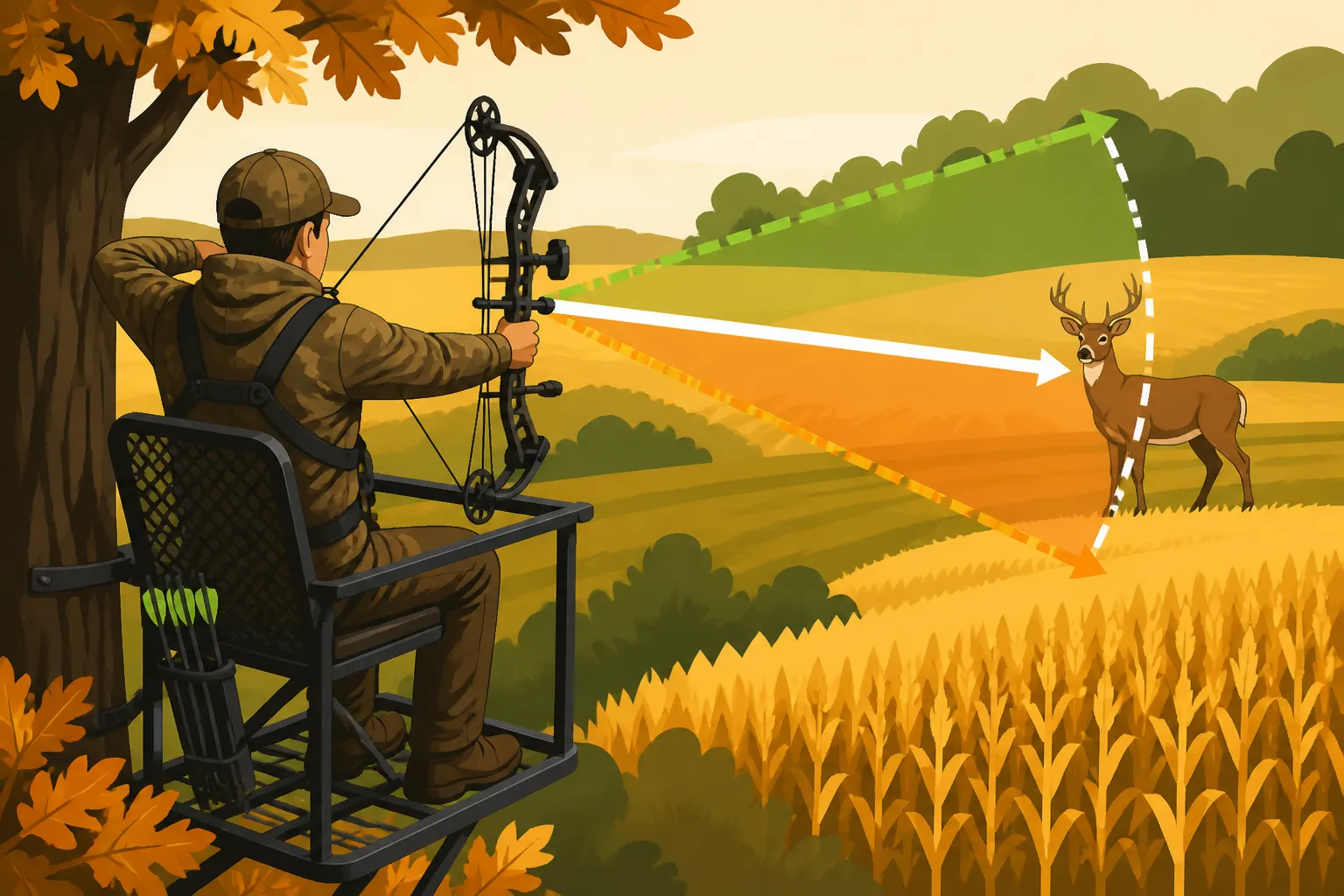
From an elevated stand, judging distance and compensating for the angle are critical, especially for bowhunters. Gravity affects an arrow differently when shot at a downward angle compared to a horizontal shot. An arrow shot at a steep downward angle will hit higher than it would if shot at the same distance horizontally. This is where angle-compensating rangefinders become invaluable.
A good rangefinder, like those offered by companies often reviewed by platforms such as GoHunt, won't just tell you the line-of-sight distance; it will calculate the "shooter's equivalent horizontal distance," which is the actual distance your arrow or bullet thinks it's traveling. For example, if a deer is 30 yards away but 20 feet below you, your rangefinder might tell you the actual distance is 28 yards. This is the number you should use for your pin or scope adjustment. For rifle hunters, the effect is less pronounced but still present, particularly at longer ranges or extreme angles. Always range the deer before the shot, if possible, or at least range various landmarks around your stand to have quick reference points. Mastering Rangefinding in Timber is a skill that pays off immensely.
Mental Preparation and Shot Selection
Beyond the physical mechanics, mental preparation is a huge part of successful elevated hunting. The adrenaline of having a deer within range can cause "buck fever," making even simple tasks feel impossible. Before you even climb into your stand, visualize various scenarios. Mentally rehearse drawing your bow or raising your firearm, aiming, and executing the shot for different angles the deer might present.
When a deer approaches, assess the situation calmly. What angle is it presenting? Is it broadside, quartering-away, or something riskier? What's the range? Is there any obstruction? Is the deer calm, or twitchy? If you have any doubt about making a clean, ethical shot, wait. It’s far better to pass on a shot and hope for another opportunity or another day than to take a questionable shot and wound an animal. Ethical hunting demands that we make every effort to harvest an animal quickly and humanely. Knowing your limits and having the discipline to wait for the ideal shot is a sign of a truly experienced hunter.
Factors Influencing Your Elevated Shot Decision
Even after mastering anatomy and practicing your shots, other factors can significantly impact your ability to make an ethical shot from an elevated stand. These variables require careful consideration for a successful hunt.
Distance and Deer Movement
Distance plays a huge role in the success of an elevated shot. The closer the deer, the steeper the angle, and often, the more critical your aim adjustment becomes for bowhunters. However, closer distances also reduce the chances of an arrow drifting or a bullet impacting off-course due to external factors like wind. As the distance increases, the angle from your stand becomes less severe, gradually approaching a ground-level shot trajectory. This can make shot placement feel more intuitive, but it also increases the potential for error due to factors like projectile drop, wind, or slight movements from the deer.
Deer movement is another critical factor. A standing deer offers a much better target than one that is walking, let alone trotting or running. Never take a shot at a moving deer from an elevated stand unless it is absolutely necessary and you are highly confident in your ability (e.g., a very slow walk at close range). Even a slowly walking deer requires you to lead the target, and predicting its exact location at the moment your projectile arrives is difficult. It’s always best to try and stop the deer using a grunt call or a mouth bleat, ensuring it’s stationary before you release an arrow or squeeze the trigger.
Weapon Type and Projectile Performance
The type of weapon you're hunting with significantly influences what angles are viable from a treestand.
-
Bowhunting: Bowhunters rely on kinetic energy and broadhead sharpness for penetration. Because arrows have a lower velocity and energy compared to firearms, shot angles are even more critical. Broadside and quartering-away shots are paramount to ensure the arrow passes through both lungs and hopefully exits, leaving a blood trail. Steep, straight-down shots can be tricky as the arrow might not have enough distance to fully stabilize or penetrate optimally if it hits a shallow angle on a rib. Iowa Bowhunting Tactics Through the Rut delves into maximizing your chances with a bow.
-
Firearms (Shotgun Slugs & Straight-Wall Cartridges): Modern shotgun slugs and straight-wall rifle cartridges, like the .450 Bushmaster or .350 Legend, pack a powerful punch. This increased energy means they can often punch through light bone that an arrow might struggle with. This doesn't mean you should aim for bone, but it offers a slightly larger margin of error on angles where a broadhead might get deflected. However, the same principles of aiming for vitals and avoiding heavy bone still apply. For example, knowing the Slug Range Limits on a Deer Drive is just as important as knowing your capabilities from a stand. While they have more knock-down power, the goal remains a clean pass-through of the vitals.
Ethical Considerations and Knowing Your Limits
Ultimately, the decision to take a shot always comes down to ethical considerations. As hunters, we have a responsibility to make the cleanest, most humane kill possible. If you have any doubt about your ability to make a vital shot from your elevated position, do not take the shot. This is especially true for those risky quartering-to or head-on angles. No trophy is worth wounding an animal and causing it unnecessary suffering.
Knowing your personal limits is key. What range are you comfortable shooting from a treestand? What angles do you consistently hit in practice? Don't let buck fever push you beyond your capabilities. It's perfectly acceptable, and admirable, to pass on a shot that feels questionable. There will always be another deer, another day, and another opportunity. If you do take a shot and suspect it wasn't perfect, knowing Waiting Before Taking Up a Blood Trail can greatly improve your chances of recovery. Using tools like the GoHunt app to mark your stand location and potential hit site can also be invaluable for post-shot tracking efforts. Always prioritize the ethical harvest of the animal above all else.
| Shot Angle (From Elevated Stand) | Recommended | Target Area | Pros | Cons |
|---|---|---|---|---|
| Broadside | High | Behind shoulder, slightly lower than mid-body (from your perspective) | Large vital target, clear path for double-lung/heart, good blood trail. | Requires precise downward aim adjustment. |
| Quartering-Away | Very High | Aim for opposite shoulder, entering behind near shoulder blade | Excellent exposure of vitals, minimizes bone contact, maximizes wound channel, great blood trail. | Requires good understanding of internal anatomy and projectile path. |
| Steep Down (Under Stand) | Medium | Just behind the front shoulder, aiming forward towards chest/neck area on far side | Very close range, minimal external factors. | Very small effective target, difficult angle for full penetration/exit, limited blood trail if not perfect. |
| Quartering-To | Low | Avoid. Extremely small vital window, heavy bone obstruction. | None for ethical hunting. | High risk of hitting heavy bone, gut-shot, or superficial wound; poor blood trail; unethical. |
| Head-On | Very Low | Avoid. Minimal vital target, heavy bone protection. | None for ethical hunting. | Extremely high risk of wounding, poor blood trail; almost impossible to achieve quick kill; unethical. |
Disclaimer
The information provided in this guide is for educational purposes only. Hunting regulations and best practices can change, and it is the hunter's responsibility to review and comply with all current Iowa Department of Natural Resources (DNR) regulations and local laws before hunting. Always prioritize safety, ethical hunting practices, and respect for wildlife.