Iowa Hunter Education and Licensing Basics
One of the biggest hurdles for any aspiring hunter in Iowa, or even seasoned hunters new to the Hawkeye State, is understanding the maze of hunter education requirements and the often-confusing licensing system. It's easy to feel overwhelmed, wondering if you've missed a crucial step or purchased the wrong tag. This comprehensive guide is here to untangle all that, walking you through everything you need to know about getting properly educated and licensed to hunt Iowa's incredible wild game.
Understanding Iowa's Hunter Education Requirements
Iowa takes hunter safety seriously, and for good reason. Hunting is a tradition, but it comes with immense responsibility. Ensuring everyone who steps into the field has a foundational understanding of firearm safety, wildlife identification, and ethical hunting practices is paramount for the safety of all participants and the health of our wildlife populations. This commitment to safety is why hunter education is a cornerstone of responsible hunting in Iowa. It's not just about passing a test; it's about internalizing the principles that keep you, your hunting partners, and the public safe.
Who Needs Hunter Education in Iowa?
The requirement for hunter education in Iowa isn't universal, but it applies to a significant portion of hunters. If you were born after January 1, 1972, you must successfully complete a hunter education course to purchase an Iowa hunting license. This date is pretty standard across many states, creating a clear line in the sand. It means that if you're, say, 50 years old and just picking up hunting, you'll need to get that certificate first. There's no getting around it, and frankly, it's for the best. Even if you grew up around firearms, a formal course covers so much more than just gun safety.
However, there are a few exceptions and considerations. For instance, if you're a nonresident and can prove you've completed a hunter education course in another state, province, or country that's recognized by your home jurisdiction, Iowa will generally accept that certificate. This prevents redundant training for experienced hunters moving or visiting from out of state. Always carry proof of your hunter education with you, whether it's a physical card or a digital copy, as conservation officers can and do ask for it in the field. This requirement is so fundamental that the Iowa Department of Natural Resources (DNR) makes Iowa Hunter Education Requirements a clear priority.
Children 11 years old or younger cannot obtain a regular hunting license, but they can participate through the mentored youth programs, which we'll discuss shortly. Essentially, for anyone planning to hunt independently in Iowa who was born after that key 1972 date, getting your hunter education certificate is your absolute first step. Don't even think about buying a license until you've got this squared away.
Hunter Education Course Options
Gone are the days when a single, rigid classroom course was your only option for hunter education. Today, Iowa offers a few pathways to meet the requirement, catering to different learning styles and schedules. The primary goal remains the same: to instill safe, ethical, and responsible hunting practices. You'll cover topics ranging from wildlife conservation, hunter responsibility, survival skills, firearm basics, archery basics, and even basic first aid. It’s a comprehensive curriculum designed to prepare you for a variety of situations in the field.
The most traditional route is the in-person classroom course. These courses are typically taught by volunteer instructors certified by the Iowa DNR. They involve several hours of classroom instruction, often spread out over a few evenings or a weekend, culminating in a written test and a practical firearms handling test. These courses offer invaluable hands-on experience and the opportunity to ask questions directly. They also foster a sense of community among new hunters, which can be incredibly beneficial. Check the Iowa DNR website for scheduled courses in your area.
For those with busy schedules, Iowa also offers online hunter education courses. You can complete the academic portion of the course at your own pace from the comfort of your home. However, completing the online portion is usually just the first step. Most online courses require a mandatory "field day" or "skill session" to complete the certification. This hands-on portion allows instructors to verify practical skills like safe gun handling, shooting fundamentals, and ethical decision-making in simulated scenarios. It's a critical component that ensures online learning translates into real-world competence.
Here’s a quick overview of the main options:
| Hunter Type | Hunter Education Required? | Notes |
|---|---|---|
| Born after Jan. 1, 1972 | Yes | Must complete an approved course. |
| Born before Jan. 1, 1972 | No | Exempt, but education is always recommended. |
| Apprentice License Holder | No (temporarily) | Must hunt with a licensed adult; education still recommended for future solo hunting. |
| Nonresident (with valid out-of-state cert) | No | Iowa recognizes valid hunter education certificates from other states/provinces. |
Always verify the specific requirements for your chosen course, as they can sometimes vary slightly. Regardless of the format, the ultimate goal is to ensure you're a knowledgeable and safe hunter before you head out into the field.
Apprentice Hunting License: A Mentored Pathway
For individuals who want to try hunting before committing to the full hunter education course, or for those who simply enjoy hunting with a mentor, Iowa offers the Apprentice Hunting License. This is a fantastic program designed to introduce new hunters to the sport under the direct supervision of an experienced, licensed adult. It removes the immediate requirement for hunter education, allowing individuals to get a feel for hunting and decide if it's something they want to pursue long-term. Think of it as a trial run, a chance to learn the ropes without all the upfront commitment.
An Apprentice Hunting License is available to both residents and nonresidents of any age (as long as they are 16 years or older, or meet youth hunting age requirements). The key restriction is that the apprentice hunter must be accompanied by a licensed adult who is at least 18 years old and has a valid hunting license for the game being pursued. Furthermore, the mentor must remain within arm's reach of the apprentice at all times. This isn't just a suggestion; it's a legal requirement. This close supervision ensures safety and provides immediate guidance on everything from shot placement to game identification.
While the apprentice license waives the hunter education requirement for a temporary period, it's important to remember that it's not a permanent substitute. If an apprentice hunter decides they want to hunt independently in the future, and they were born after January 1, 1972, they will still need to complete the full hunter education course. Many find that the experience gained with an apprentice license fuels their desire to get fully certified. It's a brilliant way to pass down the hunting tradition and cultivate a new generation of ethical hunters.
Navigating Iowa's Licensing System
Once you've got your hunter education certificate (if required), or you're ready to explore the apprentice license, the next step is diving into Iowa's licensing system. This can feel like a bureaucratic labyrinth at first, but with a bit of guidance, it's quite manageable. The Iowa Department of Natural Resources (DNR) is the governing body for all hunting and fishing licenses, and they've streamlined the process significantly in recent years. Understanding the various licenses and where to purchase them is crucial for staying on the right side of the law and ensuring you have the proper authorization for your chosen quarry.
The Go Outdoors Iowa Portal
The central hub for almost all your Iowa hunting and fishing licensing needs is the Go Outdoors Iowa portal. This online system, managed by the Iowa DNR, is designed to be a one-stop shop for purchasing licenses, applying for draws, reporting harvests, and managing your hunter profile. It’s a modern convenience that saves you from having to visit a local vendor every time you need something. For most hunters, especially those who are tech-savvy, this will be your primary interface with the Iowa licensing system. You can access it from any computer or mobile device, making it incredibly convenient.
When you first use the Go Outdoors Iowa portal, you'll need to create an account. This typically involves providing some personal information, including your date of birth, address, and often your hunter education number if you have one. Once your account is set up, you can log in at any time to view your current licenses, renew expired ones, and purchase new ones. The system is fairly intuitive, but if you do run into issues, the Iowa DNR website has extensive FAQs and customer support contact information. Think of it as your personal hunting dashboard, keeping track of everything for you. For nonresidents especially, knowing how to use this platform is essential when Applying Through Go Outdoors Iowa.
Beyond just purchasing licenses, Go Outdoors Iowa is also where you'll apply for special draw hunts, such as nonresident deer tags or specific turkey seasons. It's where you'll report your deer and turkey harvests, which is a mandatory step that helps the DNR manage wildlife populations. The portal even allows you to buy preference points, which are crucial for increasing your odds in competitive nonresident draws. Familiarize yourself with this system early on; it will be your best friend throughout your Iowa hunting journey.
Essential Licenses for Iowa Hunters
Before you can pursue any game animal in Iowa, there are a few foundational licenses that almost every hunter needs. These are your entry tickets into the world of Iowa hunting and are typically required regardless of the species you're pursuing. Skipping these basic requirements can lead to fines and legal trouble, so it's critical to get them right from the start. They represent the state's investment in wildlife management and habitat conservation, ensuring that future generations have opportunities to enjoy the outdoors.
The first and most universal requirement for most hunters is a valid Iowa Hunting License. This is your general permission to hunt in the state. However, on its own, it doesn't grant you permission to harvest any particular species; it just allows you to be in the field with a weapon pursuing game. In addition to the base hunting license, you'll also need to purchase an Iowa Habitat Fee. This fee directly contributes to the acquisition, development, and maintenance of critical wildlife habitat across the state, benefiting everything from deer to pheasants. It's a small fee that makes a big difference in ensuring healthy ecosystems for wildlife. The specifics of the Iowa Base Licence and Habitat Fee are important to understand.
For specific game species, you'll then purchase additional tags or stamps. For instance, if you plan to hunt deer, you'll need a deer tag (or "license" as Iowa refers to it) specific to the season and weapon you'll be using. Similarly, turkey hunters need a turkey license, and waterfowl hunters will need state and federal migratory bird stamps in addition to their base hunting license and habitat fee. Each of these specific licenses carries its own fees and regulations, so always double-check what's required for the exact game you plan to hunt. Think of it as building blocks: you need the foundation (base license + habitat fee) before you can add the specific animal permits.
Specific License Categories: Youth, Senior, Disabled, Military
Iowa recognizes that not all hunters fit into a single category, and it offers several specific license categories to accommodate youth, senior citizens, disabled individuals, and military personnel. These categories often come with reduced fees or special considerations, making hunting more accessible and affordable for these groups. It's a way to honor those who have served, support our elders, and encourage the next generation of hunters, while also providing opportunities for those with physical challenges.
Youth hunters, typically those under the age of 16, benefit from significantly reduced license fees. A youth hunting license is an excellent way to get young people involved in the outdoors without a heavy financial burden. They are also subject to specific rules regarding hunter education and supervision, often falling under the apprentice hunting license program or requiring an adult mentor to be present. These regulations are designed to ensure a safe and positive introduction to hunting for impressionable young minds. Many Iowa counties offer youth-specific hunts or events to further engage this demographic.
Iowa residents who are 65 years of age or older can often qualify for senior resident hunting licenses at a reduced rate. This acknowledges a lifetime of potential contributions to conservation and makes it easier for older hunters to continue their traditions. For disabled hunters, Iowa offers special licenses and accommodations, which may include permits for certain mobility devices or specific hunting seasons designed for greater accessibility. These provisions aim to remove barriers and allow individuals with disabilities to enjoy the hunting experience.
Finally, military personnel, including active duty, veterans, and sometimes even those serving in the National Guard or Reserves, may be eligible for special licensing rates or exemptions. These programs are Iowa's way of showing gratitude for their service and sacrifice. It's always a good idea to check the most current Iowa DNR regulations or the Go Outdoors Iowa portal for specific eligibility requirements and documentation needed for each of these special categories, as rules can occasionally change.
Obtaining Your Deer Hunting Tags
For many, Iowa is synonymous with whitetail deer hunting. The state is renowned for its trophy bucks and healthy deer populations, making it a dream destination for deer hunters. However, actually securing a deer tag in Iowa, especially for nonresidents, can be a complex process that demands careful planning and understanding of the draw system. Whether you're a lifelong Iowan or hoping to experience a bucket-list hunt, knowing how to navigate the deer tagging system is paramount to a successful season.
Iowa Resident Deer Tags: The Easier Path
If you're an Iowa resident, securing a deer tag is generally a much more straightforward process compared to your nonresident counterparts. Residents are typically guaranteed an "any-sex" or "any-deer" tag during at least one of the hunting seasons, usually archery or one of the shotgun seasons, provided they apply during the established application period. This means you have the opportunity to harvest either a buck or a doe, offering significant flexibility in your hunt planning. It's a privilege that underscores the state's commitment to providing ample hunting opportunities for its own citizens.
Residents have several options for deer tags, covering various weapon choices and seasons. You can typically purchase an archery tag, a shotgun tag (for either First or Second Shotgun Season), or a muzzleloader tag. These tags are often issued as "any-sex" for the initial purchase. Furthermore, residents often have the opportunity to purchase additional antlerless deer tags, especially in counties where the DNR is trying to reduce the doe population to meet management goals. These extra tags are usually available over-the-counter or online after an initial draw or sale period, making it easier to fill your freezer and contribute to herd management.
The key for residents is to stay aware of the application deadlines, even for guaranteed tags, and to purchase any additional antlerless tags promptly if you intend to harvest more than one deer. The Go Outdoors Iowa portal is, again, your best friend for this. Resident tags are considerably less expensive than nonresident tags, further encouraging participation among Iowans. While relatively simple, understanding the specific season dates and weapon restrictions for each type of tag is still essential for legal hunting.
Understanding Iowa Nonresident Deer Draw Explained
Now, if you're a nonresident dreaming of an Iowa whitetail, the process shifts dramatically. Iowa is one of the most coveted deer hunting states, and nonresident tags are highly sought after. Unlike residents, nonresidents must enter a lottery-style draw system for a chance to obtain an "any-deer" tag. This system is designed to manage nonresident hunting pressure and ensure a fair distribution of the limited tags available. The competition is stiff, and drawing a tag often requires patience and strategy. A deep dive into the Iowa Nonresident Deer Draw Explained is crucial for anyone considering this path.
The nonresident deer draw typically opens in early May and closes in early June, so marking these dates on your calendar is critical. You'll apply through the Go Outdoors Iowa portal, selecting your preferred hunting zone (A or B, though most nonresidents hunt in Zone B which covers the majority of the state) and weapon choice (archery, shotgun, or muzzleloader). The draw system uses a preference point system: for every year you apply and are unsuccessful, you accrue a preference point. The more points you have, the better your odds of drawing a tag in future years. It’s essentially a waiting game, with some zones and weapon choices requiring more points than others.
Many nonresident hunters will spend several years building up preference points before they have a realistic chance of drawing an archery or shotgun tag in their desired zone. For example, some popular southern Iowa zones for archery can take 4-6 preference points or even more. Muzzleloader seasons, particularly the late season, often require fewer points and can be a good entry point for nonresidents. It's vital to research the draw odds for specific zones and seasons before applying to make an informed decision about your strategy. Sometimes buying a preference point without even applying for a tag is the smartest move for future success.
Antlerless Deer Tags and Quotas
Managing the deer herd in Iowa isn't just about big bucks; it's heavily focused on maintaining a healthy balance between antlered and antlerless deer. That's where antlerless deer tags come into play, and they are a vital component of Iowa's deer management strategy. The Iowa DNR sets specific county-by-county antlerless quotas each year, aiming to regulate deer populations to prevent overbrowsing, reduce crop damage, and mitigate deer-vehicle collisions. Understanding Iowa Antlerless Tags and Quotas is key to both resident and nonresident hunters.
For residents, antlerless tags are generally easier to acquire. After applying for their initial any-sex tag, residents often have the opportunity to purchase additional antlerless-only tags over the counter or online. These are typically available on a first-come, first-served basis until the county quota is met. Hunters are encouraged to harvest antlerless deer, especially in counties with high populations, as it directly contributes to the overall health and balance of the herd. Many seasoned Iowa hunters prioritize filling their antlerless tags before pursuing a buck.
Nonresidents can also acquire antlerless tags, but the process is different. If a nonresident successfully draws an any-deer tag, that tag also functions as an antlerless tag if they choose to harvest a doe. Furthermore, some nonresident antlerless-only tags may become available after the primary draw, often in specific "deer management zones" or counties with particularly high quotas. These are often less competitive than the any-deer tags. It’s always worth checking the Go Outdoors Iowa portal after the main draw to see if any leftover antlerless tags are available, as they can sometimes be picked up with fewer or even zero preference points. These opportunities are especially common during the late muzzleloader or January antlerless seasons.
Turkey and Upland Bird Licensing
While Iowa's whitetails often steal the spotlight, the state also offers fantastic opportunities for turkey and upland bird hunting. Just like deer, these species require specific licenses and tags, each with its own set of rules and application processes. Whether you're chasing spring gobblers or flushing pheasants from a CRP field, understanding the licensing requirements for these diverse hunting experiences is essential.
Iowa Spring and Fall Turkey Licences
Iowa boasts a robust wild turkey population, with opportunities for both spring and fall hunting seasons. Spring turkey hunting, with its thrilling gobbling action, is particularly popular. Like deer, turkey hunting requires a specific license for each season, and there are different rules for residents and nonresidents. For residents, turkey tags are generally available over-the-counter or through a relatively simple application process. You can typically choose between various seasons (e.g., first, second, third, or fourth spring seasons), often dictated by weapon choice (shotgun/archery).
Nonresidents, however, face a draw system for spring turkey licenses, similar to deer, though usually less competitive. Nonresidents typically apply in late December or January for the spring season, and drawing a tag can sometimes take a year or two of preference points in popular zones. The Iowa Nonresident Spring Turkey Licences are limited, and success in the draw often depends on the zone you apply for. Fall turkey tags are generally easier to obtain for both residents and nonresidents and are often available over the counter, as hunting pressure is typically lower. Fall seasons allow for taking either a hen or a gobbler, whereas spring seasons are typically limited to bearded turkeys only.
It's crucial to pay attention to the specific zone and season dates on your turkey license. Iowa is divided into zones for turkey hunting, and your tag is only valid in the zone and during the season for which it was issued. Using the Go Outdoors Iowa portal to apply and purchase your turkey licenses is the most efficient method, ensuring you have the correct documentation for your hunt. Remember to report your turkey harvest, just as you would for deer, to aid in wildlife management.
Pheasant and Quail: Small Game Licences
For those who love chasing upland birds, Iowa offers excellent hunting for ring-necked pheasants and bobwhite quail. Unlike deer and turkey, which require specific big game tags, pheasant and quail hunting typically falls under the umbrella of a general small game hunting license. This means you don't need a separate "pheasant tag" or "quail tag," but you do need your base Iowa hunting license and habitat fee. This simplifies the process considerably for upland hunters, allowing them to focus more on scouting cover and less on complex draws.
The beauty of small game hunting in Iowa is its accessibility. Once you have your valid Iowa hunting license and habitat fee, you're set to pursue these birds during their respective open seasons. However, staying up-to-date on the specific Iowa Pheasant and Quail Season Dates and daily bag limits is paramount. These dates can shift slightly from year to year, and exceeding bag limits is a serious violation. The Iowa DNR publishes an annual hunting regulations booklet that details all these specifics, and it's always a good idea to carry a copy or have access to the digital version.
While the licensing is simpler, success in pheasant and quail hunting often hinges on knowing where to find good habitat. Iowa's landscape of corn and soybean fields interspersed with grass cover and brushy draws provides ideal conditions for these birds. Many hunters enjoy the camaraderie of a pheasant drive or the thrill of a covey flush. Whether you're working public land or have secured private land access, having your basic hunting license and habitat fee in order is your first step towards a rewarding upland hunt.
Waterfowl Hunting Requirements: State and Federal Stamps
Waterfowl hunting in Iowa, particularly along the Mississippi and Missouri River flyways, is a celebrated tradition. However, duck and goose hunters have additional licensing requirements beyond the standard Iowa hunting license and habitat fee. These extra stamps contribute to nationwide waterfowl conservation efforts and are crucial for protecting the wetlands and habitats these birds depend on. These requirements reflect a broader national and international commitment to migratory bird management.
The first additional requirement for waterfowl hunters is the Iowa Migratory Bird Fee, often referred to as the state duck stamp. This state-specific fee provides funding directly to Iowa's wetland acquisition and restoration projects, benefiting waterfowl and a host of other wetland species. This is typically purchased along with your other licenses through the Go Outdoors Iowa portal. It's a small investment that makes a huge impact on local bird populations and hunting opportunities.
Beyond the state fee, every waterfowl hunter 16 years of age or older must also purchase a federal Migratory Bird Hunting and Conservation Stamp, commonly known as the federal duck stamp. This stamp is an initiative of the U.S. Fish and Wildlife Service, and 98 cents of every dollar spent on a federal duck stamp goes directly to purchasing or leasing wetlands and wildlife habitat for the National Wildlife Refuge System. It's truly a stamp with a purpose, directly supporting the lands where these birds thrive. Additionally, hunters of migratory birds must register with the Harvest Information Program (HIP). This is a free registration process that gathers data on migratory bird hunters for survey purposes, providing vital information for population management. All these can typically be handled when purchasing your base license through the Go Outdoors Iowa portal.
Carcass Tagging, Reporting, and CWD Rules
Harvesting an animal is only part of the hunting experience; the responsibilities continue long after the shot is fired. Proper carcass tagging, mandatory harvest reporting, and adherence to Chronic Wasting Disease (CWD) regulations are critical legal and ethical obligations for every Iowa hunter. These steps not only ensure compliance with state law but also provide valuable data for wildlife management and help protect the health of Iowa's deer herd. Neglecting these post-harvest duties can result in serious penalties.
Mandatory Harvest Reporting in Iowa
For many big game species in Iowa, harvest reporting is not optional; it's a mandatory requirement. Specifically, if you harvest a deer or a wild turkey, you are legally obligated to report that harvest to the Iowa DNR. This isn't just a bureaucratic hurdle; it's an incredibly important tool for wildlife biologists. The data collected from these reports helps the DNR track harvest numbers, monitor population trends, assess management strategies, and make informed decisions about future hunting seasons and quotas. Your participation directly contributes to the sustainability of Iowa's wildlife.
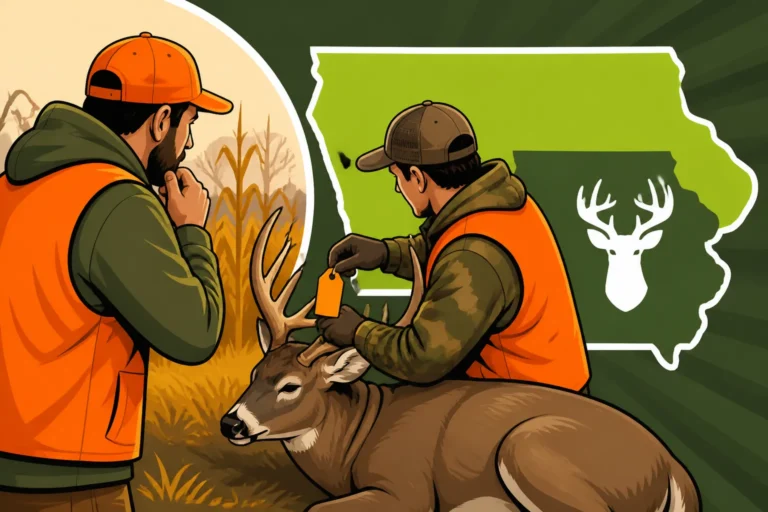
The good news is that reporting your harvest is quite easy, thanks again to the Go Outdoors Iowa portal. After harvesting a deer or turkey, you'll need to notch your tag (as per instructions on the tag itself) and attach it to the animal. Then, within a specific timeframe (usually within 24 hours of harvest and before the animal leaves the state or is processed by a commercial locker plant), you must log into your Go Outdoors Iowa account and submit your harvest report. You'll need to provide information such as the date of harvest, the county it was harvested in, the species and sex of the animal, and sometimes the type of weapon used. The specific details regarding Iowa Deer Harvest Reporting Rules are readily available.
Failing to report your harvest within the specified timeframe can result in fines and other penalties, so it's not something to take lightly. Even if you're excited or tired after a successful hunt, make sure to prioritize this step. It's part of being a responsible and ethical hunter, ensuring that the privilege of hunting can continue for generations to come. Having the GoHunt app or a bookmark to the Go Outdoors Iowa portal on your phone can make this process even smoother when you’re out in the field.
CWD Sampling and Carcass Transport Restrictions
Chronic Wasting Disease (CWD) is a serious neurological disease affecting deer, elk, and moose. It's a constant concern for wildlife managers, and Iowa is no exception. To monitor and control the spread of CWD, the Iowa DNR has implemented specific regulations regarding CWD sampling and carcass transport. These rules are crucial for protecting Iowa's deer herd and maintaining public health and safety. Hunters play a vital role in this effort.
In certain counties identified as CWD surveillance zones, mandatory CWD sampling may be required for harvested deer during specific seasons. This usually means that deer harvested in these counties must have their heads or lymph nodes submitted for testing. The DNR provides designated drop-off locations or check stations for this purpose. Always check the current year's hunting regulations booklet or the Iowa DNR website to see if you're hunting in a mandatory CWD sampling county and what the specific requirements are. Participating in these sampling efforts is incredibly important for early detection and management of the disease. Details can be found in Iowa CWD Sampling and Carcass Rules.
Beyond sampling, there are also strict carcass transport restrictions, particularly for deer harvested in other states or even within Iowa if coming from a CWD-positive area. The general rule is that only certain parts of a deer carcass (deboned meat, clean skull plate, antlers, hides, and finished taxidermy products) can be transported across state lines or out of CWD surveillance zones. Whole carcasses, spinal columns, and other high-risk materials are typically prohibited from movement to prevent the inadvertent spread of the disease. These regulations are designed to minimize the risk of CWD transmission and protect both Iowa's deer and the deer populations of neighboring states. Always process your deer thoroughly in the field or at home before transporting it long distances.
Legalities of Party Hunting and Tagging
Hunting can be a deeply personal experience, but it's also often a communal one, particularly during Iowa's shotgun seasons where group drives are common. "Party hunting" refers to a group of licensed hunters working together to harvest game, and Iowa has specific rules governing this practice, especially concerning tagging. Understanding these rules is crucial to avoid violations and ensure everyone in your hunting party remains legal and ethical. The nuances of Iowa Party Hunting Rules are important for group dynamics.
In Iowa, for deer and turkey, a unique aspect of party hunting is the ability to tag an animal harvested by another member of your hunting party, provided certain conditions are met. All individuals in the hunting party must be properly licensed for the species being hunted, and they must be actively hunting together when the animal is harvested. For instance, if one hunter shoots a deer but has already filled their tag, another licensed hunter in the same party who has an unfilled tag for that species and season can legally tag the animal. This is common in shotgun drives where multiple hunters might be pushing deer, and one shooter fills a tag for another group member.
However, there are critical limitations and ethical considerations. This practice is generally restricted to the primary shotgun and muzzleloader seasons for deer, and specific rules apply to turkey. It's typically not allowed during archery season. The intent of party hunting is to facilitate a group hunt, not to allow someone who wasn't present or active in the hunt to simply claim a deer. Furthermore, the animal must be legally harvested, and the tag must be immediately notched and attached as required. Always ensure clear communication within your hunting party about who has filled what tags and who is eligible to tag an animal. Misunderstandings can easily lead to serious violations for everyone involved. Honesty and strict adherence to the rules are paramount when party hunting.
Key Regulations Beyond Licensing
Beyond the specific requirements for hunter education and obtaining the correct licenses, there are a host of general regulations that every Iowa hunter must adhere to. These rules are in place for safety, fair chase, and to ensure a respectful and sustainable hunting environment for everyone. From what you wear to when you can hunt, these regulations shape the daily reality of hunting in Iowa.
Blaze Orange and Safe Zones of Fire
Safety is always the top priority in hunting, and few regulations underscore this more than the requirements for blaze orange clothing. During Iowa's shotgun and muzzleloader deer seasons, as well as during any youth deer season, specific blaze orange requirements are in effect. All hunters, whether actively hunting or simply accompanying a hunter, must wear an exterior garment that is solid blaze orange. This includes hats, coats, vests, or any other visible clothing. The intent is simple: to make hunters highly visible to one another, significantly reducing the risk of accidental shootings.
The specific rules often dictate a minimum amount of blaze orange, such as at least one-half of the body, excluding the head and extremities. However, it's always recommended to wear as much blaze orange as possible, especially during these busy seasons. While archery hunters do not have a mandatory blaze orange requirement outside of the gun seasons, many archers choose to wear some form of orange when walking to and from their stands, particularly if they are hunting during overlapping seasons or in areas where gun hunters might be present. Familiarizing yourself with Iowa Blaze Orange Requirements is essential.
Closely related to blaze orange is the concept of a "safe zone of fire." This refers to the area in which a hunter can safely shoot without endangering other hunters, non-hunters, or property. This is particularly critical during party hunts or when hunting in areas with varied terrain and potential hidden obstacles. Before any group hunt, it's vital to discuss and agree upon safe zones of fire for each hunter. This includes understanding what's beyond your target, identifying potential ricochet hazards, and always positively identifying your target and what's behind it before taking a shot. A commitment to these safety principles is foundational to responsible hunting.
Legal Hunting Hours and Equipment Restrictions
Hunting in Iowa is governed by strict legal hunting hours, primarily centered around sunrise and sunset. For most game species, hunting is allowed from one-half hour before sunrise to one-half hour after sunset. This specific window is designed to ensure fair chase, aid in positive target identification, and prevent unethical night hunting. However, there are exceptions, such as for coyote hunting at night, which has its own specific set of rules and often requires a fur harvester license. Always check the official Iowa DNR regulations for the precise legal shooting hours for the species you are pursuing, as they can vary. The Iowa Legal Shooting Hours are strictly enforced.
In addition to timing, Iowa has specific restrictions on the types of equipment that can be used for hunting different species. For deer, this includes regulations on shotgun gauges, slug types, straight-wall cartridge calibers (and their minimum/maximum diameters and muzzle energy), muzzleloader projectiles, and bow draw weights/arrow specs. For instance, centerfire rifles with bottleneck cartridges are generally prohibited for deer hunting in Iowa, with a few specific exceptions for straight-wall cartridges. These equipment rules are often in place for public safety, fair chase, and to ensure humane harvesting.
For turkey hunting, restrictions typically involve shotgun gauge limits and the prohibition of certain types of firearms or archery equipment. Waterfowl hunting also has its own equipment rules, such as the mandatory use of non-toxic shot. It’s imperative that every hunter verifies their chosen equipment meets all state regulations before heading into the field. Ignorance of the law is not an excuse, and using illegal equipment can lead to severe fines and confiscation of gear. A quick check of the current year's hunting regulations booklet will clarify any doubts you might have.
Trespass Laws and Obtaining Permission
Respect for private property is a cornerstone of responsible hunting, and Iowa's trespass laws are clear and strictly enforced. Unauthorized entry onto private land for hunting, trapping, or even scouting is illegal and can result in significant fines and loss of hunting privileges. The vast majority of land in Iowa is privately owned, making it crucial for hunters to understand and adhere to these regulations. Even if land isn't posted with "No Trespassing" signs, it is still considered private property, and permission is required.
The golden rule in Iowa is simple: "Know before you go." Always assume land is private unless it's clearly marked as public hunting ground (like a Wildlife Management Area or an IHAP property). If you wish to hunt on private land, you must obtain permission from the landowner. While verbal permission is legally sufficient in Iowa, it is highly recommended to obtain written permission, especially if you plan to hunt the same property repeatedly. A written agreement can prevent misunderstandings and provide proof of permission if questioned by a conservation officer or other property owners.
When seeking permission, always be respectful, introduce yourself, and clearly state your intentions. Offer to share game or help with chores. Landowners are often more willing to grant access to polite, responsible hunters. Never take "no" personally, and always thank them for their time, regardless of their decision. For public land hunting, resources like the Iowa DNR's Hunting Atlas, the GoHunt app, or OnX Maps are invaluable for identifying boundaries and access points. Even on public land, be mindful of adjacent private properties and avoid encroaching. Understanding and respecting these trespass laws isn't just about avoiding legal trouble; it's about fostering positive relationships between hunters and landowners, which is vital for the future of hunting in Iowa.
Disclaimer
The information provided in this guide is for general informational purposes only and does not constitute legal advice. Hunting regulations in Iowa are subject to change, and it is the hunter's sole responsibility to consult the most current Iowa Department of Natural Resources (DNR) regulations and statutes before engaging in any hunting activities. Always refer to the official Iowa Hunting and Trapping Regulations booklet for the most accurate and up-to-date information.