Where Iowa Turkeys Roost
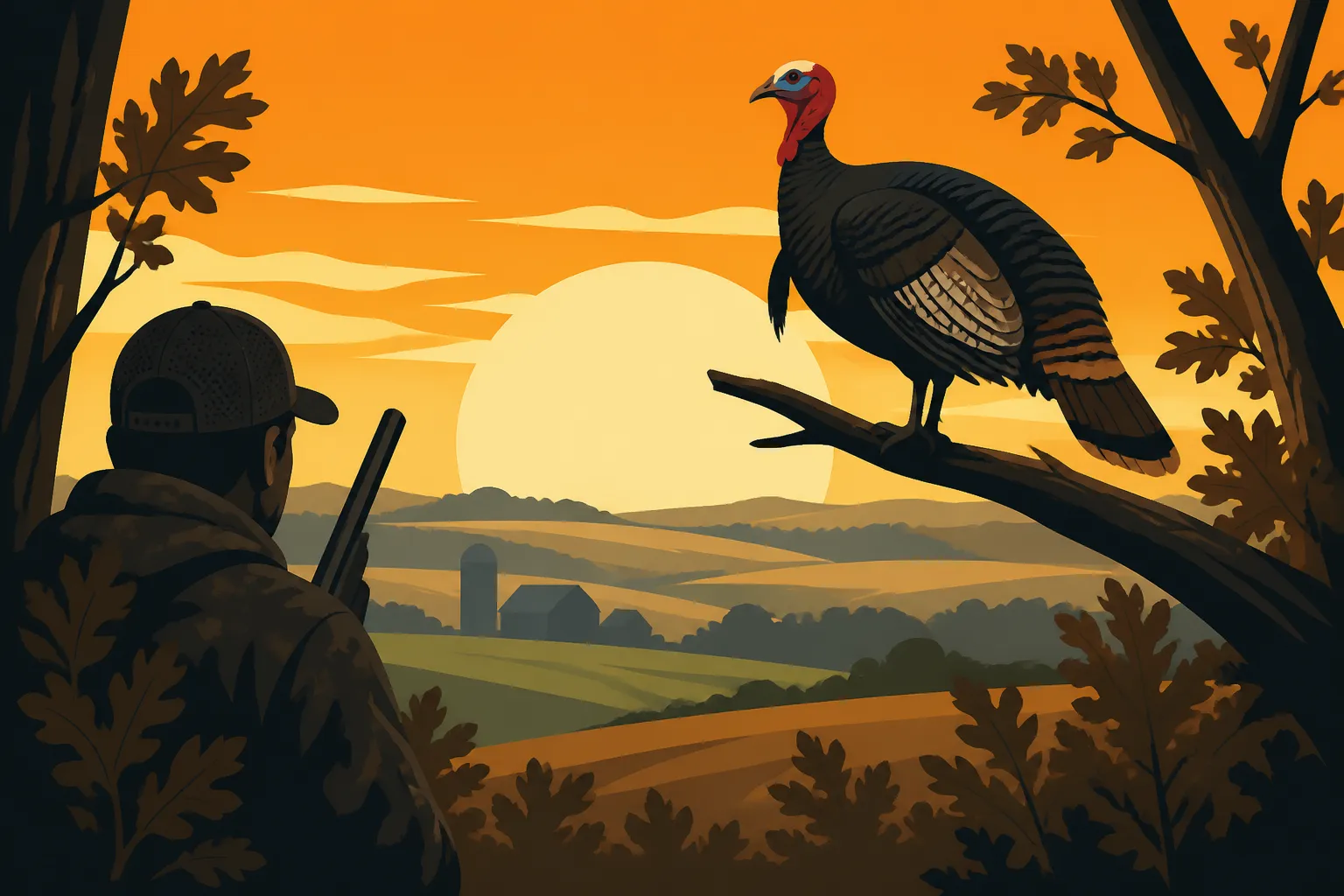
There’s nothing quite like the hopeful silence of an Iowa spring morning, broken only by the chirping of awakening songbirds, as you wait for that first thunderous gobble to confirm you’re in the right spot. But if you've ever spent countless hours still-hunting through timber, trying to locate those elusive Eastern longbeards only to come up empty, you know the immense frustration. Understanding where Iowa turkeys roost isn't just about finding them for an morning hunt; it’s about decoding their daily habits, ensuring safety, and boosting your chances of a successful spring season. This guide will walk you through the precise locations these wary birds choose for their night's rest and how you can use that knowledge to your advantage.
Understanding Why Turkeys Roost Where They Do
Wild turkeys aren't just picking a tree at random to sleep in. Their roosting choices are deeply ingrained survival strategies, honed over generations to keep them safe from predators and comfortable in varying weather conditions. Thinking like a turkey when it comes to choosing a bedtime spot is your first step toward finding them.
Safety First: Predators and Elevation
Imagine being a big, clumsy bird that can’t see well in the dark, with coyotes, bobcats, and raccoons all looking for an easy meal on the forest floor. That's essentially a turkey's reality every night. They seek out elevated positions primarily for security. Getting off the ground puts a crucial barrier between them and most nocturnal predators.
They typically choose tall, sturdy trees that offer clear flight paths up and down. You'll often find them choosing trees that are on a slight rise or ridge, or even better, overlooking a steep bank or waterway. The idea is to make it as difficult as possible for a ground predator to surprise them. They want to be able to fly up into the tree with minimal effort and fly down the next morning without obstacles, putting distance between themselves and the forest floor quickly. This natural caution is why you’ll rarely find them roosting in short, scraggly saplings or dense, low-canopy thickets where a predator could easily climb or ambush them.
Comfort and Cover: Weather and Wind
While safety is paramount, comfort certainly plays a role, especially in Iowa's unpredictable spring weather. Turkeys are exposed to the elements when they roost, so they'll often pick trees that offer some protection from wind, rain, and cold.
Consider a blustery spring evening with a cold front moving in. Turkeys will often tuck into the leeward side of a ridge or choose a dense stand of pines or cedars that breaks the wind. These conifer groves, while not as common across all of Iowa, can be absolute magnets for roosting birds during harsh weather because they provide excellent thermal cover and block wind better than bare deciduous trees. In heavy rain, they might seek out trees with a denser canopy to minimize direct exposure. Large, mature oaks with their spreading branches can offer decent cover, but don’t discount thick evergreens when the weather turns nasty. They're looking for a relatively stable, protected perch where they can minimize energy expenditure through the night.
Proximity to Food and Water Sources
Turkeys are efficient creatures, and their daily routine is often a loop: roost, fly down, feed, water, strut, dust, and then back to the roost. It makes perfect sense that they'd want their roost site to be reasonably close to their preferred morning feeding areas or a reliable water source.
While they might not roost directly over a picked cornfield, they'll often be in the timber edge just a short fly-down away. If you've been doing your scouting and identified a consistent feeding area – perhaps a newly greening field edge, a patch of oaks dropping last year's acorns, or a cattle pasture full of insects – look for ideal roosting timber within a few hundred yards. The convenience of flying down directly into a breakfast buffet is a strong draw. Similarly, if water is scarce, especially later in the spring, a roost near a creek or pond can be a major factor. They want to fly down, hit the ground, and immediately have access to what they need, rather than walking a long distance, which exposes them to more potential dangers.
Identifying Prime Roosting Locations in Iowa
Iowa's diverse landscape, from rolling hills to vast agricultural fields and river bottoms, means turkeys have a variety of choices for their evening perches. Knowing the typical habitats where these birds thrive will help you narrow down your search. If you want to learn more about Iowa Turkey Population Trends, understanding their habitat needs is crucial.
Mature Timber Near Waterways and River Bottoms
This is perhaps the quintessential Iowa turkey roosting habitat. Think of the mighty Mississippi River corridor, the Des Moines River, or any of the smaller creeks and rivers that snake through the state. These waterways are almost always lined with mature timber—towering cottonwoods, massive oaks, and sturdy maples that provide excellent height and strong branches for roosting.
River bottoms often offer a combination of elevation (even if subtle), dense canopy cover, and close proximity to water and fertile feeding grounds. Turkeys love to pitch up into the tallest trees they can find in these areas, often overlooking the river or a low-lying field. These areas tend to be less disturbed by human activity in the evenings, offering the birds a sense of security. I’ve personally found some of my best roosting activity on stretches of timber that run along one of Iowa's numerous creeks. It's a classic example of Timber and Creek Corridors as Deer Cover also serving as prime turkey real estate. When you're using your mapping apps like GoHunt, look for those thick green lines following the blue squiggly ones – that's often where the magic happens.
Isolated Woodlots and Timber Fingers in Farmland
While vast river bottom timber is great, a significant portion of Iowa is dominated by agriculture. In these landscapes, isolated woodlots, shelterbelts, and narrow fingers of timber that extend into crop fields become critical roosting spots. These pockets of trees, often surrounded by miles of corn or soybeans, act like islands of safety for turkeys.
These smaller timber blocks, even if only a few acres, can hold surprising numbers of birds, especially if they contain mature trees. Turkeys will fly across open fields to reach these secure roosts. For hunters, these spots can be golden because the birds are often predictable; they'll fly into the same woodlot every evening, or at least a specific section of it. When you're E-Scouting Iowa Farm Country From Home, pay close attention to any patch of timber, no matter how small, that sits adjacent to fields. These "islands" are often overlooked by other hunters who focus on larger public tracts, making them fantastic opportunities if you can secure permission. A good satellite image on a tool like GoHunt can clearly show these isolated timber blocks and help you plan your approach.
Steep Bluffs and Ridgelines in the Driftless Region
Head northeast in Iowa, and the landscape changes dramatically into what's known as the "Driftless Area." Here, you'll find steep bluffs, deep valleys, and rugged timbered ridgelines. This unique topography offers turkeys some fantastic roosting options that leverage elevation to their advantage. If you're hunting in this area, you'll want to read up on Northeast Iowa Driftless Hunting strategies.
In these areas, turkeys will often roost on trees growing on the very edge of a bluff or along a sharp ridgeline. This allows them a commanding view of the valley below and an unobstructed flight path when they pitch off the limb in the morning. The steep terrain makes it incredibly difficult for ground predators to approach unseen, adding another layer of security. Look for the tallest trees on these prominent features. They might not be the biggest around in terms of trunk diameter, but their elevation makes them prime targets. These spots are often associated with larger expanses of Eastern Turkeys in Iowa Timber, providing ample space for these birds to thrive.
Strategies for Locating Roosted Turkeys
Once you have a good idea of where turkeys like to roost, the next challenge is actually pinpointing which trees they are using on a given night. This requires a combination of active scouting, technological assistance, and interpreting the signs they leave behind.
Evening Scouting: Listening for Gobbles and Fly-Up
There's simply no substitute for getting out into the woods in the evening to listen. This is the most reliable way to confirm an active roost. As the sun begins to set and light fades, turkeys will start flying up to their roosts. This process is often accompanied by distinct sounds. You'll hear the powerful whoosh of their wings as they gain elevation, followed by excited "fly-up cackles" as they settle onto their limbs.
Once they're on the roost, gobblers often let out a few last calls before dark. These "goodnight" gobblers are golden for a hunter. Position yourself discreetly, ideally on a ridge or high point that allows you to hear a wide area without being detected. Use a crow call or owl hooter periodically as it gets dark; these shock calls can often provoke a tom to gobble, revealing his exact location. Just be cautious not to call too aggressively or too close, as you don't want to alert the birds to your presence. Remember, the goal is to locate, not engage. For more in-depth techniques, check out Roosting Iowa Turkeys the Night Before. It's a critical part of a successful spring hunt.
E-Scouting and Topographic Maps
Before you ever step foot in the woods, you can significantly narrow down potential roosting areas using modern mapping tools. Platforms like GoHunt, or even detailed satellite imagery found on public mapping services, are invaluable for this.
Start by looking for the habitat types discussed earlier: mature timber along waterways, isolated woodlots, and prominent bluffs or ridgelines. Zoom in to identify the tallest trees within these areas. Look for patches of denser canopy that might indicate evergreen cover. Use topographic layers to identify elevation changes. A dark timber patch on a steep bank overlooking a creek is a prime candidate. Mark these potential roosting areas on your map. This digital reconnaissance helps you focus your ground scouting efforts, saving you time and shoe leather. It’s an efficient way to get a jump on the season and forms the basis for effective E-Scouting Iowa Farm Country From Home. By combining satellite views with topo lines, you can really start to see the landscape through a turkey's eyes.
Interpreting Roost Sign and Droppings
If you find yourself in a promising piece of timber and haven't heard any vocalizations, you can still find evidence of previous roosting activity. Turkeys are creatures of habit, and if an area has been used before, chances are it will be used again.
Walk through areas you suspect are roosts and look for telltale signs on the ground directly beneath large, prominent trees. You'll be looking for a concentration of turkey droppings – these are typically cylindrical and segmented, though they can vary. Fresh droppings are usually softer and shiny. You might also find shed feathers, especially larger flight feathers, scattered on the ground. The more fresh sign you find, the more confident you can be that turkeys are actively using that particular tree or cluster of trees. Over time, you may even notice where the ground is worn down or cleared in areas directly under frequent roosts. Just be mindful not to disturb the area too much, as you want to keep it pristine for future use.
Setting Up on a Roosted Bird for Success
Once you’ve successfully located a roosted gobbler, the real work begins. Getting into position before fly-down without alerting the bird is arguably the most critical step in sealing the deal. This is where many hunts are won or lost.
Early Morning Approach and Quiet Entry
The golden rule here is to get there early. And I mean early, sometimes an hour or more before first light. Turkeys have exceptional eyesight, even in low light, and they are incredibly alert to any unusual movement or sound. Your approach needs to be as quiet and stealthy as possible.
Plan your route in the daylight beforehand. Identify natural terrain features like creek beds, ditches, or ridge lines that can offer cover for your approach. Use any available shadows or dense brush to conceal your movement. Walk slowly, lifting your feet rather than dragging them, and avoid snapping twigs or rustling leaves loudly. Pay close attention to wind direction; you want the wind in your face or quartering to you, carrying your scent away from the roost tree. Don’t rush, even if it means moving at a snail's pace. Bumping a roosted bird almost guarantees a bust, sending him off silently in the wrong direction and often ruining your morning. If you're not sure how early to leave, consider the advice in Walking In Before Legal Light to ensure you're in place well ahead of time.
Positioning for the Fly-Down
Your setup location is absolutely crucial. You want to be close enough to the roost tree for a shot when the bird flies down, but not so close that he spots you. A good rule of thumb is to set up 75 to 150 yards from the roost tree, ideally where you can see his expected fly-down path.
Look for a spot that offers natural cover—a fallen log, a thick patch of evergreens, or a fencerow—that breaks up your silhouette. Ensure you have a clear shooting lane in the direction you expect the gobbler to come from. Consider the topography; if he flies down into a dip, you might lose sight of him. Also, think about where the sun will rise. You want the sun at your back, shining into his eyes as he flies down, giving you a visual advantage. Avoid setting up directly under the roost tree; turkeys rarely fly straight down, instead pitching out to a safer, more open area. For optimal strategy, make sure to read up on Setting Up Before Fly-Down to learn how to perfectly anticipate their morning movements.
Decoy Placement and Initial Calling
Decoys can be a powerful tool when hunting a roosted bird, but placement is everything. Often, one or two hen decoys, set up 20-30 yards out from your position, facing away from you (as if walking off), can be incredibly effective. This presentation makes them look approachable and less threatening. If you're using a gobbler decoy, place it behind the hens, making him appear to be a challenging intruder.
Once you’re set up and it's approaching fly-down time, resist the urge to hammer him with loud calls. Start with soft, subtle tree yelps or purrs, just enough to let him know there’s a hen in the area. This natural, quiet invitation often works better than aggressive calling right off the bat, especially when they are still on the limb. Let him do the bulk of the gobbling from the tree. You're just giving him a reason to come your way when he pitches down. If he sounds hot, you can increase intensity after he hits the ground. Learn more about effective setups with Turkey Decoy Spreads That Work.
For a quick reference, here’s a table summarizing prime roosting habitats across different Iowa regions:
| Iowa Region | Primary Roosting Habitats | Key Characteristics | Example Tree Types |
|---|---|---|---|
| River Bottoms & Central Iowa | Mature timber along major rivers and creeks, deep creek corridors | Tall, sturdy trees offering elevation, near water/food | Cottonwood, Oak, Sycamore, Silver Maple |
| Agricultural/Farm Country | Isolated woodlots, shelterbelts, timber fingers in fields | Pockets of mature trees surrounded by open ground, security-focused | Oak, Walnut, Cedar (for cover), Hedge/Osage Orange (dense) |
| Northeast Driftless Region | Trees on steep bluffs, ridgelines, valley edges | High elevation, clear flight paths, often conifer groves | Oak, Maple, Hickory, Pine, Cedar |
| Southern Iowa | Extensive timber blocks, mature trees in CRP edges | Large timber tracts, dense cover, often mixed with brush | Oak, Hickory, Walnut, Cedar, Locust |
Remember, the goal is to be invisible and irresistible. Patience and a well-planned setup will significantly increase your odds of calling that gobbler off the roost and into your lap. If you hear him gobbling on the limb, you're halfway there; the rest is about execution, and knowing when and how to start Calling a Gobbler Off the Roost is a key skill. After he hits the ground, if he hangs up, you might even consider Run-and-Gun Turkey Tactics on Iowa Public Land, but for a roosted bird, a static ambush is usually best. Don't forget, Turkey Poult Survival and Spring Weather also plays a role in future populations, so understanding all aspects of their life cycle makes you a more knowledgeable hunter.
Disclaimer
This article is for general informational purposes only and does not constitute professional advice. Laws, prices and regulations vary by location and change over time. Consult a qualified professional for guidance on your specific situation.