Best Iowa Counties for Quail
For many of us who love chasing upland birds, the sound of a bobwhite quail covey flush is music to our ears. But let's be honest, finding consistent quail hunting in Iowa can feel like a real challenge, especially with all the focus on pheasants or deer. It's frustrating to drive around, hopeful, only to find endless rows of corn and beans with no suitable cover in sight. This guide is here to cut through that frustration, directing you to the best Iowa counties for quail and detailing the specific types of habitat you need to be looking for to put more birds in the bag.
The Heart of Iowa's Quail Country: Southern Iowa
When you're talking about quail in Iowa, your compass absolutely has to point south. This isn't just a hunch; it's where the habitat consistently provides what these birds need to thrive. Unlike the vast, flat, intensely farmed landscapes that dominate much of central and northern Iowa, the southern tiers of counties offer a much more diverse and rugged topography, which is key to bobwhite survival.
Why Southern Iowa Reigns Supreme for Bobwhites
Southern Iowa has historically been the stronghold for bobwhite quail, and for good reason. The landscape simply lends itself better to their needs. You'll find a lot more rolling hills, timbered draws, and smaller, irregularly shaped farm fields that create abundant edge habitat. This region hasn't seen the same level of expansive, wall-to-wall row cropping that has impacted game bird populations elsewhere. The land use here tends to be a mix of agriculture, pasture, timber, and conservation efforts, providing that crucial interspersion of cover and food sources.
Think about it: quail don't migrate. They live and die in a relatively small area, needing everything they require – nesting cover, brooding cover, escape cover, and food – to be within a few hundred yards. Southern Iowa’s varied terrain naturally provides more of these essential elements in close proximity. The numerous creek bottoms, hedgerows, and brushy field borders offer year-round protection from predators and harsh weather, which is absolutely vital for quail to endure Iowa’s winters. While quail populations can fluctuate based on severe winters or wet springs, the underlying habitat in southern Iowa gives them the best chance to bounce back.
Key Counties for Quail Activity
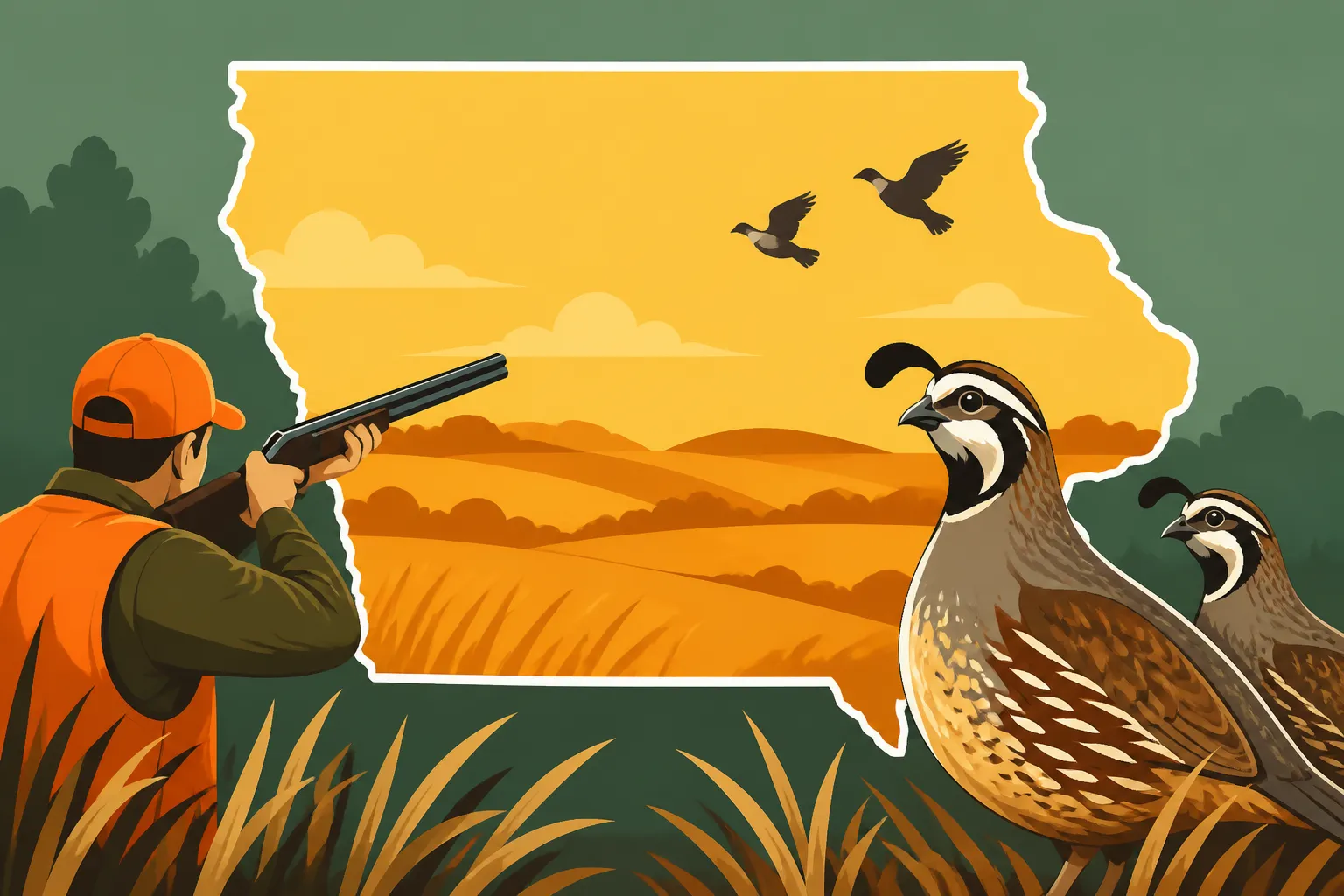
While you might find a covey almost anywhere in Iowa with the right isolated pocket of habitat, if you're serious about targeting bobwhites, you'll want to focus your efforts primarily on the southern two to three tiers of counties. These areas boast the most robust and consistent populations. Counties like Appanoose, Wayne, Ringgold, Decatur, Lucas, Monroe, Van Buren, Davis, and Clarke are often mentioned as prime quail hunting destinations.
What makes these particular counties stand out? It's that critical combination of less intensive farming practices, more rugged topography, and a higher percentage of public lands or lands enrolled in conservation programs that specifically benefit upland birds. In counties like Wayne and Lucas, you’ll find larger tracts of state forests or wildlife management areas that encompass diverse habitat. Other counties, while perhaps having less large-scale public ground, often have more private landowners who are managing for wildlife, or have enrolled their lands in programs like the Habitat and Access Program (IHAP). Utilizing scouting tools like GoHunt, which can layer property lines and public access points, will be invaluable in these areas. You can also dive into resources like Iowa Public Land Quail Cover to narrow down your options within these counties.
Understanding Quail Habitat: More Than Just Grass
Many hunters think "grass" when they think of upland birds, but quail are much pickier than pheasants when it comes to their living arrangements. They need a complex mosaic of different cover types that provide everything from nesting to escape to food within a very small home range.
The Critical Mix of Cover and Food
Bobwhite quail thrive in what we call "edge habitat" – those places where two or more distinct cover types meet. They need open, grassy areas for nesting, often clumps of bunchgrasses that provide concealment. Once chicks hatch, they require areas with bare ground interspersed with vegetation for easy movement and foraging for insects, which are a critical protein source for growing poults. And perhaps most importantly, they absolutely must have dense, brushy escape cover nearby. This could be plum thickets, multiflora rose, osage orange hedgerows, or thick briar patches. Without this dense cover, they are highly vulnerable to predators like hawks, owls, and coyotes.
When you're walking through a potential quail spot, you should be looking for this diversity. Imagine being a small bird trying to survive winter or escape a hawk – every component of the habitat needs to serve a purpose. A large, unbroken field of switchgrass might be great for pheasants, but if there's no brushy cover within a stone's throw, quail will typically avoid it. For a deeper dive into what makes prime bobwhite territory, check out Bobwhite Quail Habitat in Iowa.
CRP, Timber Edges, and Brushy Draws
These three habitat types are your golden ticket to finding quail in Iowa, especially in the southern counties.
CRP (Conservation Reserve Program) Fields: These fields are often a lifesaver for upland birds, but not all CRP is created equal for quail. The best CRP for quail isn't just tall grass; it's CRP that has a good mix of native grasses and wildflowers, with some bare ground for easy travel, and most importantly, it's adjacent to brushy cover. Think of CRP fields that border timber, creek bottoms, or old fencelines choked with brush. The grass provides nesting and brooding habitat, while the nearby brush offers crucial escape and thermal cover. Sometimes, CRP can get too thick and rank, making it difficult for quail to move through, so look for fields that have some diversity in vegetation height and density. The principles of what makes good CRP Grass and Where Bucks Bed often apply to quail too, as both species benefit from diverse, dense cover.
Timber Edges: The transition zone where a timber block meets an open field or grassland is a magnet for quail. This edge often has a healthy growth of saplings, shrubs, and briars, creating a protective buffer. Quail will use the timber for roosting or thermal cover in harsh weather, and then venture out into the edges for foraging. Look for timber stands with an understory, not just mature trees with clean ground underneath. These edges are often where you’ll find the perfect blend of food (seeds from fields, insects from the undergrowth) and secure cover.
Brushy Draws and Creek Bottoms: These are arguably the most consistent places to find quail, especially during late season or after hunting pressure has moved birds. A brushy draw or a creek bottom choked with plum thickets, dogwood, multiflora rose, and thorny briars is a quail's fortress. It provides incredible escape cover, protects them from the wind and cold, and often holds a surprising abundance of insects and wild seeds. Many times, quail will gravitate to these areas, especially if they are connected to other cover types like CRP or timber edges. If you're wondering how to really dissect these areas, you might find some useful insights in Quail Coveys in Southern Iowa Brush or even Scouting Iowa Timber and River Bottoms which provides foundational skills for identifying game-holding cover.
| County | Primary Habitat Type | Key Features | Known For |
|---|---|---|---|
| Appanoose | Mixed timber, CRP, brushy draws | Rolling hills, good interspersion of cover, smaller fields | Consistent quail numbers |
| Wayne | Grasslands, timber fringes, creekbeds | Expansive public lands (State Forests, WMAs), diverse terrain | Strong covey finds, winter survival |
| Ringgold | CRP, pasture, small timber blocks | High enrollment in conservation programs, gentler topography, good edges | Accessible quail habitat |
| Decatur | Forested stream corridors, old fields | Abundant edge habitat, traditional quail territory, dense briar patches | Thick escape cover |
| Lucas | State forests, brush, timber edges | Stephens State Forest provides large, contiguous blocks of prime cover | Good for combined deer/quail hunts |
| Monroe | Timbered river breaks, pasture, CRP | Mix of rugged river breaks and upland fields, less intense agriculture | Remote pockets of birds |
| Van Buren | Brushy ditches, timber patches, creeks | Southeast Iowa's mixed landscape, often overlooked, good small game hunting | Diverse cover options |
Scouting and Strategy for Iowa Quail
Finding these specific habitat elements in the right counties is one thing, but knowing how to effectively scout them and then hunt them is another challenge entirely. Quail hunting is often a game of persistence, attention to detail, and knowing when to trust your instincts (or your dog's nose).
E-Scouting and On-the-Ground Recon
Before you even tie your boots, start with a robust e-scouting session. This means pulling up aerial imagery and mapping tools. Platforms like GoHunt, along with the official Using the Iowa DNR Hunter Atlas, are incredibly powerful for identifying potential quail habitat. Look for that crucial interspersion: fields of CRP next to timber, especially if there's a brushy draw running through or alongside them. Identify old fencelines, plum thickets, and areas where row crops give way to tangled messes of briars and saplings. Pay close attention to corners of fields where timber encroaches, or where small, often overlooked patches of cover exist. Also, use these tools to identify access points, parking areas, and to determine if the land is public or private. Understanding Iowa County Conservation Board Hunting Rules for specific parcels can also be invaluable here. For public areas, specifically seek out spots mentioned in Finding Iowa IHAP Tracts on a Map, as these are often prime but can be less obvious.
Once you have some promising spots highlighted on your map, it’s time for boots on the ground. Even the best aerial imagery can't tell you everything. You need to walk the edges, check the density of the brush, look for tracks or droppings, and listen for calling birds in the early morning or late evening. Pay attention to how the cover connects, forming corridors that birds might use. Confirming your e-scouting observations with actual ground recon will save you countless wasted hours during the season.
Hunting Quail Effectively in Iowa
Quail hunting in Iowa is a different game than pheasants. Instead of sweeping large fields, you'll often be working smaller, denser patches of cover, sometimes even fighting your way through tangled briar patches. The key is to work these covers slowly and methodically, leaving no stone unturned. Quail are notorious for holding tight, often flushing at your feet or even after you've walked past them, especially if they have good escape cover nearby.
A good bird dog is almost indispensable for quail hunting. Not only will they find birds you would have walked right past, but they are also crucial for retrieving downed birds in thick cover, preventing lost game. If you're Working Pheasant Cover Without a Dog, the same principles of thoroughness apply, but expect to move at a slower pace and potentially lose more birds that fall into the dense cover.
When hunting with partners, safety is paramount. Quail flushes can be unpredictable, often low and fast in thick cover. Always know where your hunting partners are, communicate clearly, and only take safe shots. Work the cover in a line, pushing birds towards open edges or other hunters. Pay attention to the wind, as birds will typically flush into it, giving them better lift and speed. By understanding these tactics and focusing your efforts on the rich, diverse habitats of southern Iowa, you can significantly increase your chances of experiencing that exhilarating covey flush.
Disclaimer
This article is for general informational purposes only and does not constitute professional advice. Laws, prices and regulations vary by location and change over time. Consult a qualified professional for guidance on your specific situation.