Antler Growth and Nutrition
It's easy to look at a monstrous Iowa whitetail rack and wonder, "How on earth did that deer grow such a magnificent set of antlers?" Many hunters assume it's just about age, or maybe some secret mineral lick. But the truth is, while age is undeniably a huge factor, the underlying engine driving impressive antler growth is complex, deeply rooted in a deer's nutrition. This guide will peel back the layers, moving beyond the myths, to show you how diet, environment, and overall health conspire to create those coveted Iowa giants.
The Foundation: Understanding the Annual Cycle of Antler Growth
Before we dive into the nitty-gritty of what a deer eats, it's crucial to understand the biological rollercoaster that is antler growth. It's not a static process; it's a dynamic, energy-intensive cycle that repeats every single year for a mature buck. For a hunter, grasping this cycle helps make sense of why certain nutritional elements are so critical at different times.
The Annual Cycle of Antler Development
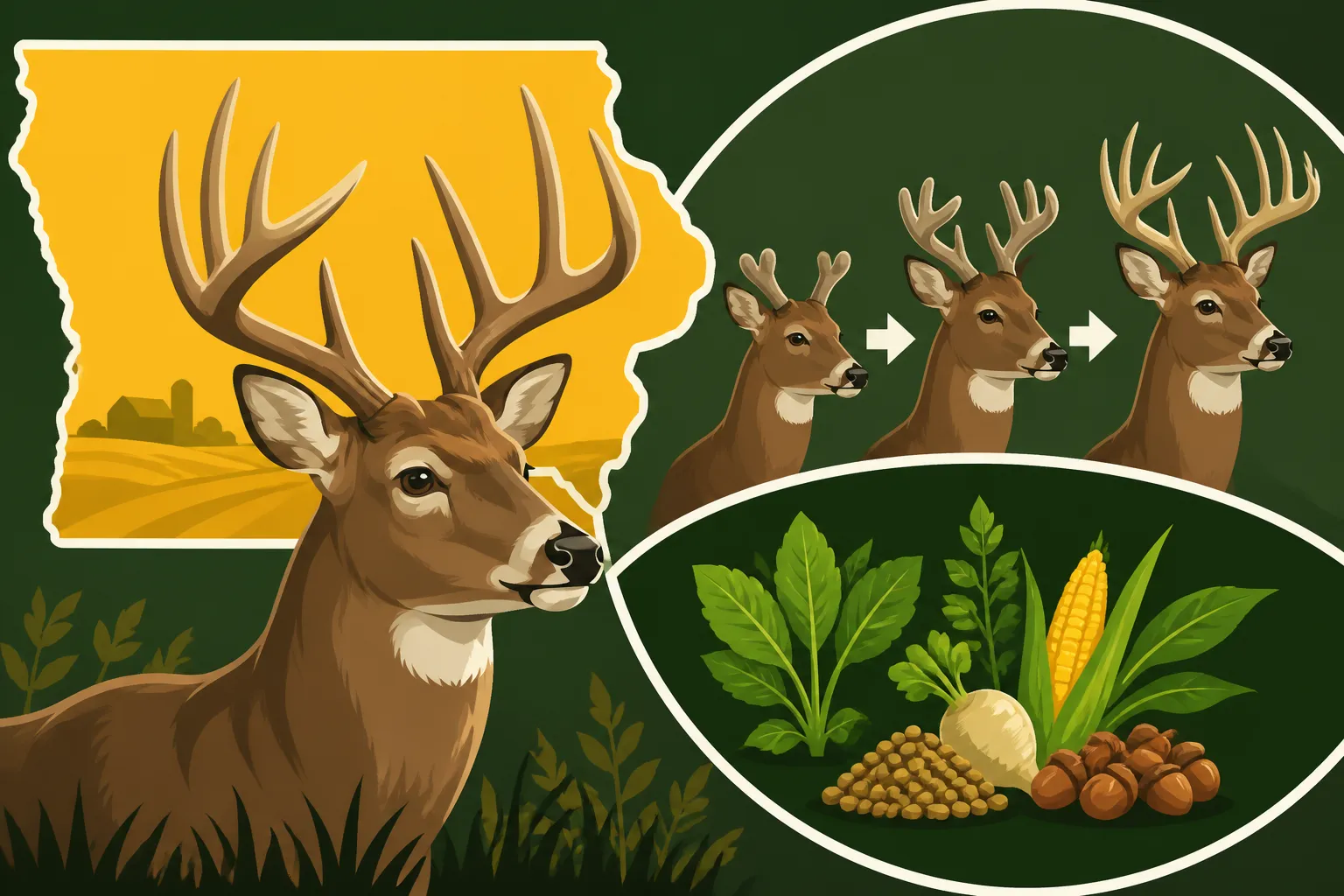
Think of a buck's antlers as temporary bone structures, shed and regrown annually. The process kicks off in late winter or early spring, shortly after the old antlers are cast off. This is a period of rapid, almost explosive growth, with antlers developing at an incredible rate. During this initial phase, the antlers are soft, spongy, and covered in velvet – a furry, blood-rich membrane that supplies the necessary nutrients for development. It’s an incredibly demanding time for a buck’s system.
As summer progresses, the antlers begin to mineralize, hardening into the solid bone structure we recognize. By late August or early September, the velvet dries up, blood flow ceases, and the buck begins to rub it off, revealing his polished rack. This transition from soft velvet to hard bone is where calcium, phosphorus, and other minerals become absolutely vital. Finally, after the rut, typically in late winter, the hormonal shifts trigger the casting of antlers, and the whole cycle begins anew.
Hormones, Genetics, and Environmental Triggers
While nutrition provides the raw materials, hormones act as the architects, dictating when and how much growth occurs. Testosterone, in particular, plays a critical role, not just in initiating the velvet shed and hardening process, but also in influencing overall antler size and density. A buck with robust hormonal health, often tied to his age and physical condition, is better positioned for superior antler development.
Genetics, of course, set the ultimate ceiling. A deer inherits its potential for antler size, shape, and even characteristics like typical versus non-typical growth. However, genetics alone aren't enough. Think of it like a blueprint: the most intricate design still needs quality materials and skilled builders to become a reality. Environmental factors, such as habitat quality, hunting pressure, and weather severity, then act as external influences, determining whether that genetic potential is fully expressed or suppressed. A buck with great genetics in a poor nutritional environment will never reach his full potential.
The Cornerstone of Nutrition: Macro and Micro Nutrients for Iowa Whitetails
Deer, like all living creatures, require a balanced diet to thrive. When it comes to antler growth, certain nutrients take center stage, playing indispensable roles in building those impressive racks. Iowa's rich agricultural landscape often provides a feast, but understanding what specifically contributes can help you identify quality habitat.
Protein: The Building Block
Protein is arguably the most talked-about nutrient when discussing antler growth, and for good reason. It's an absolute necessity for all aspects of a deer's health, from muscle development and lactation in does to immune function and, yes, growing antlers. Antlers are primarily composed of protein, and without adequate intake, even a genetically superior buck simply won't have the raw materials to grow a large rack. The early stages of antler growth, when the velvet is rapidly expanding, are particularly protein-demanding.
In Iowa, deer benefit immensely from the widespread agricultural crops. Alfalfa fields and lush soybean crops are prime sources of high-quality protein, especially during the crucial spring and summer growth periods. Forbs—broad-leafed plants—found in pastures, timber clearings, and along field edges also contribute significantly. The availability of these protein-rich foods is a key reason Why Iowa Produces Big Whitetail Bucks. On private land, thoughtful food plot choices can supplement natural forage, with plants like clover and alfalfa providing sustained protein throughout the antler-growing season.
Minerals: Calcium, Phosphorus, and Beyond
While protein builds the matrix, minerals are what harden and give antlers their density. Calcium and phosphorus are the titans of antler mineralization, making up a significant portion of the hardened antler. These minerals are absorbed from the soil by plants, which deer then consume. So, the mineral content of the soil directly impacts the mineral content of the forage, which in turn impacts the deer. This is a critical link often overlooked when hunters simply throw out mineral blocks. While mineral supplements can play a role, particularly in areas with poor natural mineral availability, a deer's primary intake comes from the plants they eat, grown in mineral-rich soil. This connection is further explored in Soil Fertility and Antler Growth.
Beyond calcium and phosphorus, a host of trace minerals, though needed in smaller quantities, are equally vital for overall deer health and, by extension, antler development. Zinc is crucial for tissue repair and immune function. Copper aids in bone formation and connective tissue health. Selenium and cobalt also play roles in metabolism and overall vitality. A deficiency in any of these, even a trace mineral, can indirectly impact antler quality by compromising a buck's overall health and ability to utilize other nutrients effectively. When you're thinking about habitat quality, look beyond just the big crops and consider the underlying soil health that supports a wide array of nutritious plants.
Iowa's Landscape: A Nutritional Goldmine (and Sometimes a Challenge)
Iowa's reputation for producing giant whitetails isn't just a coincidence; it's a direct reflection of the incredibly fertile landscape and the abundance of high-energy, high-protein food sources available to deer for much of the year. However, even in a state as rich as Iowa, there are nuances and challenges to consider.
The Impact of Agriculture on Deer Nutrition
Let's be honest, Iowa is a farming state, and our deer live in an agricultural paradise. The vast fields of corn and soybeans that blanket the state are a double-edged sword, but mostly a beneficial one for deer. During the spring and summer, young soybean plants offer an exceptional source of protein and other nutrients, fueling rapid antler growth. Once the crops mature and are harvested, the waste grain left behind, particularly corn, provides a massive influx of carbohydrates – pure energy – that helps deer pack on fat reserves for the winter and recover from the strenuous rut. This consistent availability of high-energy and high-protein food is a major contributor to Corn and Soybeans in a Deer Diet and why Iowa deer can grow so large.
However, the sheer dominance of monoculture farming (vast fields of only corn or soybeans) can also present challenges. While these crops are great, they don't offer the full spectrum of diverse forage found in a more natural, mixed habitat. When fields are picked clean in late fall, and snow covers the ground, deer might face nutritional gaps until spring green-up, particularly if natural browse is limited. This is where diverse native habitats become even more critical.
Natural Forage and Habitat Diversity
While ag crops steal the show, don't underestimate the power of natural forage and diverse habitats. Timber stands, especially those with varying age classes of trees and good undergrowth, provide browse, acorns (a critical fat and carbohydrate source), and a wider array of forbs. River bottoms and creek corridors are often biological hotspots, offering a mix of woody browse, succulent forbs, and mast crops that fill nutritional niches the ag fields might miss. To truly maximize antler potential, deer need more than just corn and beans. They need the rich variety that comes from mixed habitats.
Areas of Conservation Reserve Program (CRP) grass are not just excellent bedding cover, but they also host a surprising diversity of forbs and insects that deer utilize. You might think of CRP as just tall grass, but within those fields are numerous broadleaf plants that provide essential nutrients. Understanding these nuanced foraging areas is key to Scouting Iowa Timber and River Bottoms and finding where deer consistently find the best groceries. The relationship between CRP Acres and Iowa Deer Numbers is a clear indicator of how these areas contribute not only to shelter but also to a more diverse diet.
Water: The Often Overlooked Essential
We spend so much time talking about protein and minerals, but what about water? It's often taken for granted, but it's absolutely fundamental to a deer's health and ability to utilize all those precious nutrients. Water acts as the transportation system, moving nutrients throughout the body to where they're needed, including the rapidly growing antlers. Dehydration, even mild, can significantly impede nutrient absorption and overall metabolic processes, thus hindering antler development.
During the hot summer months, when antlers are in their fastest growth phase, adequate water intake is particularly crucial. Bucks are expending immense energy, and they need consistent access to clean water to support that growth and maintain their core body temperature. While Iowa generally has ample water sources – creeks, rivers, ponds, and even dewy fields – understanding their location is key, especially during drier periods. For hunters, knowing Finding Water in Dry Southern Iowa can be a game-changer, as these areas often concentrate deer during drought conditions, making them prime spots for scouting.
Age, Stress, and Other Factors Affecting Antler Quality
While nutrition lays the groundwork, it's not the only piece of the puzzle. A deer's age, the level of stress it experiences, and overall herd dynamics all play significant roles in determining whether a buck truly reaches his genetic potential for antler growth. Ignoring these factors means missing a big part of the story when it comes to Iowa's trophy deer.
Age Class: The Primary Driver of Antler Potential
Let's be clear: a deer cannot grow its biggest antlers until it reaches physical maturity. Nutrition can get a 1.5-year-old buck to grow a decent rack for his age, but it won't magically make him a 5.5-year-old giant. The most substantial gains in antler size and mass typically occur when a buck is between 3.5 and 6.5 years old. This is when his body has prioritized growth of his skeletal structure and muscles, and now has excess energy and nutrients to dedicate to antler development. Young bucks, on the other hand, are still growing their bodies, and their resources are simply stretched thinner.
This is why managing for older age classes is such a critical component of producing consistently big antlers. Iowa has a reputation for this precisely because many bucks are allowed to reach these older age classes. Understanding How Old Iowa Bucks Get Before Harvest is essential for any hunter interested in trophy management, whether on public or private land. It's not about making a deer grow bigger, it's about letting him live long enough to express his full potential.
Disease and Stress: Drawing Resources Away from Antlers
Imagine trying to build a magnificent house while constantly battling fires. That's what a deer's body goes through when facing chronic stress or disease. Any energy and nutrients that would normally be allocated to antler growth are instead diverted to survival, fighting off illness, or simply coping with adverse conditions. EHD and Iowa Deer Die-Offs, for instance, can devastate local deer populations and set back antler quality for years, as the survivors redirect resources to recovery rather than antler expression.
Chronic Wasting Disease (CWD), a neurological disease, is another grim example. While not immediately fatal like EHD, it slowly degrades a deer's health, eventually leading to emaciation and death. A CWD-positive buck will eventually show reduced antler size and overall body condition as the disease progresses, diverting critical resources away from growth. This is why vigilance around Chronic Wasting Disease in Iowa Deer and reporting sick animals is so important for herd health. High hunting pressure, severe winters, or prolonged drought conditions can also create stress, subtly but effectively reducing a buck's capacity to grow top-end antlers. Even factors like vehicle collisions, while sudden, remove mature deer from the herd, impacting overall age structure.
Managing for Antler Quality: A Holistic Approach
Ultimately, growing impressive antlers in Iowa or anywhere else isn't about a single magic bullet or a specific brand of mineral. It's a holistic endeavor that combines several key elements. You need genetically capable deer, which Iowa certainly has. You need them to reach maturity, which often means selective harvest strategies and understanding Buck Age Structure in Iowa. And critically, you need consistent, high-quality nutrition year-round, supported by diverse and healthy habitat. This includes the abundant agricultural crops, but also the natural browse, forbs, and water found in our timber, CRP fields, and river bottoms.
For those serious about understanding the nuances of deer movement and habitat, tools like GoHunt can be invaluable. Their mapping features allow hunters to dissect satellite imagery, pinpointing potential food sources, bedding areas, and travel corridors, helping you understand where deer are finding the best nutrition and cover. This informed approach, considering all factors from the ground up, is how you truly manage for better antler quality across the landscape, contributing to the overall health and vitality of the herd. It all ties back into a balanced approach to Iowa Deer Herd Management and Harvest, focusing on both robust deer and their environment.
Factor Impact on Antler Growth
Factor Impact on Antler Growth
This is a comprehensive guide to understanding why Iowa's deer population, particularly its bucks, consistently exhibit superior antler growth.
What Determines Antler Size? The Big Three
When you look at a truly exceptional Iowa buck, with heavy, wide, and tall antlers, what really made that happen? It boils down to a fundamental tripod of influences: age, nutrition, and genetics. You simply cannot have trophy-class antlers without all three aligning in a deer's favor. Neglect one leg of that tripod, and the whole structure weakens. Many hunters focus intensely on one aspect, say, genetics, but if the deer isn't getting the right nutrients or isn't old enough, that genetic potential remains untapped.
This interconnectedness means that understanding antler growth isn't just about what a deer eats today, but what it has been consuming throughout its life, how old it is, and the genetic blueprint it carries. Iowa's unique blend of environment and deer management practices contributes heavily to this perfect storm of antler-growing potential.
The Role of Genetics in Antler Expression
Genetics often feel like the most mysterious component, the invisible hand guiding antler development. While you can't see a deer's genes, their influence is undeniable in everything from tine length to beam circumference. It's the inherited potential that sets the upper limit on what a buck can ultimately grow.
The Heritability of Antler Traits
Deer inherit specific genetic codes that influence various antler characteristics. This includes factors like the number of points, beam diameter, spread, and even inherent symmetry or asymmetry. If a buck comes from a lineage of bucks with wider spreads or particularly long G2s, there's a higher probability he will also express those traits, provided he has the nutrition and age to do so. Think of it like a family tree for antlers: certain traits tend to run in the family.
It's important to remember that this genetic blueprint is a potential, not a guarantee. A buck might have the genes for a massive 180-inch rack, but if he lives in a food-poor environment or is harvested as a young deer, those genes will never fully express themselves. Conversely, even with stellar nutrition and age, a buck with inherently poor antler genetics won't suddenly grow a Boone and Crockett rack. The interaction between genes and environment is what truly sculpts the final rack.
Breeding for Better Antlers (in Managed Herds)
While recreational hunters can't directly manipulate the genetics of wild deer, understanding this principle is crucial for herd management. On intensively managed private lands, some landowners might focus on "culling" younger bucks with inferior antler characteristics, hoping to remove those genetics from the breeding pool. However, this is a complex and often debated topic, especially in free-range situations where bucks disperse, and does contribute half of the genetic material.
For the average Iowa hunter, focusing on genetics means appreciating the strong genetic base that already exists in the state's deer herd, largely due to fertile soils, excellent nutrition, and a history of allowing bucks to mature. Using tools like GoHunt, you can sometimes identify areas known for producing larger-racked deer, which often correlates with areas where genetics, age, and nutrition consistently converge.
The Power of Age: Letting Bucks Reach Maturity
This is perhaps the simplest and most impactful factor for hunters to influence: letting bucks get old. All the protein, minerals, and genetic potential in the world won't produce a true giant if the buck isn't given enough seasons to grow. It’s a common frustration to see a young buck with incredible potential harvested before he’s had a chance to fully develop.
The Growth Curve: Why Older Bucks Get Bigger
A whitetail buck’s body goes through distinct phases of development. In his first 1.5 to 2.5 years, almost all of his nutritional intake and energy are funneled into growing his skeletal frame and muscle mass. Antlers, while they do grow, are a secondary priority. You might see a "fork horn" at 1.5, or a small 8-point at 2.5. He's still a "teenager" in deer years, still filling out his frame.
It's typically not until a buck reaches 3.5 years old, and often 4.5 or 5.5, that his body has matured enough that surplus nutrients and energy can be fully dedicated to antler production. This is when you see significant increases in beam diameter, tine length, and overall mass. A 3.5-year-old buck might put on 20-30 inches of antler compared to his 2.5-year-old self. This exponential growth continues until a buck reaches his prime, usually between 5.5 and 7.5 years, before a gradual decline often sets in. Understanding this curve is fundamental to knowing How Old Iowa Bucks Get Before Harvest and what to expect from different age classes.
The Impact of Hunter Harvest on Age Structure
Iowa’s reputation for big bucks isn't just about fertile ground; it's also a testament to its management strategies and, often, hunter restraint. When hunters choose to pass on younger bucks, allowing them another year or two, the entire age structure of the herd improves. More mature bucks means more opportunities for impressive antlers. This doesn't mean every hunter must pass on every young buck, but understanding the impact of harvest decisions on the age class of the local deer population is empowering.
This kind of selective harvest, often referred to as quality deer management (QDM), doesn’t just apply to private land. Even on public ground, if a significant number of hunters are choosing to let younger deer walk, it can collectively shift the age structure over time. This thoughtful approach directly contributes to Iowa Deer Herd Management and Harvest goals, aiming for a healthier, more balanced herd with a greater proportion of mature animals.
The Role of Protein in Antler Development
Protein is often called the "building block of life," and nowhere is that more evident than in a rapidly growing set of antlers. Antlers are primarily composed of protein (about 45% when dried), particularly collagen, alongside a significant mineral component. Without sufficient protein in a deer's diet, even exceptional genetics and age won't lead to impressive antler growth.
Seasonal Protein Needs and Sources
A buck's protein requirements aren't constant throughout the year. The most critical period for high protein intake is during the spring and summer when antlers are actively growing in velvet. During this time, a buck might need a diet consisting of 14-18% crude protein to maximize growth. This is also when does are lactating and fawns are rapidly growing, placing high demands on the available forage.
In Iowa, deer are incredibly fortunate. Our agricultural fields provide a protein buffet. Young, green soybean plants are packed with protein and are a major food source during the crucial antler-growing months. Alfalfa fields also provide consistently high protein content. Beyond cultivated crops, deer rely on natural browse and forbs found in timber, CRP fields, and along fencelines. Tender shoots, leaves, and a variety of broadleaf weeds are all high in protein. This abundance of protein-rich forage is a primary reason for Why Iowa Produces Big Whitetail Bucks.
Protein vs. Energy: The Balance
While protein is essential for growth, it's not the only story. Deer also need energy (carbohydrates and fats) to fuel their metabolism, maintain body condition, and convert protein into antler tissue. Think of it like this: protein provides the bricks, but energy provides the mortar and the labor. Corn, especially after it's picked and waste grain is on the ground, becomes a critical energy source in the fall and winter, helping bucks recover from the rut and put on fat for the lean months.
A balanced diet that offers both high protein for growth and ample energy for overall health and recovery is ideal. For those managing land, strategic food plots often aim to provide this balance, with legumes like clover for protein in spring/summer, and grains like corn or brassicas for energy in fall/winter. However, even on public lands, Iowa's landscape often provides a natural progression of these food sources.
Essential Minerals for Antler Hardening
Once the protein framework is laid down in the velvet, minerals take over, transforming the soft, cartilaginous antler into the hardened bone structure we all admire. Without sufficient mineral intake, antlers would remain flimsy and porous, unable to withstand the rigors of the rut.
Calcium and Phosphorus: The Heavy Hitters
Calcium and phosphorus are, without a doubt, the two most important minerals for antler development. They are the primary components of bone and are deposited in massive quantities during the mineralization phase of antler growth (late summer). A buck needs a consistent supply of these minerals throughout the year, as his body draws upon reserves if dietary intake is insufficient. These minerals are largely absorbed by plants from the soil, highlighting the importance of Soil Fertility and Antler Growth.
Many hunters put out mineral licks or blocks, hoping to provide these essential minerals. While deer will use them, and they can offer some supplementation, the vast majority of a deer's mineral intake comes from the natural forage it consumes. The soil itself is the ultimate mineral source, and plants act as the conduits. So, focusing on improving overall soil health and habitat diversity is generally more effective than relying solely on artificial mineral sites, especially considering that deer also need a base level of these minerals for basic bodily functions long before any excess can go to antlers.
Trace Minerals: The Unsung Heroes
Beyond calcium and phosphorus, a host of trace minerals, though needed in much smaller amounts, play critical roles in a deer's overall health and ability to grow antlers. These include:
- Zinc: Essential for enzyme function, immune system health, and healthy tissue growth. Deficiencies can impact antler quality.
- Copper: Important for bone formation, nerve function, and red blood cell production.
- Selenium: An antioxidant that protects cells from damage and supports immune function.
- Manganese: Involved in bone and cartilage formation.
If a deer is deficient in any of these trace minerals, even if it has plenty of protein, calcium, and phosphorus, its body won't be able to properly utilize those major nutrients for optimal antler growth. This again points to the importance of a diverse diet from a rich habitat rather than a narrow focus on just one or two components. GoHunt mapping can help you identify diverse habitats that offer a wider range of forage, often leading to a more complete mineral profile for deer.
Water: The Forgotten Nutrient for Antler Growth
It might seem obvious, but water is an absolutely fundamental, yet often overlooked, component of antler growth and overall deer health. You can have the best genetics, the most nutritious forage, and perfectly aged bucks, but if they lack access to sufficient water, their potential will be limited.
The Biological Necessity of Water
Water is more than just a thirst quencher; it's the medium through which all biological processes occur. For a deer, water is essential for:
- Nutrient Transport: It carries proteins, minerals, vitamins, and other essential nutrients to the rapidly growing antlers and every other cell in the body. Without adequate water, these vital building blocks can't get where they need to go.
- Waste Removal: Water helps flush metabolic waste products from the body.
- Temperature Regulation: Especially critical during the hot summer months when antlers are growing fastest, water helps deer stay cool.
- Digestion and Absorption: Water aids in the digestive process, allowing deer to efficiently extract nutrients from their forage.
During the most active antler growth phase in spring and summer, when temperatures are rising and bucks are exerting significant energy, their water requirements increase dramatically. A lack of water, even for relatively short periods, can lead to dehydration, reduced feed intake, and ultimately, a negative impact on antler development.
Water Sources in the Iowa Landscape
Iowa, with its numerous rivers, creeks, farm ponds, and even temporary puddles after rain, typically offers abundant water sources for deer. However, during prolonged dry spells, particularly in late summer, readily available water can become a limiting factor, concentrating deer around remaining sources. This is where scouting for water becomes crucial.
Understanding Finding Water in Dry Southern Iowa or any part of the state can reveal critical deer movement patterns. Water sources often act as magnets, drawing deer from surrounding bedding areas and leading them past key travel corridors. Recognizing the importance of water and its availability in your hunting area is just as vital as understanding food sources and cover. GoHunt's mapping layers can often help identify these crucial water features, allowing you to connect the dots between food, cover, and hydration for the local deer population.
Disclaimer
This article is for general informational purposes only and does not constitute professional advice. Laws, prices and regulations vary by location and change over time. Consult a qualified professional for guidance on your specific situation.