Are Thermal Scopes Legal in Iowa?
It's easy to get excited about the latest hunting technology, especially when you see incredible footage online of hunters using thermal scopes. But for those of us hitting the timber and fields here in Iowa, a big question often pops up: are thermal scopes legal in Iowa for hunting? The regulations surrounding advanced optics can feel like a moving target, creating a lot of confusion and even frustration among hunters trying to understand what's allowed and what's not. This guide aims to clear up that confusion, diving deep into Iowa's rules on thermal optics so you can hunt responsibly and within the law.
Demystifying Thermal Optics and Iowa's Hunting Regulations
Understanding the rules around thermal imaging for hunting in Iowa can feel like navigating a maze. The core of the confusion often stems from the distinction between different types of night hunting equipment and how they interact with established principles of fair chase. It’s not just about what a device can do, but what the state allows it to do for certain species.
Understanding Thermal vs. Night Vision
Before we even talk about legality, let's clarify what we mean by "thermal scope." Many people lump thermal and night vision together, but they are fundamentally different technologies, and Iowa's regulations might treat them differently or broadly prohibit "artificial light or sighting devices."
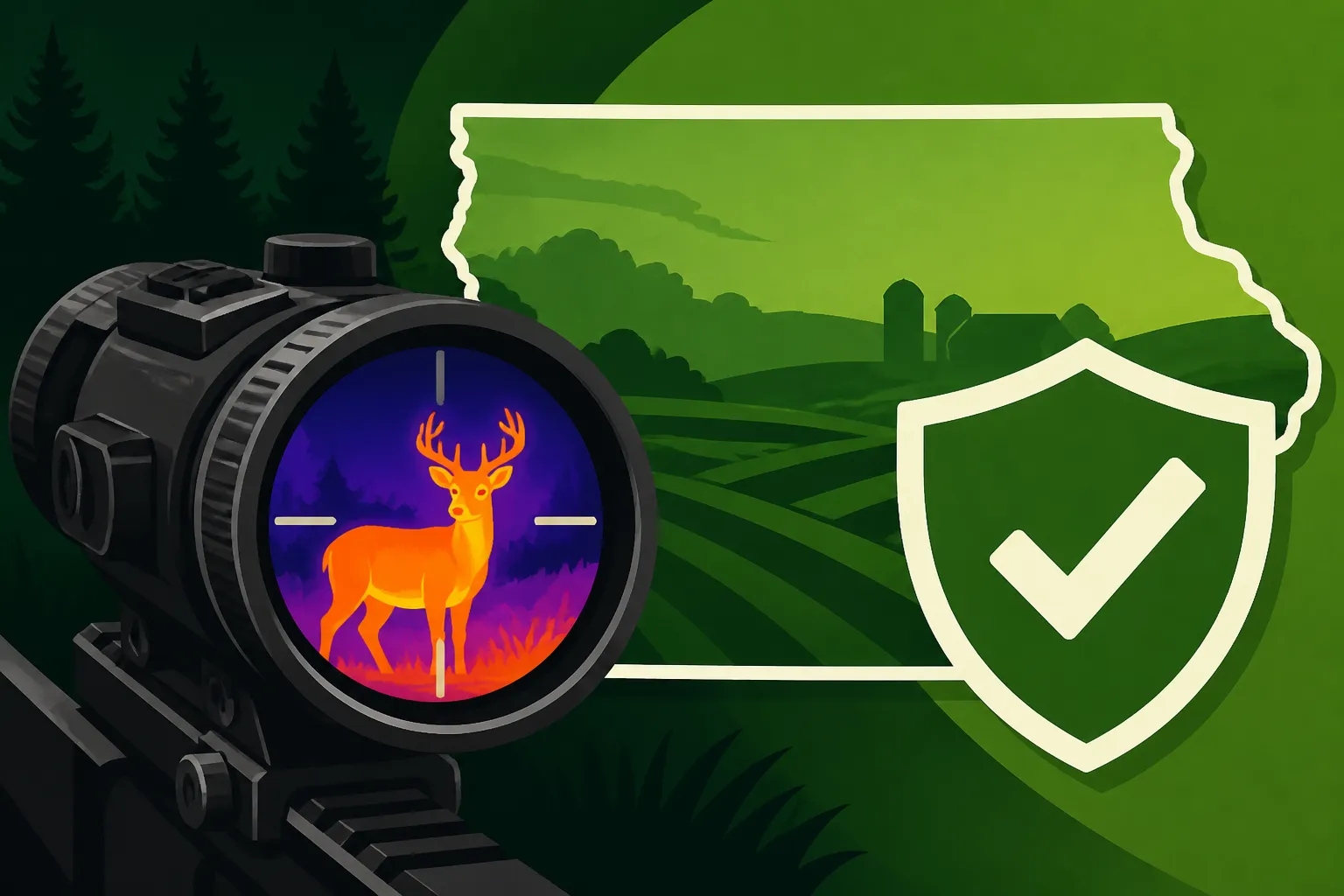
Thermal imaging devices detect heat signatures. They don't need any ambient light to work; they literally "see" the heat radiating from an animal's body, even through dense fog, smoke, or light brush. This means a deer standing in a pitch-black timber block will glow brightly in a thermal scope, making it nearly impossible for the animal to hide once detected. This capability is a game-changer, and it's precisely why regulations are often very strict. Night vision, on the other hand, amplifies existing ambient light – starlight, moonlight, or even distant city glow. Without some light, traditional night vision is useless. Both technologies offer a significant advantage over human eyesight in low-light conditions, but thermal's ability to see heat regardless of light makes it exceptionally powerful. For planning your hunts, especially during different Iowa Deer Season Dates by Weapon, understanding these differences is key to deciphering the regulations.
General Restrictions on Artificial Light and Sighting Devices
Iowa's hunting regulations have long held a strong stance on maintaining fair chase, particularly for popular big game species like deer and turkey. This principle often translates into prohibitions against devices that provide an "unfair" advantage. Historically, this has meant no artificial lights attached to firearms for deer hunting, and restrictions on spotlights for most game.
The language in Iowa's regulations often targets "artificial light or sighting devices that enhance the ability to shoot in low-light conditions." While thermal imaging doesn't emit visible light, its ability to detect heat and create an image in complete darkness falls squarely into the category of "enhancing the ability to shoot in low-light conditions." This is why, even if a thermal device doesn't have an actual "light," it's often covered under these broader restrictive clauses. It's really about the function, not just the physical emission of light. Keeping up with the nuances of these rules is vital, and checking the latest Iowa Regulation Booklet Release Date annually is always a good idea. Tools like GoHunt can help you plan your access and scout terrain, but always verify specific equipment rules with the official Iowa DNR resources.
Thermal Scope Legality by Game Species in Iowa
The legality of using thermal scopes in Iowa isn't a blanket yes or no answer; it depends heavily on what you're hunting. Different species have different management goals and ethical considerations, which leads to varying regulations for advanced equipment.
Thermal for Deer and Turkey
For many hunters, the primary question revolves around using thermal for deer and turkey. Here in Iowa, the answer is a pretty firm no. Using thermal imaging devices (and night vision, for that matter) for hunting deer and wild turkeys is generally prohibited. The Iowa DNR takes the stance that such technology provides an unfair advantage, severely compromising the principle of fair chase that is central to deer and turkey hunting traditions.
Imagine a mature whitetail buck moving silently through dense timber on a moonless night. Without thermal, a hunter relies on skill, scouting, and a bit of luck to be in the right place at the right time during legal shooting hours. With thermal, that buck's heat signature would stand out like a beacon, giving the hunter a distinct advantage that the Iowa DNR deems unethical for these species. This restriction covers both scouting and the actual act of hunting. It's a common regulation across many states for big game, reflecting a shared commitment to traditional hunting values. If you're planning your deer hunt, focusing on traditional optics and Iowa's Legal Deer Hunting Equipment by Season is the way to go.
Thermal for Predators and Furbearers
Now, here's where things get interesting and potentially permissible. When it comes to species like coyotes, foxes, and other furbearers, the rules often relax significantly. In Iowa, thermal scopes can be legal for hunting certain furbearers and predators, particularly during designated night hunting seasons or for specific management purposes.
Coyote hunting, for instance, is often seen as a form of pest control and a way to manage their populations, which can impact deer and turkey numbers. Because the goals are different – often focusing on population management rather than traditional fair chase for sport – the use of advanced equipment like thermal or night vision is more commonly allowed. Hunters pursuing coyotes, especially at night, often find these tools invaluable for locating animals in vast agricultural fields or dense timber edges. Always consult the specific Iowa Coyote Hunting Licence Rules and the current regulations for the season you intend to hunt. The rules for Night Hunting Rules for Coyotes in Iowa can specify what equipment is permissible, so reading the fine print is essential. While GoHunt can offer general hunting information and mapping, always double-check the latest Iowa DNR regulations for any specific equipment, especially for night hunting, as these rules can change.
Summary of Thermal Optics Legality in Iowa
To help clarify, here's a quick overview of how thermal optics typically stack up against Iowa's hunting regulations for different types of game:
| Species Category | Thermal Scopes Legality | Notes |
|---|---|---|
| Deer | Generally Prohibited | Considered an unfair advantage, undermines fair chase. No use for hunting or locating deer, including for scouting if carrying a weapon. |
| Wild Turkey | Generally Prohibited | Similar to deer, thermal use is restricted to maintain fair chase principles. |
| Furbearers | Often Permitted | (e.g., Coyote, Fox, Raccoon, Badger, Skunk, Opossum) Often allowed for hunting during legal seasons, especially at night. Check specific furbearer regulations for exact details and seasons. |
| Small Game | Generally Prohibited | (e.g., Rabbit, Squirrel, Pheasant, Quail) Typically restricted to daylight hours and traditional methods. Thermal offers little practical advantage and is generally not permitted. |
| Waterfowl | Generally Prohibited | Waterfowl hunting is almost exclusively a daytime activity. Regulations focus on decoys, blinds, and non-toxic shot, not advanced night optics. |
| Injured Animal Recovery | Varies | While not for hunting, using thermal for tracking a legally shot animal after legal hunting hours may have specific provisions. Always check with a Conservation Officer before attempting, as rules for recovery aids can be nuanced. |
Always remember: this table provides general guidance. Specific regulations can be complex and are subject to change. It is your responsibility to verify current laws with the Iowa Department of Natural Resources (DNR) before heading afield.
Practical Considerations and Ethical Debates
Beyond the black and white of the law, the use of thermal optics in hunting raises a lot of discussion among hunters about ethics, fair chase, and the future of our sport. It's worth considering these angles to become a well-rounded and responsible hunter in Iowa.
Why the Rules Exist
The regulations prohibiting thermal optics for deer and turkey are rooted in long-standing traditions of fair chase. Hunting these animals is often viewed as a contest of wits between hunter and hunted, where the animal has a reasonable chance of escape. Thermal imaging drastically shifts that balance in favor of the hunter, especially in low-light or dense cover where a deer would normally be at a significant advantage. It allows hunters to see animals that would be completely invisible to the naked eye, effectively turning night into day in a way that goes beyond natural light amplification.
Many hunters feel that allowing thermal for species like deer would fundamentally change the challenge and the experience, potentially reducing it to little more than target practice. It’s about respecting the animal and the pursuit. These regulations also play a role in managing herd populations, preventing overharvest that could occur if hunters had such a significant technological edge. While Iowa Deer Herd Management and Harvest aims for healthy populations, the methods employed are crucial. Moreover, safety is always a concern; shooting at targets that are only visible via a heat signature, without clear identification of the background or surrounding area, could lead to dangerous situations, especially given the range limits of Slug Range Limits on a Deer Drive during gun seasons.
Staying Informed and Being a Responsible Hunter
As a hunter in Iowa, it's our responsibility to know and abide by the rules. Regulations can and do change, often in response to new technologies, biological data, or public input. Relying on old information or hearsay is a sure way to find yourself in trouble.
The best way to stay informed is to regularly consult the official Iowa Department of Natural Resources (DNR) hunting regulations. These are typically published annually and are available on the DNR's website. They provide the most accurate and up-to-date information on all hunting laws, including specifics about Iowa Legal Shooting Hours and permissible equipment. You can also contact your local Conservation Officer if you have specific questions that aren't clearly answered in the booklet; they are often the best resource for interpreting nuanced rules. While many digital platforms, like GoHunt, offer fantastic tools for scouting and planning your hunt, remember that these are supplementary resources. Always prioritize official DNR documents for legal compliance. Becoming familiar with Iowa Hunter Education and Licensing Basics is the first step, and continuous learning about regulations is part of the journey. Violations, especially involving prohibited equipment, can lead to serious Iowa Wildlife Violation Penalties, including fines, license revocation, and equipment confiscation. It's simply not worth the risk.
Disclaimer
This article is for general informational purposes only and does not constitute professional advice. Laws, prices and regulations vary by location and change over time. Consult a qualified professional for guidance on your specific situation.