Ditch Crossings in Row Crop Country
For many hunters traversing Iowa's vast stretches of corn and soybean fields, finding consistent deer movement can feel like searching for a needle in a haystack. The sheer openness of the landscape often leaves us scratching our heads, wondering how whitetails navigate with any sense of predictability. But if you know what to look for, those seemingly insignificant ditch crossings can reveal themselves as vital, high-traffic arteries that deer depend on daily. This guide will dive deep into why these subtle landscape features are so important and how you can pinpoint and effectively hunt them to tag your next Iowa buck or doe.
The Hidden Highways: Why Ditch Crossings Matter to Iowa Deer
When you look at a sea of row crops, it's easy to assume deer just wander aimlessly. But whitetails, especially mature ones, are incredibly efficient and security-conscious. They aren't going to just stroll across an open field in broad daylight without a reason or some form of cover. This is where ditches, even small ones, become paramount.
Understanding Deer Movement in Open Landscapes
In areas dominated by agriculture, deer often move between bedding areas (timber, CRP, thickets) and food sources (picked crop fields, food plots). The challenge for them is crossing the exposed ground in between. They prioritize routes that offer the most concealment, even if it's just a slight dip in the terrain. Think about it from a deer's perspective: an open field is a gauntlet. Predators, whether coyotes or hunters, can spot them from a mile away. So, they instinctively seek out any feature that breaks up their silhouette or provides a visual barrier.
This natural inclination means deer will often hug the edges of fields, use the few remaining fencerows, or utilize subtle changes in elevation. But in truly vast sections of cropland, these options can be limited. This pushes them into natural depressions and waterways – the ditches – as preferred travel lanes. These aren't always big, gaping ravines; sometimes, it's just a shallow swale that holds a bit more brush or grass, enough to make a deer feel a little more secure as it moves from one area to another.
More Than Just Water: Ditches as Travel Corridors and Bedding
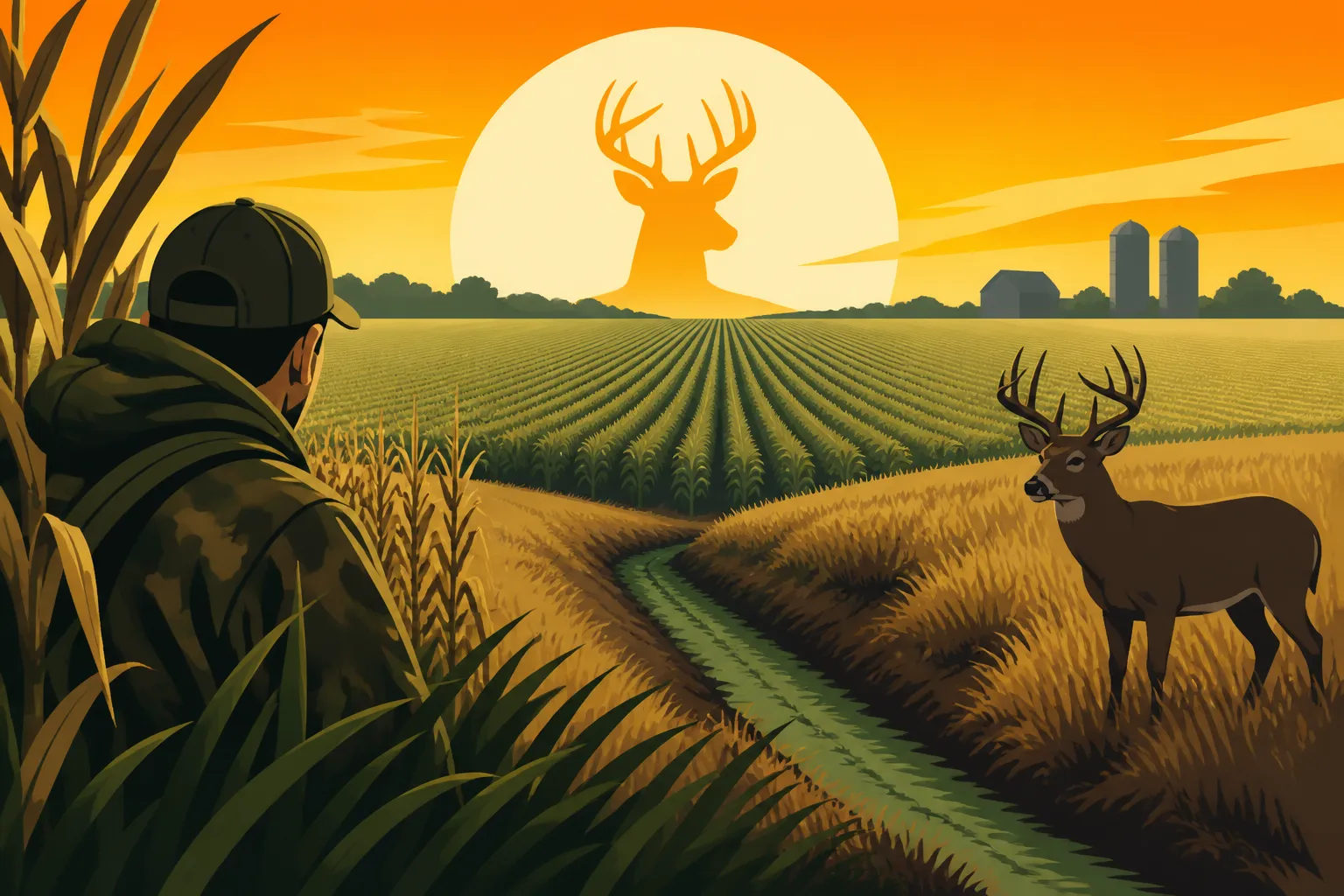
While ditches might primarily serve to drain water from fields, their value to deer extends far beyond that. Even when dry, they provide a linear strip of varying terrain and often thicker vegetation that stands out from the manicured rows of crops. This linear cover is a game-changer for deer. It allows them to travel with their bodies low to the ground, out of sight from distant threats, essentially creating a "hidden highway" through otherwise exposed country.
Imagine a deer needing to get from a small timber patch on one side of a 100-acre cornfield to a soybean field on the other. Rather than walking in the open rows, it will almost certainly drop into the nearest ditch and follow its winding path, popping out only when necessary or when it reaches its destination. These ditches often connect different habitat types—timber to CRP, CRP to harvested fields, or even provide a secret passage between two isolated woodlots. They concentrate deer movement in predictable ways. Furthermore, during specific times of the year, especially when crops are down, thicker ditches with mature grasses or brush can serve as temporary bedding areas. A buck might bed down in a deep, brushy ditch during the midday sun, hidden from view, only to emerge in the late afternoon to feed.
Becoming a Topographical Detective: Finding Productive Ditch Crossings
Finding these hidden highways isn't always obvious from the road. It takes a bit of digital legwork and then some serious boots-on-the-ground confirmation. Becoming proficient at this "topographical detective work" is a skill that will pay dividends in Iowa's agricultural landscape.
E-Scouting: Your First Line of Attack
Before you even step foot in the field, fire up your favorite mapping app. Platforms like GoHunt, Google Maps, or the Iowa DNR's Hunting Atlas are invaluable. You're looking for linear features that cut through fields. These will appear as darker green lines (if vegetated) or distinct depressions in the terrain on satellite imagery. Pay close attention to:
- Confluences and Intersections: Where two ditches meet, or where a ditch crosses a fence line or a field edge, these are natural pinch points that funnel deer.
- Transitions: Look for where ditches transition from open field to timber, CRP, or a brushy fencerow. Deer will often pop out of the ditch at these points to enter new cover or feed.
- Irregularities: A ditch that widens, deepens, or has more mature trees/brush growing along it will be more attractive to deer. Sometimes, these are old drainage tile lines that have eroded over time, creating perfect mini-funnels. For a deeper dive into how to leverage these tools, check out our guide on E-Scouting Iowa Farm Country From Home. Remember, the more isolated the cover in the ditch, the more it will likely concentrate movement. Try to identify these key features by Reading Aerial Imagery for Bedding Cover.
When zooming in on GoHunt's satellite imagery, you might notice subtle elevation changes. Even a slight rise or dip can be enough to influence deer travel, and ditches often exaggerate these micro-terrain features. Look for areas where the ditch provides the only significant cover or break in the monotony of a field. These are often the most productive.
Boots on the Ground: Confirming Your Intel
Once you've identified potential hot spots on your map, it's time to hit the ground. There's simply no substitute for walking the actual terrain. This is where you confirm your e-scouting observations and gather fresh intel. When scouting ditch crossings, look for:
- Well-worn Trails: This is your number one indicator. Deer are creatures of habit. If a ditch crossing is actively used, there will be a defined path leading into and out of it, and often along its length. Look for tracks, especially where the ground is softer near the bottom of the ditch.
- Droppings and Rubs: Fresh droppings indicate recent activity. Rubs along saplings or small trees within or adjacent to the ditch are a huge sign that bucks are using the corridor, especially during the pre-rut and rut.
- Entry/Exit Points: Observe exactly where deer are entering and exiting the ditch. Do they cross at a specific narrow point? Do they follow the ditch up to a brushy finger that leads to a woodlot? Understanding these precise paths is crucial for stand placement.
- Water and Food Sign: If the ditch holds water, especially during dry periods, it can become a watering source. Look for tracks along the muddy banks. Also, check for browse lines or signs of deer feeding on native vegetation within the ditch itself.
Remember, when scouting, be as stealthy as possible, especially if you plan to hunt the area soon. You don't want to blow deer out of a potential bedding area or educate them to your presence. For more on preparing for the season, consider revisiting Scouting Iowa Public Land Before the Opener.
Strategizing Your Ambush: Hunting Ditch Crossings Effectively
You've found the perfect ditch crossing. Now what? Hunting these spots successfully requires careful planning of your setup, considering wind, access, and timing. It's not just about getting into a stand; it's about setting up an ambush that accounts for deer behavior in this specific type of terrain.
Stand Placement: Maximizing Concealment and Shot Opportunity
The unique nature of ditch crossings means your stand placement might differ from a typical timber setup. You need to consider what cover is available, the prevailing wind, and the likely direction of deer travel.
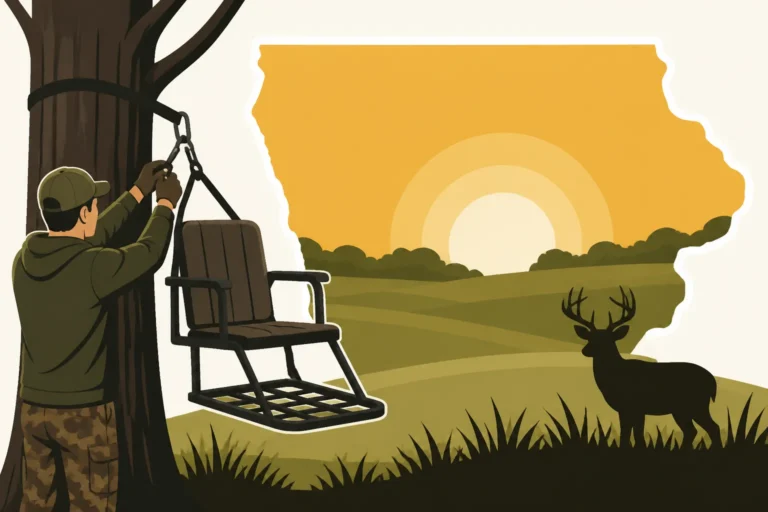
Treestands: If there are trees large enough, a treestand can be an excellent option. Position yourself slightly off the main trail within the ditch, giving you an advantage as deer move below you. A common mistake is to set up directly over the trail; this makes you silhouetted and easily busted. Instead, find a tree 10-20 yards downwind of the crossing point, slightly back from the edge of the ditch. This allows you to observe deer approaching and gives you more time to get a shot off without being directly in their line of sight. Always prioritize your entry and exit routes so you don't spook deer. For instance, sometimes it's better to walk in the ditch to your stand to remain concealed until you climb up. In many cases, hunting the inside corners of fields where ditches intersect will create ideal natural funnels.
Ground Blinds: Often, ditches in row crop country lack suitable trees for treestands. This is where a well-placed ground blind shines. Position your blind inside the ditch itself or along its immediate edge, using the natural contours and any brush for concealment. Brush it in heavily! A ground blind offers excellent concealment and allows for more movement, which can be critical during cold weather hunts. Ensure your shooting lanes are clear and that your blind doesn't stick out like a sore thumb. A great read on this is Brushing In a Ground Blind. The goal is to blend seamlessly with the environment. Remember, deer might pop up suddenly from the ditch, so be ready.
Timing is Everything: When to Hunt These Hot Spots
Deer use ditch crossings for various reasons, and understanding when they use them most can dictate your success.
- Morning Hunts: Deer will often use ditches to return to bedding areas after feeding in fields overnight. Setting up well before daylight, focusing on the ditch as a return route to timber or heavy cover, can be very productive.
- Evening Hunts: As deer leave bedding to head to food, ditches serve as safe travel lanes. Your evening setup should be positioned between the bedding area and the food source, intercepting deer as they emerge from the ditch.
- Midday Movement: Don't underestimate ditches during the middle of the day, especially during the rut. Cruising bucks will often utilize these corridors to search for does, offering an unexpected encounter. Also, if a ditch provides thick cover, deer may bed in them, and movement can be triggered by human or other animal activity in the area, or simply by deer shifting within their micro-habitat.
- Weather Impact: Cold fronts, especially after a warm spell, can trigger significant deer movement. During windy conditions, deer might stay lower in ditches to escape the brunt of the wind. A good understanding of Wind and Thermals in River Breaks can translate well to ditch hunting, as similar principles apply to how air currents move through depressions.
- Crop Status: This is huge in Iowa. When corn is standing, deer have an abundance of cover within the fields themselves, making ditches less critical as primary travel. However, once that corn comes down, deer become exposed, and the importance of ditch crossings skyrockets. Likewise, Standing Corn and Bean Field Deer Patterns will affect when and how deer use these linear features. Keep an eye on the Iowa Bowhunter Observation Survey data for general movement trends too.
Gear Up for Success: Essentials for Ditch Country Hunting
Hunting ditch crossings often means you're operating in transitional zones—part open field, part thick cover. Your gear choices should reflect this, prioritizing stealth, visibility, and the ability to adapt to varying shot distances.
Stealth and Scent Control
Being quiet is paramount. If you're setting up in a ground blind or a low treestand along a ditch, deer can often be much closer than you expect. Wear quiet clothing that won't rustle or snag on brush as you walk in or adjust your position. Think fleece, wool, or soft-shell materials. As for scent, in open country, your scent can carry far. While no product completely eliminates human odor, using scent-reducing sprays, washing clothes in scent-free detergent, and storing them in airtight containers can help. Rubber boots are almost a must for minimizing ground scent, especially when navigating muddy or damp ditch bottoms. For a full breakdown, revisit Scent Control Products and What They Do. Your goal is to be a ghost from the moment you leave your vehicle until you're back at the truck.
Optics and Rangefinding in Open Terrain
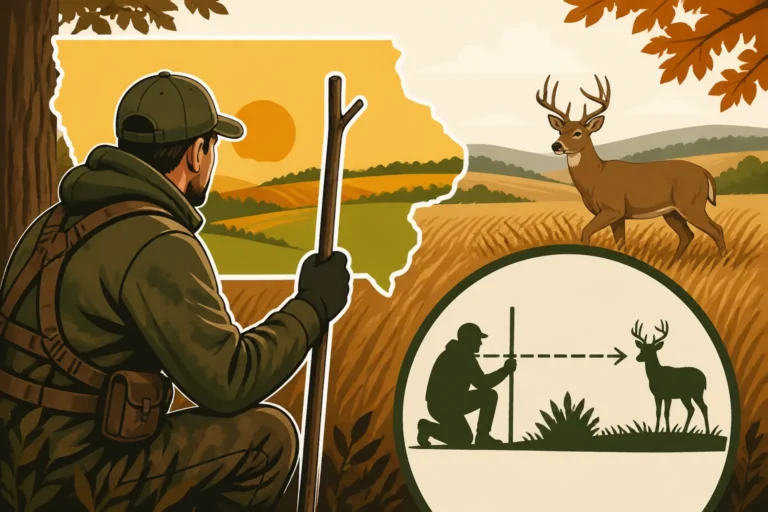
While deer in ditches might be close, you'll often be glassing open fields to spot deer before they enter the crossing. A good pair of 8x or 10x binoculars is essential for scanning distant field edges, looking for emerging deer. When a deer does present itself, especially if it's quartering away or across a ditch, a rangefinder becomes critical. Distances in ditches can be deceiving, as the ground drops away. Knowing the exact yardage to your target is key for an ethical shot, particularly if you're bowhunting. Make sure your rangefinder has angle compensation for those tricky shots up or down into a ditch.
Choosing the Right Weapon
The weapon you choose can depend on the season and specific setup.
- Archery: Bowhunting a ditch crossing is incredibly rewarding. Shots can be close, but they can also be at odd angles if a deer is below you in the ditch. Practice shooting from elevated positions and also downward angles to be prepared. Broadhead choice matters here; fixed blades or mechanicals with a wide cutting diameter are effective.
- Shotgun/Straight-Wall Rifle: During Iowa's shotgun seasons, a ditch crossing can be an ideal ambush point. Shotguns with slugs or legal straight-wall cartridge rifles (.350 Legend, .450 Bushmaster, .45-70 Gov't, etc.) offer more range than a bow, which can be advantageous if deer are moving along the ditch and you need to reach them before they hit heavy cover. However, even with firearms, shot angles and backstops remain crucial.
Remember to consider Cold Weather Stand Clothing as well, as you'll often be sitting for long periods, sometimes in exposed positions near these ditch crossings. Being comfortable means staying focused, and staying focused means more opportunities.
| Ditch Type | Characteristics | Hunting Potential | Ideal Setup | Considerations |
|---|---|---|---|---|
| Shallow Grass Ditch | Barely perceptible, grassy, subtle depression | Moderate, acts as visual break in open field | Ground blind or subtle treestand | Requires more focus on scent & stealth |
| Brushy Ditch | Contains saplings, multiflora rose, taller grass | High, excellent cover & travel corridor | Treestand or well-brushed ground blind | Good for mid-day bedding, offers more concealment |
| Timber-Lined Ditch | Mature trees along banks, connecting woodlots | Very High, natural funnel | Treestand is ideal, usually provides cover | Can be primary bedding-to-food corridor, check thermals |
| Wet/Water-Filled Ditch | Contains standing water, muddy banks | High, attracts deer for water & travel | Ground blind or elevated stand nearby | Good for early season, more sensitive to wind & scent |
Disclaimer
Always consult the latest Iowa Department of Natural Resources (DNR) hunting regulations before heading afield. Hunting laws and seasons can change, and it is every hunter's responsibility to know and follow the current rules. The information provided here is for general guidance and educational purposes only.