Parking Away From Your Stand
There’s nothing quite as frustrating as putting in all the hard work: scouting, hanging stands, checking cameras, only to have your entire morning hunt blown before you even step foot in the timber. Many Iowa hunters overlook one critical component of their strategy: where they park their vehicle. This guide is dedicated to helping you understand why your parking spot matters immensely and how to choose locations that don't spook deer, ensuring your hunt starts off on the right track.
The Undeniable Impact of Your Vehicle on Deer Movement
It might seem innocuous, just a piece of metal on the side of the road or in a designated parking area, but to a whitetail deer, your vehicle is often a flashing neon sign screaming "HUMAN ACTIVITY HERE!" Ignoring this fact can completely undermine even the most meticulously planned hunt, especially in a state like Iowa where deer are acutely aware of human presence.
Why Deer React to Vehicles Differently Than Hunters on Foot
Think about it from a deer's perspective. They’re constantly processing information from their environment – sounds, smells, visual cues. When you walk into the woods, your scent trail is a ribbon of information, and your footsteps are relatively quiet, especially if you're taking care. But a vehicle? That’s a whole different animal, literally.
First, there's the sound. The crunch of tires on gravel, the closing of a door, the engine humming – these are all unnatural sounds in the pre-dawn quiet of the Iowa countryside. Deer, particularly mature bucks, learn quickly to associate these sounds with human intrusion. They've probably had countless negative experiences with trucks, ATVs, or even farm equipment, and they tend to give wide berths to anything that sounds like it belongs to us. It's not just the noise, though. Your truck, even after you've killed the engine, carries a significant scent footprint. The exhaust fumes, the lingering smell of gasoline, even the faint aroma of your coffee from inside – these can all drift on the breeze, alerting deer that something is amiss. A deer's nose is thousands of times more sensitive than ours, and what seems like a faint smell to you can be a blaring alarm to them. Visually, a vehicle is a large, unnatural object. While deer might tolerate a tractor in a field during harvest, a stationary truck near their bedding area at dawn is a red flag. They're constantly on alert for anything out of place, and a vehicle, especially one in an unusual spot, stands out like a sore thumb. They're not just looking for a human shape; they're looking for anomalies in their familiar landscape.
The Immediate and Long-Term Effects of Poor Parking
The consequences of parking too close or too conspicuously can manifest in both immediate and lasting ways, truly affecting the quality and success of your hunts. In Iowa, where deer are often pressured, these effects are amplified.
Immediately, you might experience a blown hunt. You step out of your truck, slam the door a little too loudly, and a mature doe blows at you from a nearby thicket. That "phhwww!" isn't just a warning to you; it’s an urgent alert to every deer within earshot, potentially sending them scurrying into thicker cover or out of the area you planned to hunt. I've had countless mornings where I've seen deer spook from an approaching vehicle even half a mile away, altering their entire travel route for the morning. They might not even see you, but the auditory and olfactory cues are enough. This often leads to deer abandoning their normal travel corridors, making all your hard work of finding those perfect Saddles and Benches Deer Cross Daily or Hunting Inside Corners of Crop Fields totally useless.
Over the long term, consistent poor parking can condition deer to avoid entire areas. If a specific patch of timber or a field edge frequently has vehicles parked nearby, deer will learn to steer clear, especially the older, wiser bucks. They'll shift their core bedding areas, change their primary travel routes, and become even more nocturnal. This contributes significantly to Hunting Pressure Patterns on Iowa Public Land, making it harder for everyone to find success. Think about those public land spots where there’s always a truck parked at a key entry point. Over time, deer just learn to go around it, making that entry point less productive for actual hunting. It's a cumulative effect that can degrade the hunting quality of an entire parcel over a season or two.
Strategic Parking Principles for Iowa Deer Hunters
So, how do you mitigate this impact? It all boils down to a few core principles that prioritize stealth, scent control, and respect for the deer's natural patterns. These principles are especially vital in Iowa's diverse terrain, from sprawling crop fields to dense river bottoms.
Maximizing Distance: The Golden Rule of Parking
This is perhaps the most crucial, yet often overlooked, aspect of parking strategy. The simple truth is, the further away you can park from your desired stand location, the better. Many hunters get lazy or impatient, opting for the closest possible spot, but this convenience often comes at the expense of deer encounters.
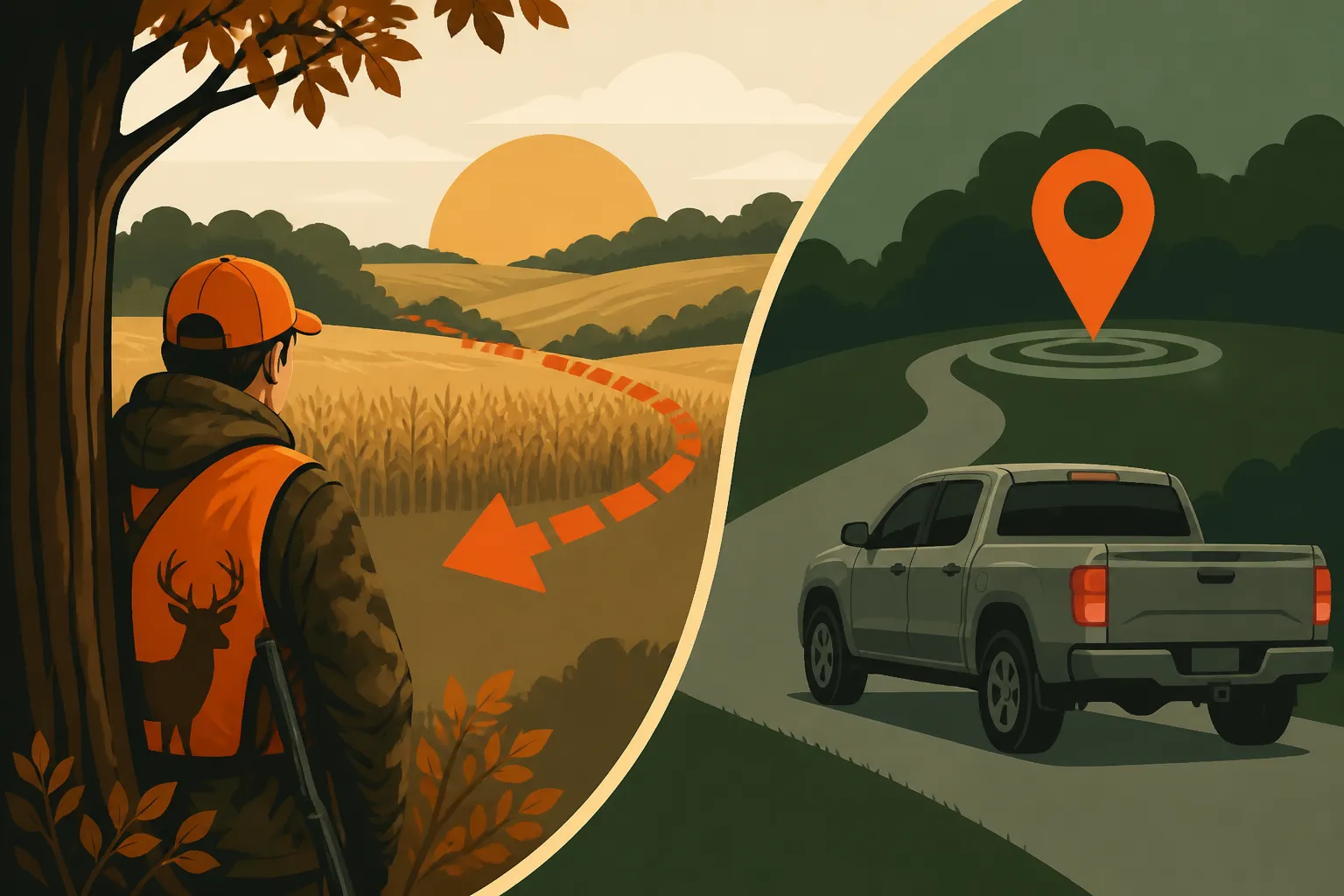
How far is "far enough"? It's not an exact science, but a good rule of thumb is to aim for a minimum of a quarter-mile walk, and often a half-mile or even a mile is preferable, especially for targeting mature bucks. In open Iowa crop country, where scent and sound travel easily, that distance becomes even more critical. If you're hunting an isolated timber finger surrounded by beans or corn, parking a mile down the road and walking in along a fence line or ditch can make all the difference. This long walk isn't just about moving your vehicle away; it's about forcing yourself to create a quiet, controlled approach, allowing the woods to settle down long before you reach your stand. It gives any deer that might have been alerted by your arrival time to calm down and resume their natural movements. Consider it an integral part of your hunting strategy, not a chore. It's an investment in the quality of your hunt, and frankly, a little extra exercise never hurt anyone.
Leveraging Topography and Cover for Concealment
Beyond distance, where you park makes a huge difference. You want to conceal your vehicle as much as possible, both visually and audibly. This means using the natural features of the Iowa landscape to your advantage.
Look for dips in the terrain, deep ditches, behind dense cedar thickets, or even in the middle of a standing cornfield (if you have permission and it's legal/safe to do so). A vehicle tucked into a creek bottom or nestled behind a significant ridge will be far less noticeable than one prominently displayed on a field edge or along a straight stretch of road. When you're using an app like GoHunt to e-scout, pay close attention to contour lines and vegetation types around potential access points. A little cluster of trees, a sharp bend in the road, or a natural depression can be a perfect hiding spot. Even if you have to walk an extra 100 yards to get it completely out of sight, it’s worth it. This also applies to farm lanes or private drives; ask the landowner if you can park your truck out of sight behind a shed or in a grove of trees, rather than right by the gate. These small acts of stealth make your presence less obvious, reducing the chances of deer associating that specific area with human intrusion.
Wind Direction and Scent Control at the Vehicle
This is a frequently ignored aspect, but it's absolutely critical. Even if you park a good distance away, your vehicle itself can be a source of scent contamination that alerts deer.
Always consider the prevailing wind when choosing your parking spot. Just as you want your human scent to blow away from deer, you want any residual scent from your vehicle to do the same. If possible, park downwind or crosswind of any likely deer travel corridors or bedding areas. For example, if you anticipate deer moving along a timber edge with a north wind, don't park directly north of that timber. Try to find a spot to the east or west, or even further south, so your vehicle's scent cone blows away from where the deer will be. It's a simple concept, but often overlooked in the rush of getting to your stand. On a chilly Iowa morning, that cold engine smell or exhaust can carry surprisingly far. Furthermore, even your boots picking up residual scent from the ground around your vehicle can be an issue. Always approach your vehicle from the downwind side when you leave and make sure to use Scent Control Products and What They Do before getting out to retrieve your gear. This holistic approach ensures that your scent footprint, from vehicle to person, is minimized.
Practical Strategies for Parking on Iowa Public and Private Land
Navigating parking effectively differs slightly depending on whether you're on public or private ground in Iowa. Both present unique challenges and opportunities for stealth.
Identifying and Utilizing Designated Parking Areas Effectively
Public lands, like Iowa Wildlife Management Areas, often have designated parking lots or pull-offs. While convenient, these spots can also be a double-edged sword. On one hand, they tell you exactly where you can park legally. On the other, they often serve as obvious access points that deer become conditioned to avoid, especially during peak seasons.
The key on public land is to use these areas, but not to be limited by them. If the parking lot is right next to a prime bedding area, think about what every other hunter is doing. They’re probably parking there and walking straight in. This creates predictable pressure. Instead, consider parking at the designated area, but then walking further down the road or through adjacent cover to access a less-pressured entry point. This might mean an extra mile on foot, but it could put you in front of deer that haven't been pushed out of the area by immediate parking pressure. For example, if you're hunting an Iowa Wildlife Management Areas with a few designated lots, use the Using the Iowa DNR Hunter Atlas or GoHunt to find a spot furthest from where you want to hunt, or a spot that allows you to approach your stand from a unique angle, ideally with the wind in your favor. Another strategy for heavily used public lots is to arrive well before legal shooting light. This allows you to get in, get quiet, and give the area time to settle before the deer begin moving. It also makes you less conspicuous if other hunters arrive later, drawing attention to themselves.
Creative Solutions for Undesignated Access and Stealthy Entry
Sometimes, there simply isn't a designated parking spot that makes sense for your hunt, especially if you're exploring Hunting Iowa Walk-In Ground Without Burning It Out or gaining permission on a new piece of private land. This is where creativity and knowing the rules come into play.
On many Iowa county roads, parking on the shoulder is legal, provided you're not obstructing traffic or creating a safety hazard. This can open up access to areas that don't have official parking. Always double-check local ordinances, and ensure your vehicle is completely off the traveled portion of the road. If you’re parking on the shoulder, try to pick a spot where your vehicle is somewhat obscured by a fence row, a small rise, or even a standing crop field if it's tall enough. The goal is to make it as invisible as possible to both deer and other people.
For private land, don't just assume you have to park at the farmstead. When you're asking for permission, specifically ask the landowner if there are alternative parking spots further from the house or closer to where you want to hunt, but tucked away. They might have a seldom-used field access lane or a secluded spot behind a shelterbelt that you wouldn't know about unless you asked. Using mapping apps for E-Scouting Iowa Farm Country From Home can help you identify these potential spots before you even make the call or knock on the door. It's about working with the landowner to find solutions that minimize your impact and maximize your stealth. Remember, the goal is always to create Access Routes That Do Not Bump Deer, and that starts with your parking choice.
When to Break the Rules (Carefully) and When to Hold Firm
Let’s be real, sometimes, despite your best intentions, a less-than-ideal parking spot is unavoidable. Maybe access is extremely limited, or you're part of a specific Party Hunting Rules and Safe Drives that dictates where vehicles need to be. In these situations, knowing when to compromise and how to mitigate the damage is key.
If you absolutely must park closer than you’d like, or in a more visible spot, then every other aspect of your stealth needs to be amplified. This means absolute silence when getting in and out of your vehicle. Don't slam doors. If you're driving in, go slow. If your approach path passes near your vehicle, ensure your wind is perfect, carrying your scent away. You might also consider using a ground blind if you're worried about deer seeing your vehicle, as it can offer more concealment from the deer's perspective than an elevated stand in some scenarios. However, these are exceptions, not the rule. Generally, it's best to hold firm to the principles of distance and concealment. The consequences of consistently disregarding them are diminished deer activity and fewer hunting opportunities. The decision to "break the rules" should be a rare, calculated risk, not a default setting. Always remember the principle of Leaving No Trace on Iowa Walk-In Ground – that applies to your vehicle’s impact on deer behavior as much as it does to physical litter.
Here's a quick comparison of parking strategies to help you weigh your options:
| Parking Strategy | Pros | Cons | Best Use Case |
|---|---|---|---|
| Distant & Concealed | Maximizes stealth, minimizes deer disturbance. | Requires longer walk, more effort. | Targeting mature bucks, pressured public land. |
| Designated Public Lot | Legal, clear access. | Can be crowded, deer are conditioned to human activity. | General access, but consider walking further. |
| Roadside (Obscured) | Accesses remote areas, can be stealthy if hidden. | Requires local knowledge, can be illegal/unsafe if not careful. | Remote public land, private land with limited access. |
| Private Land (Tucked Away) | Landowner permission, hidden from view. | Requires good relationship with landowner. | Any private land hunt. |
| Close & Visible | Minimal walk. | High risk of spooking deer, burns out areas quickly. | Only if absolutely unavoidable, e.g., quick retrieval. |
Your Vehicle as Part of the Hunting System
In the end, your vehicle isn't just a means of transportation; it's an extension of your hunting presence. Every decision you make, from where you apply for your Iowa Nonresident Deer Draw Explained to the choice of Muzzleloaders for Iowa's Two Seasons or even your parking strategy, contributes to your overall success (or lack thereof) in the Iowa woods. By being mindful and strategic about where you park, you take control of another variable that can make or break your hunt. It's about respect for the deer, for the land, and ultimately, for your own efforts. Don't let a lazy parking choice be the reason you go home empty-handed from an otherwise perfect Iowa hunt.
Disclaimer
Hunting is an inherently dangerous activity. Always prioritize safety, follow all local and state regulations, and obtain appropriate licenses and permissions before hunting. This guide provides informational content only and should not be considered legal advice.