What to Borrow Instead of Buy
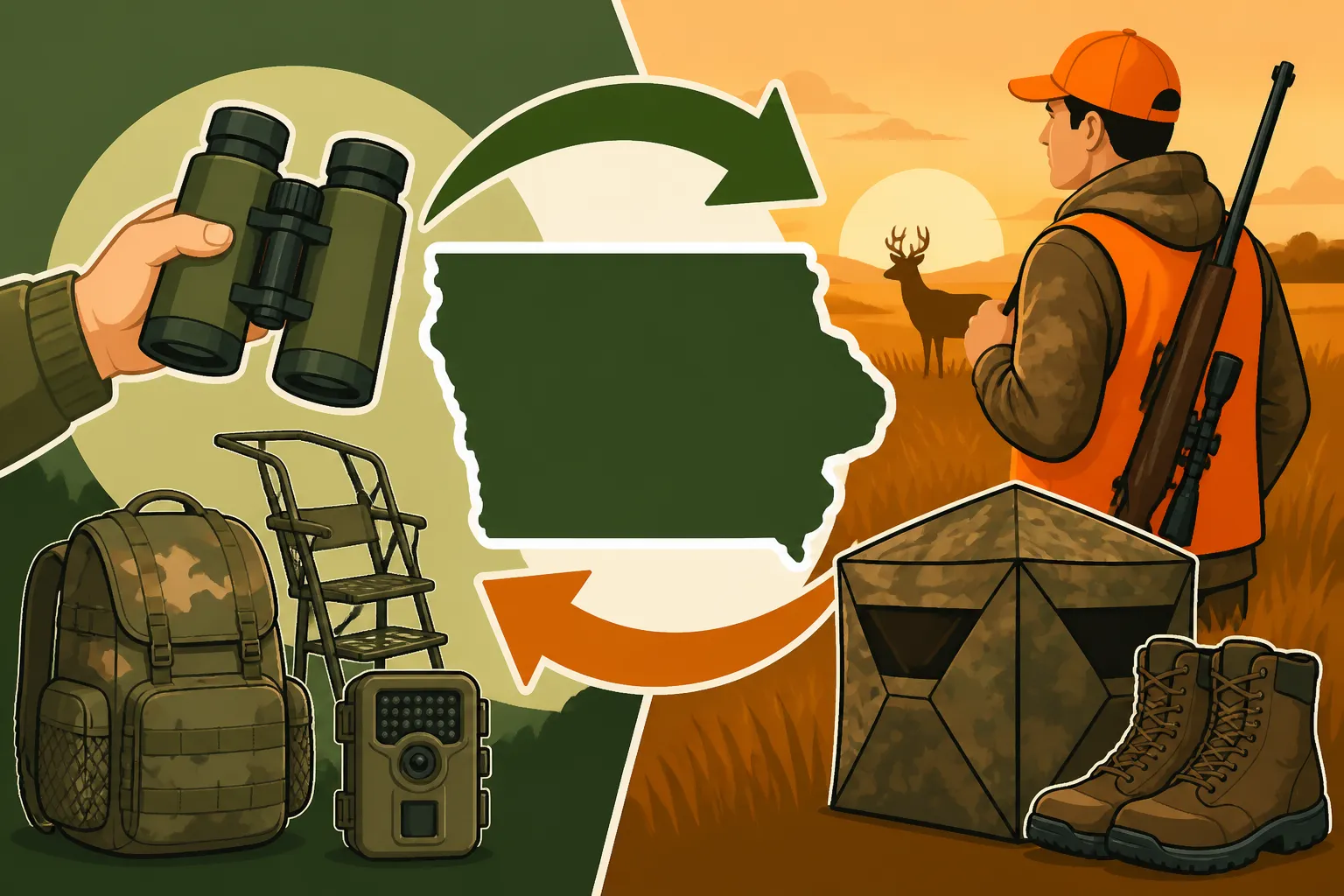
Let's be real, stepping into the world of Iowa hunting can feel like walking into a sporting goods store with an empty wallet and a long wishlist. The sheer volume of gear available, and the price tags attached to it, can be incredibly daunting, especially when you're just starting out or only plan to hunt specific seasons. Many of us have felt that pinch, wondering how we'll ever afford everything we think we need. This guide is here to help you navigate those initial financial hurdles by identifying key pieces of hunting equipment that you can wisely borrow instead of outright buying, saving your hard-earned cash for the essentials and a few future investments.
Why Borrowing Makes Sense for Iowa Hunters
Hunting in Iowa offers incredible opportunities, from chasing whitetails in the timber to pheasants in CRP fields, but each pursuit often requires specialized equipment. This can quickly add up, leaving many new or even seasoned hunters feeling overwhelmed. That's where the strategy of borrowing truly shines.
Easing the Financial Burden
Think about it: a top-tier rangefinder, a specialized muzzleloader, or a heavy-duty deer cart can each run you a pretty penny. If you're only going to use a particular item for a week during Iowa Early Muzzleloader Season or for a couple of pheasant trips, does it really make sense to drop hundreds, or even thousands, of dollars on it right away? For many, the answer is a resounding "no."
By borrowing, you significantly reduce the upfront investment required to get into hunting or to try a new season. This financial relief can be the difference between getting out in the field and staying home. It allows you to prioritize spending on items that are truly personal and essential, like your core weapon (if you don't borrow one), quality layering clothing, or a base license and tags, which are always a necessary expense as detailed in guides like Iowa Deer Licence and Tag Costs.
Imagine you're primarily a bowhunter, but you want to try Iowa Shotgun Season Tactics for Party Hunting with some buddies. Instead of buying a dedicated slug gun and all the accessories, borrowing one makes perfect sense for those few days a year. It lets you experience the hunt without committing to a piece of gear that might otherwise sit in your safe for 11 months.
Testing the Waters Before Committing
One of the biggest advantages of borrowing isn't just saving money, it's preventing buyer's remorse. How many times have we bought a piece of gear, only to find it doesn't quite fit our style, our body, or the specific hunting situations we encounter in Iowa? Borrowing allows for a real-world "test drive" before you pull the trigger on a purchase.
Perhaps you're curious about Mobile Saddle Hunting in Iowa, a tactic that's gained a lot of traction for its lightweight and adaptable nature on public ground. A full saddle setup—saddle, platform, climbing sticks—is a significant investment. Borrowing a buddy's setup for a few practice hangs or even a couple of short hunts can help you decide if it’s truly for you. You might find you prefer the stability of a traditional hang-on stand, or you might fall in love with the mobile freedom. Articles on GoHunt often feature detailed comparisons of different hunting setups, and reading those can help inform your decision, but nothing beats hands-on experience through borrowing.
The same goes for optics. You might be considering a high-magnification binocular for wide-open field hunting but wonder if it's too much for the thick timber. Borrowing a pair to try in your actual hunting terrain can reveal whether an 8x or a 10x magnification makes more sense for your typical Reading an Iowa Timber Draw for Deer Sign. This practical application far outweighs just reading specs online.
The Community Aspect of Hunting
Hunting is often a shared experience, built on camaraderie, mentorship, and mutual support. When you borrow gear, you’re not just saving money; you're engaging with the hunting community in a meaningful way. It opens up conversations, builds trust, and allows experienced hunters to share their knowledge and passion with newcomers.
Often, veteran hunters have a spare piece of gear or two that they're happy to lend out, especially to someone eager to learn. This fosters a pay-it-forward mentality that strengthens hunting traditions. It’s a chance for mentors to offer advice not just on how to use the gear, but also on where and when it's most effective in Iowa's diverse landscapes, such as on Public Land Deer Hunting in Iowa. This interpersonal exchange is invaluable and can accelerate your learning curve far beyond what any solo online research could achieve.
Key Gear to Consider Borrowing for Your Iowa Hunt
When you look at your potential shopping list, some items clearly stand out as good candidates for borrowing. These are often things that are highly specialized, very expensive, or only used seasonally.
Specialized Weaponry for Specific Seasons
Iowa's diverse hunting seasons often necessitate different types of firearms or archery equipment. For many hunters, owning every single legal weapon for every season just isn't practical. This makes specialized weaponry a prime candidate for borrowing.
For instance, if you're primarily an archer but want to try the gun seasons, a shotgun or a straight-wall cartridge rifle might be on your list. Iowa's Legal Deer Hunting Equipment by Season details all the options. A good slug gun can be accurate and effective, but it’s a specific tool. If you’re only going to hunt during Iowa First and Second Shotgun Seasons, borrowing a 12-gauge or 20-gauge from a friend who hunts more often makes a lot of sense. The same goes for Iowa's Straight-Wall Cartridge Rules. Many hunters are opting for these newer rifle calibers, but purchasing a rifle in, say, .350 Legend or .450 Bushmaster, might be a big leap if you're uncertain about how much you'll use it or if you have a primary weapon already.
Muzzleloaders, for their respective seasons, are another excellent example. Owning a modern inline muzzleloader means investing in the firearm, optics, cleaning supplies, and specific ammunition. If you're looking to explore Late Muzzleloader Deer Hunting in Iowa for the first time, asking a seasoned friend if you can borrow their setup is a fantastic way to experience the hunt without the full financial plunge. Just make sure you get proper instruction on loading, firing, and most importantly, safety protocols.
High-Ticket Optics and Electronics
Optics and electronics represent some of the highest financial investments in a hunter's gear locker. While essential for success, many of the top-tier items are far out of reach for casual hunters.
Consider a high-quality rangefinder. For bowhunters, it’s non-negotiable for precise shot placement, but for shotgun or muzzleloader hunters, its necessity might vary depending on the terrain and typical shot distances. If you're hunting thick Iowa timber where shots are rarely beyond 50 yards, a basic rangefinder might suffice. However, if you plan to hunt wide-open field edges, a more advanced model with angle compensation becomes more valuable. Borrowing different models can help you understand what features truly benefit your style of hunting. GoHunt often reviews a wide array of optics, giving hunters detailed insights into their performance, but a field test of a borrowed unit will always tell you more.
Trail cameras are another great example. They are incredibly useful for Trail Camera Placement on Iowa Public Land and understanding deer movement, but they can be expensive, especially cellular models. If you're just starting to scout a new piece of ground or want to test whether trail cameras provide enough value for your specific hunting style, borrowing a few cameras for a month or two is a smart move. You can learn about optimal placement, battery life in cold weather, and how to interpret the data without investing in multiple units right away.
Large or Infrequently Used Items
Some hunting gear is just plain bulky, awkward, or only gets pulled out a few times a year. These are perfect candidates for sharing or borrowing.
A Deer Carts on Iowa Walk-In Ground is a lifesaver when you’ve got a big Iowa buck down in a creek bottom or a quarter-mile from the truck. But how often do you actually recover a deer that far away? For many hunters, it's not every trip. Buying a sturdy deer cart can be an investment, both financially and in terms of storage space. If you hunt with a group, chances are someone already has one they’d be willing to share or lend out for a recovery.
Similarly, large, heavy-duty coolers are essential for meat care, especially during warmer early-season hunts. While having your own is great, if you only hunt for a few days a year, borrowing a friend’s large cooler might be more practical than buying one that will sit empty most of the time. You can coordinate with your hunting partners to ensure enough cooler space is available for everyone's harvest, whether it's deer, turkey, or pheasants.
Ground blinds are another good example. While a small, lightweight blind is easy to transport and use, larger, more comfortable hub-style blinds can be cumbersome to carry in and out for every sit. If you plan a specific hunt from a ground blind, perhaps with a youth hunter, borrowing one for a few days to get a feel for it can be incredibly useful. This way, you don't have to commit to a large, specialized blind unless you know it will become a regular part of your hunting strategy.
How to Secure Borrowed Gear Responsibly
Borrowing gear isn't just about asking; it's about being a responsible and respectful member of the hunting community. Done correctly, it strengthens relationships. Done poorly, it can sour them.
Who to Ask and How to Approach It
The best people to ask for gear are often close friends, family members, or hunting mentors. These are individuals who know you, trust you, and understand your commitment to the hunt. When you approach them, be direct and clear about what you need and for how long.
For example, don't just ask, "Hey, can I borrow your gun?" Instead, try, "Hey, I'm thinking about trying the second shotgun season this year, and I don't have a slug gun. Would you be willing to lend me yours for a few days, say, December 10-14, if it's available? I'd take excellent care of it." Specificity shows you’ve thought it through and respect their property.
It's also a good idea to offer something in return, even if it's just a sincere "thank you" and a promise to clean it thoroughly. Perhaps you can help them scout, offer some gas money, or even just buy them a meal. This shows appreciation and reinforces the positive cycle of sharing. GoHunt encourages community among hunters, and lending gear is a classic way to foster those bonds.
Care and Return Protocols
This is absolutely critical. When you borrow someone's gear, you are entrusted with their property. Treat it better than you would your own. Before you even take it, ask about any specific care instructions.
Here’s a small checklist:
- Inspection: Before taking it, inspect the item with the owner. Note any existing wear or damage. This avoids misunderstandings upon return.
- Cleaning: Thoroughly clean the item before returning it. If it's a firearm, clean and oil it. If it's a piece of clothing, wash it. If it’s a deer cart, hose it down. Make sure it’s in the same, or better, condition than when you received it.
- Prompt Return: Return the item by the agreed-upon date. Don't make the owner chase you down. If something comes up and you need it longer, communicate immediately and politely ask for an extension.
- Reporting Damage: Accidents happen. If you accidentally damage a borrowed item, be upfront, honest, and offer to pay for repairs or replacement. Trying to hide it is the quickest way to lose trust and goodwill.
Setting Expectations and Backup Plans
Always confirm the availability of borrowed gear well in advance of your hunt. Don't assume it will be free just because you asked a month ago. A quick text or call a week before your hunt can prevent last-minute scrambling.
Also, have a backup plan. What if the borrowed shotgun suddenly isn't available? Can you rent one, or do you need to rethink your season? What if the borrowed rangefinder malfunctions? Always have a contingency, even if it's just reverting to estimating distances or using a different tool. This is especially important for critical items. When you're planning a trip to unfamiliar ground, like certain Iowa Wildlife Management Areas, knowing your gear is solid, whether bought or borrowed, is key.
When Buying Is the Better Option (Even for a New Hunter)
While borrowing is a fantastic strategy for many items, some pieces of gear are simply too personal, too critical for safety, or too frequently used to rely on others. These are the items you should save up for and invest in yourself.
Personal Fit and Comfort Items
Hunting requires you to be comfortable, especially when you're sitting still for hours in varying Iowa weather or hiking miles through uneven terrain. Items that directly impact your personal fit and comfort should be purchased new to ensure they meet your specific needs.
Boots are at the top of this list. A poor-fitting pair of boots can lead to blisters, cold feet, and an altogether miserable hunt. You need boots that fit your feet perfectly, provide adequate support, and are waterproof for those damp Iowa mornings or creek crossings. Borrowing boots is generally a bad idea due to hygiene and fit issues. Similarly, high-quality base layers, mid-layers, and outer shells need to fit properly to effectively wick moisture, insulate, and keep you quiet. A baggy jacket or too-tight base layer will hinder your movement and comfort, potentially ruining a long sit during a cold December hunt.
A crucial safety item, the safety harness, also falls into this category. Every hunter who uses a treestand, whether it's a hang-on, climber, or saddle, must wear a full-body safety harness. As discussed in Safety Harness Fit and Suspension Relief, these need to fit correctly and be in good working order. Never borrow a safety harness that shows any signs of wear or has an unknown history. Your life literally depends on it.
Essential Everyday Carry Items
These are the items that are small, relatively inexpensive, but absolutely vital for every single hunt, no matter the season or species. You should always have your own, and they should be reliable.
A good, sharp hunting knife is indispensable for field dressing, cutting cordage, or various small tasks in the woods. This is a personal tool that should always be with you, well-maintained, and something you trust implicitly. Similarly, a reliable headlamp with fresh batteries is non-negotiable for walking in before legal shooting light or tracking a deer after dark. Fumbling in the dark because a borrowed headlamp died is a scenario no one wants to experience.
Navigation tools, whether it’s a dedicated GPS unit or a smartphone with offline mapping capabilities, are also crucial. Being able to navigate effectively, especially on unfamiliar Hunting Iowa Walk-In Ground Without Burning It Out or public land, is a safety priority. While apps like GoHunt can provide excellent mapping resources, you should know how to use them proficiently on your own device and ensure you have reliable power. Checking out Offline Maps for Iowa Public Ground can provide insights on how to prepare your personal devices for navigation.
Safety Gear You Can't Skimp On
Beyond the safety harness, there are other items that directly contribute to your safety or the safety of others that you should never skimp on or borrow if you're unsure of their condition.
This includes protective eyewear and hearing protection, especially for shotgun or rifle hunting. Ear protection is a must to preserve your hearing over time, and eye protection guards against errant debris. Additionally, while not "gear" in the traditional sense, understanding and practicing safe gun handling, as well as leaving a detailed trip plan with someone not hunting with you, are non-negotiable safety practices.
When participating in group hunts, especially deer drives during shotgun season, blaze orange clothing is mandatory in Iowa. While a borrowed vest might suffice, having your own well-fitting, comfortable blaze orange attire ensures you meet all regulations and are highly visible to other hunters, minimizing the risk of accidents. Safety should always be your top priority, and that starts with having reliable gear and knowing how to use it.
Gear Borrow vs. Buy Comparison
To help you visualize, here's a quick comparison of typical hunting gear, and whether it’s generally better to borrow or buy for an Iowa hunt.
| Category | Item | Borrow (Pro) | Buy (Pro) |
|---|---|---|---|
| Weaponry | Shotgun/Straight-Wall Rifle | Cost savings, seasonal use, trying new caliber | Personal fit, reliable zero, year-round use |
| Muzzleloader | Avoids specific season investment, learning curve | Consistency, personal preference, dedicated to season | |
| Optics/Electronics | High-End Rangefinder | Test features, avoids huge cost | Precise measurements, reliability, frequent use |
| Trail Cameras | Testing effectiveness, scouting new areas | Long-term monitoring, personal data, consistent placement | |
| Transport/Storage | Deer Cart | Infrequent use, avoids storage issues | Always available, specific features, heavy-duty needs |
| Large Cooler | Saves space, less frequent need for large capacity | Consistent meat care, personal preference, longer trips | |
| Comfort/Safety | Treestand/Saddle | Test style (e.g., Saddle Hunting on Iowa Public Land), initial setup cost | Personal fit, safety history known, consistent comfort |
| Ground Blind (Large) | Testing blind hunting, specific scenarios | Durability, consistent setup, weather protection | |
| Personal Essentials | Boots | None (hygiene/fit issues) | Essential for comfort, fit, and foot health |
| Base Layers | None (hygiene/fit issues) | Essential for warmth, moisture wicking, and comfort | |
| Safety Harness | None (safety risk, unknown history) | Life-saving, fit is critical, known condition | |
| Hunting Knife | Only if truly desperate | Reliability, sharpness, hygiene | |
| Headlamp | Only for emergencies | Essential for safety, reliability, consistent light | |
| Navigation Device | Only if no personal option | Essential for safety, reliability, familiarity with device |
Conclusion
Navigating the gear requirements for Iowa hunting doesn't have to break the bank, especially when you leverage the power of borrowing. By thoughtfully selecting which items to borrow—like specialized firearms for specific seasons, high-ticket optics you might not use often, or large items like deer carts—you can significantly ease your financial burden. This strategy not only saves you money but also allows you to test out different gear types and truly discover what works best for your hunting style, all while fostering a deeper connection with your fellow hunters.
However, remember that some items are non-negotiable for purchase. Your personal comfort gear, like boots and base layers, and especially critical safety equipment like a trusted safety harness and reliable headlamp, are investments worth making from day one. By making smart decisions about what to borrow and what to buy, you can build a fantastic hunting setup for Iowa's fields and forests without sacrificing quality, effectiveness, or, most importantly, safety.
Disclaimer
This article is for general informational purposes only and does not constitute professional advice. Laws, prices and regulations vary by location and change over time. Consult a qualified professional for guidance on your specific situation.