Iowa Handgun Deer Hunting Rules
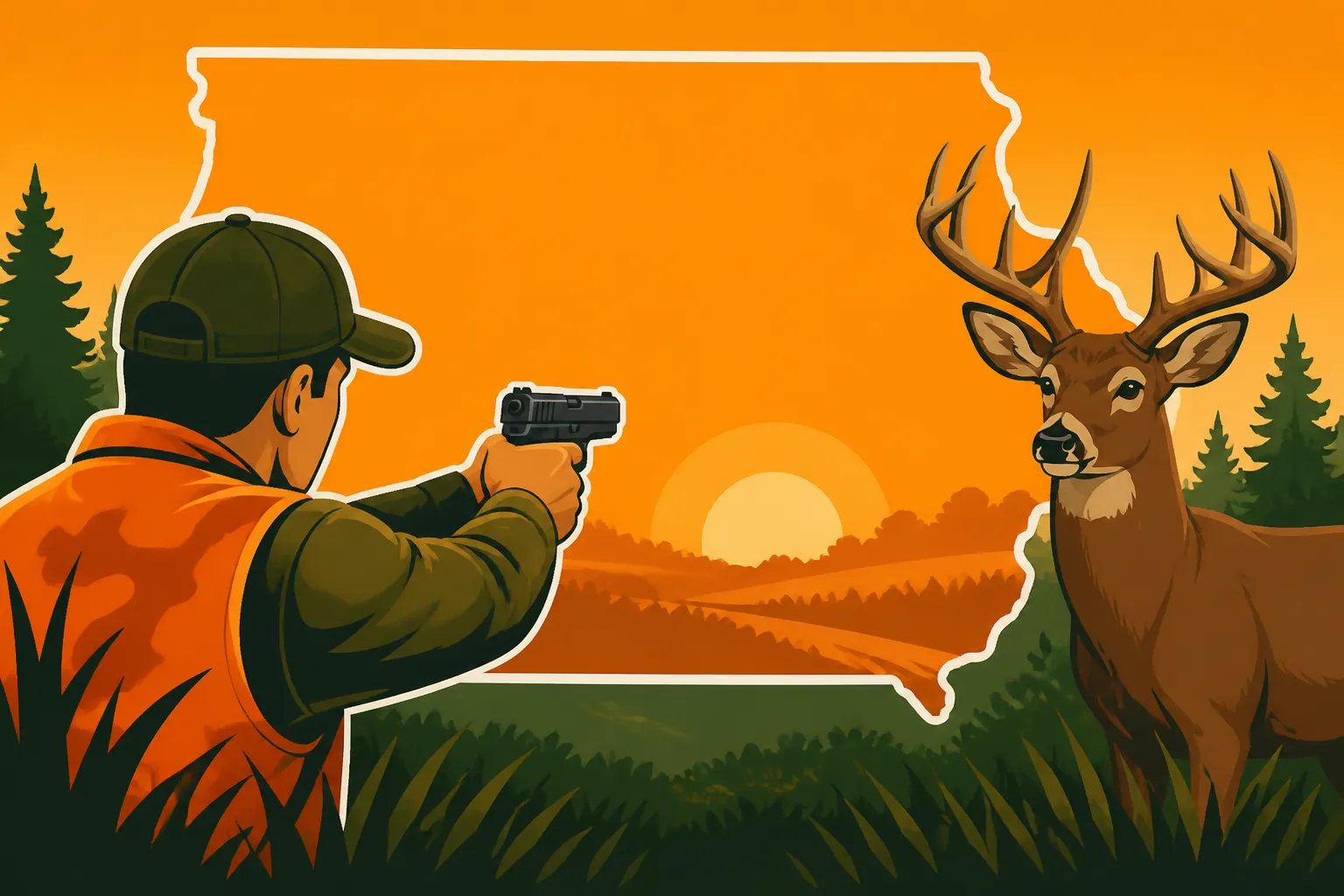
Hunting deer in Iowa often conjures images of powerful slug guns, high-tech archery setups, or classic muzzleloaders. However, for many hunters, the idea of pursuing whitetails with a handgun holds a unique appeal – a true challenge of skill and proximity. The problem is, Iowa's regulations can feel like a labyrinth, especially when it comes to the specific nuances of handgun hunting for deer. This guide aims to demystify those rules, providing a clear roadmap for anyone looking to carry a handgun afield for whitetails in the Hawkeye State.
Understanding Iowa's Legal Framework for Handgun Hunting
Iowa has a very specific set of regulations for deer hunting, and handguns are certainly included, but not without their own distinct requirements. It's not as simple as just grabbing your favorite pistol and heading out. The state's goal is to ensure safe, ethical hunting, and that means certain parameters are in place regarding weapon type, caliber, and even the season you choose to hunt. Many hunters, especially those new to handgun hunting, often assume a general firearms license covers all bases, but that's not quite how it works here. You need to understand the underlying framework to ensure you're compliant.
General Rules for Firearms in Iowa Deer Seasons
When you step into the timber or along a crop edge in Iowa with any firearm for deer, you're operating under a comprehensive set of rules. Generally, Iowa divides its deer seasons by weapon type: archery, early muzzleloader, late muzzleloader, and the two shotgun seasons. While it might seem like handguns would fall neatly into one of these, particularly the shotgun seasons, there are often additional stipulations. For instance, the use of certain firearms might be restricted by projectile type or even barrel length. This can be a source of frustration for hunters used to more open regulations in other states, where "centerfire rifle" might cover a wider array of options. It's crucial to remember that Iowa's focus is on managing a world-class deer herd, and that includes careful regulation of hunting methods. Before you even consider a handgun, ensure you understand the broader framework laid out in the annual Iowa hunting regulations.
You'll find that for deer hunting, Iowa places a significant emphasis on hunter safety and the humane taking of game. This means that any legal firearm, including handguns, must be capable of delivering a powerful enough and accurately placed shot to ensure a quick and ethical harvest. This isn't just about legality; it's about respecting the animal and the hunting tradition itself. Always review Iowa's Legal Deer Hunting Equipment by Season to stay current with any changes or specific season requirements, as these rules are periodically updated.
Specific Handgun Regulations and Definitions
Now, let's zoom in on handguns specifically. Iowa defines what constitutes a legal handgun for deer hunting quite precisely. You can't just use any handgun. There are minimum bullet diameter requirements and, often, minimum barrel length rules as well. For example, smaller calibers commonly used for target shooting or self-defense generally won't make the cut for deer hunting. The state is looking for handguns that deliver substantial kinetic energy, designed for big game, not just plinking.
One of the key things to understand is that handguns are typically grouped with other "straight-wall cartridge" firearms during the shotgun seasons. This means they are allowed during the incredibly popular First and Second Shotgun seasons, as well as the January Antlerless hunts. However, this doesn't mean all handguns. There's a distinction between a handgun that fires a straight-wall cartridge and, say, a revolver chambered in a rifle cartridge that isn't a straight wall. You'll need to confirm your specific firearm's compliance. It can be a headache sorting through the legalese, but taking the time to understand terms like "straight-wall cartridge" and "minimum bullet diameter" is absolutely vital. Companies like GoHunt can be incredibly useful resources for navigating these detailed regulations, often providing summaries and mapping tools to help you prepare for your hunt.
Legal Handgun Calibers and Ammunition for Deer
This is where many hunters get tripped up. It's not enough to know you can hunt with a handgun; you need to know which handguns and what kind of ammunition. Iowa's regulations are designed to ensure humane kills, so they've set clear minimums for projectile size and sometimes energy. This prevents hunters from going afield with calibers that are simply inadequate for the task of ethically harvesting a whitetail deer.
Minimum Caliber and Bullet Diameter Requirements
For a handgun to be legal for deer hunting in Iowa, it must meet specific caliber and bullet diameter minimums. While these numbers can fluctuate slightly over the years, the general rule of thumb is that you're looking at .357 magnum or larger. This isn't just about the name on the box; it's about the actual diameter of the projectile. For centerfire handguns, the bullet must be .357 inches or larger in diameter, and the cartridge must also be a straight-wall design. This immediately rules out many common semi-automatic pistol calibers like 9mm, .40 S&W, and .45 ACP, which, while effective for self-defense, typically don't meet the minimum energy or diameter requirements for deer in Iowa.
Think of it this way: the state wants to make sure that if you make a good shot, the deer has the best possible chance of a quick and clean kill. A larger, heavier bullet from a powerful handgun cartridge delivers more knockdown power and creates a more significant wound channel. This is why you'll often see hunters opting for calibers such as .44 Magnum, .45 Colt, .454 Casull, or even .500 S&W Magnum when pursuing deer with a handgun in Iowa. These calibers pack the necessary punch.
Projectile and Casing Rules for Handguns
Beyond just the caliber, Iowa also has rules about the type of projectile you can use and the casing design. As mentioned, handguns must fire a straight-wall cartridge. This is a crucial distinction that separates many handgun cartridges from necked-down rifle cartridges. A straight-wall cartridge has a casing where the walls run straight from the base to the mouth, without tapering down to a smaller bullet diameter. This is important for safety in densely populated areas during the gun seasons, as straight-wall cartridges tend to have a shorter effective range and less likelihood of over-penetration compared to high-velocity rifle rounds.
For the bullet itself, hunters must use expanding projectiles. This means soft-point, hollow-point, or other designs that are specifically made to expand upon impact, creating a larger wound and transferring more energy to the animal. Full metal jacket (FMJ) or "ball" ammunition, which is designed for target practice and typically passes through without much expansion, is explicitly prohibited for deer hunting. The goal is to maximize energy transfer and tissue damage within the animal to ensure an ethical harvest, not just to poke a hole. This focus on expanding projectiles is a common thread across nearly all big game hunting regulations, reflecting a commitment to animal welfare.
Handgun Ammunition Types to Avoid
Given the strict regulations, it's just as important to know what not to use. As already touched upon, avoid any ammunition that doesn't meet the minimum bullet diameter of .357 inches. This includes popular self-defense rounds like 9mm Luger, .38 Special (unless used in a .357 Magnum handgun, but even then, velocity/energy might be marginal), .40 S&W, and .45 ACP. These calibers are simply not designed for the energy and penetration required for deer, and they are not legal.
Furthermore, steer clear of any non-expanding bullet types like FMJ or round-nose lead (RNL) for hunting. These are often cheaper for practice but are unsuitable and illegal for game animals in Iowa. Some specialty ammunition, like certain frangible rounds or those designed for suppressed firearms, might also fall outside the legal parameters due to their projectile design or lack of expansion. Always double-check your ammunition's specific characteristics against the current Iowa DNR regulations before heading afield. A quick call to the local conservation officer or a careful review of the Iowa hunting guide will prevent a costly mistake.
Permissible Seasons for Handgun Deer Hunting in Iowa
Understanding when you can use your legal handgun for deer is just as critical as knowing what handgun to use. Iowa's hunting seasons are structured, and not all weapon types are allowed during all periods. For handgun enthusiasts, the opportunities are primarily concentrated around the traditional firearms seasons.
Shotgun Seasons and Handgun Eligibility
The primary window for handgun deer hunting in Iowa falls squarely within the First and Second Shotgun seasons, as well as the later January Antlerless hunts. During these periods, the regulations allow for the use of shotguns (with slugs), muzzleloaders, and straight-wall cartridge firearms, which explicitly includes qualifying handguns. This is excellent news for handgun hunters, as these seasons typically offer good deer numbers and a relatively short range for encounters, making handgun hunting a viable option. Iowa Shotgun Season Tactics for Party Hunting often overlap with handgun hunting opportunities, especially in dense cover where shots are close.
Hunting during these seasons means you'll likely be sharing the woods with other firearms hunters, so all standard safety precautions, especially regarding blaze orange requirements, are paramount. The ability to use a handgun during these seasons makes them incredibly versatile. Imagine setting up in a small timber parcel or along a brushy creek bottom during the December shotgun season. A well-placed stand in an area with good deer sign, perhaps near a winter food source, could offer that perfect close-range opportunity for a handgun shot. This is where the challenge and thrill of handgun hunting truly shine.
Early and Late Muzzleloader Handgun Opportunities
While the shotgun seasons are the most common time for handguns, it's worth noting that some handguns that are also muzzleloaders might be permitted during the dedicated muzzleloader seasons. This isn't about conventional cartridge-firing handguns, but rather specialized muzzleloading pistols. These are far less common, but if you're a purist who enjoys the muzzleloader experience and prefers a pistol, it's an avenue to explore. These firearms must adhere to all the specific muzzleloader regulations regarding projectile type, ignition, and powder.
It's a niche pursuit, but for those who enjoy the challenge, it can be rewarding. The early muzzleloader season often happens when the weather is still relatively mild, offering a unique experience. However, always confirm with the Iowa DNR if your specific muzzleloading handgun setup is legal for these seasons, as the rules can be quite granular. Generally, it's safer to assume a standard cartridge-firing handgun is not legal during the dedicated muzzleloader seasons unless it specifically meets all muzzleloader criteria. For more on strategies during these periods, you can look into Early Muzzleloader Tactics in Warm October Weather.
Archery Season Limitations and Exceptions
Here's where it gets straightforward: traditional cartridge-firing handguns are not permitted during Iowa's archery deer season. This season is exclusively for bows and crossbows. There are no exceptions for handguns during this period, regardless of caliber or projectile type. If you're planning an archery hunt, your handgun needs to stay in its case. The integrity of the archery season, with its unique challenges and equipment, is maintained by keeping it separate from firearms.
This clear distinction helps prevent confusion and ensures that hunters are operating within the specific parameters set for each season. So, if your heart is set on handgun hunting for deer, you'll need to focus your efforts on the shotgun seasons and the late antlerless opportunities like Iowa January Antlerless Hunts. Understanding these seasonal boundaries is crucial for planning a legal and successful hunt.
Practical Considerations for Handgun Deer Hunters
Beyond the black-and-white regulations, there are significant practical considerations when choosing to hunt deer with a handgun in Iowa. The effective range of a handgun is generally much shorter than a rifle or even a slug gun, demanding a different approach to scouting, tracking, and shot placement.
Range Limitations and Ethical Shot Placement
This is arguably the most critical practical aspect of handgun deer hunting. Handguns, even powerful magnum revolvers, have a significantly shorter effective range for ethical deer harvesting compared to rifles or shotguns. For most skilled handgun hunters, this means keeping shots within 25-50 yards, sometimes even closer depending on the specific caliber and hunter proficiency. Pushing beyond this range dramatically increases the risk of a wounded animal, which is every ethical hunter's nightmare.
This shorter range dictates your hunting strategy. You need to focus on drawing deer in close, whether through careful stand placement, understanding their movement patterns, or utilizing calls. It means patience is even more of a virtue, waiting for that absolutely perfect, close-range broadside or slightly quartering-away shot. Prioritize practice to truly understand your handgun's capabilities and your capabilities with it at various distances. Knowing your limits is not a sign of weakness; it's a sign of respect for the game. For advice on placing your shot under pressure, consult Shot Placement on a Whitetail at Twenty Yards.
Carrying and Concealment Rules
When you're out hunting with a handgun, carrying it safely and legally is paramount. While Iowa is a relatively permissive state regarding firearm carry for licensed individuals, hunting regulations can sometimes add nuances. Generally, your handgun should be carried in a secure holster that protects the trigger guard and prevents accidental discharge. Open carry in a holster is typically fine while hunting, but concealment might be desired for comfort or to keep it out of the way while moving through brush.
It's essential to ensure your holster system is quiet, secure, and allows for a smooth draw when the moment comes. Fumbling with a poorly chosen holster can cost you a shot or, worse, create an unsafe situation. Also, be mindful of any local ordinances or specific rules on particular public hunting areas regarding firearm carry, though general statewide hunting rules usually supersede these during legal hunting activities. While you might not be thinking about "concealment" in the traditional sense, keeping your handgun from snagging on branches or getting mud in the barrel is a form of practical concealment in the field. Hunting Iowa walk-in areas, for instance, requires careful planning of gear to avoid undue noise and hassle, which certainly applies to your handgun setup as well. Hunting Iowa Walk-In Ground Without Burning It Out can offer insights into planning your approach.
Hunting in Different Iowa Habitats
Iowa's diverse landscape offers various habitats, each presenting unique challenges and opportunities for the handgun hunter. From dense river bottom timber to sprawling CRP fields and timber draws, your strategy will need to adapt.
- Timber and Creek Bottoms: These areas are often ideal for handgun hunting. The thick cover naturally funnels deer into closer quarters, creating those precious 20-40 yard shots you need. Setting up near natural funnels, pinch points, or bedding areas can be highly effective. The dense foliage also helps obscure your presence, allowing deer to get closer before they detect you.
- Field Edges and Crop Ground: Hunting along the edges of corn or soybean fields, especially during the later seasons when crops are harvested, can also be productive. Deer will often use these edges as travel corridors to and from food sources. Here, a ground blind can be a handgun hunter's best friend, allowing for stable shots from a concealed position. Patience is key, as deer might not step out until low light, demanding excellent low-light vision or optics on your handgun.
- Open Grasslands/CRP: While more challenging due to the lack of natural cover, these areas can still hold deer, particularly larger bucks seeking solitude. However, getting within handgun range often requires extreme stealth, or hunting during periods of heavy cover, like tall, uncut prairie grass. A mobile approach, or carefully scouting out subtle terrain features that offer concealment, becomes crucial.
Regardless of the habitat, the core principle remains: get close. Handgun hunting isn't about long-range precision; it's about intimate encounters and precise shot placement when the opportunity arises.
Choosing the Right Handgun and Optics for Iowa Deer
Once you understand the rules and practicalities, it's time to talk gear. Selecting the right handgun, and equipping it with suitable optics, is critical for success and ethical hunting in Iowa. This isn't just about what's legal; it's about what you can shoot accurately and confidently.
Selecting a Deer-Legal Handgun
As we covered, the handgun needs to be a centerfire, straight-wall cartridge, with a minimum bullet diameter of .357 inches. Within these parameters, you have several excellent choices:
- .357 Magnum: While on the lower end of the legal spectrum, a .357 Magnum with heavy, ethical hunting loads (like 158-180 grain JSP or JHP) can be effective at close range for a skilled shooter. It offers manageable recoil for practice.
- .41 Magnum: A less common but highly effective cartridge, the .41 Magnum offers a significant step up in power from the .357, without the extreme recoil of some larger calibers.
- .44 Magnum: This is arguably the most popular and versatile choice for handgun deer hunting. The .44 Magnum delivers plenty of power for whitetails, and a wide array of excellent hunting ammunition is available. Revolvers chambered in .44 Magnum are robust and reliable.
- .45 Colt (Ruger Only/Levergun loads): Standard .45 Colt loads are often too anemic for deer, but modern, heavy-loaded .45 Colt ammunition (often marked for "Ruger Only" or "Levergun use") can be very potent and deer-legal. Be absolutely sure your handgun is rated for these higher-pressure loads.
- .454 Casull and .500 S&W Magnum: These are powerful, heavy-hitting cartridges that offer significant stopping power. They are often overkill for whitetail deer but certainly legal and effective. Hunters choosing these calibers should be prepared for substantial recoil and commit to extensive practice.
When making your selection, prioritize accuracy and reliability. A double-action/single-action revolver is a common choice due to its robustness and power. A steady platform and a comfortable grip will make a huge difference in your ability to shoot accurately under field conditions. Consider the weight and balance of the handgun, especially if you'll be carrying it for long periods.
Optics and Sighting Systems for Handguns
While some purists hunt with open sights, many handgun deer hunters opt for some form of optical sight to improve accuracy and confidence. Given the shorter effective range, extreme magnification isn't necessary, but a clear sight picture is vital.
- Red Dot Sights: These are an increasingly popular choice for handgun hunting. A quality red dot sight offers quick target acquisition, allows for fast follow-up shots, and is excellent in low-light conditions. The single red dot reticle is easy to pick up, and many models are incredibly durable. They remove the need to align front and rear sights, simplifying the aiming process under pressure. For a great discussion on similar optics, see Red Dot Sights on a Slug Gun.
- Low-Power Scopes: A handgun scope, typically with 2x, 2.5x, or 4x magnification, can provide greater precision for those slightly longer handgun shots, pushing out to 50-75 yards for expert shooters. They require more careful eye relief and a steady hold, but the magnified view can help with precise shot placement. However, the field of view is smaller, making target acquisition a bit slower.
- Open Sights (Iron Sights): For close-range encounters, especially in dense timber where shots are often 25 yards or less, a good set of fiber-optic or highly visible iron sights can be perfectly effective. They are robust, never run out of batteries, and teach fundamental shooting skills. Many hunters prefer a wide rear notch and a clear front post for quick aiming.
Whatever you choose, ensuring it's properly mounted, sighted in, and that you've practiced extensively with it is crucial. Your setup needs to be reliable and consistent when that Iowa buck steps out. Don't forget to practice in various lighting conditions, as deer often move most at dawn and dusk. For general guidance on choosing and using optics, consider Optics for Iowa Timber and Field Edges.
Holsters and Carry Systems
The right holster is not just about carrying your handgun; it's about safety, accessibility, and comfort. For hunting, you want a holster that:
- Secures the Firearm: It must hold the handgun firmly, preventing it from falling out or shifting while you move through brush, climb into a stand, or drag a deer. Retention straps or active retention mechanisms are often preferred.
- Protects the Trigger: The trigger guard must be completely covered to prevent accidental discharge.
- Is Quiet: Avoid holsters that squeak, creak, or rub noisily as you walk. Leather or kydex with felt lining can be good choices.
- Is Weather Resistant: Iowa hunting can involve rain, snow, and mud. Your holster should protect your firearm as much as possible from the elements.
Common holster types for hunting include strong-side belt holsters, chest holsters, or even specific backpack systems that integrate a handgun compartment. Chest holsters are popular for hunting as they keep the handgun accessible while wearing a pack and keep it out of the way of your legs when walking or sitting. Some hunters also prefer a cross-draw setup for easy access while seated. Test your chosen holster setup thoroughly before your hunt, ensuring it's comfortable for a full day in the field and allows for a quick, safe draw.
| Handgun Feature | Importance for Iowa Deer Hunting | Common Choices | Considerations |
|---|---|---|---|
| Caliber | Ethical kill, legal compliance (min .357") | .357 Mag, .44 Mag, .45 Colt (heavy), .454 Casull | Recoil, ammo availability, your proficiency |
| Ammunition | Expanding projectiles only (no FMJ) | JSP, JHP, hard cast lead (expanding) | Ballistics for ethical range, penetration |
| Sighting System | Accuracy, quick target acquisition | Red dot, low-power scope, fiber-optic irons | Low-light performance, durability, personal preference |
| Barrel Length | Affects velocity/energy, maneuverability in brush | 4-8 inches common | Longer can mean more velocity, shorter is handier |
| Holster Type | Safety, accessibility, comfort | Chest, strong-side belt, cross-draw | Quiet, secure, weather protection, pack compatibility |
| Reliability | Absolute must for cold, wet, dirty conditions | Quality revolver or robust semi-auto | Regular cleaning, testing, maintenance |
Safety and Ethical Hunting Practices with a Handgun
Hunting with any firearm demands the utmost respect for safety and ethics, and handguns are no exception. In some ways, their shorter range and unique handling characteristics can even amplify the importance of these considerations.
Handgun Proficiency and Practice
Hunting with a handgun isn't something you just pick up a week before the season. It requires dedicated practice, more so than many other hunting firearms. The smaller platform, different grip, and often heavier recoil demand consistent training to achieve proficiency. It's not just about hitting a paper target at 25 yards; it's about doing it quickly, accurately, and under pressure, potentially in cold weather or awkward shooting positions.
Your practice regimen should include:
- Stance and Grip: Develop a stable, consistent shooting stance and a firm, repeatable grip to manage recoil and maximize accuracy.
- Trigger Control: Smooth, consistent trigger pull is paramount for accuracy, especially with a handgun. Avoid jerking the trigger.
- Sight Picture: Whether using open sights, a red dot, or a scope, focus on acquiring a clear sight picture quickly and consistently.
- Practice at Hunting Distances: Don't just shoot at 7 yards. Practice at 20, 30, 40, and 50 yards to understand your effective range.
- Field Positions: Practice shooting from kneeling, sitting, and even standing with support, mimicking real-world hunting scenarios.
- Simulated Hunting: Put on your hunting clothes, use your full gear, and simulate drawing and firing from a hunting stand or ground blind.
The more proficient you are with your handgun, the more confident and ethical you will be in the field. Sighting In Before Shotgun Season is an excellent resource, and many of the principles apply directly to handguns.
Respecting Private Property and Public Land Boundaries
Iowa has a patchwork of private and public land, and knowing exactly where you are at all times is vital, especially with a handgun where your effective range is shorter. Trespassing, even accidentally, can lead to serious legal trouble and give all hunters a bad name. Utilize mapping tools like those offered by GoHunt, or apps like onX Hunt, to clearly identify property lines.
Always obtain explicit permission from landowners before stepping onto private property. If hunting public land, know the specific boundaries and any unique regulations for that particular area. The last thing you want is to take a shot at a deer that crosses onto private land where you don't have permission. Respecting these boundaries not only keeps you legal but also fosters good relationships between hunters and landowners, which is crucial for maintaining access in Iowa.
Recovering Your Deer Ethically
Even with a perfectly legal handgun and excellent shot placement, things can go wrong. Deer don't always drop in their tracks. Knowing how to responsibly track and recover your deer is a critical part of ethical hunting. A handgun's wound channel might be different from a rifle, sometimes requiring careful tracking.
After the shot:
- Observe and Listen: Note where the deer was hit, its reaction, and the direction it ran. Listen for crashing sounds.
- Wait: Resist the urge to immediately pursue. Give the deer time to expire. A good rule of thumb is 30 minutes for a good lung hit, and several hours for a gut shot, especially if you suspect the hit wasn't ideal.
- Locate the Blood Trail: Start at the point of impact. Look for blood, hair, bone fragments, or disturbed earth. Follow every drop of blood, no matter how small.
- Mark the Trail: Use flagging tape or toilet paper to mark the last known blood sign, making it easier to resume if you lose the trail.
- Persistence: A well-hit deer will often leave a clear trail, but sometimes it takes patience and persistence to find it. In challenging cover like tall grass or multiflora rose, this can be extremely difficult. For detailed advice, check out Blood Trailing in CRP and Multiflora Rose.
Remember, your responsibility doesn't end until the deer is recovered and properly tagged. Ethical hunting includes every step of the process, from preparation to recovery.
Disclaimer
This article is for general informational purposes only and does not constitute professional advice. Laws, prices and regulations vary by location and change over time. Consult a qualified professional for guidance on your specific situation.