Early Muzzleloader Tactics in Warm October Weather
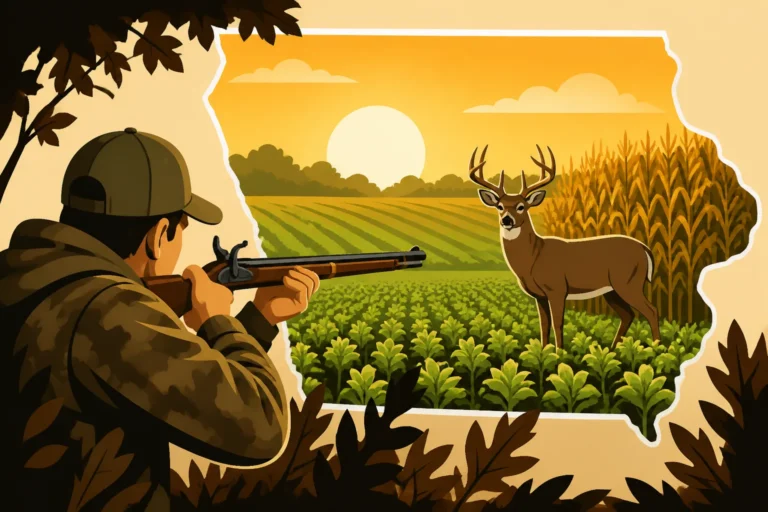
There’s nothing quite like the anticipation of early muzzleloader season in Iowa, but let’s be honest, that crisp autumn air we dream of often turns into an unseasonably warm, muggy October. It's incredibly frustrating when you've waited all year, only to find the deer acting completely different than you'd expect, making your usual hunting tactics feel utterly useless. This guide is all about tackling that exact problem, arming you with the strategies and insights you need to adapt your early muzzleloader hunt when the weather simply refuses to cooperate, ensuring your efforts aren't wasted.
Understanding the Challenges of Warm October Muzzleloader Hunting
Warm weather in October isn't just a minor inconvenience; it fundamentally alters the deer woods, from how deer move to how your scent hangs in the air. Ignoring these changes is a surefire way to come home empty-handed and feeling defeated. It’s critical to understand why these conditions are so tough so we can proactively adjust our approach.
How Warm Weather Impacts Deer Behavior
When temperatures climb in early October, whitetail deer, much like us, prefer to stay cool and conserve energy. This means their typical routines go right out the window, making them significantly harder to pattern.
Instead of cruising around in the middle of the day, bucks and does alike tend to become much more nocturnal. They'll move heavily under the cover of darkness when the air is cooler, often only making short, strategic movements during legal shooting hours. This can be incredibly disheartening when you’re sitting patiently in your stand, wondering where all the deer have gone. Their bedding locations also change; instead of merely finding thick cover, they'll prioritize spots with shade, air movement, or proximity to water to help regulate their body temperature. You might find them tucked into north-facing slopes, dense cedar thickets that block the sun, or even right on the edge of a cool, shaded creek bottom. They aren't going to exert themselves any more than necessary, so their travel paths will often be the most efficient route between these cool bedding areas and nearby, easily accessible food sources.
Furthermore, their foraging habits can shift. While they still need to eat, the urgency to pack on calories might not be as pronounced as when cold weather is imminent. They might browse more selectively on succulent forbs or tender shoots, rather than committing heavily to a large, exposed food plot in the heat of the day. This makes pinpointing a primary food source much more challenging, as they could be nibbling on various natural browse throughout the timber.
The Struggle with Scent and Comfort
Warm, still air is a hunter's worst enemy when it comes to scent control. Unlike a crisp, breezy day that helps disperse human odor, warm and humid conditions allow your scent to hang heavy in the air, creating a much larger "scent cone" that deer can easily pick up.
Every step you take, every bead of sweat, releases more scent, and in warm, moist air, it lingers. This dramatically increases the chances of deer busting you before you even see them. It's a huge frustration because you can do everything right with your scent elimination shower and clothing, only to have a sudden shift in thermals or a lack of wind betray you. Your comfort level also plays a significant role; if you're sweating buckets on the walk in or baking in your stand, it's not only miserable, but that discomfort can lead to fidgeting, decreased focus, and, you guessed it, more scent. Layering becomes a delicate dance: enough to stay comfortable during a cool morning, but easily shed if the sun beats down. It’s hard to focus on the hunt when you’re constantly battling the elements yourself.
Even your trusty muzzleloader can be affected. Warm, humid conditions can impact powder consistency and cause increased fouling in the barrel, potentially affecting accuracy or making follow-up shots more difficult if not properly maintained. The last thing you want is a hang fire or a misfire when that trophy buck finally steps out. It adds another layer of anxiety to an already challenging hunt.
Adapting Your Scouting and Stand Selection
When warm weather makes deer patterns unpredictable, your traditional stand locations might become dead zones. This means going back to the drawing board, both on your computer and with boots on the ground, to find those hidden gems where deer are most likely to be. It's about thinking like a warm-weather deer.
Focusing on Bedding and Water Sources
In the heat of early October, deer are constantly seeking relief. This makes their bedding areas and water sources absolutely prime locations for your stand setups. Forget wide-open food plots for a moment and shift your focus to where they'll hide from the sun and quench their thirst.
You'll want to scout those dense, cool spots. Think north-facing slopes covered in thick timber, especially if there are mature oaks or maples providing a heavy canopy. Cedar and locust thickets are often overlooked but provide incredible thermal cover and shade, making them ideal bedding spots in warmer weather. Look for trails leading directly into these thickets, especially those that show heavy traffic during the last few hours of daylight or the first few hours after dawn. Creek bottoms and river breaks are also magnets for deer in the heat. The cooler, often shaded environment near water provides both comfort and easy access to a drink. Look for hidden seeps, small, stagnant ponds, or even just a low, marshy area within the timber. These can be critical spots when the main water sources are further afield or more exposed. Understanding how deer utilize these areas is key, which is why studying a piece like Early-Season Bowhunting Over Water can really drive home the importance of H2O for whitetails when the mercury rises.
When you're out there, really pay attention to the subtle cues. Look for fresh tracks in soft mud near water, beds pressed into cool earth under dense cover, and any signs of rubbing or scraping activity on the edges of these sanctuary zones. These fresh indicators tell you deer are currently using these spots, not just historically. Remember, deer won't be moving far from these cool, secure havens, so your stand needs to be positioned on their travel lanes between bedding and water, or just off the edge of the bedding itself.
E-Scouting and Boots-on-the-Ground Adjustments
Modern technology has revolutionized how we approach scouting, and it's especially invaluable for warm-weather adjustments. Tools like GoHunt or onX Hunt allow you to pore over aerial imagery, topo maps, and land ownership details from the comfort of your home.
Before you even step foot in the woods, spend hours digitally scouting. Look for those dark green patches indicating dense cover, identify north-facing slopes that offer persistent shade, and trace creek lines or drainage features that could hold water. Pay close attention to subtle terrain features like saddles, pinch points, or changes in elevation that might funnel deer movement, even if those movements are minimal in the heat. Identifying potential Reading an Iowa Timber Draw for Deer Sign on your map can help you narrow down areas before physically checking them. With GoHunt, you can overlay various map layers to pinpoint exact property lines, public access points, and even historical harvest data, giving you a comprehensive overview. This initial E-scouting helps you formulate a game plan and directs your efforts once you're on the ground, saving you precious time and minimizing disturbance in the woods.
However, E-scouting is only half the battle. You absolutely need to get boots on the ground to confirm your hypotheses and discover what the digital maps can't tell you. Walking the property a few weeks before the season, or even a few days if you can manage it discreetly, allows you to find fresh sign. Look for current tracks, droppings, and fresh rubs or scrapes, particularly around those suspected bedding and water areas. Note specific tree types (oaks dropping acorns, persimmon trees with ripe fruit) that might be attracting deer at that exact time. This on-the-ground verification is crucial for understanding current deer activity. Remember, when Scouting Iowa Public Land Before the Opener, try to do so during midday when deer are bedded, and keep your intrusion minimal to avoid educating wary whitetails.
Prioritizing Access Routes
Your entry and exit routes are always important, but they become absolutely critical in warm October weather when deer are hyper-sensitive to pressure and your scent lingers longer. A poorly chosen access route can blow out your entire hunting area before you even climb into your stand.
When planning your approach, you need to think like a stealthy predator. Always use the wind and thermals to your advantage. Mornings often see thermals falling (air moving downhill), while evenings see them rising (air moving uphill). If you're hunting a ridge or creek bottom, understand how these air currents will carry your scent. Wind and Thermals in River Breaks can be particularly tricky, as the water can create unique microclimates and unpredictable air movements. Your goal is to choose a path that keeps your scent blowing away from any potential bedding or travel corridors the deer might be using. This might mean taking a longer, more circuitous route, but it’s a necessary sacrifice.
Avoid walking through known bedding areas, even if it feels like the most direct path. This is a common mistake that can completely ruin a spot. Deer are often bedded early and late in the day, precisely when you’re trying to get to and from your stand. Instead, find paths that utilize ditches, ravines, fence lines, or property edges that keep you out of sight and as far from prime deer habitat as possible. Reviewing articles on Hunting Pressure Patterns on Iowa Public Land and Access Routes That Avoid Bedding Areas can offer further valuable insights into minimizing your impact. The less the deer know you're there, the higher your chances of success. A quiet, slow, and scent-conscious approach is paramount when the weather is warm and deer are already on high alert.
Muzzleloader Gear and Scent Control for Warm Conditions
Warm weather not only affects deer but also presents unique challenges for your gear, especially your muzzleloader, and puts your scent control regimen to the ultimate test. You can't just rely on the same routines you would for a frosty November morning.
Keeping Your Muzzleloader Reliable
Muzzleloaders are renowned for their accuracy and power, but they require diligent care, especially when the weather turns warm and humid. The last thing you want is a misfire or a compromised load when that Iowa buck steps into range.
Humidity is the enemy of black powder and its substitutes. Moisture can cause powder to clump, reduce its effectiveness, and even lead to a complete misfire. It's crucial to use high-quality, pre-measured powder charges in sealed containers or individual speed loaders. Many hunters opt for pelletized powder in these conditions, as it’s generally less susceptible to moisture than loose powder. Always ensure your primers are fresh and stored in a waterproof container. A small desiccant packet placed in your possibles bag with your primers and powder can also help. Keep your rifle protected in a good case on the way to your stand and consider a scope cover to keep optics clear and dry. If you anticipate sitting in damp conditions for an extended period, periodically check your load to ensure everything feels right.
Regular cleaning is also paramount, even more so than in dry conditions. The increased humidity combined with powder residue can lead to faster fouling and potential corrosion. Even if you don't fire a shot, after a long sit in humid conditions, it's wise to at least run a patch down the barrel before your next hunt. Reviewing tips on Keeping a Muzzleloader Dry in Rain and Cleaning a Muzzleloader Between Sits can provide excellent guidance on maintaining your firearm in adverse weather. A reliable muzzleloader is a confident hunter, and confidence is key to making that critical shot when the opportunity finally arises.
Mastering Scent Control in the Heat
When the air is warm and often still, your scent control regimen needs to be at its absolute peak. Any shortcuts here will likely cost you a deer. This isn't just about hiding your scent; it's about minimizing its production and ensuring what little remains is effectively managed.
Start with your pre-hunt routine: a thorough shower with scent-free soap, including your hair, is non-negotiable. Wash your hunting clothes in scent-free detergent and dry them outdoors if possible, or in a dryer with scent-free dryer sheets. Store them immediately in airtight bags or totes with a few natural scent wafers (like earth or pine) if you choose to use them. For the walk-in, dress in minimal layers to avoid sweating. You can carry your heavy outer layers in a scent-free bag and put them on once you reach your stand, allowing your body to cool down. Brands like ScentLok and Scent Crusher offer carbon-lined clothing and ozone generators designed to combat odor, and while they aren't magic bullets, they can certainly help reduce your overall scent signature.
During your hunt, be mindful of what you touch. Avoid touching bark, leaves, or your equipment with bare hands if possible. Wear clean gloves and a face mask to contain breath odor. Even chewing gum or eating snacks can release strong odors, so be cautious. It's also important to consider thermal currents, especially in the mornings and evenings. Warm air rises and cool air falls, so your scent will travel accordingly. Even on a seemingly still day, understanding these micro-thermals is crucial. If you're on a ridge, your scent might drop into a valley in the morning. If you're in a valley, it might rise up the hillside in the evening. Always try to position yourself so your scent is carried away from known or suspected deer travel routes and bedding areas.
Optics and Accessories for Early Season
The right optics and accessories can make a significant difference in your ability to locate and identify deer, even in challenging warm weather conditions. Don't overlook these crucial items in your preparation.
A good pair of binoculars is indispensable. In dense, leafy early October timber, deer can be incredibly hard to spot. A high-quality 8x or 10x binocular will help you pick apart shadows and identify subtle movements in the undergrowth. Look for models with excellent low-light performance, as deer movement will often be confined to the dim hours of dawn and dusk. Investing in a quality binocular harness will keep your optics secure, easily accessible, and prevent them from swinging and making noise. For more on this, check out Binoculars for Iowa Timber Hunting.
A reliable rangefinder is also non-negotiable for muzzleloader hunting. Knowing the exact distance to your target is crucial for accurate shot placement, especially with a firearm that has a more pronounced bullet drop than a modern rifle. Practice with your muzzleloader at various ranges, so you know your holdovers. A rangefinder with angle compensation is a bonus if you're hunting hilly terrain. You can find more specific advice on this in articles like Rangefinders for Bow and Slug Ranges. Finally, don't forget personal comfort items like a good hydration pack to combat the heat, especially if you're sitting for extended periods. Bug spray (scent-free, of course) can also be a lifesaver in warm, buggy October conditions, allowing you to focus on the hunt instead of swatting mosquitoes.
Effective Hunting Strategies in Warm October
When deer are behaving atypically due to warm weather, your hunting strategies need to shift from aggressive pursuit to patient observation and careful positioning. It's about being where they want to be, rather than where you hope they are.
Hunting the Edges of Bedding Areas
In warm October conditions, deer spend most of their time bedded down in thick, cool cover. This makes hunting the immediate vicinity of these bedding areas incredibly effective, especially during the brief windows of prime movement.
Your goal isn't to walk into the bedding area and push deer out—that's a surefire way to educate them. Instead, identify the trails that deer use to enter and exit these sanctuaries. These trails often run along ridge lines, benches, or parallel to creek bottoms. Set your stand up just off these trails, typically 20-30 yards downwind, within effective muzzleloader range. The key is to be positioned to intercept them as they leave bedding to grab a quick bite or drink in the evening, or as they return from a nocturnal forage in the morning. Focus your efforts on the first 1-2 hours of legal shooting light and the last 1-2 hours before dark. These are the periods when deer are most likely to make their short, strategic movements. During the midday lull, they'll be tucked away.
Think about how deer will approach or depart these areas. Are there specific points where trails converge? Are there small pockets of desirable browse or water just outside the thickest cover? These "staging areas" can be excellent spots. Remember, the deer's movements will be minimal, so your setup needs to be tight to their travel corridors. Avoid deep penetration into these bedding zones. Your entry and exit routes must be impeccable to avoid bumping deer, as a single mistake can ruin the spot for several days.
Patience and Timing Your Moves
Warm weather significantly reduces deer activity during the day, making patience an even more critical virtue for the early muzzleloader hunter. This isn't the time for run-and-gun tactics; it's the time for long, quiet sits.
Deer will typically move very little between roughly 9 AM and 5 PM in warm October. They are bedded down, conserving energy, and waiting for the cooler air of evening. This means you need to commit to sitting for extended periods, from before first light until well after sunrise, and then again from late afternoon until dark. Don't be tempted to climb down mid-morning because you haven't seen anything; a deer might just be taking its sweet time to get to its bed or decide to get up for a quick stretch. Minimizing your entry and exit noise and movement is paramount. The less you disturb the area, the more likely deer are to use it. If you move around too much, you're just broadcasting your presence.
Many hunters talk about the "October Lull," a period of reduced deer activity often attributed to warmer temperatures and abundant food sources. While some argue if The October Lull and Whether It Is Real is truly a thing, the behavioral changes during warm periods are undeniable. Your best bet is to be present when deer are most likely to move, which means those golden hours of dawn and dusk. If you absolutely must move stands or scout during the day, do so in the middle of the day when deer are most likely to be bedded and avoid direct paths to your evening hunting spot.
Utilizing Calling and Decoys with Caution
While the peak rut is still a ways off, some light calling can sometimes pique a deer's curiosity in early October, even in warmer weather. However, it needs to be done with extreme caution and subtlety.
Aggressive rattling or loud grunting is generally not effective in early October, especially if the weather is warm. The bucks aren't in full rut mode yet, and such calls might actually make them wary. If you choose to call, stick to soft doe bleats or subtle fawn distress calls, especially if you're hunting near a known doe family group. A very light, short tending grunt or an occasional, soft basic grunt might draw a younger buck looking to investigate, but don't overdo it. Think about the mood of the woods: quiet and relaxed, not aggressive. For more advanced techniques, you might check out Rattling and Grunting During the Iowa Rut, but remember to scale back significantly for early October.
Using a decoy can be a risky but sometimes rewarding strategy. If you're hunting a field edge or an open timber setting with good visibility, a single doe decoy might draw in a curious buck, especially younger ones. Place it at a realistic distance for your muzzleloader, facing slightly away from your position to present a quartering-away shot. However, be extremely mindful of scent. A decoy is a stationary target, and if the wind swirls or your scent wafts towards it, any approaching deer will likely bust you. Decoys are best used when you have a very predictable wind, excellent cover for yourself, and a clear shooting lane. In thick timber or high humidity where scent is a major concern, a decoy might do more harm than good by drawing a deer to an area where your scent is pooled.
Post-Shot Procedures in Warm Weather
When you finally get that shot opportunity in warm October weather, the work isn't over. In fact, the next steps—waiting, trailing, field dressing, and cooling—become even more critical to ensure a successful recovery and prevent meat spoilage.
Waiting and Blood Trailing
One of the hardest parts of hunting is waiting after the shot, but it's absolutely crucial, especially when the weather is warm. Deer don't bleed as much when their body temperature is high, and a blood trail can be surprisingly sparse.
After the shot, try to mark the exact spot where the deer was standing, and where it ran. Then, sit tight. For a suspected gut shot, you'll need to wait at least 6-8 hours, or even longer if it's warm and humid – sometimes overnight. For a lung or heart shot, an hour is often sufficient, but if you have any doubt, give it more time. Prematurely pushing a deer can make a marginal hit into a lost animal. Deer will often bed down quickly after a hit if they aren't pursued. Once you've waited, start your blood trailing slowly and methodically. Look for specks of blood on leaves, broken twigs, or disturbed ground. In warm weather, the blood will often dry faster, making it harder to see. Use a bright headlamp or flashlight if trailing after dark. If the trail becomes sparse or disappears, expand your search in a grid pattern.
If you hit a significant blood trail, note the color and consistency. Bright red, foamy blood indicates a lung hit. Dark, thick blood suggests a liver hit. Green or brown matter indicates a gut shot. Each requires a different trailing strategy. If you lose the trail completely or are unsure, consider backing out and coming back with fresh eyes, or, if legal in Iowa, bringing in a tracking dog. Learning about Waiting Before Taking Up a Blood Trail and Using a Tracking Dog Legally in Iowa can provide excellent guidance and improve your recovery odds. The more patient and methodical you are, the better your chances of a successful recovery.
Rapid Field Dressing and Cooling
Once you've recovered your deer, the clock starts ticking, particularly in warm October weather. Field dressing and cooling the carcass quickly are absolutely essential to prevent meat spoilage.
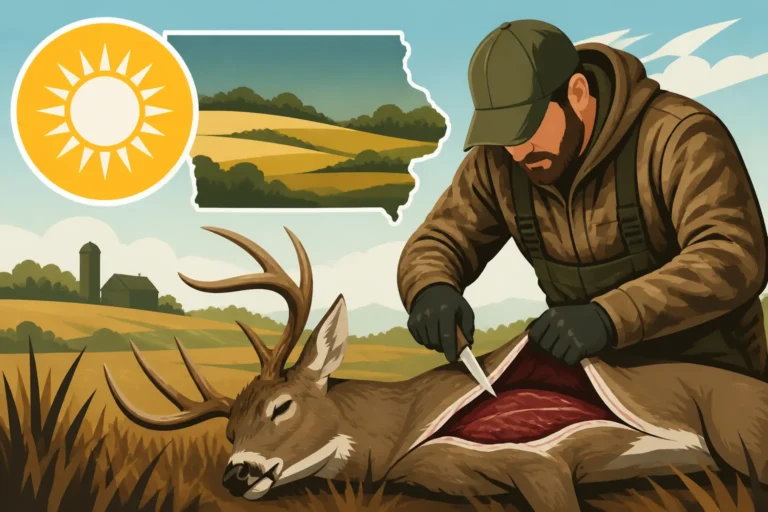
Your priority is to get the guts out as fast as possible. This removes a significant source of heat and bacteria. Work efficiently and carefully. After field dressing, prop the cavity open with a stick or two to allow air to circulate and promote rapid cooling. If you have any water nearby, you can rinse the cavity, but make sure to dry it thoroughly afterward. In warmer temperatures, bacteria multiply quickly, and moisture can exacerbate the problem. For comprehensive guidance, you might find articles on Field Dressing in Sixty-Degree Weather particularly helpful.
If you have a long drag ahead, or if the temperature is climbing, consider skinning the deer in the field and quartering it. This allows for even faster cooling and makes transport much easier, especially if you have to pack it out. Game bags are a hunter's best friend in this scenario; they protect the meat from dirt, flies, and debris while allowing it to breathe. The goal is to get that internal body temperature down as quickly as you can. For more tips on this, look up Getting a Deer Cooled in October. Every minute counts when the mercury is high, so be prepared with your knives, gloves, and game bags.
Game Recovery and Transport
Getting a deer out of the woods is often the hardest part of the hunt, and warm weather makes it even more challenging. You need an efficient plan to minimize effort and protect the meat.
Before you even head out, have a plan for how you'll get a deer out of various terrains. A good deer cart can be a lifesaver, especially on flatter ground or established trails. Brands like Hawk or Cabela's offer robust carts that can handle rough terrain. However, if you're in incredibly steep, brushy, or marshy areas, a cart might not be feasible. In those situations, a strong drag harness or quartering the animal for a backpack carry might be your only option. Trying to drag a whole deer through thick cover and up hills in warm weather is an exhausting task that can quickly spoil meat if it takes too long. If you're dealing with challenging topography, like a steep creek bottom, reading about Getting a Deer Out of an Iowa Creek Bottom could give you some invaluable strategies.
Once the deer is out, your next step is immediate transport to a cooler environment. If you're driving a significant distance, ensure you have plenty of ice or frozen jugs of water to pack into the body cavity and around the deer. A large cooler is essential if you're quartering the animal. Pack the meat loosely at first to allow air circulation, then add ice directly into the bags or around the meat. The quicker you get that meat cooled to below 40°F (4°C), the better the quality and flavor will be. Don't underestimate the impact of heat on venison. Planning for rapid game recovery and transport is just as important as shot placement for ensuring you get to enjoy your harvest.
Warm Weather Muzzleloader Strategy Comparison
To sum up the key differences, here's a quick comparison of how warm weather dictates a different approach compared to colder conditions.
| Aspect of Hunt | Warm October Muzzleloader Strategy | Cold Weather Muzzleloader Strategy |
|---|---|---|
| Deer Movement | Primarily nocturnal, short movements at dawn/dusk. Focus on bedding. | More active during the day, seeking food sources. |
| Stand Location | Edges of dense, cool bedding cover; near shaded water sources. | Near primary food sources (corn/beans, food plots); travel corridors. |
| Scent Control | Hyper-critical: Light layers, scent-free everything, constant wind check. | Important, but less critical as scent disperses better. |
| Access Routes | Stealthy, long, use wind/thermals carefully to avoid bedding. | Can be more direct, but still mindful of bedding areas. |
| Calling/Decoys | Minimal, soft bleats/grunts; cautious decoy use in open areas. | More aggressive calls (rattling, grunts) as rut approaches; decoys effective. |
| Post-Shot Care | Urgent: Quick field dress, rapid cooling, immediate transport. | More time available, but still prioritize cooling. |
| Hunter Comfort | Manage sweating, hydration; light, breathable layers. | Layering for warmth, insulated boots; hand/foot warmers. |
Disclaimer
Hunting is an inherently dangerous activity. Always prioritize safety, follow all local and state regulations, and ensure you have the proper licenses and tags. The information provided in this guide is for informational purposes only and should not be considered a substitute for professional instruction or adherence to official Iowa DNR guidelines. Be sure to check the most current Iowa Hunting and Trapping Regulations before heading afield, as rules and seasons can change.