Are 20 Gauge Slugs Enough for Deer?
For many Iowa deer hunters, especially those new to the sport or those looking for a different experience, the question of whether a 20 gauge slug is truly "enough" for deer often brings a mix of doubt and hopeful curiosity. You’ve likely heard the old-timers swear by the thump of a 12 gauge, but times have changed, and so has ammunition technology. This guide will dive deep into the modern capabilities of the 20 gauge slug, helping you understand its effectiveness and when it might be the perfect fit for your next deer season here in the Hawkeye State.
The Enduring Debate: 20 Gauge Versus 12 Gauge for Iowa Deer
It’s a conversation that pops up in hunting camps across Iowa every fall: which shotgun gauge is truly king for deer? For generations, the 12 gauge has been the default choice, synonymous with deer season. Its larger bore and heavier slugs seemed to offer an undeniable advantage, creating a perception that anything smaller might be underpowered. This conventional wisdom, while rooted in historical performance, doesn’t always account for the incredible advancements in modern ammunition.
Why Hunters Question the 20 Gauge
The apprehension about using a 20 gauge often stems from a few understandable places. First, there's the sheer visual difference; a 20 gauge shell and its accompanying slug look smaller than their 12 gauge counterparts. This immediately makes some hunters wonder if they're sacrificing too much "knockdown power." You might hear folks discuss kinetic energy or bullet weight, and on paper, the 12 gauge often shows higher numbers in these categories, especially with traditional lead slugs.
Beyond the numbers, many hunters are simply used to what they've always used or seen others use. If everyone in your hunting party carries a 12 gauge during the Iowa First and Second Shotgun Seasons, switching to a 20 gauge can feel like an unconventional move, raising questions about whether you’re adequately prepared for a big Iowa whitetail. It’s a natural hesitation, especially when you’re talking about ethically harvesting an animal.
Understanding the Fundamentals of Knockdown Power
Let's clear the air: "knockdown power" isn't just about the biggest number on the box. What truly matters is the projectile's ability to create a sufficient wound channel and transfer enough energy to quickly and humanely dispatch an animal. This is a function of bullet mass, velocity, and how the projectile performs upon impact – specifically, how it expands and penetrates vital organs. A heavier, faster slug often does have more kinetic energy, but if it zips through without significant expansion, or if it's placed poorly, that raw power means very little.
For deer hunting, especially with shotguns, the effective range is relatively short compared to rifle hunting. Within these typical shotgun ranges, a well-designed slug, whether 20 or 12 gauge, delivers a significant blow. The key differentiator for a humane harvest isn't solely the diameter or weight of the slug, but rather its precise placement. A 20 gauge slug delivered accurately to the vitals will always be more effective than a 12 gauge slug that merely wounds.
Recoil Management and Shooter Confidence
One of the most significant, yet often overlooked, advantages of the 20 gauge is its reduced recoil. Let's be honest, shooting heavy 12 gauge slugs, especially from a lightweight gun, can be a punishing experience. That heavy kick can lead to flinching, poor form, and ultimately, less accurate shooting. This is particularly true for younger hunters, smaller-framed individuals, or anyone who simply struggles with the violent jolt of a 12 gauge.
Reduced recoil from a 20 gauge means you can practice more comfortably and consistently, leading to greater proficiency and confidence when that moment of truth arrives in the field. A confident shooter who can maintain composure and execute a clean shot with a 20 gauge is far more ethical and successful than someone anticipating a brutal kick from a 12 gauge, leading to a rushed or poorly aimed shot. Remember, accuracy trumps raw power every single time when it comes to ethical hunting.
Modern 20 Gauge Slug Technology: A Game Changer
Forget the old days of basic rifled slugs in smoothbore barrels. Modern 20 gauge slugs are a far cry from their predecessors, incorporating advanced designs and materials that dramatically improve their performance. If you haven't looked at 20 gauge options in a while, you're in for a pleasant surprise. This evolution has truly elevated the 20 gauge into a highly capable deer hunting platform.
Sabot Slugs and Rifled Barrels
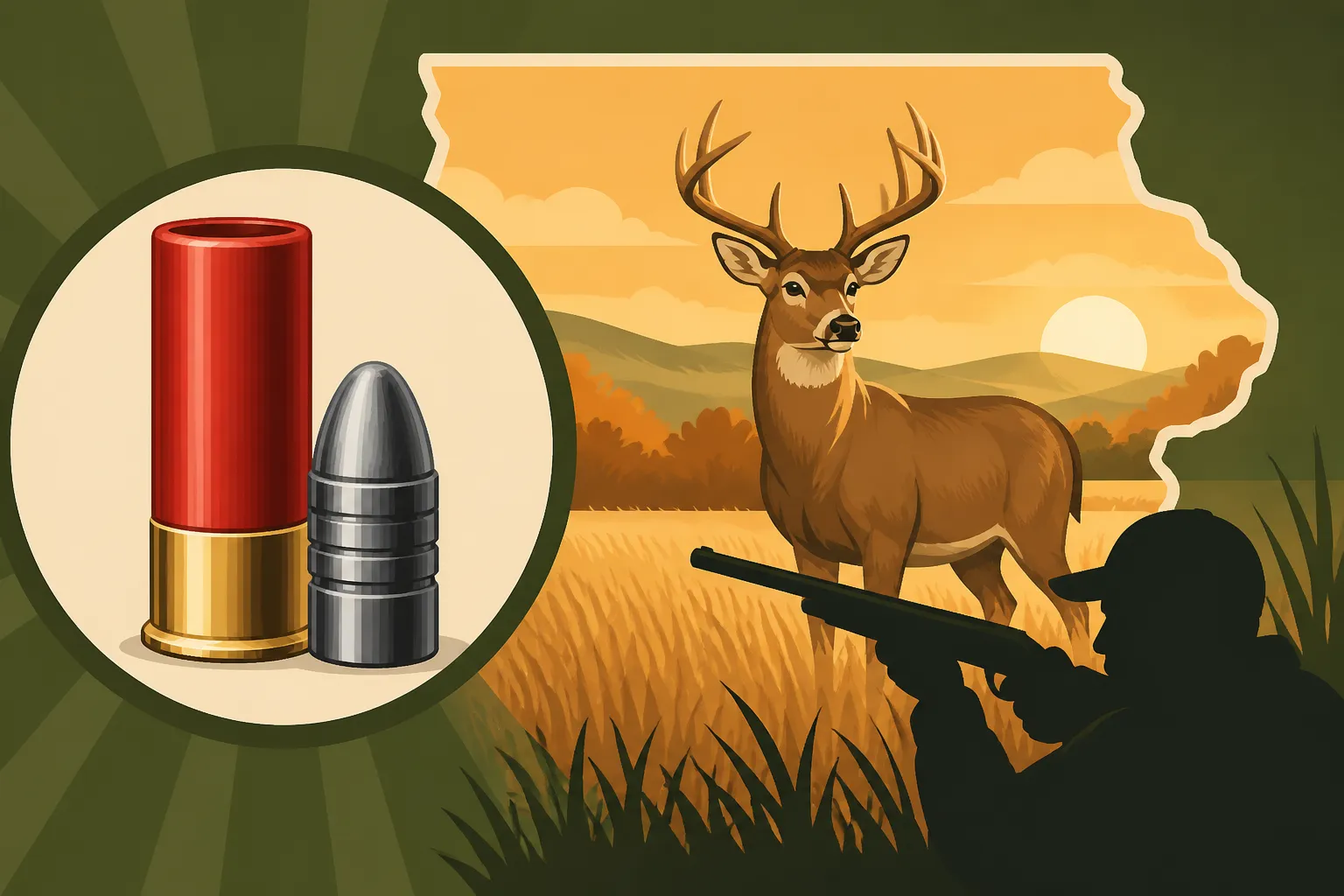
The biggest leap forward for slug guns, and especially the 20 gauge, came with the widespread adoption of sabot slugs and rifled barrels. A sabot slug isn't just a lead chunk; it's a sleek, aerodynamic bullet encased in a plastic sabot (pronounced "SAY-bow"). As the slug travels down a rifled barrel, the rifling grips the sabot, imparting a spin to the bullet. Once it leaves the barrel, the sabot falls away, and the bullet continues to spin, stabilizing its flight like a rifle bullet.
This spin stabilization drastically improves accuracy and extends the effective range compared to traditional rifled slugs shot through a smoothbore. With a dedicated rifled barrel, a 20 gauge shooting modern sabot slugs can achieve accuracy comparable to many centerfire rifles out to 100-150 yards, sometimes even further depending on the load and shooter. When researching options, platforms like GoHunt can be invaluable for comparing different sabot slug brands and their reported ballistics. This pairing of sabot technology with a rifled barrel is precisely what makes the 20 gauge a truly viable and ethical deer hunting tool today. If you're wondering about the specifics, check out Rifled Barrels Versus Smoothbore Slugs.
Expanding Projectiles and Energy Transfer
Modern 20 gauge slugs also benefit from sophisticated bullet designs. Gone are the days of simple, soft lead slugs that might deform inconsistently. Today's sabot slugs feature various expanding projectiles, from bonded lead cores to solid copper designs, and even partition-style bullets. These designs are engineered to reliably expand upon impact, creating a larger wound channel and maximizing energy transfer within the animal.
This controlled expansion is crucial. It ensures that even though the initial bullet diameter might be smaller than a 12 gauge, the expanded diameter is often very similar, and the energy is effectively dumped into the vitals rather than simply punching a small hole and exiting. This means a 20 gauge slug, when properly designed, can deliver terminal performance that is virtually indistinguishable from a 12 gauge within typical shotgun hunting ranges. The advancements in metallurgy and bullet geometry have made a significant difference in how these projectiles perform on game.
Effective Range Considerations for the 20 Gauge
While modern 20 gauge sabot slugs are impressively accurate, it's still important to understand their practical and ethical range limitations. For most hunters, with a properly sighted-in rifled 20 gauge, shots out to 100-125 yards are entirely ethical and achievable. Some skilled shooters, with specific ammunition and firearm combinations, might extend that to 150 yards under ideal conditions. Beyond that, the trajectory of even the best slugs begins to drop significantly, making precise shot placement much more challenging.
It’s easy to get caught up in manufacturers’ claims of extreme ranges, but for ethical hunting, you need to know your firearm's capabilities and your own shooting ability. Practice is key. Take your 20 gauge to the range and Zeroing a Slug Gun at Fifty Yards, then practice at 75 and 100 yards. See what kind of groups you can consistently produce from field positions. This personal knowledge, combined with reliable data you might find on GoHunt, will tell you your true effective range, which is often very similar to what most hunters can ethically achieve with a 12 gauge slug gun.
Practical Application and Ethical Considerations
Choosing the right firearm for deer hunting isn't just about ballistics; it's about making ethical decisions in the field. When you step into Iowa's timber or settle in on a field edge, your 20 gauge is only as good as the hunter behind it. Understanding its practical application and adhering to sound ethical principles will ensure you make the most of its capabilities.
Shot Placement is Paramount, Regardless of Gauge
We cannot stress this enough: shot placement is the single most critical factor in ethically harvesting a deer. Whether you're using a 20 gauge, a 12 gauge, or even a rifle, hitting the vitals (heart and lungs) is what causes a quick and humane death. A perfectly placed 20 gauge slug will anchor a deer faster and more humanely than a poorly placed 12 gauge slug every single time. The vital zone on an Iowa whitetail is roughly the size of a paper plate, and your goal should always be to place that projectile squarely within it.
Think about the angles. A broadside shot is generally ideal, offering the largest target to the vitals. Quartering-away shots can also be highly effective, aiming to penetrate through the ribs into the opposite shoulder. Avoid quartering-to or frontal shots unless absolutely necessary and you are extremely confident in your ability to place the shot precisely into the chest cavity, avoiding heavy bone. Spend time studying deer anatomy and visualizing the vitals from different angles. This knowledge, coupled with knowing Shot Placement on a Whitetail at Twenty Yards, will serve you far better than chasing bigger numbers on a box of ammo.
Understanding the Limitations and Choosing Your Shots
While modern 20 gauge slugs are highly capable, every firearm has its limitations. It's your responsibility as an ethical hunter to know these limits and hunt within them. This means passing on shots that are too far, too obstructed, or taken in poor light conditions. Imagine you’re tucked into a ground blind on a picked bean field, and a beautiful buck steps out at 170 yards. Even if your 20 gauge setup could theoretically reach that far, the chances of a perfect, ethical shot are significantly diminished. That's a shot to pass, plain and simple.
The thick timber and rolling hills of southern Iowa, or the brushy creek bottoms common in farm country, often present closer-range opportunities where a 20 gauge truly shines. The lighter, more nimble shotgun can be easier to handle in tight spots, like during a Shotgun Season Drives in Small Timber. Never let ego or "buck fever" push you beyond your rifle's or your personal capabilities. A missed or wounded animal is the worst possible outcome, and understanding your equipment's true range helps prevent that. Using a rangefinder, even in timber where distances can be deceiving, is a simple ethical tool. Consider reading Rangefinding in Timber to sharpen your skills.
Pairing Your 20 Gauge with the Right Optics
To get the most accuracy out of your modern 20 gauge slug gun, a quality optic is essential. Forget relying solely on open sights for anything beyond very close range. A low-power variable scope or a red dot sight can dramatically improve your precision. For most Iowa shotgun hunting, a 1-4x or 2-7x variable scope is a fantastic choice. These allow for quick target acquisition at close range on the lowest power, and enough magnification to make precise shots at the upper end of your ethical range.
Red dot sights are another excellent option, especially for hunters who prefer quick, instinctual shooting in dense cover where shots are often inside 75 yards. They offer a clear, unobstructed field of view and a precise aiming point. Whichever optic you choose, ensure it is mounted securely and zeroed meticulously with the specific slug ammunition you intend to hunt with. Different brands and bullet weights can have wildly different points of impact, so test thoroughly. For more specific advice on choosing and using optics, check out Scope Magnification for Slug Guns and Red Dot Sights on a Slug Gun.
Real-World Performance and Hunter Experiences
Beyond the technical specs and ethical discussions, the real proof of the 20 gauge's effectiveness lies in the experiences of hunters who have successfully used it in the field. Many Iowa hunters, from seasoned veterans to enthusiastic newcomers, have put the 20 gauge to the test and found it to be a very capable tool.
Success Stories from Iowa Hunters
Drive through any locker plant during Iowa's shotgun season, and you'll see plenty of big whitetails taken with 20 gauge slugs. Talk to hunters around the state, and you'll hear story after story of quick, clean harvests using modern 20 gauge setups. From the vast corn and bean fields that stretch across much of central Iowa to the rugged timber of the Northeast Iowa Driftless Hunting, hunters are consistently proving that the 20 gauge, when coupled with today's advanced ammunition, is more than sufficient.
Many hunters specifically choose the 20 gauge for its lighter recoil, allowing them to make better shots. I've known hunters who've harvested multiple Boone and Crockett-class bucks with a 20 gauge, demonstrating that raw size of the projectile is far less important than precision. The confidence gained from a comfortable, accurate shooting experience translates directly into more successful hunts and more deer brought home.
When a 20 Gauge Might Be the Better Choice
There are certain scenarios where a 20 gauge isn't just "enough," but might actually be the better choice. For instance, introducing a new hunter, especially a youth, to deer hunting. The lighter recoil of a 20 gauge makes the shooting experience much more pleasant and less intimidating, fostering a love for the sport rather than creating a fear of the gun. This is critical for recruiting the next generation of Iowa hunters.
Furthermore, hunters with shoulder injuries, those sensitive to recoil, or anyone who simply finds the 12 gauge too much to handle, can hunt effectively and comfortably with a 20 gauge without feeling under-gunned. Its lighter weight can also be an advantage when you're making a long walk into your stand on public land or navigating the dense undergrowth found in some of Iowa's less-pressured areas. Sometimes, a more comfortable, user-friendly firearm leads to a more focused and ultimately more successful hunt.
Resources for Choosing Your Setup
The world of shotgun slugs has expanded immensely, offering a fantastic array of choices for the 20 gauge. To help you navigate these options, resources are readily available. Online platforms like GoHunt offer detailed ballistic charts and reviews for various slug loads, allowing you to compare velocities, energies, and bullet drop. This can help you select the best slug for your specific shotgun and intended hunting ranges.
Don't be afraid to try different brands and bullet weights at the range. Every shotgun has its own preference, and finding the load that groups best out of your gun is crucial for accuracy. Consult local sporting goods stores in Iowa; many employees are avid hunters themselves and can offer practical advice based on their own experiences with Iowa's Legal Deer Hunting Equipment by Season. For a deep dive into ammunition specifics, you might also find valuable insights in Best Slug Loads for Iowa Deer.
Ultimately, the 20 gauge slug is unequivocally enough for deer in Iowa, provided you choose modern sabot ammunition, pair it with a rifled barrel, sight it in properly, and most importantly, practice until you can consistently place your shots accurately. It's a capable, ethical, and often more comfortable choice for many hunters seeking to fill their freezer with delicious Iowa venison.
| Feature | 20 Gauge Slugs (Sabot) | 12 Gauge Slugs (Sabot) |
|---|---|---|
| Perceived Recoil | Moderate to Light | Heavy to Very Heavy |
| Effective Range | 100-150 yards (with rifled barrel/sabots) | 100-175 yards (with rifled barrel/sabots) |
| Slug Weight Range | 250-300 grains (approx.) | 300-450 grains (approx.) |
| Bullet Diameter | Typically .45-.50 caliber (sabot projectile) | Typically .50-.58 caliber (sabot projectile) |
| Common Application | Youth/New Hunters, Recoil Sensitive, General Deer Hunting | Traditional Choice, Maximum Energy Transfer |
| Accuracy Potential | Excellent with proper setup | Excellent with proper setup |
Disclaimer
This article is for general informational purposes only and does not constitute professional advice. Laws, prices and regulations vary by location and change over time. Consult a qualified professional for guidance on your specific situation.