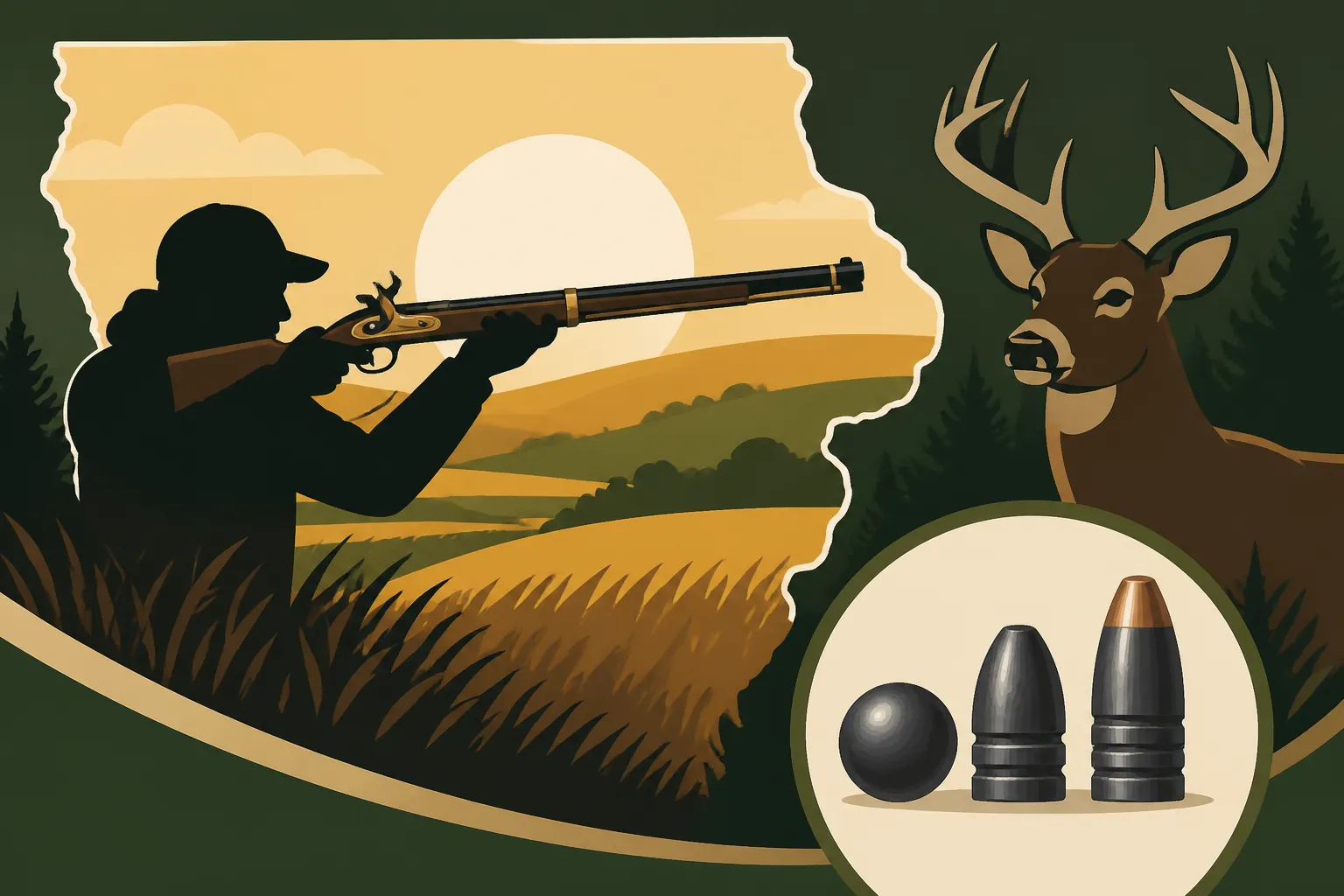
Iowa Muzzleloader Caliber Range
One of the biggest head-scratchers for new and even seasoned hunters looking to try muzzleloading in Iowa is figuring out exactly what kind of firearm you can legally take to the timber or field edge. It's not always as simple as grabbing any old smoke pole and heading out. The regulations, while designed to create fair chase opportunities and manage the deer herd, can sometimes feel like a maze, especially when you're trying to nail down the specifics of what caliber is truly legal for deer. This guide is here to clear the smoke, helping you understand the Iowa muzzleloader caliber range and all the other critical considerations to ensure your hunt is both successful and fully compliant with state law.
Navigating Iowa's Muzzleloader Regulations: More Than Just Caliber
Before we even dive into specific numbers, it's crucial to understand the overarching framework of Iowa's muzzleloader seasons. The Hawkeye State offers distinct opportunities for muzzleloader enthusiasts, each with its own quirks and often, its own set of conditions that influence not just what you can hunt with, but how you hunt. Misunderstanding these foundational rules can quickly turn a hopeful trip into a frustrating one, or worse, a costly legal issue.
The Specifics of Iowa's Muzzleloader Seasons
Iowa actually provides two primary muzzleloader seasons for deer hunters: the Early Muzzleloader season and the Late Muzzleloader season. These seasons are strategically placed to offer different hunting experiences and manage deer populations at various times of the year.
The Early Muzzleloader season typically falls in mid-October, often overlapping with some archery opportunities. This season can be absolutely fantastic, as deer are often still in their early fall patterns, sometimes visiting water sources or distinct travel corridors before the full-blown rut kicks in. However, the weather can be warm, which adds a layer of complexity to meat care. Understanding that this season is generally warmer means your gear choices, including your muzzleloader, might favor reliability in variable conditions. Iowa Early Muzzleloader Season is a popular time for hunters who enjoy crisp autumn mornings without the full pressure of shotgun season.
Then there's the Late Muzzleloader season, which usually runs from mid-December into January. This is a much colder affair, often involving snow and bitter winds, but it can be incredibly rewarding. Deer are typically concentrated on late-season food sources, and if you can brave the elements, you might find some excellent hunting. This season requires a different mindset and different gear considerations, including how your muzzleloader performs in freezing temperatures. For many, this season is about hunting those hard-to-reach deer that have dodged earlier pressure, often finding them in thick thermal cover or hidden food plots. Iowa Late Muzzleloader Season demands robust gear and a strong will to endure the cold.
General Rules Affecting All Muzzleloader Choices
Beyond the season dates, several general regulations dictate what defines a legal muzzleloader in Iowa. It's not just about the hole at the end of the barrel; it's about the entire system. Iowa law specifies that a muzzleloader must be loaded from the muzzle, can only be loaded with a single projectile (no buckshot or multiple balls), and must use black powder or a black powder substitute. This means no breech-loading "muzzleloaders" that are essentially disguised modern firearms.
Another critical aspect is the ignition system. Iowa allows percussion cap, flintlock, and 209 primer ignition systems. This gives hunters a bit of flexibility based on their preference and what kind of muzzleloader they own or plan to buy. Some hunters prefer the traditional feel of a flintlock, while others lean towards the modern convenience and reliability of 209 primers, especially in damp or cold conditions. For detailed state-specific regulations, many hunters find resources like the Iowa DNR website or even hunting apps like GoHunt incredibly helpful for cross-referencing against their existing setup or planned purchases. These platforms are designed to distill complex legal jargon into understandable terms, making sure you're always on the right side of the law.
Understanding these basic tenets is your first step. It sets the stage for what types of muzzleloaders are even on the table before you start thinking about caliber, powder charges, or projectile weights. It's truly about the spirit of the hunt and adhering to the historical methods that define muzzleloading.
Deciphering the Legal Caliber Range for Iowa Whitetails
Now for the heart of the matter: what caliber muzzleloader can you actually use for deer in Iowa? This is where many hunters get hung up, fearing they'll choose something too small or, perhaps, too large and not allowed. The good news is that Iowa's regulations are fairly straightforward when it comes to minimums, and there's a wide range of effective and legal options available.
Minimum Caliber Requirements for Deer
Iowa law stipulates a minimum caliber for hunting deer with a muzzleloader. For hunting deer, your muzzleloader must be at least .44 caliber. This is a crucial number to remember. Anything smaller than .44 caliber is simply not legal for deer hunting in Iowa. This minimum ensures that hunters are using a firearm capable of delivering sufficient energy and projectile mass for a clean, ethical harvest on a whitetail deer.
This rule means that popular small-game muzzleloaders, like a .32 or .36 caliber rifle, while perfectly fine for squirrels or rabbits, are off-limits for deer. You really need to step up to that .44 minimum. For many years, the .50 caliber muzzleloader has been the undisputed king of the woods for deer hunters, and it easily meets this minimum. However, you're not restricted to just .50 caliber. Any caliber from .44 up is generally permissible, provided it meets the other legal requirements regarding loading and projectile type. It’s always smart to double-check the latest Iowa DNR regulations for any changes, as things can occasionally be updated. Platforms like GoHunt often compile these rule changes and explain them for hunters.
Common and Recommended Calibers for Effectiveness
While .44 caliber is the minimum, most serious Iowa deer hunters will opt for something larger, typically a .50 caliber or even a .54 caliber muzzleloader. There are good reasons for this, primarily related to energy transfer and bullet performance on larger game like mature whitetail bucks.
The .50 caliber muzzleloader is by far the most popular choice across the country, and certainly in Iowa. It offers an excellent balance of manageable recoil, good accuracy, and more than enough knockdown power for whitetails. With a .50 caliber, you have a vast array of bullet choices, from traditional lead round balls and conical bullets to modern saboted projectiles. This versatility makes it a go-to for many hunters. When loaded with a proper bullet and charge, a .50 caliber can easily take a deer out to 100-150 yards, sometimes further depending on the specific rifle and shooter proficiency, assuming Muzzleloader Accuracy at 100 Yards has been properly practiced.
The .54 caliber is another excellent choice, providing a noticeable bump in projectile weight and energy. While perhaps less common than the .50, a .54 caliber muzzleloader can be incredibly effective, especially if you anticipate longer shots or prefer the extra punch. Recoil might be slightly heavier, but for most hunters, it's still very manageable. Bullet selection for .54 caliber might not be as vast as .50, but there are still plenty of solid options, particularly in conical bullets designed for deep penetration.
The .45 caliber is also a very viable and legal option, especially if you're using saboted bullets. Many .45 caliber muzzleloaders are designed to shoot smaller diameter, high ballistic coefficient bullets (like .40 or .42 caliber pistol bullets) encased in a plastic sabot. This setup can offer flatter trajectories and excellent accuracy, appealing to hunters who prioritize precision and a slightly lighter recoil than a .50 or .54. As long as the bore of your muzzleloader is .44 caliber or larger, using a saboted projectile that might be smaller than .44 caliber at its core is perfectly fine, as the regulations focus on the bore diameter of the firearm itself. However, it is essential to understand Iowa Muzzleloader Projectile Rules to ensure your chosen bullet type is also legal.
Here's a quick comparison of popular legal muzzleloader calibers in Iowa:
| Caliber | Common Projectiles | Typical Advantages | Typical Disadvantages |
|---|---|---|---|
| .44 | Round Ball, Conical | Lighter recoil, historic feel | Less energy than larger calibers, fewer modern projectile options |
| .45 | Saboted Bullets (e.g., .40-.42 cal), Conical | Excellent accuracy, flatter trajectory with sabots, good energy | Sabots can be tricky to load, bore must be .44+ |
| .50 | Round Ball, Conical, Saboted Bullets | Most popular, wide range of projectile options, great power/recoil balance | Can have stout recoil with heavy loads |
| .54 | Round Ball, Conical | Maximum energy for whitetail, deep penetration | Heavier recoil, fewer projectile options than .50 |
Ultimately, the best caliber for you will depend on your personal preference, comfort with recoil, and the specific hunting conditions you expect to encounter. All these calibers, when properly loaded and placed, are highly effective on Iowa whitetails.
Choosing the Right Muzzleloader Setup for Iowa's Diverse Terrain
Selecting a muzzleloader for Iowa isn't just about picking a legal caliber; it's about building a reliable system that performs in the field. Iowa offers a variety of hunting environments, from dense timber and creek bottoms to sprawling crop fields and small woodlots. Your choice of projectile, powder, and the overall setup of your muzzleloader will significantly impact your success and confidence when that trophy buck steps out.
Factors Beyond Caliber: Projectile Type and Performance
Once you've settled on a legal caliber, the next big decision is your projectile. This is where modern muzzleloading has really evolved, offering hunters choices that can dramatically affect accuracy, range, and terminal performance.
Traditional hunters might opt for lead round balls or conical bullets (like PowerBelts or Hornady Great Plains). Round balls are excellent for accuracy at closer ranges and offer decent killing power, especially in larger calibers. Conical bullets provide more mass and often better penetration. These are generally easier to load without sabots and can be very effective in the hands of a skilled shooter.
However, many modern muzzleloader hunters, especially those using .45 or .50 caliber rifles, gravitate towards saboted bullets. These consist of a smaller, often polymer-tipped, projectile (like a .40 or .42 caliber bullet for a .45 cal muzzleloader, or a .45 caliber bullet for a .50 cal muzzleloader) encased in a plastic sabot. The sabot engages the rifling, imparting spin to the bullet, but then falls away after leaving the muzzle. The advantages are numerous: flatter trajectories, better ballistic coefficients, and often superior accuracy at longer ranges. Brands like Hornady, Barnes, and Federal offer excellent saboted options. Just ensure your chosen projectile adheres to Iowa Muzzleloader Projectile Rules, which generally prohibit anything other than a single projectile.
Then there's the powder. Black powder substitutes like Pyrodex, Triple Seven, and Hodgdon 777 are extremely popular. They burn cleaner and are less corrosive than traditional black powder, making cleanup easier. The amount of powder charge you use will also affect velocity, trajectory, and recoil. Always consult your muzzleloader's manual and the powder manufacturer's recommendations for safe loading data. Experimenting at the range with different projectile and powder combinations is key to finding what shoots best in your specific rifle and building confidence in your setup.
Matching Your Muzzleloader to Hunting Scenarios
Iowa hunting scenarios can be incredibly varied, and a versatile muzzleloader setup can be a real asset. Consider where you typically hunt and what kind of shots you expect to encounter.
If you're primarily hunting dense timber and thick brush, like you might find in some of the larger state forests such as Stephens State Forest or Yellow River State Forest, then quick, close-range shots are more likely. In these situations, a heavier conical bullet might be preferred for busting through light brush and delivering maximum energy at short distances. Accuracy out to 75-100 yards is paramount. A good set of open sights or a low-magnification scope could be ideal. Best Stand Locations in Rolling Timber often dictates these closer shot opportunities.
Conversely, if you're hunting field edges, creek lines, or the more open areas of central Iowa farm country, you might anticipate longer shots across picked corn or bean fields. Here, a .45 or .50 caliber with a high ballistic coefficient saboted bullet, paired with a reliable scope, would give you the edge. You'll want to practice extensively to ensure you can consistently make ethical shots out to 150 yards or even a bit further. Hunting Inside Corners of Crop Fields often presents these longer shot challenges.
For both scenarios, having a muzzleloader that is reliable in all weather conditions is non-negotiable. Keeping a Muzzleloader Dry in December is a serious consideration during the late season when dampness or freezing rain can render a less-than-perfectly sealed 209 primer or a traditional percussion cap inert. Many modern inline muzzleloaders are designed with weather resistance in mind, offering superior ignition reliability compared to older, open-action designs. A seasoned hunter often applies a light layer of waterproof grease around the primer or cap to prevent moisture from compromising the shot.
Practical Considerations for Your Iowa Muzzleloader Hunt
Beyond the legalities and choosing your setup, there are several practical aspects that can make or break your Iowa muzzleloader hunt. From understanding your weapon's true capabilities to ensuring proper care in the field, these details contribute significantly to your overall success and ethical hunting practice.
Accuracy and Range: Knowing Your Limits
It's one thing to know your muzzleloader is legally capable of taking a deer; it's another to know you are capable of making an ethical shot with it. This comes down to practice, practice, and more practice.
Every muzzleloader is a unique beast. What shoots well in one .50 caliber might not in another. You need to spend time at the range, trying different loads, projectiles, and powder charges until you find the combination that yields the tightest groups from your specific firearm. Always start by zeroing your muzzleloader. For most muzzleloaders, a 100-yard zero is a good starting point, but understand your bullet's trajectory both closer and farther out. Some hunters prefer a 50-yard zero if they know their shots will be primarily within that range, but then you need to know how much your bullet drops at 75 or 100 yards. Comparing this to Zeroing a Slug Gun at Fifty Yards might highlight differences in trajectory and effective range.
Knowing your effective range is paramount. Just because your muzzleloader can shoot 150 yards doesn't mean you can consistently hit a deer's vital zone at that distance under hunting pressure, especially in the cold with numb fingers. Be brutally honest with yourself about your maximum ethical range. For many, this might be 100-125 yards, especially when using open sights or lower-magnification scopes. Always prioritize a clean kill over a long shot that risks wounding an animal. Utilize a rangefinder when out in the field to confirm distances to landmarks and potential shot zones. This simple piece of gear can save you a lot of heartache.
Maintenance and Reliability in the Field
Muzzleloaders, by their very nature, require a bit more attention to maintenance than modern cartridge firearms, especially during prolonged hunting trips. The corrosive nature of black powder and its substitutes means that thorough cleaning after each shooting session is vital to prevent rust and maintain accuracy.
After a day in the field, even if you haven't fired a shot, it's wise to at least remove the breech plug and swab the barrel, especially if the weather was damp. Moisture and residual powder fouling can quickly lead to corrosion. Cleaning a Muzzleloader Between Sits is not just a suggestion; it's a critical part of being a responsible muzzleloader hunter. Modern cleaning solvents specifically designed for black powder are a game-changer, making the process much easier than it used to be.
Reliability in the field also extends to your ignition system. If you're using 209 primers, make sure they are stored in a dry place. Some hunters even carry a small, waterproof container for extra primers. If using a flintlock, ensure your flint is sharp and your pan is clean. For percussion caps, ensure they are seated properly and not exposed to moisture. Having a dry patch or two to wipe down the barrel exterior can also help prevent rust during a long sit in a stand or blind.
Considering the unpredictable Iowa weather, especially during the Late Muzzleloader Food Source Hunting season in December and January, proper clothing is also a factor in your muzzleloader's reliability, as it affects your ability to handle the rifle and make a steady shot. Make sure you have appropriate Cold Weather Stand Clothing to stay comfortable and focused.
Finally, remember to unload your muzzleloader safely at the end of each hunting day or before transporting it. Modern muzzleloaders often have safe de-cocking methods or ways to remove the primer without firing. Never transport a loaded muzzleloader in your vehicle.
By understanding these regulations, choosing an appropriate caliber and setup, and diligently practicing and maintaining your equipment, you'll be well on your way to a safe and successful muzzleloader deer hunt in the great state of Iowa.
Disclaimer
This article is for general informational purposes only and does not constitute professional advice. Laws, prices and regulations vary by location and change over time. Consult a qualified professional for guidance on your specific situation.