Ground Blind Windows and Shooting Lanes
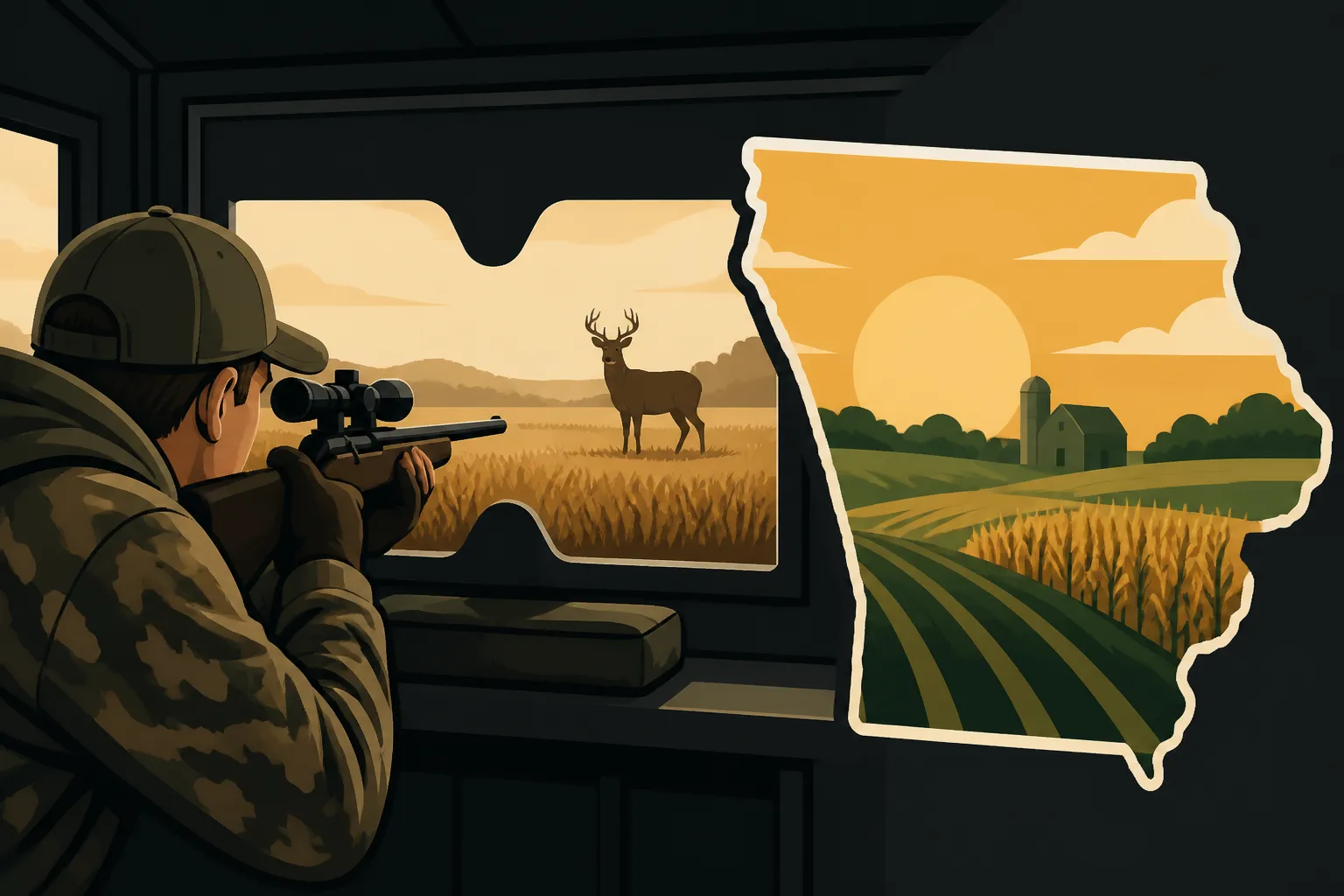
It's happened to all of us: you've put in the time scouting, picked the perfect corner of a picked bean field or that subtle timber funnel, brushed in your ground blind just so, and then the deer steps out. But in that critical moment, you find yourself contorting, struggling with a window, or realizing a branch you swore wasn't there is now directly in your shooting lane. Setting up ground blind windows and clearing effective shooting lanes isn't just about concealment; it's about making sure your hard-won opportunity doesn't turn into a frustrating "what if." This guide will walk you through optimizing your ground blind setup for success, no matter the Iowa terrain or hunting method.
Understanding the Unique Challenges of Ground Blind Hunting
Hunting from a ground blind offers fantastic concealment from game animals, helping to mask your movement and scent. However, it also presents its own set of challenges, particularly when it comes to visibility and making a clean shot. Unlike a treestand that offers a wide, elevated view, a ground blind keeps you at eye level with the deer, and often, with the surrounding vegetation.
The Restricted Field of View
One of the most common frustrations for hunters in a ground blind is the restricted field of view. You're essentially looking out of a series of portals, which means your peripheral vision is severely limited compared to hunting from an open stand or on the ground. This isn't just a minor inconvenience; it can be the difference between spotting that cruising buck in time to prepare for a shot, or only seeing him as he's already passing by your lane.
Think about it: you're scanning for movement through a relatively small window, trying to cover a 90-degree arc, or even more, with your head and eyes. Meanwhile, a deer could be approaching silently from a blind spot just outside your current window, or subtly moving through cover you can't quite see through your mesh. This restricted view makes it crucial to understand deer travel patterns and anticipate where they will appear, rather than just reacting to where they are. It also emphasizes the importance of good pre-season scouting, so you have a solid idea of which directions deer are likely to approach from. Using tools like GoHunt can help you analyze terrain features and potential travel corridors from the comfort of your home, informing where you orient your blind and what areas need the most focus for shooting lanes.
Navigating Awkward Shooting Angles and Obstructions
Another significant hurdle is dealing with awkward shooting angles and unexpected obstructions. When you're at ground level, every rise, dip, small bush, or even a clump of tall grass can become a major impediment to a clear shot. A branch that looked harmless from outside the blind suddenly becomes a bullet deflector or an arrow redirector when you're looking through your sight.
Furthermore, the angles themselves can be tricky. While treestands often provide downward angles that open up vitals, ground blinds require precise horizontal shots. This means your shooting lanes need to be impeccably clear, not just for a moment, but for the entire trajectory of your projectile. You might get a perfect view of a deer's chest at 20 yards, but if there's a small sapling between you and the deer at 10 yards, that shot is a no-go. You'll often find yourself having to move slightly within the blind, adjust your seated position, or even pivot your body to align with the deer as it moves through your designated lane. This internal movement needs to be minimal and slow to avoid spooking game, highlighting the need for well-planned and ample shooting lanes from the outset.
Strategic Window Management in a Ground Blind
Effective window management is paramount to successful ground blind hunting. It's not just about opening a window when you see a deer; it's a strategic decision that balances visibility, concealment, and shot opportunity.
How Many Windows to Open and When
Deciding how many windows to open, and when, is a delicate dance between visibility and maintaining concealment. Opening too many windows can compromise your blind's dark, concealing interior, allowing more light in and making your silhouette more visible to wary deer. Too few, and you risk missing opportunities.
Generally, I recommend starting with one primary shooting window open, typically the one facing the most likely approach of game or your best food plot. Have the secondary windows, especially those covering adjacent travel corridors or potential escape routes, open just enough to peek through the mesh, allowing you to scan for approaching animals without creating too much light contrast inside your blind. If you're bowhunting, you'll need a wider aperture, so opening a single large window or even two adjacent ones might be necessary. For shotgun or straight-wall rifle hunting, a smaller window opening can often suffice, as the shooting dynamics are less sensitive to tight clearances. Always consider the wind direction when choosing which windows to open. While a blind helps contain scent, opening a window directly into a swirling wind can push your scent out, especially if you're not meticulous with Ozone and Scent Control Claims.
Harnessing Mesh Screens and Light Control
Most modern ground blinds come equipped with mesh screens, and these are your best friend for concealment. The mesh allows you to see out relatively clearly while making it very difficult for deer to see in, especially into the darker interior of your blind. It’s like a one-way mirror, a truly amazing invention for hunters.
I highly recommend keeping the mesh screens down on all windows, even the primary shooting window, until the moment you need to shoot. When a deer is approaching, you can scan through the mesh without fear of being spotted. If you’re bowhunting, you’ll likely need to silently flip or pull back the mesh on your shooting window just before drawing your bow to ensure a clear arrow flight. For gun hunters, you might be able to shoot directly through the mesh with certain loads and distances, but it's always safer and more accurate to clear it for the shot if possible. Furthermore, managing the light inside your blind is crucial. Always try to set up your blind with the sun at your back or to the side, preventing direct sunlight from streaming into the blind and backlighting your silhouette. Wear dark clothing inside the blind to blend into the shadows, and minimize any reflective surfaces on your gear.
Quick Adjustments and Silent Operation
The ability to quickly and silently adjust your windows is critical when a deer is actively moving in your area. Fumbling with zippers, Velcro, or noisy snaps at the crucial moment can instantly blow your hunt.
Before the season, get intimately familiar with your blind’s window system. Practice opening and closing them silently. Lubricate zippers if they're sticky. If your blind uses Velcro, you might consider adding small magnetic strips or silent clips to certain areas to reduce noise, or simply only use the silent toggles if available. When setting up, think about which windows you might need to adjust quickly and ensure they are easily accessible. For example, if you anticipate a shot to your left, have that window ready to open wide without needing to reach across your body or make excessive movements. Consider a blind chair that swivels silently, allowing you to pivot to different windows without creaking or shuffling your feet. This readiness is especially important when deer are on the move during the First Week of November Stand Choice as they cruise for does.
Creating and Maintaining Effective Shooting Lanes
Once your windows are sorted, the next step is to ensure you have clear, unobstructed paths for your bullet or arrow. This often means some pre-season work, but it's worth every bit of effort.
Pre-Season Preparation and E-Scouting
The best shooting lanes are created well before opening day. This starts with thorough pre-season preparation, beginning with e-scouting from home. Use mapping applications or platforms like GoHunt that provide detailed aerial imagery and topographic maps. Identify potential game trails, bedding areas, and feeding zones. Pinpoint the exact location where you plan to set up your blind.
Once you have a spot in mind, use the mapping tools to visualize possible shooting lanes. Look for natural breaks in cover, subtle terrain features that might funnel deer, or existing clearings. Once you're on the ground, bring your trimming tools and a rangefinder. Set up your blind and sit inside it, just as you would when hunting. This is critical because what looks clear from outside can be completely obstructed from your eye-level vantage point inside the blind. Take test "aims" with your bow or gun to ensure absolutely nothing is in the way for typical shooting distances. For bowhunters, aim for lanes that are at least three to four feet wide to account for arrow flight and potential wind drift. For gun hunters, you might not need as wide a lane, but still, ensure there are no small twigs or leaves that could deflect a bullet. This foresight can make all the difference, especially when Scouting Iowa Public Land Before the Opener.
Natural Versus Cleared Lanes
When establishing shooting lanes, always prioritize utilizing natural openings where possible. These are less invasive, require less work, and disturb the habitat less. Perhaps a logging trail, a cow path, or simply a sparse area in the timber provides a ready-made lane.
However, often you'll need to create or enhance lanes by clearing vegetation. When doing so, focus on trimming only what is absolutely necessary. Avoid creating obvious, "cut-out" looking lanes that might alert wary deer. Instead, try to feather the edges, remove individual branches or small saplings that are direct obstructions, and blend your work into the natural surroundings. For instance, instead of clear-cutting a wide swath, identify specific shot corridors (e.g., at 20 yards, 30 yards, 40 yards) and only clear those specific lines of sight. Pay close attention to the ground level and eye level of a deer. Removing low-hanging branches or tall weeds that would obstruct a deer's vitals is often more important than clearing high canopy. Remember, the goal is to make a clear path for your projectile, not to create a wide-open field. On public land, be mindful of rules regarding vegetation removal; generally, minor trimming with hand tools is acceptable, but consult local regulations if you plan anything more extensive.
Setting Up for Bow, Shotgun, or Straight-Wall Rifle
The type of weapon you're using heavily influences your shooting lane requirements. Each has different projectile trajectories and effective ranges.
| Weapon Type | Optimal Lane Width (Estimated) | Effective Range Considerations | Key Obstruction Concerns |
|---|---|---|---|
| Bow | 3-4 feet wide minimum | 20-40 yards typically | Small twigs, leaves, tall grass, ground debris |
| Shotgun (Slugs) | 1-2 feet wide | 50-100 yards depending on setup | Small branches, thick brush, dense foliage |
| Straight-Wall Rifle | 1-2 feet wide | 100-200+ yards depending on cartridge | Similar to shotgun, but increased range demands even clearer paths |
For bowhunters, precision is key. Your arrow travels slower and has more arc than a bullet, making even a small twig a potential deflection. You need wide lanes to account for the fletching of your arrow, especially at closer ranges. Practice shooting from your blind at various angles and distances, including through the mesh screen if you plan to keep it down for the shot. When dealing with a Shot Placement on a Whitetail at Twenty Yards, every inch counts.
Shotgun and straight-wall rifle hunters have a flatter trajectory and more kinetic energy, meaning small twigs are less likely to deflect a bullet. However, you're often shooting at longer ranges, so any obstruction further out in the lane becomes magnified. Ensure your lanes are clear out to your maximum effective range. If you're hunting with a shotgun, consider Slug Range Limits on a Deer Drive to understand your effective reach. Always double-check your lanes from inside the blind, especially if you're using a rest or bipod, to make sure your firearm's barrel has a clear path.
Adapting to Different Iowa Hunting Scenarios
Iowa presents a diverse range of hunting environments, from vast agricultural fields to dense timber and river bottomlands. Your ground blind window and shooting lane strategy needs to adapt to these varied landscapes.
Field Edge and Open Country Setups
Hunting field edges and open country in Iowa often means you'll encounter deer at longer distances, but also that they'll be more aware of their surroundings. In these scenarios, concealment is paramount, and your window strategy needs to reflect that. You're typically watching a specific food source or travel corridor along the edge of a field.
When setting up your blind on a field edge, think about the prevailing wind and sun. Always try to put the sun at your back to keep your blind's interior dark and avoid glare. You'll likely want a wider main window open, or at least quickly accessible, to cover the length of the field edge you expect deer to use. Given the more open nature, you might not have many natural shooting lanes, so you may need to focus on clearing specific lines of sight that parallel the field or intersect known crossings. Consider brushing in your blind exceptionally well, even piling up corn stalks or brush around it to help it blend into the background. This heavy brushing is key, as deer in open country are often more skittish and prone to spotting abnormalities. Using a Decoy on a Field Edge can also be very effective in these settings, but remember to set up your decoy to complement your shooting lanes, not obstruct them.
Timber and River Bottom Configurations
Timber and river bottom environments present a completely different set of challenges and opportunities for ground blind hunting. Here, deer movement is often tighter, more concealed, and at closer ranges. The dense cover also offers more opportunities for natural concealment and pre-existing shooting lanes.
In timber or river bottoms, your focus will shift from wide-open vistas to smaller, more defined lanes and pockets of visibility. Identify funnels, pinch points, and natural deer trails that wind through the trees. These are prime locations for blind setups. You might find that you only need a few, highly precise shooting lanes cleared, often at closer distances. The key here is to trim just enough to give yourself a clear shot at likely deer crossings, without making your presence obvious. Thinning out brush along a Hunting a Narrow Creek Corridor or clearing a small path where deer naturally cross a rise can be incredibly effective. Because of the density, light control within the blind becomes even more critical, as deer can appear silently and quickly at close range. Keep your mesh screens down as much as possible, and be ready to make silent, quick adjustments. Understanding Wind and Thermals in River Breaks is crucial here, as swirling air currents can easily betray your position, making careful window management even more vital.
Considerations for Public Versus Private Land
The rules for modifying habitat for shooting lanes can differ significantly between public and private land. Always be aware of the regulations for the specific land you are hunting.
On private land, with landowner permission, you generally have more leeway to clear extensive shooting lanes, strategically trim vegetation, or even create small food plots near your blind. This allows for optimal customization to maximize your hunting success. However, always discuss any significant clearing plans with the landowner beforehand to maintain a good relationship. When hunting Public Land Deer Hunting in Iowa, the rules are usually much stricter. Most public lands prohibit the cutting of live vegetation or extensive clearing. You're generally limited to using small hand pruners to snip twigs or small branches that directly obstruct your shooting lanes, and even then, discretion is advised. Many public areas emphasize leaving no trace, so any cut vegetation should be scattered or removed. This means on public ground, you'll need to focus even more heavily on finding natural shooting lanes and placing your blind where the cover already provides good opportunities. Remember to always check specific area regulations, as some wildlife management areas might have unique rules regarding blind placement and vegetation modification.
Disclaimer
This article is for general informational purposes only and does not constitute professional advice. Laws, prices and regulations vary by location and change over time. Consult a qualified professional for guidance on your specific situation.