Hunting a Narrow Creek Corridor
It's incredibly frustrating when you're hunting in Iowa, staring out at what seems like endless crop fields or dense timber, and you just know deer are moving, but you can't quite pinpoint their travel routes. Often, these elusive whitetails are using subtle features of the landscape as their hidden highways, and one of the most overlooked yet consistently productive spots is a narrow creek corridor. This guide will dive deep into understanding, scouting, and effectively hunting these vital deer movement pathways.
Why Creek Corridors Are Deer Magnets
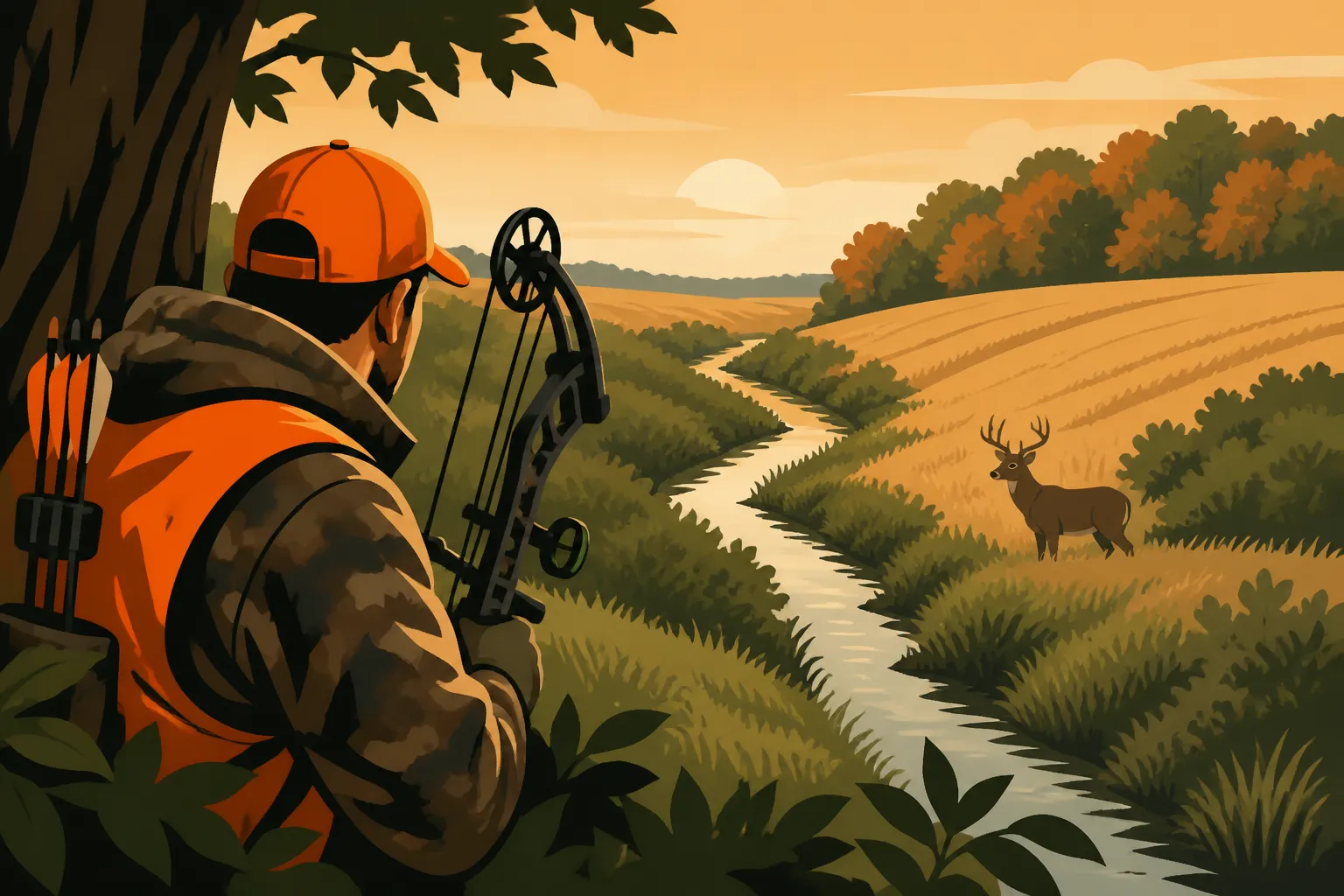
When you're looking at an aerial map or even walking through a property, it's easy to dismiss a small, narrow creek. It might seem insignificant compared to larger river systems or vast timber blocks. However, for a whitetail deer, these modest waterways often represent a perfect combination of cover, consistent water, and a safe travel route that allows them to move undetected through more open landscapes. They act as natural funnels, concentrating deer movement in predictable ways.
Natural Funnels and Travel Routes
Think about how deer prefer to move. They're masters of efficiency and stealth. A narrow creek, even if it's mostly dry for parts of the year, creates a natural depression in the landscape. This depression often carries thicker vegetation along its banks – think multiflora rose, dogwood thickets, young saplings, and even mature trees that wouldn't survive in the adjacent, frequently tilled fields. This dense growth provides excellent visual cover, allowing deer to walk from bedding to feeding areas, or simply move between larger blocks of timber, without being exposed in the open. They can dip down into the creek bed, using the contours of the land and the overhead canopy to conceal their presence from predators and hunters alike. It’s like a hidden trench through otherwise exposed country. Many times, these creeks link up critical resources, connecting a secluded bedding area in one timber block to a prime food source like a picked soybean field a quarter-mile away.
Water Sources and Thermal Cover
Beyond just a travel lane, creeks offer other essential resources. Even if the main channel is dry, often there are small seeps or pockets of standing water that persist longer than puddles in open fields, especially during dry spells in the early bow season. Deer need water daily, and these consistent sources can draw them in. Furthermore, the topography of a creek corridor, with its banks and sometimes steep sides, creates microclimates. In colder months, the sheltered banks and thicker cover can provide thermal cover, protecting deer from harsh Iowa winds and heavy snow. Conversely, in the heat of early season, the cooler air that sinks into these depressions can offer relief from sweltering temperatures. Understanding how Wind and Thermals in River Breaks work can give you a significant advantage, and these principles apply equally to smaller creek bottoms.
Scouting the Corridor Reading the Sign
You can't effectively hunt a creek corridor unless you've done your homework. "Boots on the ground" scouting is paramount, but it should be augmented with modern tools. Don't just walk the creek bed; really dissect it. Look for the subtle clues that tell you when, where, and why deer are using this specific path.
E-Scouting Before You Go
Before you ever step foot in the timber or along the creek bank, pull up an aerial map. Tools like GoHunt (or other similar mapping platforms) are invaluable here. Look for where the creek connects different types of habitat. Does it snake from a large timber block, through a series of crop fields, and into another bedding area? Note any pinch points where the creek might narrow, or where thick cover funnels down into a very confined space. Identify potential access routes to these points that won't blow deer out of the area. Pay close attention to where the creek crosses fence lines or cuts through field corners. These are often natural crossing points. Also, identify any subtle bends or turns in the creek bed that might offer a hidden pocket or a small bench where a deer might pause. Having a solid e-scouting plan can save you a ton of time and help you identify potential hot spots without disturbing the area. When learning how to use these tools, remember that E-Scouting Iowa Farm Country From Home is your first step to success.
Identifying Key Deer Sign
Once you’re on the ground, your mission is to read the story the deer have left behind. Don't just look for tracks; look for patterns. Are there heavy trails running parallel to the creek on one side, or are they crossing frequently? Look for worn-down paths leading up and out of the creek bed to adjacent fields. These are often primary travel corridors. Search for rub lines and scrape lines, especially along the edges of the thicker cover. A fresh rub line indicates a buck has been actively marking his territory, and if it's running parallel to the creek, you know he's using that corridor. During the rut, these creek bottoms can become hotspots for cruising bucks. Check for bedding areas within the creek's immediate vicinity — sometimes deer will bed just off the bank in a thicket, using the elevation change for a quick escape or to get a better vantage point. You're looking for evidence of consistent, purposeful use, not just a random track. Pay attention to how deer are utilizing various features; for instance, Ditch Crossings in Row Crop Country can be significant travel areas connected to these creek lines.
Setting Up for Success Stand Placement and Strategy
Choosing the right stand location in a narrow creek corridor is all about understanding deer movement, wind, and your access. You want to be where you can intercept deer without alerting them to your presence, and that often means thinking outside the box compared to traditional timber hunting.
Pinpointing the Perfect Perch
When considering stand placement, look for areas where the creek forms a distinct bottleneck or funnel. This could be where the creek narrows between two fields, where a thicket forces deer into a specific crossing point, or where a slight rise in the terrain within the creek bottom creates a natural crossing. Elevated stands are usually your best bet, as they get you above a deer's natural line of sight and help carry your scent above their noses. A hang-on stand is often ideal here, as it offers flexibility for adjusting to specific trees along the bank, giving you a better view into the creek bottom or out into an adjacent field. You might also consider a mobile setup, like a saddle, which allows you to be nimble and adjust your position based on fresh sign or changing wind. Remember to clear shooting lanes thoroughly, especially if you're bowhunting, as shots can be tight and quick in these brushy environments. The goal is to maximize your visibility while remaining completely concealed.
| Stand Type | Pros | Cons | Ideal Scenario |
|---|---|---|---|
| Hang-on Stand | Versatile, can be placed on almost any tree, good concealment | Requires climbing sticks, more setup time per hunt | Tight cover, specific trees along the creek bank |
| Climbing Stand | Highly mobile, quiet to set up (if practiced), self-contained | Requires straight, limbless trees, can be noisy if not careful | Straighter sections of creek with mature trees |
| Saddle Hunting | Extremely mobile, lightweight, 360-degree shooting, excellent concealment | Steeper learning curve, less comfortable for long sits | Highly dynamic deer movement, scouting new spots quickly |
| Ground Blind | Warm, dry, comfortable, great for kids or cold weather | Limited visibility, scent containment challenges, brushing in required | Thick creek edges, less exposed locations, gun hunting |
Access Routes and Scent Control
Your entry and exit routes are just as important as your stand location. Deer using creek corridors are often on high alert because they are moving through a less secure environment. Always plan your approach to use the wind to your advantage, keeping your scent from blowing into the travel corridor. If possible, use the creek bed itself to approach, as the depression can hide your movement and funnel your scent vertically. Alternatively, use a distant field edge or a fenceline, staying well away from the creek until you're very close to your stand location. Scent control is non-negotiable. Wear clean hunting clothes, use scent-eliminating sprays, and store your gear properly. The more you can minimize your human odor and presence, the more confident deer will be using that corridor, and the higher your chances of success. Understanding Access Routes That Do Not Bump Deer is critical for consistent success over time.
Hunting the Wind and Thermals in Creek Bottoms
Creek bottoms and drainages create their own unique atmospheric conditions that can make or break your hunt. Ignoring how wind and thermals behave in these topographical features is a surefire way to spook deer. Being able to predict and adapt to these subtle movements of air is paramount.
Understanding the Swirling Air
Unlike open fields where the wind might be fairly consistent, creek corridors are notorious for swirling winds, especially when the sun starts to rise or set, or when a weather front is moving in. The banks of the creek can act like funnels, directing the wind in unexpected ways. Cold air sinks, so in the morning, as the sun warms the upper banks, the colder, denser air in the creek bottom will tend to flow downhill, often moving with the direction of the creek itself. As the day warms up, these thermals will start to lift, pulling your scent upwards and out of the corridor. In the evening, the opposite happens: as the sun sets and the air cools, thermals will begin to fall, drawing your scent down into the creek bottom. This means that a stand location that is perfect in the morning might be a disaster in the evening, or vice-versa. Always carry a wind checker (like a puff bottle or milkweed seeds) and use it frequently to monitor these shifting air currents. Don't assume the wind at your face at ground level is the same as the wind at your stand height, or within the creek bed.
Strategic Setup for Varying Conditions
Given the unpredictable nature of wind and thermals in creek bottoms, having multiple stand locations or a highly mobile setup is often the most effective strategy. If you identify two or three key pinch points or crossing areas within a narrow creek corridor, consider setting up a hang-on stand at each. That way, no matter which direction the wind is blowing, you have a viable option that keeps your scent out of the primary deer movement path. For example, if you anticipate deer traveling up the creek from a feeding area in the evening, you’ll want to be set up on the downwind side of their approach, with your scent blowing away from the corridor. If you're a mobile hunter using a saddle, this flexibility is built-in; you can quickly adapt to changing conditions by moving to another tree. Keep in mind that when the First Week of November Stand Choice comes around, these creek bottoms can be absolutely phenomenal for catching a cruising buck, so having your strategy dialed in is crucial. Always prioritize your access and exit based on the current wind. If you can't get to your stand without blowing deer out of the area, then that's not the stand to hunt that day, no matter how good it looks on the map.
Disclaimer
Hunting is an inherently dangerous activity. Always follow all local, state, and federal hunting regulations. Ensure you have the necessary licenses and permits. Prioritize safety by wearing a safety harness when hunting from an elevated stand, understanding your equipment, and always being aware of your surroundings and other hunters.