Iowa Big Buck Records and Counties
You've heard the whispers, seen the pictures, and maybe even dreamt about it: the legendary Iowa whitetail buck. For many of us, the quest for a truly giant deer is a driving force, and Iowa stands as a beacon, renowned for consistently producing world-class antlers. But with a whole state to consider, how do you even begin to understand which areas hold the highest potential for that buck of a lifetime? This guide is here to unravel the mystery, diving deep into the science, the habitat, and the historical hotspots that make Iowa the trophy hunting mecca it is today.
The Lure of Iowa's Trophy Whitetails: A Deep Dive
There's something almost mythical about Iowa and its whitetails. Every year, photos circulate of massive bucks with incredible racks, making hunters from across the continent sit up and take notice. It's not just luck; there are very real, tangible reasons why this state consistently ranks so high for trophy deer.
Why Iowa Consistently Produces Giants
Iowa isn't just famous for big bucks by accident. It’s a confluence of factors that come together to create the perfect storm for antler growth. First and foremost, the genetics of Iowa's deer herd are simply phenomenal. These deer have evolved over generations in an environment that rewards robust growth and survival. But genetics alone aren't enough; you need the right fuel. This state is literally built on some of the richest topsoil in the world, producing an abundance of high-quality agricultural crops like corn and soybeans. This creates a year-round buffet of protein and minerals essential for antler development that few other places can match.
Beyond genetics and nutrition, the age structure of the buck herd plays a critical role. Many hunters in Iowa, both residents and non-residents, are focused on letting younger bucks walk, allowing them to reach their full potential. This collective management strategy means more bucks live long enough to put on those truly massive racks. When you combine top-tier genetics, an endless supply of nutrient-rich food, and a healthy proportion of mature bucks, it's no wonder Iowa holds the reputation it does. It's a testament to the land and to the hunting culture that respects the growth cycle of these magnificent animals. Understanding these elements is key to appreciating Why Iowa Grows Trophy Whitetails.
Understanding Boone and Crockett & Pope and Young Standards
When we talk about "big bucks," we're often referencing official scoring systems like Boone and Crockett (B&C) and Pope and Young (P&Y). These organizations provide standardized methods for measuring antlers, allowing for objective comparison of trophy animals. Boone and Crockett typically applies to bucks harvested with firearms, while Pope and Young is for archery-harvested animals. Both systems differentiate between "typical" and "non-typical" racks. A typical rack is symmetrical, with points growing primarily off the main beam, while a non-typical rack has abnormal points, drop tines, or other unique formations that add to its character but require special deductions or additions in scoring.
The allure of these records isn't just about bragging rights; it's a way to appreciate the exceptional quality of a deer herd and the specific conditions that allowed a particular buck to reach such impressive dimensions. Iowa is consistently near the top in terms of total entries for both Boone and Crockett and Pope and Young, a clear indicator of the state's incredible big-buck potential. Knowing the difference between these categories and what goes into Scoring Typical and Non-Typical Racks can help you appreciate the true magnitude of Iowa's trophy deer. It truly puts into perspective How Iowa Ranks for Boone and Crockett Entries compared to other states.
Environmental Goldmines: Factors Fueling Antler Growth
Iowa's landscape is a mosaic of agricultural fields, timbered draws, and winding river bottoms, all contributing to an environment that optimizes deer health and antler growth. It’s a delicate balance that provides both sustenance and sanctuary.
The Role of Rich Farmland and Nutrition
You can't talk about Iowa whitetails without talking about corn and soybeans. These crops are more than just commodities; they are the backbone of the deer's diet, providing an unparalleled nutritional intake. The fertile soil of Iowa, consistently ranked among the best agricultural land in the world, means these crops are packed with nutrients. Deer have access to this high-energy forage for a significant portion of the year, especially through the critical antler-growing months. This consistent, nutrient-dense food supply allows bucks to allocate substantial resources to antler development, year after year.
Think about it: a buck growing a huge rack isn't just eating to survive; it's eating to thrive. The sheer volume and quality of feed available across much of the state, even after harvest, means deer aren't stressing to find food. This constant nutritional support is a primary driver behind the massive body sizes and impressive racks we see. It’s a direct link between Soil Fertility and Antler Growth and the overall health of the herd. The abundance of Corn and Soybeans in a Deer Diet cannot be overstated as a factor in antler size.
Habitat Diversity and Sanctuary
While rich food sources are critical, deer also need diverse habitat for cover, bedding, and security. Iowa's landscape offers this in spades. Beyond the seemingly endless crop fields, you'll find intricate networks of timbered draws, dense creek bottoms, and expansive Conservation Reserve Program (CRP) grasslands. These areas provide crucial thermal cover during harsh winters and much-needed sanctuary from hunting pressure throughout the season. Mature bucks, in particular, are masters of finding and utilizing these hidden pockets of cover.
The interspersion of these habitat types is key. Deer can feed in a picked cornfield at night and retreat to a thick cedar thicket or a brushy river bottom for bedding during the day. This proximity to both food and cover allows bucks to expend less energy traveling, conserving more for antler growth and overall body condition. Areas with large blocks of timber, combined with the rolling terrain often found along river systems, create natural travel corridors and secure bedding locations that allow bucks to age. Exploring how CRP Acres and Iowa Deer Numbers relate and understanding the critical role of Timber and Creek Corridors as Deer Cover will illuminate how habitat contributes to trophy potential.
Spotlight on Success: Iowa's Top Big Buck Counties
While trophy bucks can theoretically come from any corner of the state, certain regions consistently rise to the top when it comes to producing giants. These areas often share common characteristics: excellent habitat, responsible management, and a legacy of big deer.
Examining Southern Iowa's Historic Prowess
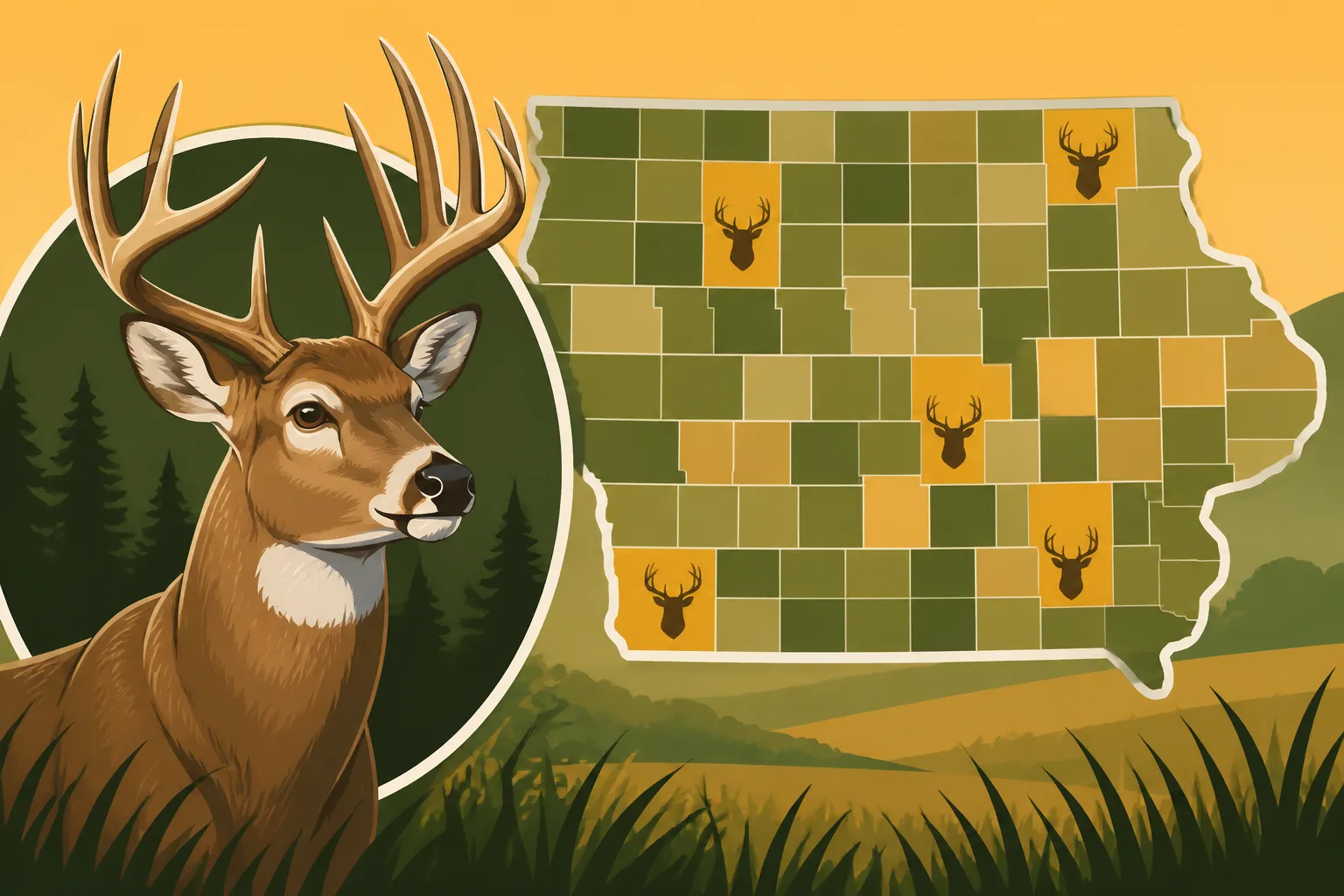
When you hear "Iowa big bucks," often the conversation quickly turns to southern Iowa. This region has a well-earned reputation for churning out monster whitetails year after year. Counties like Warren, Madison, Lucas, Monroe, Van Buren, and Appanoose are frequently mentioned in discussions about trophy potential. What makes this area so special? It's a combination of factors. The terrain is generally more rugged and timbered than the flat farmlands of northern Iowa, providing extensive blocks of cover that allow bucks to grow old and become reclusive. These timber blocks often follow river systems and creek drainages, creating natural travel corridors and bedding areas.
Couple this with an abundance of private land, which often experiences less overall hunting pressure than public ground, and you have a recipe for success. Landowners in these areas often implement quality deer management practices, focusing on herd health and encouraging bucks to reach maturity. This has cultivated a consistent population of older-age-class bucks. Hunters often dream of hunting this part of the state for a reason. You can learn more about specific areas in Southern Iowa Timber Country. For those wondering Which Iowa Counties Produce Big Bucks, southern Iowa is almost always at the top of the list, producing legendary deer like The Tony Lovstuen Buck From Appanoose County.
Northeastern Iowa's Driftless Region Advantage
Shifting gears to the opposite corner of the state, the Driftless Region of Northeast Iowa offers another unique big buck haven. This area, untouched by glaciers, features dramatic bluffs, deep river valleys, and a patchwork of timber and small agricultural fields. Counties like Allamakee, Clayton, and Winneshiek are known for their rugged beauty and, increasingly, for their impressive whitetails. The steep topography and dense timber provide incredible sanctuary for deer, making them challenging to hunt but also allowing them to reach advanced ages.
The scattered nature of the agriculture means deer are often concentrating in smaller, high-quality food plots or crop fields nestled among the hills. This funneling effect can make mature bucks more predictable during certain periods of the season. The unique challenges of hunting this terrain often mean a different approach, but the rewards can be immense. The combination of dense cover, rich food sources in pockets, and a generally lower population density of hunters compared to some other areas creates ideal conditions for trophy potential. Exploring Northeast Iowa Driftless Hunting will give you a better sense of this remarkable landscape.
Emerging Hotbeds and Statewide Potential
While southern and northeastern Iowa get a lot of the spotlight, it's crucial to remember that trophy bucks can come from almost anywhere in the state. Iowa's consistent quality deer management and widespread ideal habitat mean that emerging hotbeds can pop up, and even historically less-known counties can surprise you with a giant. Counties throughout the central and western parts of the state, often dominated by vast stretches of row crops, can still hold impressive deer, particularly where timbered river bottoms or substantial CRP plantings offer crucial bedding and security.
What often distinguishes these areas is localized management. A handful of landowners focused on letting bucks mature, combined with strategic food plot placement and low hunting pressure, can create a private oasis for big deer. For hunters willing to put in the legwork, using mapping tools like GoHunt can be instrumental in identifying these overlooked pockets. By studying aerial imagery and public land boundaries, you might discover a lesser-known gem. The key is to look for areas with a combination of consistent food, dense cover, and minimal disturbance, regardless of the county's "reputation."
Strategies for Pursuing Iowa's Record-Class Bucks
Hunting big bucks in Iowa isn't just about showing up; it's about understanding the deer, their habitat, and how to apply intelligent strategies throughout the season. It requires patience, persistence, and a willingness to learn the landscape.
The Importance of Age Structure and Doe Management
One of the most critical factors in a region's big buck potential is the age structure of its herd. Simply put, bucks need years to grow those massive antlers. A 1.5-year-old buck might have a small rack, but given three or four more years of good nutrition, that same buck could be a legitimate giant. Many Iowa hunters understand this, leading to a culture of passing on younger bucks, which directly contributes to the high percentage of mature animals. Effective Buck Age Structure in Iowa is paramount.
Doe management also plays a significant role. Keeping the doe population in check helps ensure that there's enough food for all deer, including growing bucks. Too many does can lead to overbrowsing and reduced nutritional intake, which can negatively impact antler quality across the board. By taking antlerless deer when appropriate and supporting management efforts, hunters contribute to a healthier, more balanced herd, where bucks have the opportunity to reach their genetic potential. This commitment to Doe Harvest and Iowa Herd Balance is crucial for sustaining the state's trophy quality.
Intelligent Scouting and Stand Placement
You can have the best genetics and nutrition in the world, but if you can't find and effectively hunt the mature bucks, it doesn't matter. This is where intelligent scouting comes into play. It starts with e-scouting from home, using tools like GoHunt to pore over aerial imagery, identify potential bedding areas, travel corridors, and pinch points. Look for thick cover near food sources, especially in areas with limited access. River oxbows and timber points between two fields are often overlooked spots. This groundwork is invaluable for narrowing down your search before you even step foot in the woods. Dive deeper into E-Scouting Iowa Farm Country From Home to hone these skills.
Once you're on the ground, focus on reading the sign. Look for large rubs, active scrapes, and big tracks. Pay attention to changes in elevation, natural funnels, and subtle terrain features that might concentrate deer movement. When choosing a stand location, consider not just where deer are now, but where they will be when you hunt. Think about wind direction, thermals, and how you can access and exit your stand without alerting deer. A well-placed stand in a critical funnel, especially during the rut, can be the difference-maker. For detailed advice, check out Scouting Iowa Timber and River Bottoms and consider strategic Trail Camera Placement on Iowa Public Land to confirm deer movement patterns.
Patience, Pressure, and Public Land Realities
Hunting Iowa's biggest bucks, especially on public land, requires a tremendous amount of patience and a deep understanding of hunting pressure. Public lands, by their nature, receive more attention from hunters. This means mature bucks on these tracts quickly learn to adapt, often becoming nocturnal or moving to the densest, hardest-to-reach cover. To succeed, you often need to go deeper, work harder, and hunt smarter than the average hunter. This might mean extended hikes, hunting less conventional spots, or utilizing mobile hunting tactics.
Understanding Hunting Pressure Patterns on Iowa Public Land is key. Often, the deer will shift their patterns dramatically after opening day, seeking refuge in areas that offer the most security. This is where a long-term approach and adaptability come into play. Don't be afraid to move if a spot isn't producing or if pressure is too high. Sometimes the best strategy is to wait for adverse weather, such as a cold front, when many other hunters stay home, giving you a better chance at catching a mature buck off guard. Ultimately, consistent success on Iowa's Public Land Deer Hunting in Iowa comes down to persistence and being willing to do what others won't.
Disclaimer
This article is for general informational purposes only and does not constitute professional advice. Laws, prices and regulations vary by location and change over time. Consult a qualified professional for guidance on your specific situation.