CRP Acres and Iowa Deer Numbers
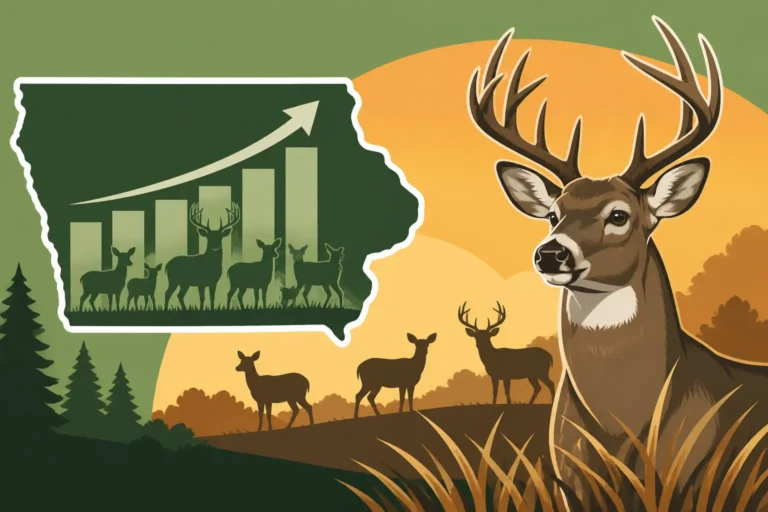
Many Iowa deer hunters often find themselves scratching their heads, wondering how to consistently locate and pattern whitetails in a state famous for its agriculture. It can feel like deer simply vanish in vast stretches of open fields, especially after harvest. Understanding the critical role of Conservation Reserve Program (CRP) acres is paramount to unlocking these elusive deer, as these vital habitats dictate where deer bed, move, and seek refuge from pressure. This comprehensive guide will illuminate how CRP directly impacts Iowa's deer population and provide actionable insights into how you can leverage this knowledge for more successful hunts.
The Role of CRP in Iowa's Landscape and Deer Habitat
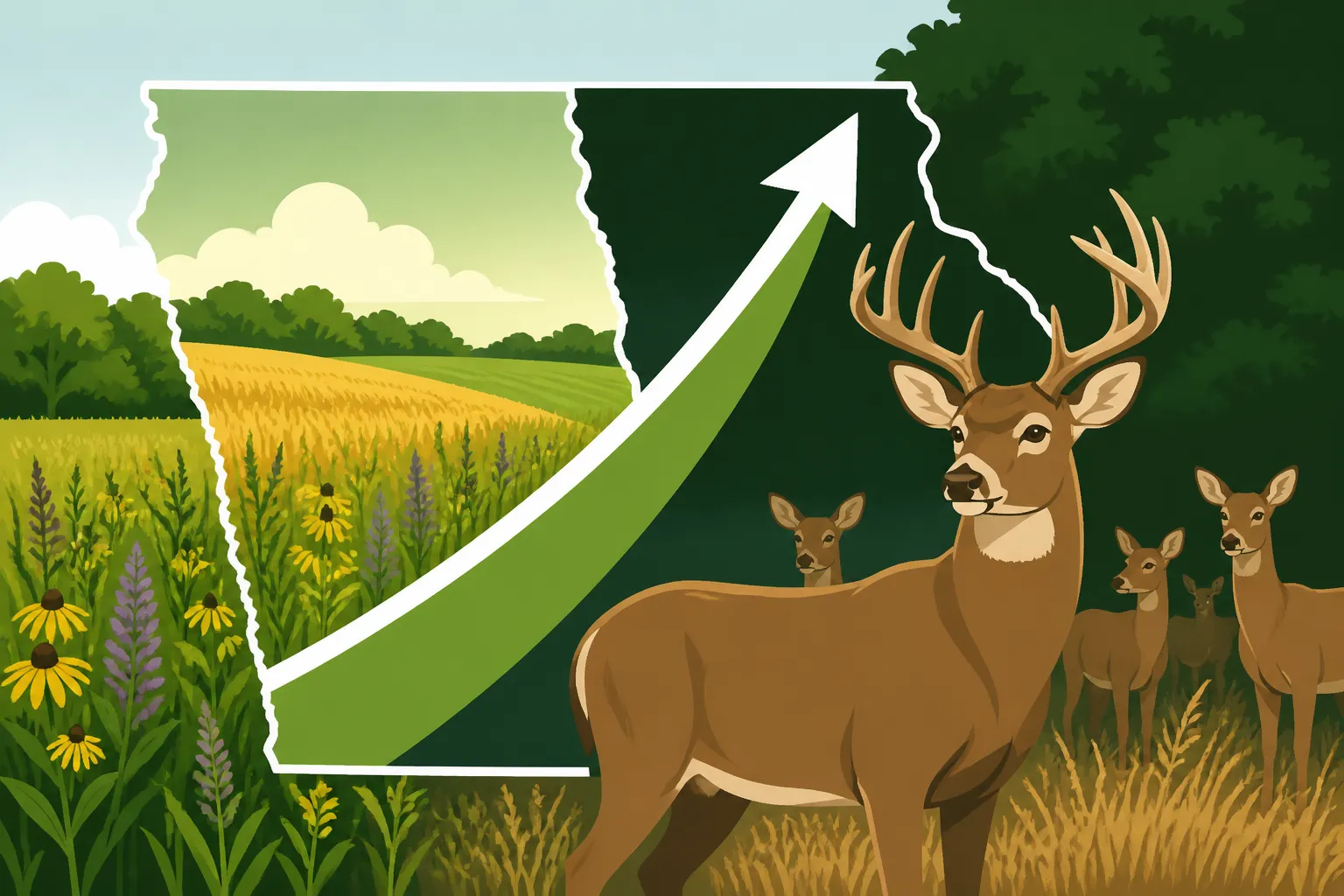
Iowa is legendary for its rich soils and bountiful agriculture, which, in turn, contributes to the impressive body and antler size of its whitetails. However, this agricultural dominance also means large areas are open and exposed, particularly beyond the timbered river bottoms and woodlots. In this landscape, the Conservation Reserve Program (CRP) emerges as a pivotal player, transforming what might otherwise be barren ground into flourishing ecosystems that benefit not only deer but a host of other wildlife. It fills a crucial habitat gap, creating pockets of sanctuary across the farming belt.
Understanding the Conservation Reserve Program
At its core, the Conservation Reserve Program is a voluntary land conservation initiative managed by the USDA Farm Service Agency. Landowners with environmentally sensitive acreage choose to enroll their land, taking it out of active agricultural production for a set contract period. In exchange, they receive annual rental payments. The overarching goals of CRP are multifaceted: to curb soil erosion, enhance water quality, and, perhaps most importantly for us hunters, create and improve vital wildlife habitat. When you drive through Iowa, you'll see these distinct fields—often stands of native grasses, legumes, wildflowers, and sometimes even young tree plantings—interspersed among the corn and soybean fields. These aren't just fallow fields; they are carefully designed ecological zones, providing diverse cover, food, and breeding grounds. The type of vegetation planted can vary significantly, from towering stands of switchgrass perfect for concealing a mature buck to a mix of shorter prairie species and forbs that offer critical fawning cover and forage. This diversity is a lifeline for wildlife in an otherwise intensively farmed environment.
The composition of a CRP field profoundly influences how deer use it. A dense, uniform block of tall native grasses like big bluestem or Indiangrass creates an almost impenetrable fortress where deer can disappear. Other CRP contracts might specify a mix of shorter prairie species, which, while not offering the same visual concealment, can provide excellent forage and fawning cover. Some CRP might even include blocks of woody vegetation, like dogwood or plum thickets, adding even more diversity and crucial thermal protection in winter. When scouting, understanding these different CRP types is key. Is it a dense, stemmy jungle perfect for bedding, or a more open, browse-rich field that deer might use for feeding and loafing? The answer will heavily influence your hunting strategy and expectations for deer activity.
How CRP Grasslands Offer Deer Critical Cover
For a whitetail deer, especially one that's managed to grow a substantial rack, security cover is not just preferred—it's essential for survival. CRP grasslands deliver this security in spades. In parts of Iowa where timber is sparse, fragmented, or under heavy hunting pressure, these thick grass fields become invaluable. Deer can bed down in the heart of a dense CRP tract and feel virtually invisible, protected from the keen eyes of predators and the prying optics of hunters. This sense of security allows them to conserve energy and remain calm during daylight hours, minimizing stress. This is particularly evident in large, contiguous blocks of CRP, which can become primary, undisturbed bedding areas that deer will travel considerable distances to reach after feeding in open fields.
Beyond providing a safe haven for bedding, CRP functions as a vital corridor and concealment network for deer movement. Whitetails instinctively use the edges of dense CRP fields to travel between their bedding sanctuaries and feeding grounds in nearby crop fields. The thick cover offers both visual and olfactory concealment, allowing them to move with a heightened sense of security. Picture a long, winding strip of switchgrass CRP running adjacent to a freshly picked bean field. Deer can slip out of the timber, follow the invisible edge of the CRP for hundreds of yards, and then vanish back into its depths without ever being fully exposed. This makes understanding CRP Grass and Where Bucks Bed absolutely crucial for patterning deer. During the rut, these concealed travel lanes become even more active, with bucks cruising the perimeters, scent-checking for does that might be tucked away deep within the grass. Learning to effectively navigate and hunt these areas demands a different approach than hunting traditional timber, often requiring more patience and a keen eye for subtle sign.
How CRP Acres Directly Impact Iowa Deer Numbers and Behavior
The mere presence of CRP acres across the Iowa landscape doesn't just create good hiding spots; it profoundly influences the overall health, reproductive success, and daily patterns of the state's whitetail population. It’s a direct and undeniable link between robust, high-quality habitat and a thriving deer herd, particularly in a state dominated by intensive agricultural practices.
CRP as Fawning and Thermal Cover
One of CRP's most vital contributions to the Iowa deer herd is its provision of superior fawning cover. As spring transitions into early summer, pregnant does seek out the densest, most secluded areas available to give birth and hide their newborn fawns. Tall, thick CRP grasses fit this need perfectly, creating natural nurseries where fawns can be dropped and effectively concealed from predators such as coyotes, foxes, and various raptors. This enhanced concealment directly translates to higher fawn survival rates, which, in turn, means more deer recruited into the population each year. This is a critical factor in maintaining healthy deer numbers, especially in agricultural regions where traditional woodlots and brushy areas might be limited or heavily disturbed. Without these protected fawning grounds, fawn mortality could climb significantly, directly impacting the future availability of deer for hunters.
In addition to fawning cover, CRP also serves as indispensable thermal cover, a feature that becomes critically important during Iowa's often-harsh winters. While traditional timber offers some respite from the wind, dense, chest-high stands of native grasses within CRP fields can create remarkable pockets of relatively still air. This insulation helps deer conserve precious energy, significantly reducing the physiological stress on their bodies during periods of extreme cold and biting winds. A deer that can remain warmer expends fewer calories to maintain its core body temperature, allowing more energy to be directed towards growth and overall survival, ensuring they emerge from winter in better condition. This benefit is particularly important for young deer and pregnant does, who are more susceptible to winter stress. When you are Staying Warm on a December Sit, remember that the deer are doing the same, often by burying themselves deep within those insulating CRP fields.
Bedding and Movement Patterns in CRP
Deer, especially the older, wiser bucks, prioritize security above almost all else. In areas featuring extensive CRP, these thick grass fields frequently become their primary bedding locations during daylight hours. A mature buck might venture into a picked corn or bean field under the cloak of darkness to feed, but long before the sun crests the horizon, he’ll retreat deep into a CRP field, often remaining there, unmoving, until dusk. The sheer density of the cover offers not only impeccable visual obscurity but also creates a complex scent trap, making it incredibly challenging for predators or hunters to reliably scent-trail them. This typical pattern explains why hunters often observe fewer deer in open crop fields during the day; the deer are safely hidden away in the dense grass. Understanding these patterns is paramount for planning your approach, particularly if you are hunting adjacent crop fields, where insights from topics like Hunting Inside Corners of Crop Fields can prove invaluable.
The movement patterns around CRP are often quite predictable once you learn to read the landscape. Deer will frequently skirt the edges of CRP fields, using the continuous cover for concealment as they travel from their secure bedding sites to their feeding grounds. They might utilize specific fingers or points of CRP that extend into agricultural fields as staging areas, pausing there before committing to venture into the wide open. During the crucial rut period, these CRP edges become even more active, as bucks will meticulously cruise them, scent-checking for does that might be secreted away within the thick grass, all while minimizing their own exposure. Identifying these natural travel corridors, funnels, and pinch points along CRP boundaries is absolutely critical for strategic stand placement. Utilizing advanced mapping tools, such as those found on platforms like GoHunt, can help you visualize these subtle transitions in the landscape, allowing you to mark potential stand locations or ambush points along the most likely deer routes. A deer leaving a soybean field and heading towards a CRP field will almost certainly enter at a particular corner or follow a subtle draw, and positioning a stand just inside that transition can yield incredible results.
Hunting Strategies for Deer in and Around CRP Fields
Hunting CRP areas demands a distinct approach, often quite different from traditional timber hunting. These fields can be incredibly thick and challenging to navigate, but the potential rewards—encountering unpressured, mature deer—can be substantial if you employ effective tactics.
Scouting CRP for Deer Sign
Effective scouting in CRP means shifting your focus beyond the typical rubs and scrapes you'd find in the timber. While you might occasionally spot some sign on isolated trees or brush along the edges, the most valuable clues within the CRP itself will be different. Look for flattened beds deep within the tall grass, often situated on slight rises or hummocks that offer a minimal advantage in visibility or allow for better scent dispersion. Most importantly, seek out trails—deer are masters at creating intricate tunnels through the densest cover. These pathways can be incredibly difficult to spot from a distance, but once you find a well-worn one, it's a prime indicator of consistent deer movement. You’ll often notice where deer have repeatedly pushed through, bending or breaking the tough grass stems. These are their highways through the thick stuff.
Modern e-scouting tools, especially those offering detailed aerial imagery like what you’ll find on GoHunt, are invaluable for deciphering CRP landscapes from home. You can easily identify fingers of CRP that jut out into crop fields, subtle changes in vegetation density, or where a block of CRP meets a timber edge. These are natural transition points where deer movement is highly concentrated. By meticulously combining satellite imagery with boots-on-the-ground investigation, you can piece together precisely how deer are utilizing a particular CRP block. Remember, your goal isn't just to find isolated deer sign, but to understand the flow of deer activity—where they are entering the CRP, where they prefer to bed, and their likely exit routes. This comprehensive understanding will directly inform your stand placement and overall hunting strategy. For a deeper dive into preparing for your hunt, check out resources like E-Scouting Iowa Farm Country From Home and Reading Aerial Imagery for Bedding Cover.
Effective Hunting Tactics Near CRP
Hunting deer that frequent CRP fields typically requires a careful blend of patience and strategic aggression. For bowhunters, setting up on the downwind edge of a CRP field, particularly near a well-defined trail leading into or out of an adjacent crop field, can be incredibly effective. Deer often feel a strong sense of security when approaching or entering CRP, making them potentially less wary until they are fully exposed in the open. Wind direction is an absolute critical factor; your scent will carry easily across open fields and through the often-sparse vegetation. A common and successful tactic is to position yourself where deer are most likely to exit the CRP to feed in the evening or where they re-enter for bedding in the morning. Here, a solid understanding of how Wind and Thermals in River Breaks apply to open, grassy terrain can be adapted to your advantage.
For gun seasons, particularly during Iowa's shotgun or straight-wall cartridge segments, CRP can be an excellent location for small, well-orchestrated deer drives. A few hunters can walk through a dense CRP field, slowly pushing deer out towards strategically placed blockers on the opposite side or along a connecting timber edge. This tactic demands meticulous planning for safety and clear, consistent communication among all participants, as detailed in articles like Party Hunting Rules and Safe Drives. For solo hunters, still-hunting slowly and deliberately through the edges of a CRP field, pausing frequently to glass and listen for any subtle movement, can also prove fruitful. The key is to move at an almost imperceptible pace, anticipating deer that might be holding tight. Setting up well-brushed-in ground blinds along the CRP edges also presents a fantastic option, offering superior concealment and comfort for extended sits, which is especially valuable during colder weather. Always consider where deer might naturally funnel around internal obstacles within the CRP or where even a slight elevation change might provide a break in the thick cover.
Challenges and Future of CRP's Impact on Deer
While the Conservation Reserve Program is undeniably a significant boon for Iowa's deer population, its impact isn't static. The program itself is dynamic, subject to policy changes, and environmental factors can also influence how effectively CRP continues to function as prime deer habitat. A nuanced understanding of these evolving aspects is crucial for long-term hunting success and appreciating the broader conservation landscape.
Program Changes and Habitat Stability
The Conservation Reserve Program, like all federal agricultural programs, is subject to periodic reauthorization and policy adjustments through omnibus farm bills. This means the specific rules, financial incentives, and overall acreage caps can fluctuate, potentially altering both the quantity and quality of CRP land available for wildlife. For instance, periods of high commodity prices might make traditional farming more financially attractive, leading some landowners to withdraw their land from CRP once their contracts expire. Conversely, new federal environmental initiatives or increased funding could lead to an expansion of the program. These shifts create a fluid landscape for deer habitat. A fantastic CRP field that produced deer year after year might suddenly be plowed under for corn, or a new, valuable tract could appear elsewhere. Hunters need to remain informed about these potential changes, as they directly influence where deer will concentrate their activity. Monitoring resources from state conservation agencies and utilizing sophisticated mapping services, such as those provided by GoHunt, which regularly update land use layers, can help you stay ahead of the curve.
Furthermore, the ongoing management of CRP acres is essential for maintaining their habitat value. To keep the native vegetation healthy and effective as cover, CRP fields often require periodic management practices such as prescribed burns, strategic mowing, or light disking. While these activities are overwhelmingly beneficial in the long run for promoting robust, diverse plant communities, they can temporarily displace deer or disrupt their established patterns. For example, a late-summer prescribed burn might temporarily reduce dense cover, making deer feel more exposed until new growth establishes itself. Landowners make these management decisions, and while they are typically conducted outside of peak hunting seasons, their timing can still have a ripple effect on how deer utilize the habitat. This continuous evolution means that observant hunters must constantly adapt their strategies rather than relying on static assumptions about deer behavior from one year to the next.
Balancing CRP with Agricultural Demands
The very existence of CRP in Iowa represents a delicate balance between critical conservation needs and the immense demands of the state's agricultural industry. Iowa's fertile black soils are among the most productive in the world, making farming a highly lucrative enterprise. This creates an inherent tension, as every acre enrolled in CRP is an acre taken out of potential crop production. While the program offers annual rental payments to landowners, these payments may not always fully offset the potential profits from growing high-value crops like corn or soybeans, especially during periods of robust commodity prices. This constant economic balance directly influences the total acreage of CRP available at any given time and, consequently, the overall extent of high-quality habitat available for Iowa's deer.
Moreover, the geographical distribution and context of CRP fields are profoundly important. A large, unbroken block of CRP nestled within expansive timber provides different benefits than a series of isolated strips of CRP scattered in open row crop country. Understanding this environmental context helps us to fully appreciate the program's vital and diverse roles. For instance, smaller, fragmented CRP fields can act as critical stepping stones or corridors for deer movement in landscapes where natural cover is scarce, while larger, more contiguous blocks can serve as core, virtually unpressured bedding areas. The ongoing challenge lies in advocating for and supporting agricultural policies that continue to prioritize conservation, recognizing the profound and positive impact that CRP has on Iowa's deer numbers and the broader health of its ecosystems. Hunters, by staying informed and engaged with conservation efforts, can play a crucial role in supporting programs that help maintain Iowa's well-deserved reputation for producing healthy, trophy-class whitetails, thereby ensuring the long-term success of Iowa Deer Herd Management and Harvest.
Here's a breakdown of how different CRP characteristics might influence deer behavior and how you might adjust your hunting approach:
| CRP Characteristic | Typical Appearance/Vegetation | Primary Deer Use Implications | Key Hunting Tactic Adjustments |
|---|---|---|---|
| Dense Tall Grass | Uniform stands of switchgrass, big bluestem | Primary daytime bedding, ultimate security, minimal movement | Ambush travel lanes on edges, strategic small drives (gun), quiet entry/exit |
| Mixed Shrub & Grass | Grasses interspersed with brush/young trees | Excellent thermal cover, fawning, transition zones, daytime loafing | Hunt funnels where brush meets open grass, approach from downwind |
| Wetland/Riparian CRP | Near creeks/ditches, cattails, willows | Water source, thermal cover, travel corridors, fawning | Check for trails along water, hunt edges of marsh, use wind to your advantage |
| CRP with Food Plot Mix | Planted for wildlife, clover, brassicas | Active feeding, staging area before entering crops, daytime foraging | Set up for morning/evening ambushes over food, careful scouting for fresh sign |
| Small CRP Strips | Narrow bands along field edges/ditches | Travel corridors, temporary cover, loafing | Place stands on pinch points where strips narrow, intercept cruising bucks |
Disclaimer
This article is for general informational purposes only and does not constitute professional advice. Laws, prices and regulations vary by location and change over time. Consult a qualified professional for guidance on your specific situation.