Where Iowa Turkeys Are Most Common
It can feel incredibly frustrating when you’re geared up and ready for a spring gobbler hunt, but you just can't seem to locate where those elusive Iowa turkeys are actually living and thriving. You might drive for miles, seeing endless corn and soybean fields, and wonder if there are even any birds out there. This guide is going to cut through that frustration by detailing the specific regions and habitats across Iowa where you're most likely to encounter wild turkeys, helping you plan your hunts with confidence and a clear understanding of where to focus your efforts.
Understanding Iowa's Wild Turkey Landscape
Iowa, at first glance, might seem like an endless sea of agriculture. While row crops dominate much of the landscape, beneath that surface lies a surprisingly rich and diverse habitat that supports a robust population of wild turkeys. These aren't your easily patterned deer that stick to food plots and timber edges; turkeys require a complex mosaic of open woodlands, mature timber for roosting, brushy cover for nesting, and nearby agricultural fields for foraging. Understanding this habitat diversity is key to pinpointing where these birds congregate.
The Eastern Wild Turkey's Preferred Habitat
The Eastern wild turkey, the subspecies found throughout Iowa, is a master of adaptation, but it definitely has its preferences. They thrive in areas that offer a mix of mature hardwood forests, especially those with large, tall trees for roosting at night. Think old oaks, hickories, and cottonwoods that provide a safe, elevated perch away from predators. These areas also need to have an open understory, allowing them to see potential threats and easily move through the timber while foraging for acorns, seeds, and insects.
Beyond the mature timber, turkeys need good nesting cover. This often comes in the form of dense brush, thickets, and even tall grasses in CRP fields or along field edges. Young poults, in particular, rely on this thick cover for protection from predators and the elements. And, of course, turkeys are opportunistic feeders, so access to agricultural fields—especially corn and soybeans after harvest—provides a crucial food source, particularly during the leaner winter months. The beauty of Iowa is that this exact combination exists in many pockets, making the state a fantastic place to hunt if you know what to look for. You can learn more about these birds by checking out Iowa Wild Turkeys Across the State.
Factors Influencing Turkey Distribution Across the State
Several factors dictate where you'll find higher concentrations of turkeys in Iowa, and they’re not always what you’d expect. Habitat quality is paramount, of course, but it's not just about having some trees. It's about having the right kind of trees, the right density of undergrowth, and reliable food sources. Think about large, contiguous blocks of timber—these are magnets for turkeys. Fragmented timber, while it might hold a few birds, generally won't support the larger, more stable populations you're looking for.
Another critical factor is historical land use and conservation efforts. Areas with strong traditions of wildlife management, coupled with private landowners who prioritize timber health, often boast healthier turkey numbers. Furthermore, severe winters can take a toll on poult survival, impacting populations year to year, which is why Turkey Poult Survival and Spring Weather is such an important topic for hunters to follow. Disease outbreaks, though less common, can also locally affect populations. When you're scouting, keep these broader ecological factors in mind, as they often explain why one area seems devoid of birds while another, seemingly similar, area is teeming with them. GoHunt, for instance, often compiles harvest data and habitat information that can give you a historical look at how certain counties perform.
Turkey Hotbeds: Southern and Northeast Iowa
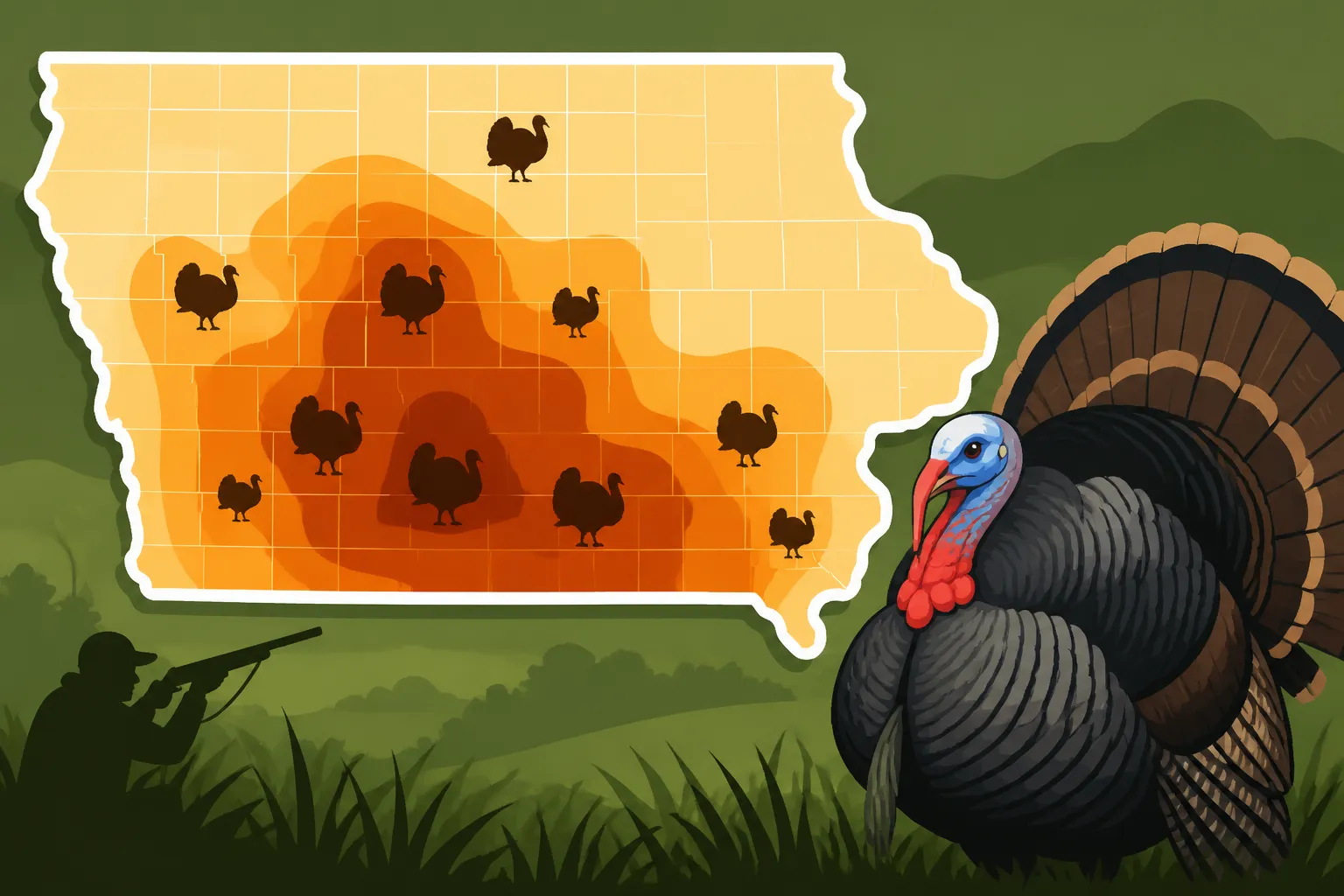
If you ask seasoned Iowa turkey hunters where they'd start looking, a significant majority would point you toward two primary regions: the timbered hills of Southern Iowa and the rugged, unglaciated terrain of the Northeast. These areas stand out because they naturally offer the extensive, high-quality habitat that turkeys absolutely crave.
The Timbered Hills of Southern Iowa
Southern Iowa is arguably the most renowned turkey hunting destination in the state, and for good reason. Counties like Appanoose, Lucas, Monroe, and Wayne are famous for their sprawling blocks of mature timber. Unlike much of central and northern Iowa, which was heavily tilled, this southern tier boasts a landscape dominated by rolling hills, deep creek drainages, and vast expanses of oak-hickory forest. These timber stands provide ideal roosting sites, abundant mast crops like acorns, and excellent nesting cover in the form of brushy draws and clearings.
Picture yourself walking through a hollow in Southern Iowa: you're surrounded by towering oaks, the ground littered with last year's leaves, and every so often, you come across a brushy thicket along a small stream, perfect for a hen to make her nest. The sheer scale of these timbered tracts means less hunting pressure (in some spots) and more room for turkeys to roam, leading to stable, healthy populations. These areas are truly the heart of Southern Iowa Timber Country for many species, including our feathered friends. You can often use platforms like GoHunt to scout these regions, identifying public land tracts or understanding private land ownership patterns that might open up access opportunities.
Driftless Region: Rugged Terrain in Northeast Iowa
Shifting gears to the opposite corner of the state, Northeast Iowa offers a completely different, yet equally productive, turkey hunting experience. This region is part of the "Driftless Area," a unique landscape that was untouched by glaciers during the last ice age. The result is a dramatic topography of steep bluffs, deep river valleys, and heavily timbered coulees, unlike anywhere else in Iowa. Counties such as Allamakee, Clayton, and Winneshiek are prime examples of this rugged beauty.
Here, the terrain itself dictates turkey movement and habitat use. Turkeys will often roost on the steep hillsides overlooking river bottoms or agricultural fields nestled in the valleys. The mixed hardwood forests provide ample food and cover, and the sheer ruggedness of the land offers natural sanctuaries where birds can evade pressure. Hunting here often involves more strenuous climbs and descents, but the reward is often encountering birds in breathtaking settings. This unique habitat is also fantastic for other wildlife, making Northeast Iowa Driftless Hunting a diverse experience. When scouting these areas, pay close attention to elevation changes and how they might funnel birds, a feature easily highlighted on mapping apps.
| Region | Primary Habitat Features | Key Counties (Examples) | Terrain Characteristics | Typical Turkey Density |
|---|---|---|---|---|
| Southern Iowa | Extensive mature oak-hickory forests, creek bottoms, brushy draws | Appanoose, Lucas, Monroe, Wayne | Rolling hills, deep drainage systems | High |
| Northeast Iowa | Steep bluffs, river valleys, mixed hardwoods, hemlock stands | Allamakee, Clayton, Winneshiek | Rugged, unglaciated, dramatic elevation changes | High |
| Central River Corridors | Mature timber along major rivers, smaller woodlots, crop edges | Des Moines, Cedar, Marion | Relatively flat with river breaks | Moderate to High (local) |
| Western Loess Hills | Oak-hickory timber, deep ravines, prairie remnants | Monona, Harrison, Pottawattamie | Steep, erosional hills of wind-blown silt | Moderate |
Beyond the Obvious: Central and Western Iowa Pockets
While Southern and Northeast Iowa are turkey meccas, don't overlook the potential of other regions. Iowa's turkeys are more adaptable than some give them credit for, and significant populations can be found in more fragmented, but still productive, habitats throughout the central and western parts of the state. These areas might require a bit more focused scouting, but the reward can be less pressured birds.
River Corridors and Woodlots in Central Iowa
Central Iowa, with its vast agricultural fields, might not immediately scream "turkey country." However, the major river systems that snake through the landscape create vital corridors of timber and excellent turkey habitat. Rivers like the Des Moines, Skunk, Iowa, and Cedar are often lined with mature timber, offering prime roosting and foraging grounds for turkeys. These riparian zones act like linear oases in an otherwise open environment.
Within these river corridors, you'll find a mix of cottonwoods, silver maples, and oaks, providing both tall roost trees and diverse food sources. Adjacent to these riverine forests are often smaller, isolated woodlots and brushy creek drainages that connect to the main timber. These smaller pockets can hold surprisingly large numbers of birds, especially if they offer good nesting cover and are close to agricultural fields. Hunting these areas requires understanding Reading an Iowa Timber Draw for Deer Sign as turkeys often use similar travel routes and cover. Don't be afraid to put boots on the ground or utilize mapping tools to scout these "green arteries" cutting through the farmland.
Western Iowa's Loess Hills and Farm Timber
The Loess Hills in Western Iowa, similar in uniqueness to the Driftless Area, present another fascinating region for turkey hunters. These deeply eroded, wind-blown silt hills create a dramatic and rugged landscape along the Missouri River. While perhaps not as densely timbered as Southern Iowa, the Loess Hills offer significant blocks of oak-hickory timber, especially in the deep ravines and on the steep faces of the hills.
Counties like Monona, Harrison, and Pottawattamie host good turkey populations, particularly where public lands like the Western Iowa Loess Hills Hunting areas or private parcels are managed with wildlife in mind. Turkeys here utilize the timber for roosting and cover, often venturing into adjacent prairie remnants or agricultural fields for foraging. The challenge here is the incredibly steep terrain, which can make accessing some areas difficult, but this also means less human pressure. Beyond the Loess Hills, scattered farm timber and creek bottoms throughout the western agricultural landscape can also hold local turkey flocks. These smaller, isolated patches of timber, even if just a few acres, can be home to a resident flock that few hunters consider.
Tying It All Together: Scouting and Strategy for Success
Knowing where turkeys are generally common is one thing, but pinpointing your best spot for a successful hunt requires diligent scouting and smart strategy. The overall health of Iowa Turkey Population Trends might indicate good hunting across the state, but local conditions always matter most.
Utilizing Digital Tools for Scouting Turkey Habitat
In today's hunting world, digital scouting tools are your best friend, especially when trying to locate specific turkey habitat from afar. Online mapping platforms, including those from GoHunt, allow you to analyze aerial imagery, topo maps, and public/private land ownership layers right from your couch. Look for large, contiguous blocks of mature timber, particularly along river systems or in hilly terrain. Identify potential roosting areas by searching for tall trees near water sources or open fields.
Pay attention to elevation changes, as turkeys often prefer to roost on high ground, and these subtle contours can funnel birds. Identify pinch points, saddles, and creek crossings that turkeys might use as travel corridors. When considering public land, cross-reference your findings with the Using the Iowa DNR Hunter Atlas to confirm boundaries and access points. By digitally narrowing down your search areas, you save valuable time and gas, making your on-the-ground scouting much more efficient. You can get a head start by learning how to do E-Scouting Iowa Farm Country From Home.
On-the-Ground Reconnaissance and Reading the Land
Once you've got your potential spots highlighted on a map, there's no substitute for putting boots on the ground. Turkey sign is everywhere if you know what to look for: droppings, tracks in soft soil, dusting bowls, and shed feathers. Listen for gobbling at dawn or dusk, especially during the spring season, to confirm birds are in the area. Look for large trees with horizontal limbs over deep ravines or near water—these are often primary roost trees. Pay attention to what the birds are feeding on. If you find scratchings in leaf litter, they're likely foraging for mast crops. If you see them in picked cornfields, you know their diet.
Walking through the timber helps you understand the understory density, which is crucial for nesting hens and poult survival. Identifying specific roost trees the night before a hunt can give you a massive advantage for your morning setup. Remember, turkeys are creatures of habit. They'll often use the same roosting areas and travel routes year after year if the habitat remains stable. Understanding these patterns, and how they relate to the Eastern Turkeys in Iowa Timber that call these places home, will significantly increase your odds of punching a tag. By combining digital scouting with thorough in-person reconnaissance, you'll be well on your way to finding those common turkey haunts and having a successful hunt in Iowa.
Disclaimer
This article is for general informational purposes only and does not constitute professional advice. Laws, prices and regulations vary by location and change over time. Consult a qualified professional for guidance on your specific situation.