Western Iowa Loess Hills Hunting
Hunting the rugged, unforgiving terrain of Iowa's Loess Hills presents a unique set of challenges that can leave even seasoned hunters scratching their heads. It’s not your typical flat farm ground or gently rolling timber; these steep, broken hills demand a different approach, often leaving hunters feeling lost, unsure how to approach the drastic elevation changes and thick cover. This guide aims to demystify hunting the Western Iowa Loess Hills, providing comprehensive strategies, scouting tips, and gear advice to help you successfully navigate this incredible landscape and fill your tags.
Understanding the Unique Landscape of the Loess Hills
The Loess Hills in Western Iowa are unlike anywhere else in the state, or even the world. They offer a hunting experience that combines the physical demands of mountain hunting with the incredible game populations Iowa is famous for. But to truly hunt them effectively, you first have to understand what makes them tick.
Geological Formation and Topography
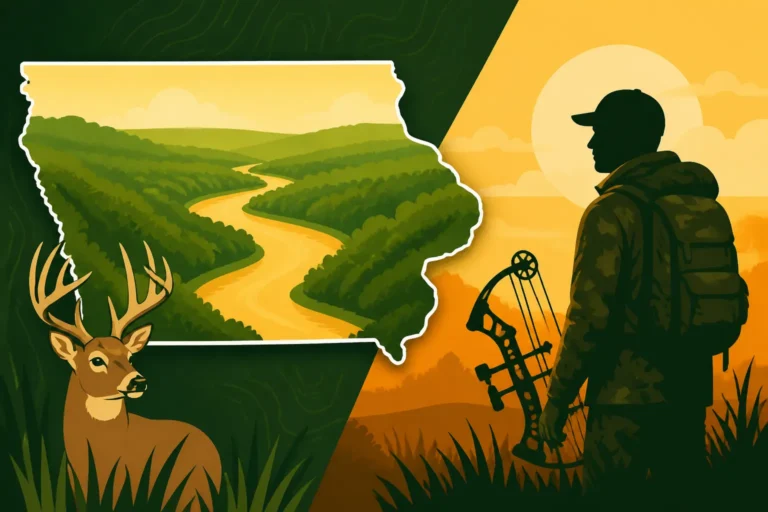
Imagine towering bluffs that rise abruptly from the Missouri River floodplain, carved by wind and time into a series of sharp ridges and deep, narrow ravines known as "catsteps." That's the Loess Hills. These aren't your typical hills formed by glacial activity; they're composed of fine, wind-blown silt, or "loess," deposited over tens of thousands of years. This unique composition leads to incredibly steep slopes that are often difficult to traverse, with soft, crumbly soil that can give way underfoot. The ridge tops can be surprisingly narrow, dropping off sharply on either side, creating natural travel corridors and choke points that deer frequently use. Understanding these formations means you start to see the land not just as pretty hills, but as a series of natural funnels and bedding areas.
Navigating these slopes requires planning. You won't be walking straight up or down for long without burning out your legs or sliding. Instead, you'll find yourself angling across the contours, following game trails that traverse the hillsides. These trails often provide the most practical, albeit still challenging, routes through the steepest sections. Recognizing the difference between a main game trail and a less-used path can be crucial for silent entry and exit, especially if you're trying to reach a hidden bedding area or a feeding bench partway down a slope. The elevation changes aren't massive compared to true mountains, but the steepness creates similar physical demands and dictates game movement in a very distinct way.
Vegetation and Habitat Diversity
Within the Loess Hills, you'll find an astonishing array of habitats packed into a relatively small area. The steeper, south-facing slopes are often covered in native prairie grasses and wildflowers, creating excellent thermal cover and bedding areas for deer during cooler weather, and crucial nesting habitat for upland birds. These grasslands can be incredibly dense, providing perfect concealment for a wary whitetail buck trying to escape pressure. Conversely, the cooler, north-facing slopes and deep ravines tend to be heavily timbered, primarily with oak, hickory, and other hardwoods, interspersed with cedar thickets and brush. This timber provides critical shade in warmer months, abundant mast crops, and vital escape cover.
This mosaic of prairie and timber creates a diverse ecosystem that supports a robust game population. Deer can move seamlessly between the thick timber of the ravines, up into the dense grasses of the bluffs, or down to a small, isolated crop field tucked into a valley. Understanding where these different habitat types meet is key to successful hunting. A buck might bed on a steep, south-facing grass bluff to soak up the morning sun, then transition to a shaded timbered draw during midday heat, only to emerge at dusk to feed in a valley below. This incredible diversity means you're not just hunting "timber" or "fields"; you're hunting a complex, interconnected system where game moves horizontally and vertically based on food, cover, and pressure.
Microclimates and Weather Considerations
The dramatic topography of the Loess Hills creates its own unique set of microclimates, significantly impacting how weather affects both you and the game. The deep ravines and north-facing slopes can hold cooler, moister air, often feeling several degrees colder than the exposed ridge tops, especially in the early morning or late evening. Conversely, south-facing slopes, particularly those covered in prairie grasses, can become sun-drenched and warm up quickly, even on chilly days. This can influence deer bedding choices, pushing them to seek shade in the timber during mild conditions or bask in the sun on cold days.
Wind is another critical factor. The Loess Hills are notoriously windy, as the bluffs are directly exposed to prevailing westerly and southerly winds. The wind can swirl unpredictably in the deep draws and ravines, making scent control an even greater challenge. What seems like a steady wind on a map can become a swirling vortex in a steep valley, carrying your scent in multiple directions. Learning to read the subtle cues of wind movement in this terrain is crucial for setting up a successful ambush. Paying attention to swirling leaves, the way tree branches move, or even carrying a small puff bottle can help you anticipate shifts. These microclimates and wind patterns aren't just minor details; they are fundamental elements that dictate game movement and your hunting approach. Wind and Thermals in River Breaks offers insights that can be adapted to this unique hill country.
Primary Game Species in the Loess Hills
The Loess Hills are a biological hotspot, home to a variety of game species, but it's the whitetail deer and wild turkeys that truly define the hunting experience here. The rugged landscape provides ideal habitat, leading to robust populations and incredible hunting opportunities for those willing to put in the effort.
Whitetail Deer: The Undisputed King
There's a reason Iowa is famous for its whitetail deer, and the Loess Hills are a prime example of why. The combination of nutrient-rich soils, diverse habitat, and limited hunting pressure in some of the most challenging terrain means bucks have the potential to grow old and large. Iowa Whitetail Deer and Why They Score So High is a testament to the quality of deer found here. The deer here are often accustomed to traversing steep grades, making them incredibly agile and hardy. They use the deep ravines as travel corridors, moving between bedding areas on sunny slopes and feeding locations in secluded crop fields or oak flats.
Hunting these whitetails is a true test of skill and endurance. A buck might bed on a steep bench halfway down a bluff, concealed by dense cedar thickets, and only move during low light. The sheer difficulty of accessing some of these areas means that deer, particularly mature bucks, can find pockets of refuge, allowing them to escape hunting pressure and reach older age classes. You'll often find distinct rub lines and scrape areas along the contours, especially where two ridges converge or where a steep draw creates a natural pinch point. Understanding these movement patterns, often dictated by the terrain, is far more critical than simply looking for the biggest food plot.
Wild Turkeys: Roaming the Timbered Ridges
If you love chasing gobblers, the Loess Hills offer some fantastic opportunities. Eastern wild turkeys thrive in the mixed timber and open grasslands, using the steep slopes to their advantage. They'll often roost in tall oaks or cottonwoods along the ridge lines or in sheltered ravines, flying down to feed in the open prairie or harvested crop fields below. Iowa Wild Turkeys Across the State touches on the state's turkey populations, and the Loess Hills are certainly a stronghold.
Locating roosting birds the evening before a hunt is a highly effective tactic in this area, allowing you to position yourself for a fly-down setup. Turkeys will often use the same travel routes as deer, following paths of least resistance along the contours or through saddles. Calling a gobbler across a deep ravine can be a challenging but rewarding experience, as their booming calls echo through the hills. You might find yourself setting up on a narrow ridge, trying to coax a tom up from a valley below, or down from an adjacent bluff. Their keen eyesight and hearing, combined with the undulating terrain, demand patient and strategic setups, often requiring you to get above them or catch them moving along a distinct travel path.
Upland Birds: Pheasants and Quail
While the primary draw for many is deer and turkey, the Loess Hills also offer surprisingly good opportunities for upland bird hunting, particularly pheasants and bobwhite quail. The mix of native prairie, CRP fields, and brushy draws provides excellent cover and food sources. Pheasants tend to gravitate towards the dense grass cover on the bluff tops and the edges of agricultural fields, especially where there's good thermal protection from the wind. Quail, on the other hand, often prefer the brushier, thicker edges of timber and overgrown fencerows in the draws, forming coveys that can explode at your feet.
Hunting these birds without a dog can be tough in the dense cover, requiring careful planning and often multiple hunters to effectively push sections of habitat. You'll want to focus on areas where grasslands meet timber, or where a thick shelterbelt offers protection. The steep terrain adds a physical challenge, making you earn every bird you flush. It's a different kind of hunt than in the flatter pheasant counties, but the reward of a hard-earned rooster or a bursting covey of quail against the backdrop of the Loess Hills is truly special.
Predators and Small Game
Beyond the big game and upland birds, the Loess Hills are also home to a healthy population of coyotes, foxes, raccoons, and other furbearers. The rugged landscape provides ample denning sites and hunting grounds for these cunning predators. Coyote calling can be particularly effective in these open, hilly areas, allowing your calls to carry further and giving you good visibility for approaching animals.
Small game like cottontail rabbits and squirrels are also abundant. Rabbits will be found in brush piles, dense grass, and briar thickets, particularly along the edges of fields and timber. Squirrels thrive in the oak and hickory timber that dominates many of the draws, providing excellent hunting opportunities, especially in the early season when the leaves are still on the trees. These smaller game species offer a chance to extend your time in the woods and experience the full ecological diversity of the Loess Hills.
Navigating Public Hunting Opportunities in the Loess Hills
Finding a place to hunt in the Loess Hills can feel daunting, especially for those unfamiliar with the region. However, Iowa has several excellent public land options available, though they often come with their own unique access challenges and hunting pressure. Knowing where to look and how to interpret public land maps is paramount to a successful hunt.
Loess Hills State Forest: Your Main Hub
Without a doubt, the Loess Hills State Forest is the flagship public hunting area in this region. Spanning thousands of acres across Monona and Harrison counties, it offers extensive timbered ridges, deep ravines, and pockets of native prairie. This vast property provides incredible opportunities for deer, turkey, and other small game. The sheer size means that if you're willing to walk, you can often find less pressured pockets of ground, even during peak seasons. Access points are scattered, and some areas require significant hikes to get into. The terrain is demanding, but those who embrace the challenge are often rewarded with solitude and undisturbed game.
Hunting the Loess Hills State Forest requires a solid plan. Before you even set foot on the ground, spend hours with mapping apps like onX Hunt, identifying potential access routes, ridge lines, saddles, and water sources. Look for areas with diverse habitat – where timber transitions to prairie, or where small, isolated benches exist on steep slopes. These are often overlooked by hunters who stick to the easily accessible fringes. Be prepared for steep climbs and descents, and pack accordingly. Loess Hills State Forest Hunting provides a deeper dive into what you can expect from this incredible resource.
State Wildlife Management Areas
Beyond the state forest, several other State Wildlife Management Areas (WMAs) are scattered throughout the Loess Hills region. These WMAs vary in size and habitat, but many offer a valuable mix of timber, marsh, and grassland. While some might be smaller than the state forest, they can be highly productive, especially if they are surrounded by private agricultural lands that provide food sources. Examples might include areas near the Missouri River floodplain, which offer unique transitional habitats.
Always check the specific regulations for each WMA you plan to hunt, as rules can vary regarding things like ATV access, blind placement, or special seasonal restrictions. Many of these areas are smaller and can experience higher hunting pressure, particularly on weekends. However, even on these smaller tracts, if you're willing to walk a little further or hunt a less obvious spot, you can often find success. These WMAs are typically managed for a variety of wildlife, so you might find excellent pheasant or quail hunting in addition to deer and turkey.
County Conservation Board Lands
Iowa's County Conservation Boards (CCBs) manage numerous parks, wildlife areas, and natural areas throughout the state, and the Loess Hills counties are no exception. These local public lands can be a fantastic, often overlooked, resource for hunting. Their size varies dramatically, from small timber blocks to expansive prairie restorations. Many are open to public hunting, but it is absolutely critical to check with the specific county's conservation board for their rules and regulations, as they can differ significantly from state land rules. Some CCB areas may have restricted seasons, weapon types, or even require special permits.
These county areas are often smaller and can be subject to higher local pressure, but they also provide excellent opportunities, especially for archery hunting or chasing pheasants and rabbits. Sometimes a small, brushy draw on a CCB property can hold a mature buck seeking refuge from pressure elsewhere. Don't discount these smaller parcels; they can be goldmines if you do your homework and scout them thoroughly. Finding these often requires looking beyond the main state maps and checking individual county websites or contacting the local conservation office.
Iowa's Habitat and Access Program (IHAP) in the Loess Hills
Iowa's Habitat and Access Program (IHAP) is a game-changer for public hunting access, and it has a presence in the Loess Hills region. Iowa's Habitat and Access Program Explained delves into the details of this program. IHAP lands are private properties enrolled by landowners to provide public walk-in hunting access for specific seasons, marked with distinctive yellow signs. These areas can vary wildly in terms of habitat – some are crop fields, others are timber blocks, and many are CRP (Conservation Reserve Program) grasslands. The key is that they offer additional public access points, often complementing larger state-owned tracts.
Using IHAP lands effectively in the Loess Hills means paying close attention to the details on the Iowa DNR's hunting atlas or mapping apps. Look for IHAP tracts that border existing public lands, creating larger contiguous hunting blocks, or those that are located in critical travel corridors between bedding and feeding areas. The access dates for IHAP properties are typically from September 1 to May 31, providing opportunities throughout most of Iowa's hunting seasons. These properties can be highly productive, especially early in the season before they receive heavy pressure. Remember, these are walk-in only areas, so plan your approach accordingly.
| Public Land Type | Primary Hunting Focus | Typical Habitat | Key Consideration |
|---|---|---|---|
| Loess Hills State Forest | Whitetail Deer, Turkey | Expansive timber, steep ravines, native prairie | Vast, rugged, potential for low pressure if you hike far |
| State Wildlife Areas (WMAs) | Deer, Turkey, Waterfowl (near rivers), Upland Birds | Mix of timber, grassland, wetlands | Variable size, check specific regulations, can have higher pressure |
| County Conservation Lands | Deer (Archery), Small Game, Turkey | Smaller tracts of timber, brush, prairie | Check county rules, often close to towns, potential for local pressure |
| IHAP (Walk-In Access) | Deer, Upland Birds, Small Game | Private land enrolled for public access: crop, CRP, timber | Marked by yellow signs, walk-in only, good for early season |
Essential Scouting and Planning for Loess Hills Hunting
Hunting the Loess Hills successfully requires more than just showing up with your gear. It demands meticulous scouting and planning, both from your computer and with boots on the ground. Understanding how deer and other game utilize this unique terrain is key to unlocking its potential.
E-Scouting with Modern Tools
Before you ever leave your couch, modern mapping tools are your best friend for the Loess Hills. Services like onX Hunt and GoHunt provide invaluable satellite imagery, topographic maps, and public/private land ownership overlays. Start by identifying public land boundaries, then zoom in to analyze the topography. Look for prominent ridge lines, deep draws, and areas where the steep slopes moderate into benches or flats. These are often natural travel corridors or bedding areas. Identify pinch points where multiple features converge, creating narrow funnels that deer are forced to use. Look for saddles between ridges – these are prime spots for deer to cross from one drainage to another. E-Scouting Iowa Farm Country From Home offers a fantastic foundation for this crucial step, even in this rugged terrain.
Pay close attention to vegetation changes on the satellite imagery. Darker green areas usually indicate dense timber, while lighter shades might be open prairie or agricultural fields. Look for hidden pockets of timber within larger prairie expanses, or small crop fields tucked into secluded valleys. These remote areas are often less pressured and can hold mature game. Use the topo lines to visualize the steepness of the terrain; tightly packed lines mean a steep climb, while more spread-out lines indicate gentler slopes, often preferred travel routes. Mark potential bedding areas, probable food sources, and logical approach routes that consider wind direction for various stand locations. This digital reconnaissance helps you narrow down vast amounts of public land into manageable, scout-worthy sections.
Boots-on-the-Ground Reconnaissance
E-scouting can only take you so far. To truly understand the Loess Hills, you need to put boots on the ground. This physical scouting allows you to verify your e-scouting theories, discover fresh sign, and identify the nuances of the terrain that maps can't convey. Hike those identified ridge lines, follow the game trails in the draws, and explore those potential bedding thickets. Look for rub lines, scrape areas, and fresh tracks, especially in the soft, loess soil. These tell you exactly where deer are moving and when. Pay attention to how deer are using the elevation changes – are they traveling on distinct benches halfway up a slope, or are they sticking to the bottoms of the deepest ravines?
One of the biggest challenges in the Loess Hills is accessing certain areas quietly and efficiently. During your scouting trips, determine the best entry and exit routes that minimize disturbance. Can you walk a ridgetop to avoid pushing deer out of a valley? Or is it better to sneak up a concealed draw? Look for water sources, especially during dry periods, as these can become magnets for game. Find natural funnels where the terrain forces deer into a narrow crossing. Your physical scouting should confirm your e-scouting findings, identify specific tree stand locations, and confirm the prevailing wind directions in those specific spots. Remember to practice Leaving No Trace on Iowa Walk-In Ground during your scouting efforts to keep pressure to a minimum.
Understanding Deer Movement in Steep Terrain
Deer movement in the Loess Hills is heavily influenced by the steep, broken topography. Unlike flatland deer that might travel long distances along fencerows or timber edges, Loess Hills deer often move vertically and horizontally within a smaller, more concentrated home range. They will use the natural contours of the land to their advantage, following paths of least resistance. Main deer trails will often traverse hillsides rather than go straight up or down, connecting benches, saddles, and small pockets of timber.
Bedding areas are typically found on steep, often south-facing slopes in dense cover (like cedars or thick prairie grass) where they can soak up the sun and detect approaching predators from below. Bucks often choose a bed with good visibility of downwind travel routes, allowing them to scent-check anything coming from behind them. They'll transition to feeding areas in secluded crop fields, oak flats with acorns, or brushy areas with browse. Understanding these patterns means identifying the transition zones between bedding and feeding, or the pinch points where deer are forced to travel through a narrow window. A classic setup might involve catching a deer moving along a bench from a bedding area to a food source, or crossing a saddle at dawn or dusk.
Wind and Thermals: A Critical Factor
In the Loess Hills, wind and thermals are not just important; they are absolutely critical to success. The steep elevation changes cause thermals to rise in the morning as the sun heats the earth and fall in the evening as the air cools. In the morning, expect thermals to pull your scent uphill; in the evening, they'll carry it downhill into the draws. These thermal shifts are magnified by the steepness of the terrain, often overriding the general wind direction in localized areas, especially in deep, sheltered ravines.
On top of the thermals, the prevailing wind can swirl unpredictably through the intricate system of ridges and draws. A consistent wind on a ridgetop might become a swirling mess in a valley, making scent control a nightmare. You need to identify stand locations that account for both the prevailing wind and the expected thermal shifts. Sometimes, setting up halfway down a slope might allow your scent to rise above a deer in the bottom of a draw in the morning, then fall below a deer on the ridgetop in the evening. Always carry a puff bottle or milkweed seeds to constantly check the wind direction around your stand. Understanding how to use the terrain to your advantage, positioning yourself where the wind and thermals are most consistent for your target area, is a skill honed through observation and experience. Wind and Thermals in River Breaks has excellent principles that are directly applicable here, even though the specific geography differs.
Effective Hunting Strategies for the Loess Hills Terrain
Once you’ve done your scouting, it’s time to put those plans into action. The Loess Hills demand flexible and adaptable hunting strategies, as the terrain itself can be your greatest ally or your biggest enemy.
Treestand and Saddle Hunting in Steep Timber
For many whitetail hunters, elevated ambush points are the preferred method, and the Loess Hills offer plenty of opportunities for treestand and saddle hunting. However, placing a stand in steep, broken timber requires extra consideration. Instead of flat ground, you’re often looking for a tree on a bench, a subtle hump, or an inside corner of a steep slope that offers a commanding view of a travel corridor. Positioning your stand to have a shot at deer moving along the contours, or crossing a saddle, is key. Think about how deer will approach your position – they often use the cover of the terrain to stay out of sight, appearing unexpectedly.
Portable hang-on stands or climbing stands are excellent choices, especially on public land where you might not be able to leave a stand overnight. Mobile saddle hunting has become incredibly popular for this very reason, allowing hunters to quickly set up in challenging trees and adjust to changing conditions. Mobile Saddle Hunting in Iowa is a fantastic resource for learning these techniques. When hanging a stand, prioritize trees that offer both concealment and good shooting lanes down into draws or along benches. Always consider your approach and exit routes carefully, ensuring you can get in and out quietly without blowing deer out of their beds. The steepness means you'll spend more energy climbing, so consider lighter gear.
Ground Blind and Still Hunting Tactics
While elevated stands are popular, ground blinds and still hunting can be incredibly effective in the Loess Hills, especially when dealing with unpredictable winds or very thick cover. A well-brushed-in ground blind can offer excellent concealment on a field edge, at the mouth of a ravine, or tucked into a dense cedar thicket. The key is to blend it seamlessly into the environment and minimize any artificial appearance. Placing a blind on a natural flat or a subtle bench can be advantageous, offering a stable shooting platform.
Still hunting, or slow-stalking, is another powerful tactic in this terrain. The broken ground, dense vegetation, and constant elevation changes provide ample cover for a hunter to move stealthily. Focus on areas with soft soil for quieter walking and use the topography to stay out of sight. Move slowly, taking a few steps, then pausing to glass and listen for extended periods. This method is particularly effective in heavily timbered draws or when tracking a fresh rub line. You're trying to integrate yourself into the environment, using the hills and valleys to conceal your movement and break up your silhouette. It takes immense patience and discipline, but the reward of an up-close encounter is well worth the effort.
Driving and Pushing Small Patches
For shotgun or straight-wall seasons, particularly when hunting deer, driving or pushing small patches of timber or dense grass can be a productive strategy, especially with a group of hunters. The distinct boundaries of timbered draws or isolated thickets surrounded by open prairie make them ideal for this tactic. Typically, one or more hunters act as "blockers" or "standers," positioning themselves strategically at known escape routes or pinch points, often at the end of a draw or on a ridgetop overlooking a likely crossing. Other hunters act as "drivers," slowly moving through the cover, pushing deer towards the standers. Party Hunting Rules and Safe Drives emphasizes the importance of safety and communication in these situations.
This method requires excellent communication and a thorough understanding of the terrain. The drivers need to move slowly and deliberately, covering the entire patch, while the standers must remain vigilant and ready for fast-moving deer. Safety is paramount – always know where other hunters are and have clear shooting lanes. The steepness of the Loess Hills means deer will often try to slip out the side or climb quickly to the highest ground, so standers need to anticipate these movements. This can be a high-energy, exciting hunt, often yielding results when solo hunting methods are struggling, especially when deer are holed up in thick cover.
Locating Food and Water Sources
Just like anywhere else, deer in the Loess Hills need food and water, but finding these sources can be trickier in the rugged landscape. Water sources might include natural springs emerging from the hillsides, small ephemeral creeks in the bottom of draws, or more substantial streams and ponds in the larger valleys. During dry spells, these water sources become critical congregation points. Finding Water in Dry Southern Iowa has relevant advice, even for Western Iowa. Always scout for fresh tracks around any water you find.
Food sources are diverse. Acorn crops from oak trees in the timbered draws can be a major draw in the fall, providing high-energy forage. Look for heavily used areas beneath oak trees. Agricultural fields, particularly corn and soybeans, are also magnets for deer, especially those tucked into secluded valleys or bordering dense cover. Deer will often stage in the timber above these fields before entering them at dusk. Beyond these, deer will browse on native vegetation, including shrubs, saplings, and forbs found in the prairie and timber. Identifying these key food and water sources and understanding how deer travel to and from them, given the terrain, is fundamental to setting up successful ambushes. A buck often prefers to bed close to these resources, minimizing exposure as it moves through open areas.
Gear Considerations for Loess Hills Hunting
The Loess Hills are physically demanding, and your gear needs to be up to the task. Investing in reliable, durable equipment that enhances comfort and safety will make your hunt far more enjoyable and effective.
Footwear and Clothing for Rugged Terrain
Your feet are your most important asset in the Loess Hills. You'll be doing a lot of climbing, traversing steep slopes, and potentially covering miles of uneven ground. High-quality, waterproof hunting boots with excellent ankle support and aggressive tread are non-negotiable. Look for boots designed for mountain hunting or rugged terrain, as they offer the stability and traction needed to navigate the crumbly loess soil and steep grades. A comfortable fit is paramount to prevent blisters and fatigue.
Layering your clothing is also essential due to the unpredictable microclimates and your activity level. You'll sweat profusely climbing the steep hills, then cool down quickly once you reach your stand or pause for still hunting. Start with a moisture-wicking base layer, add insulating layers (fleece or down), and top it off with a waterproof and windproof outer shell. Quiet fabrics are always a plus for bowhunting. Don't forget durable hunting pants that can withstand briars and rough brush. Cold Weather Stand Clothing is particularly useful for late-season hunts when the wind whips through the hills.
Weapon Choices and Accuracy
The choice of weapon in the Loess Hills often depends on the season and personal preference, but accuracy and practical range are always key.
For archery season, a reliable compound bow or crossbow is the standard. Shot distances can vary, from close-quarters encounters in thick timber to longer shots across open ravines or field edges. Practice shooting at various angles, including uphill and downhill, to account for the terrain.
During shotgun seasons, a slug gun with a rifled barrel and sabot slugs offers excellent accuracy out to typical hunting distances. Given the dense timber and potential for close shots in drives, maneuverability is also a factor.
Iowa's straight-wall cartridge rifle season offers hunters a more precise option for the Loess Hills. Cartridges like the .350 Legend or .450 Bushmaster provide greater accuracy and effective range than traditional slug guns, which can be advantageous in areas with longer sight lines across valleys or open fields. Regardless of your choice, spend ample time at the range, practicing shots from various positions and distances to ensure you're confident and ethical in the field.
Navigation and Safety Equipment
Getting turned around in the deep ravines and dense timber of the Loess Hills is easier than you might think, especially in low light. A reliable GPS unit or a smartphone with a dedicated hunting app (like onX Hunt) with downloaded offline maps is essential for navigation. Use these tools to mark your vehicle, stand locations, and any significant deer sign you find. This helps with safe entry, exit, and tracking. Always carry a compass and a physical map as a backup, and know how to use them.
Safety is paramount. Pack a basic first-aid kit, especially one equipped for cuts, scrapes, and blisters. A headlamp with fresh batteries is crucial for walking in before dawn and out after dark. Carry a whistle for emergencies. Let someone know your hunting plan, including your exact location and expected return time. Cellular service can be spotty in the deep draws, so consider a satellite communication device if you plan to hunt very remote areas, especially if you're alone.
Hauling Out Your Game
If you're fortunate enough to harvest a deer in the Loess Hills, getting it out can be one of the toughest challenges of the hunt. The steep slopes, soft soil, and distance from access roads can make dragging a deer an exhausting, if not impossible, task. This is where strategic planning and specialized gear become invaluable.
For smaller deer or shorter distances, a quality deer cart with robust tires and a sturdy frame can be a lifesaver, though navigating extremely steep or heavily timbered terrain with a cart can still be difficult.
Many experienced Loess Hills hunters opt for the gutless method and quartering the deer in the field. This significantly reduces the weight and allows you to pack out the meat in game bags, making multiple trips if necessary. A sharp hunting knife, a bone saw, and good quality game bags are essential for this method. Getting a Deer Out of an Iowa Creek Bottom provides excellent tips that translate well to the steep hills. Consider a durable backpack capable of carrying heavy loads comfortably. Proper meat care, especially in warmer early-season conditions, is also critical. A lightweight tarp can help keep the meat clean while you work.
Respecting the Land and Other Hunters
Hunting in the Loess Hills, particularly on public land, comes with a responsibility to respect the environment, wildlife, and your fellow hunters. Your actions reflect on the entire hunting community, and good etiquette helps preserve these precious resources for everyone.
Ethical Hunting Practices
Adhering to ethical hunting practices is fundamental. This means always following all Iowa hunting regulations, securing proper licenses and tags, and understanding season dates and bag limits. It also means committing to fair chase principles – never taking unethical shots, and always making every reasonable effort to recover any game you harvest. The rugged terrain can make blood trailing incredibly difficult, so always ensure you have a clean shot and wait sufficient time before taking up a trail. If you injure an animal, prioritize its recovery above all else, even if it means sacrificing hunting time.
Practicing a "leave no trace" ethic is vital, especially on public land. Pack out everything you pack in, and then some. Don't litter, don't damage trees excessively for stands, and remove all your gear at the end of the season. Leave the land better than you found it. This preserves the natural beauty of the Loess Hills and ensures that the next hunter finds pristine conditions.
Dealing with Hunting Pressure
Public land in Iowa, even the remote Loess Hills, can experience hunting pressure, especially during opening weekends of popular seasons. Iowa Public Land Hunting Pressure highlights the challenges of crowded hunting areas. However, the sheer ruggedness of the Loess Hills often means that pressure is concentrated near easily accessible parking areas and along main trails. If you're willing to walk further, climb steeper, and venture deeper into the less accessible areas, you significantly increase your chances of finding solitude and undisturbed game. This is where your e-scouting and physical scouting truly pay off, helping you identify those overlooked pockets.
Be mindful and courteous to other hunters you encounter. A friendly wave and a nod go a long way. If you find someone already hunting in a spot you intended to go, respectfully move on and find another area. Avoid setting up too close to another hunter, and be aware of your surroundings, especially during gun seasons. Communication is key if you're hunting with a group, to ensure everyone knows each other's locations. By being respectful and understanding, we contribute to a positive hunting experience for everyone.
Private Land Boundaries and Access
While this guide focuses on public land, it's impossible to hunt the Loess Hills without acknowledging the mosaic of private properties intertwined with public tracts. Understanding property lines is absolutely critical to avoid trespassing. Modern mapping apps like onX Hunt show accurate property boundaries and ownership information, making it easier than ever to know exactly where you stand. However, always verify these with physical signs on the ground, such as fences or posted signs. Finding Property Lines in Iowa is an essential read for any hunter.
Never assume you have permission to hunt private land, even if it appears unposted or unfenced. Always seek explicit permission from the landowner before stepping foot on their property. This often requires a polite knock on the door, a friendly conversation, and respect for their land. Building relationships with landowners can unlock incredible hunting opportunities, but it starts with courtesy and respect for their property rights. Trespassing not only carries legal consequences but also damages the reputation of all hunters, making it harder for others to gain access in the future.
Disclaimer
This article is for general informational purposes only and does not constitute professional advice. Laws, prices and regulations vary by location and change over time. Consult a qualified professional for guidance on your specific situation.